Edwardian bachelor, ex-mining engineer, officer, and a gentleman. Originally from Scotland. Posting cognitive science and anything else that interests me.,
The brain may not encode natural movement the way laboratory studies led us to think.
We found that cortical neurons use distributed bursts to efficiently represent features of everyday self-motion.
New paper @ScienceAdvances:
https://t.co/FWzPokMYHE
#Neuroscience#vestibular
Confused about all this talk of compositionality in neuroscience? Read our new perspective https://t.co/mpdqcAHHTZ with authors Reidar Riveland and @pouget_alex.
Excited to share that our paper is now published in @NatureHumBehav!
How is AI companionship related to user well-being?
Using survey data from 1,000+ users and 400,000+ chat messages, we find that using chatbots primarily for companionship is significantly associated with lower psychological well-being.
https://t.co/leeH53HDjA.
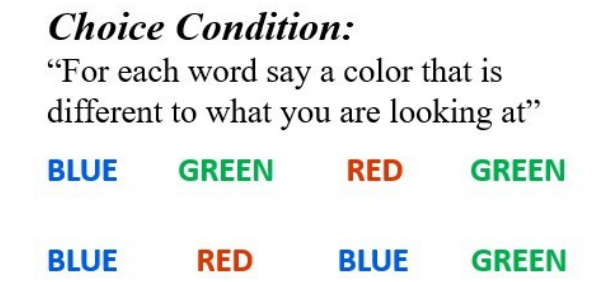
Our novel Stroop task was presented at the Cognitive Science Society #CogSci2026 recently, and the paper is now published in the proceedings. Our divergent Stroop task requires a choice, and we argue, uses up semantic control resources.
https://t.co/BEDgci4tNX
Our latest from the lab by the outstanding, John Buggeln. "Successful reinforcement history suppresses explicit and implicit error corrections". https://t.co/p5qLdZWicy
Version 2 of Theory of Contravariance is out! https://t.co/HEQpw3qprl New material on contravariance for Transformers, and the theory of Representational Similarity Analysis (RSA) and centered kernal analysis (CKA).
For transformers: it turns out that they have privileged axes, just like convnets, if you look in the right place (MLP layers and attention heads.) The identification of privileged heads is a potentially key result for emergence of interpretable stucture in LLMs. @meenakshik93
For RSA: it turns out that you can decompose RSMs into unique task-relevant "core geometry" and a task-irrelevant symmetry-generated term. Weak-strong equivalence holds for the core geometry and by projecting onto privileged axes you can filter out the task-irrelevant part so it doesn't interfere. This builds on work from Marvin Theiss @sciencelukas@saxelab@ermgrant
The Principle Investigator will do a deep dive on both topics in the coming days! https://t.co/xCFbmgSz48
if you want to get into the geometry of representations line, here's the order I'd read these in (as it goes claim -> cause -> measurement -> correct metric)
1. The Platonic Representation Hypothesis, Huh et al, the convergence claim
https://t.co/7pI0X0zAVQ
2. The Origins of Representation Manifolds, Modell et al, where the geometry comes from
https://t.co/r6th2Zfr7d
3. The Shape of Beliefs, Sarfati et al, beliefs as curved manifolds
https://t.co/nH4BHWk0V1
4. The Information Geometry of Softmax, Park et al, why the metric isn't Euclidean
https://t.co/eIe1JFJsLy
the Origins of Representation Manifolds tries to explain why that geometry exists at all, while the other three only describe it
explanation is rarer than description, and this whole line has leaned heavily on description so far
We're excited @Caltech and @TeamOratomic about mitten codes, which we hope will accelerate the journey to practical quantum computing. An extraordinary team worked on this project -- I especially appreciate brilliant contributions from Caltech students Aditya Bhardwaj, Richard Ma, and Nadine Meister.
https://t.co/eJ8nk9H6qf
Meta learning and recursive self-improvement are old ideas. Foundation models breathe new life into them. Our new survey, “Self-Improvements in Modern Agentic Systems,” reviews how the concepts are continuing to evolve.
Paper: https://t.co/59oXCMVUkD
Project: https://t.co/sZwFYdGetH
Github: https://t.co/7OFgJUCN3a
Congratulations to Shawn Standefer, whose new book, a contribution to the rapidly expanding field of #nonclassicallogics, systematically develops a basic frame theory of relevant logics that includes both modal and quantified extensions
Estimating premorbid ability is essential for accurate quantification of cognitive impairments. That's why we've been developing a test in Thai. Published now- open access. A collaboration between @USFQ_Ecuador@prmdcu@KIMEPUniversity@usfq_cocisoh.
https://t.co/b2SP4AqfP3
Our new open-access article may be of interest to those studying technological complexity in archaeology and human evolution. It gives a historical perspective & introduces heterarchy as a 'new' perspective under which this phenomenon may be studied: https://t.co/V331jGzAu9
Is Hebbian learning "universal"? In this recent ICML work with @David_Koplow and Tomaso Poggio, we showed that many learning algorithms look like Hebbian learning when regularized and look like anti-Hebbian learning when noisified. This could imply many different ways to interpret the learning process of biological brains.
Read our paper here: https://t.co/Ub5F52o5Rb
1/5 Over a decade of comparing deep neural networks to the human brain—but what have we actually learned? Our new @TrendsCognSci Feature Review synthesizes a decade of brain–DNN comparisons, asking what they reveal about brain function across vision and language.
Check out our new preprint on bioRxiv! In this study, we reanalyzed three published studies on endogenous attention and demonstrated typical sequential effects of response repetition to the repeated location and feature aspects of the target.
https://t.co/yKJrqcuAwb
Moving from conventional ML to continual learning requires revisiting even the fundamental concepts such as “test”/“train” time.
LLMs Need Sleep and Dreaming! We introduce a phase, where the model consolidates its fragile short-term memories into stable long-term memories, and then dreams to recursively self-improve over time. For memory consolidation, we introduce a new form of distillation, called Knowledge Seeding (KS), where a small model(s) distills its knowledge to a larger model. Our experiments on continual learning and reasoning tasks show that this new phase can help the model to perform better and relatively better mitigates catastrophic forgetting.
I'm excited to share that Corgi is out in @NatureComms!
We refine context-aware sequence-to-function models by using FiLM to condition the model on trans-regulator expression levels. This way Corgi can generalize to unseen cell types.
https://t.co/R2YXlpIx1L
🧵Thread 1/n