“हम कहाँ पीछे रहे… हमने ईरान से तेल लेना बंद कर दिया, हमने रूस से तेल लेना बंद कर दिया, हमने विपक्ष की तमाम आलोचन��� झेली, इसके बावजूद हमने 50% टैरिफ़ पर कुछ नहीं बोला। यहाँ तक कि FTA में हमने 18% टैरिफ़ देना स्वीकार लिया जो पहले से कहीं अधिक है… बताइए हम कहाँ पीछे रहे?”
- BJP/RSS नेता राम माधव ने विदेशी, वो भी अमेरिकी ज़मीन पर ही जाकर वो सब स्वीकार लिया जो मोदी सरकार के मंत्री या बीजेपी नेता यहाँ देश में साफ़ शब्दों में स्वीकारने को तैयार नहीं रहते हैं!
The answer can be found in Europe, where the principle of degressive proportionality is applied to the composition of the European Parliament — since they have the same problem of small and big states coexisting in one Union.
India also needs a compromise between strict democratic representation (one person, one vote) and the necessity of ensuring smaller political entities have a meaningful voice. It essentially means that while larger populations get more seats, the ratio of citizens to representatives increases as the population grows.
In the European Parliament, the allocation must follow these constraints:
*Minimum Threshold: No member state can have fewer than 6 seats.
*Maximum Ceiling: No member state can have more than 96 seats.
*Inverse Ratio: The "efficiency" of a vote must decrease as population increases. For example, a Member of the European Parliament (MEP) from Malta might represent roughly 80,000 citizens, while an MEP from Germany represents roughly 850,000 citizens.
The goal is to prevent the "Big Four" (Germany, France, Italy, and Spain) from holding a permanent absolute majority that could override the collective interests of the smaller nations, thereby maintaining the federalist spirit of the Union.
Applying this to India is what we need to debate, not women’s representation which no one objects to. We need to address the North-South divide that has arisen over delimitation. A strict population-based reallocation (proportional representation) would drastically increase seats for northern Hindi-belt states like Uttar Pradesh and Bihar, while states that successfully implemented population control (like Kerala and Tamil Nadu) would see their relative political influence diminish.
If India were to adopt a degressive model, the Parliament could be structured to balance population with federal equity. Similar to the EU, a "floor" could be set for smaller states (e.g., Goa, Sikkim, or the Northeast) to ensure they aren't reduced to insignificance. Instead of a fixed ratio of, say, 2 million citizens per MP, the ratio could scale. A state with 200 million people might have 2.5 million citizens per MP, while a state with 30 million might have 1 million per MP. This is to ensure no state feels disenfranchised. As @revanth_anumula suggests, another factor could be a state’s contribution to national GDP. It would be dangerous for our federalism if smaller states felt their prosperity & human development were being punished with relative disenfranchisement.
One could argue that the Rajya Sabha already exists for federal representation. However, degressive proportionality in the Lok Sabha would provide a "weighted" democratic mandate that acknowledges population without penalizing states for their developmental successes.
Finding a mathematical formula that satisfies both the high-growth and low-growth states, and both the large and small states, would require a level of bipartisan and interstate cooperation that it is in the interests of the central government to promote. I urge PM @narendramodi to initiate extensive consultations, with all parties and with all states, before rushing into a hasty delimitation process that leaves the core underlying issues unaddressed.
I’m a Telugu journalist based out of Hyderabad and I’m writing this on behalf of EVERY SOUTH INDIAN STATE.
India needs to pay URGENT attention !!
This is not delimitation. This is political punishment.
Punishment for controlling population.
Punishment for investing in education.
Punishment for doing exactly what the nation asked us to do.
For decades, South Indian states acted responsibly , built human capital, strengthened public systems, and contributed disproportionately to India’s economy.
And now, the reward?
Fewer voices in Parliament.
Let that sink in.
States that governed better are being pushed to the margins, while political power shifts purely on population numbers.
This is not federalism. This is a structural imbalance in the making.
Is India still a Union of States or are we heading toward permanent dominance by a few, at the cost of others?
Representation cannot come at the cost of balance.
Democracy cannot mean silencing those who performed better.
If delimitation happens without safeguards, it won’t just redraw constituencies , it will redraw the idea of India itself.
SOUTH INDIA IS NOT ASKING FOR PRIVELEGE.
It is asking for fairness.
@narendramodi@PMOIndia@ncbn@AndhraPradeshCM@revanth_anumula@TelanganaCMO@siddaramaiah@CMofKarnataka@mkstalin@CMOTamilnadu@pinarayivijayan @CMOKerala
अमरीकी राष्ट्रपति डोनाल्ड ट्रम्प और प्राचीन रोमन शासक कैलिगुला काफी हद तक तुलना के योग्य हैं। साफ़ साफ़ दीखता कि दोनों ने राजनीति को एक तरह के प्रदर्शन (spectacle) या यूँ कहें कि दृश्य-प्रपंच में बदल दिया, जहाँ सत्ता और सार्वजनिक पद की मान्य सीमाएँ धुंधली होती स्पष्ट दिखती हैं।
*****************
इतिहासकारों ने कैलिगुला का चित्रण एक ऐसे व्यक्ति के रूप में किया जिस���े राज्य-धर्म के स्थापित मानकों को ख़त्म कर दिया और अपनी मर्ज़ी को ही राष्ट्र की प्राथमिकता बना दिया आज के दौर में वैसे ही ट्रंप साहब की शैली भी उसी दिशा में चलती जा रही है। हालांकि अपने ‘आस-पास’ के कई और राष्ट्राध्यक्ष भी कैलिगुला के साथ तुलना की अहर्ता रखते हैं।
जय हिन्द
@8PMnoCM पूरा सुनने पर भी मतलब वही निकलेगा भाई !
कौन समझाए इनको कि किसान सालभर में 25-30 भी छुट्टी कर नहीं पाता है...उसे दिन में काम करना होता है और रात को गौपुत्र��ं के पैरेंट्स से रखवाली करनी होती है। सही देखें तो आज भी किसान के 365 में से 350 से ज्यादा दिन 8 घण्टे से ज्यादा काम मिलेगा।
@Shinamuller However, it is precisely on the basis of these very principles that Iran has demonstrated why it stands as a human civilization dating back over two thousand years—one that continues to exist to this day.
@Shinamuller Countries like the US & Israel know only how to manufacture weapons; they do not understand how civilizations emerge and flourish. For civilizations to thrive, one must uphold principles such as human dignity, ethics, and morality—a feat beyond the capacity of the U.S. and Israel
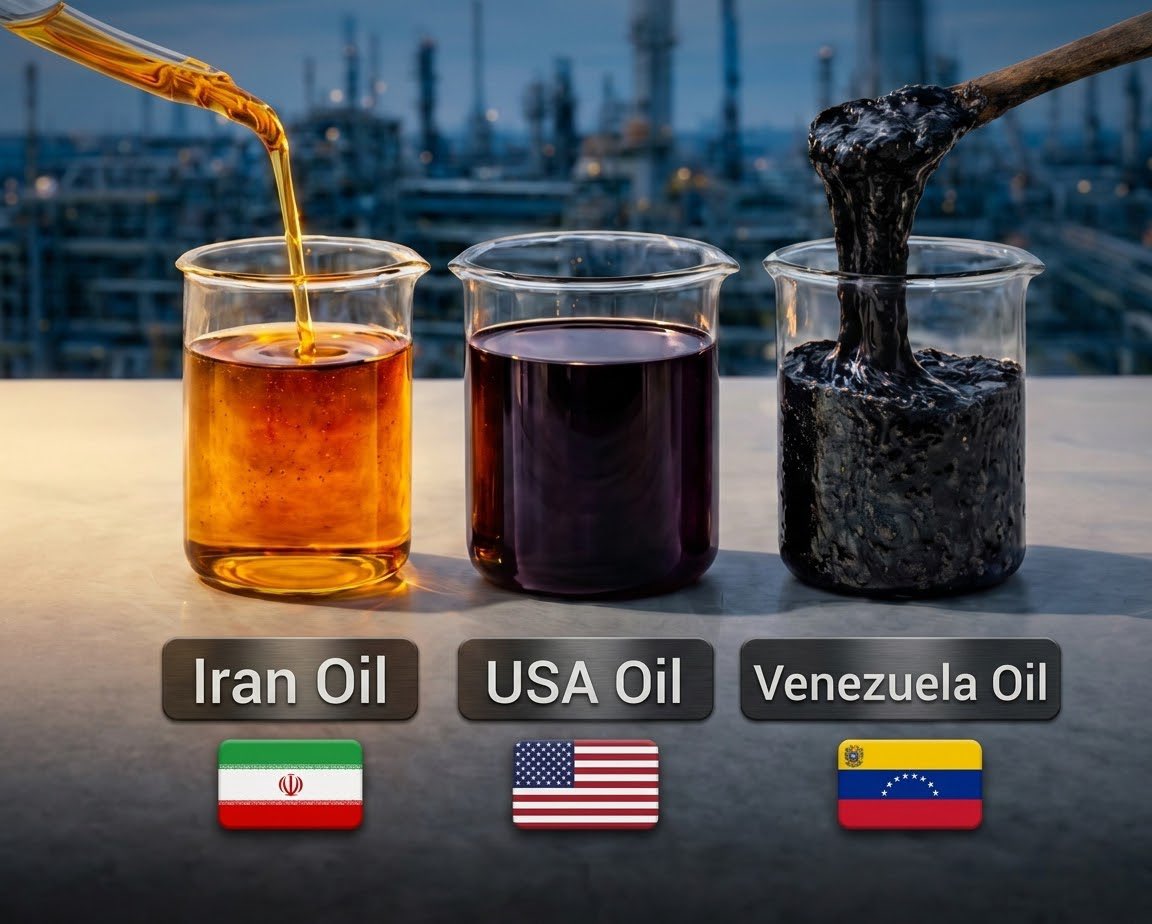
Everyone talks about Iranian oil in barrels. Nobody talks about what is inside them. That difference is why Western refineries have been running shadow networks through Dubai for twenty years to get it despite the sanctions.
Crude oil is not a uniform commodity. It is a spectrum of hydrocarbons with different molecular weights, and the composition of a given crude determines how easily it converts into the products refineries actually want to sell: gasoline, diesel, jet fuel, heating oil. The measurement that captures this is API gravity. Higher API gravity means lighter crude with shorter carbon chains, which means lower energy cost to crack, lower processing cost to refine, and higher yield of the light distillates that carry premium pricing. Lower API gravity means heavier crude requiring more energy, more processing steps, more capital equipment, and producing a higher share of lower-value residuals.
Iranian Light crude runs at 33 to 36 degrees API gravity with sulfur content between 1.36 and 1.5 percent. That is the refinery sweet spot. It is light enough to yield high fractions of gasoline and middle distillates without excessive processing costs, but heavy enough to produce the full range of products that complex refineries are designed to process. It is what petroleum engineers call an optimal blend crude.
Now compare the alternatives.
Venezuelan Merey heavy crude runs at approximately 16 degrees API gravity with sulfur between 3 and 5 percent. Refining it profitably requires a coking unit, a hydrocracker, and an extensive desulfurization train. The equipment exists. The economics work for refineries purpose-built around Venezuelan feedstock. It is not a substitute for Iranian crude. It is a different product requiring different industrial infrastructure.
US West Texas Intermediate runs at 39 to 40 degrees API with sulfur below 0.25 percent. In theory, the cleanest and easiest crude to process. In practice, it is so light that it does not yield the heavier middle distillates a complex refinery needs to run at full capacity. European and Asian refineries built around medium crudes cannot switch to WTI without blending it with heavier crudes to achieve the molecular weight distribution their process units require. WTI is not a drop-in replacement for Iranian medium.
Iranian oil fits where both US shale and Venezuelan heavy do not. It is the liquid that flows through the middle of the global refining system without requiring either the coking infrastructure for heavy crudes or the blending operations for ultra-light shale. That molecular fit is why it commands a persistent premium above comparable grades. It is why Indian refineries maintained Iranian crude purchases through every round of sanctions and negotiated the logistics to keep that flow moving. It is why the Dubai shadow banking and trading network that the UAE is now considering dismantling existed in the first place.
The Strait of Hormuz does not just carry oil. It carries the specific category of oil that the global refining system was built to process most efficiently. Closing it does not just reduce supply. It removes the grade of crude that the system runs best on and forces every refinery in the world to run less efficiently on whatever it can find as a substitute.
That is the premium embedded in the $82 oil price. Not just volume. Molecular weight.
https://t.co/ULBgEzZ3A8
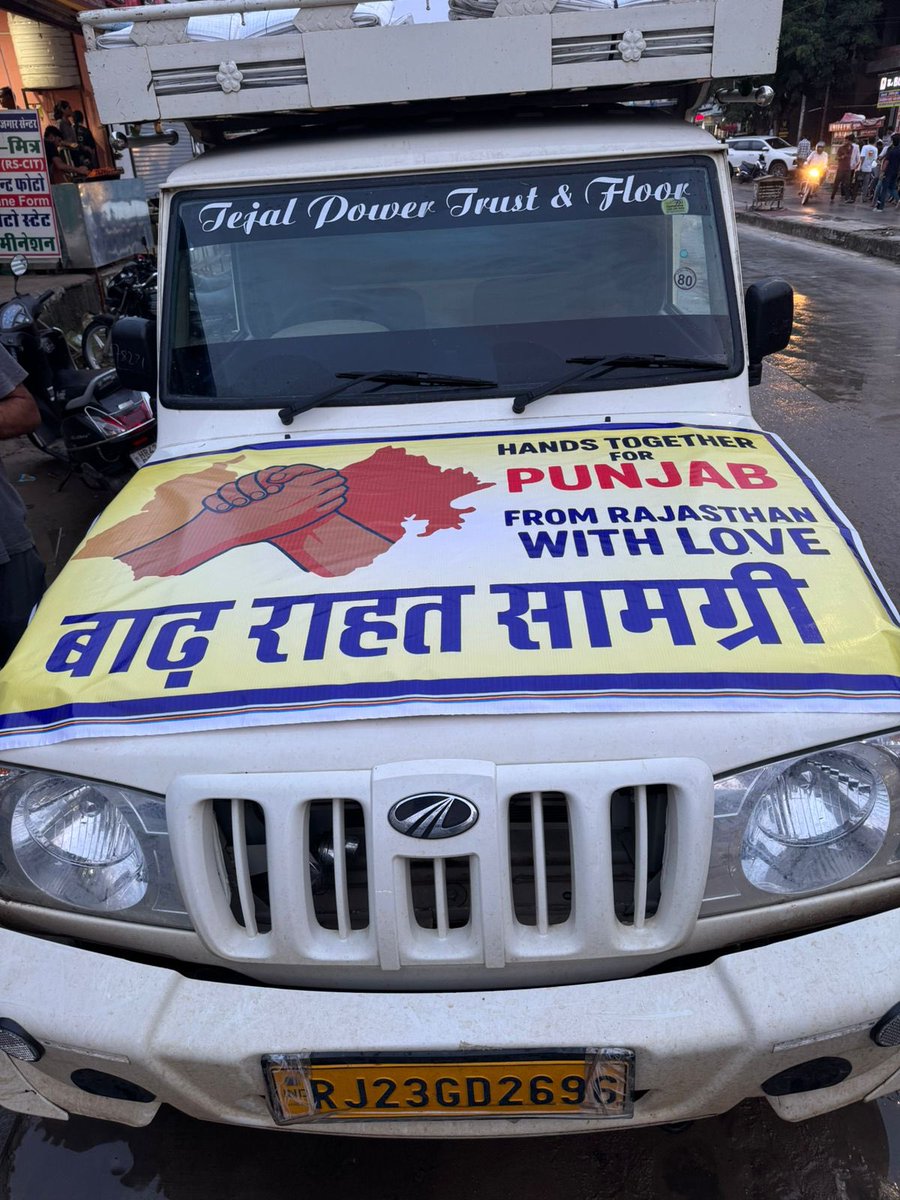
भाई @HariGarhwal ने किसी बड़ी योजना का इंतज़ार नहीं किया।
साथियों ने अमृतसर में @PandherSarvan वाली यूनियन से संपर्क करके मुख्य ज़रूरतें पता की, और चल पड़े दिलेर।
यही हाल मेवात, कोटा, ��ुनझुनू, गंगानगर, हनुमानगढ़, भीलवाड़ा से हैं।
लोगों से लोग जुड़े हैं।
कहीं किसी भी गांव में ये गुंडे बदमाशी करें तो अगले गांव पहुंचने से पहले पहले इनका इलाज किया जाना जरूरी है...इसलिये इस काम को प्राथमिकता पर लेकर करने की जरूरत है वरना ये गुंडे काफी परेशान करेंगे आने वाले समय में....
परबतसर पशु मेले में कथित गौरक्षकों की संगठित गुंडागर्दी को देखत�� हुये अब किसानों को भी गांव स्तर से लेकर प्रदेश स्तर तक इन गुंडागर्दी करने वालों से ढंग से निपटने के लिए *किसान स्वयं सुरक्षा समूह* बना लेने चाहिए...