Your Smart Contracts can now sign any payloads without having or exposing a private key of their own. They can control hundreds and thousands of addresses on different chains.
@NEARProtocol Chain Signatures is a game changer for the Chain Abstraction ecosystem.
Thread time 🧵
I wrote this simple example, apparently there are no good (easy to find) meta transactions example, especially in rust.
Check this out: https://t.co/7vg1JjLOkY
Here is the TLDR of NEP-519 on NEAR. (https://t.co/QTyX5tQOLh)
In short, NEP-519 helps make smart contracts on the NEAR more flexible by allowing contracts to pause and wait for other tasks or data before continuing. This means they can better handle tasks that take time or depend on other actions.
Currently, execution is asynchronous which mean it doesn't wait for a cross-contract call to finish, leading to the need for callbacks.
NEP-519, introduces yielded execution, which let's a contract wait until a task finishes before moving on.
This is an immediate benefit for Chain Abstraction and upcoming AI frameworks. It does this by improving support for multi-party computation (MPC) through allowing contracts to pause and wait for external computations/ events before continuing.
@NEARProtocol has an inbuilt way of rewarding smart contract developers some part of the transaction fees.
You might have heard of the 30% share.
Let's dig into that a little deeper.
🧵
I have been digging into Sputnik Contracts recently @NEARProtocol.
Something I had a hunch and makes sense is that your DAO contract does not have any keys. Full or Limited access.
You can check for yourself using this simple command
I am looking to interview developers using @NEARProtocol's QueryAPI platform for their Bos apps or any other front end or back end apps.
My DMs are open and your time will be compensated if we end up doing the interview.
Thanks.
All of us remember how all our RPC nodes were kind of performing really bad recently when there was too much traffic on the network. Since then we have had new shards and some protocol changes.
There was another simple thing we all could have done.
Asynchronous transactions.
Create a Trial Account Drop using a bos app.
I recently stored the trial account no-std wasm in a bytes array on near social component(https://t.co/Ol6uIrkc9w).
Then created a component that uses this wasm to create a trial account drop (https://t.co/x8fiBxhc1L).
This created an empty custom function call drop on
@keypomxyz. The custom function being here deploying a trial account.
Once you have a unique drop id, now you can simple add_keys to this drop and distribute them as you like. You can automate this process by setting a simple service too.
The trial account drop config component only supports adding only one contract and for all methods. In next iteration you can put multiple contracts and select methods as well ( multiple methods per contract).
The fun part here was storing the trial account wasm as a bytes array inside a component and then pass it as function args to the Keypom contract.
Here is the explorer link btw -
https://t.co/NAoKb5mNNz
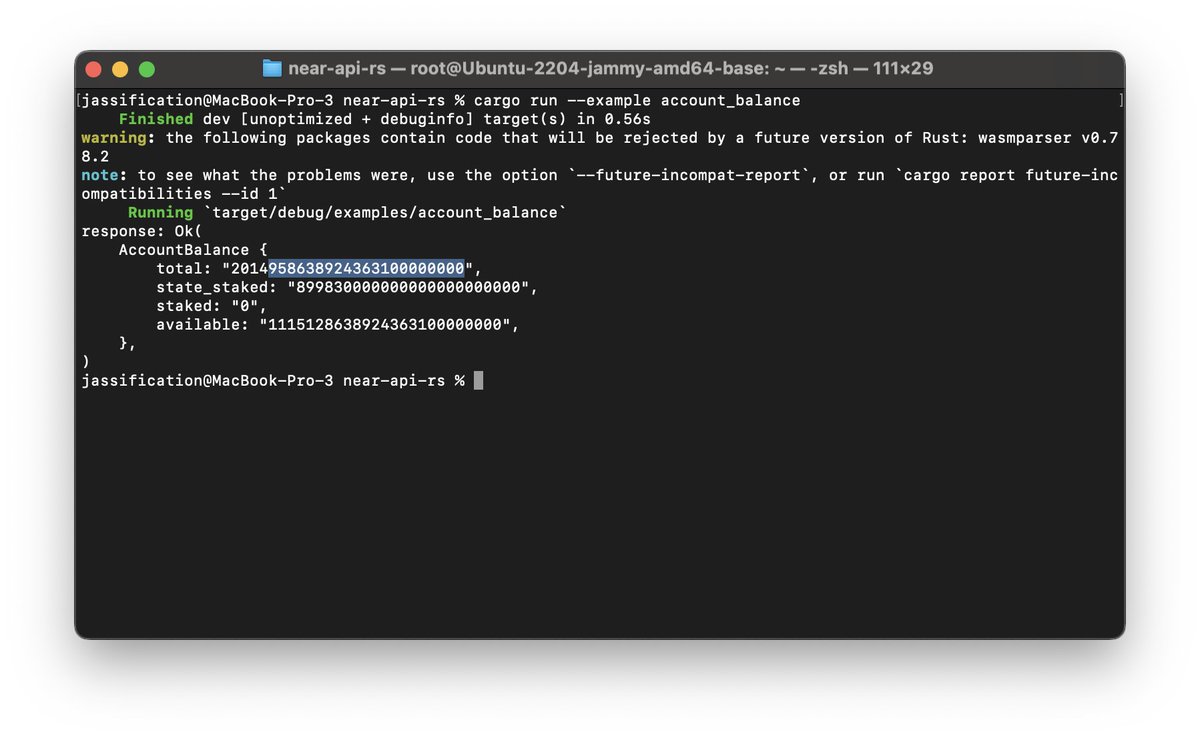
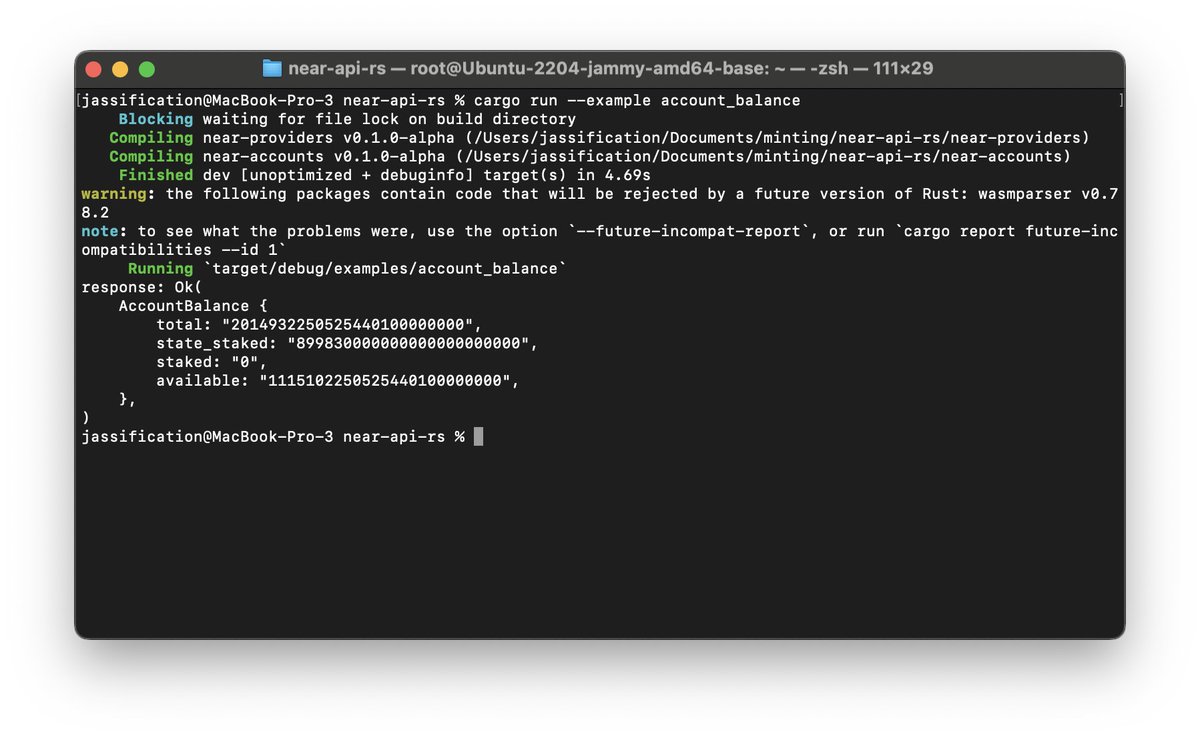
Writing a rust of implementation for near-api.
Cat is out of the box. For the past few weeks, I started writing a rust counterpart of the famous near-api-js, @NEARProtocol's most used library to interact with the chain.
@HarmonicGuild@NearBuilders
If you are looking for a low-hanging fruit with massive impact on productivity of development in NEAR, here is an issue to address: https://t.co/FE4ZG6R9CX - we can cut down the compilation time of some of the projects in half (33s -> 15s on my powerful machine)
If you are thinking to showcase your @NEARProtocol dApp at @EthereumDenver, please consider giving @keypomxyz trial accounts a chance.
Direct login to your dapp, no passphrase, no crypto top up required.
Integration would take less than a day. Happy to do it for you.
@HarmonicGuild@NearBuilders