More than 123 million Americans voted on Tuesday, and about half of them went to the polls in person. It isn’t a national holiday (maybe it should be?), but the workday treated it like one. Sellers had 8% fewer meetings than on a normal Tuesday, and cold calls connected 12–15% less often.
this weekend we perform the bizarre ritual of turning back the clocks one hour. did you know farmers lobbied against this law back in 1918? Why do we still do this?
at @Gong_io we got curious. does the extra hour of sleep change how sellers behave? Turns out it does. The week after clocks fall back is a rare window where the share of calls that get a follow-up within 14 days rises ~4%.
was daylight saving time for sellers this whole time?
more data like this here: https://t.co/1ynQPcNOFu
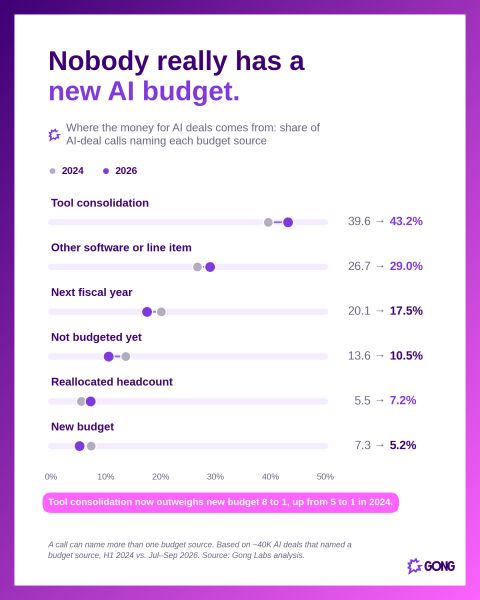
Nobody has a new AI budget.
@Gong_io looked at ~40K AI deal calls. When buyers named where the money comes from, “tool consolidation” beat “new budget” 8 to 1. In 2024 it was 5 to 1.
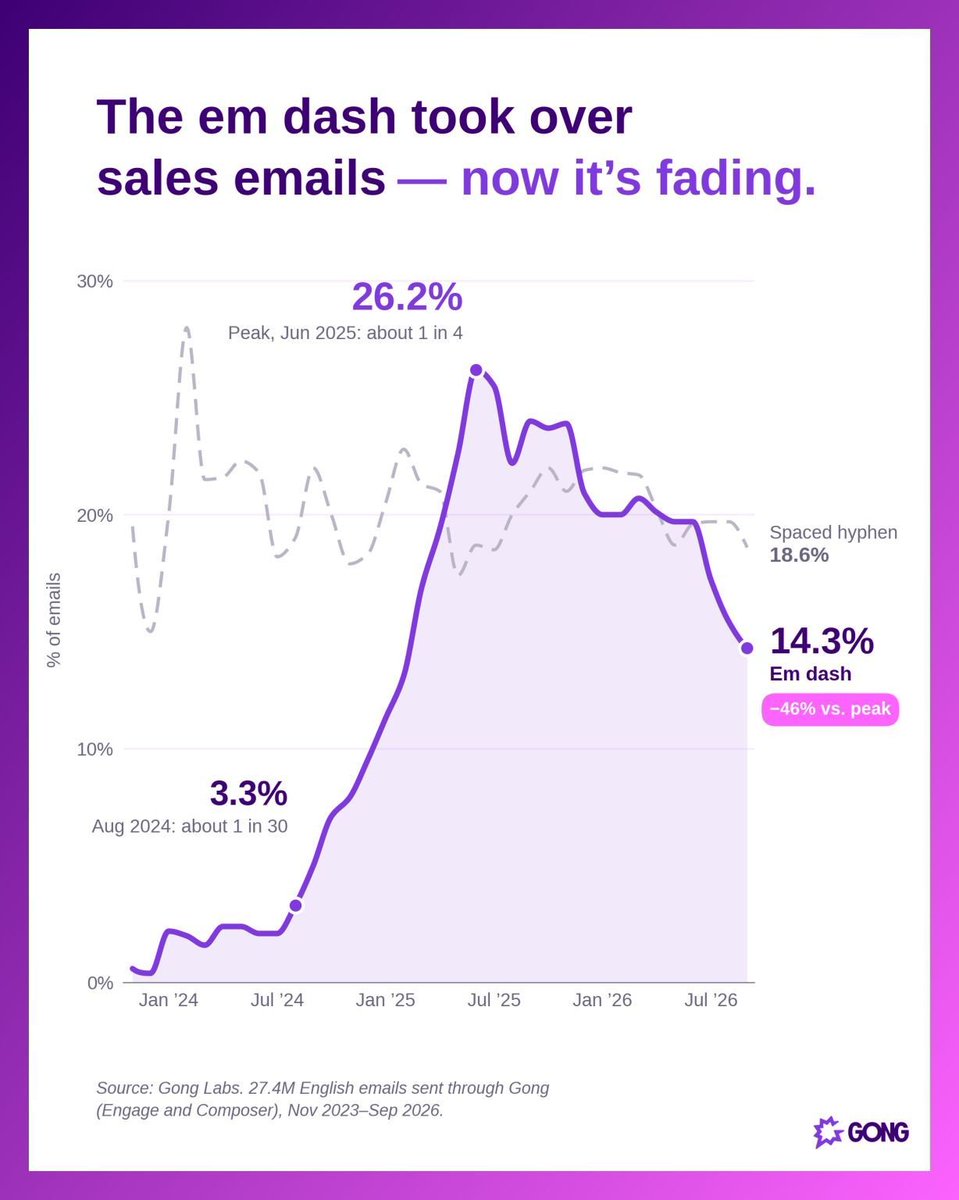
we just ran this across 27.4m sales emails at gong.
emails with an em dash got about half the replies and half the meetings of emails without one.
the dash is the easiest ai tell for a buyer to spot. the emails that read machine written pay for it.
full research here:
https://t.co/S1l3GxBJvw"
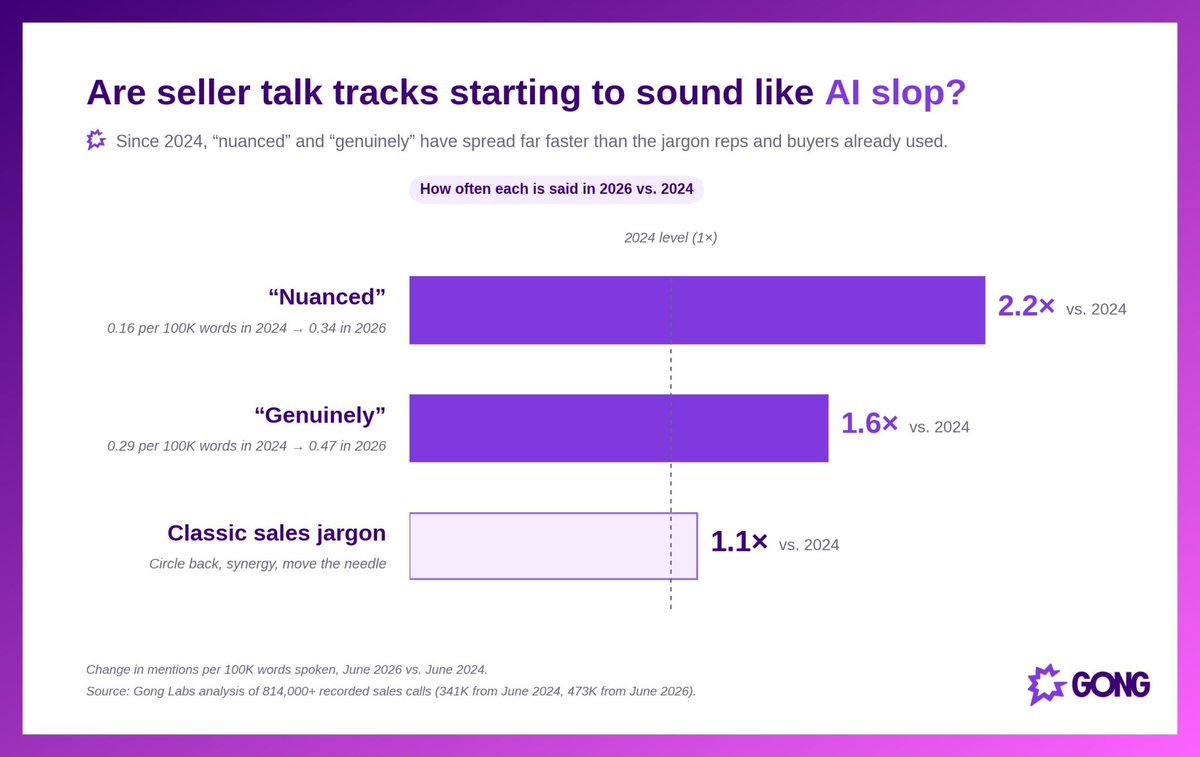
A couple weeks ago I wrote about how LLMs are changing the way we talk (salespeople say “genuinely” 60% more now). This week we looked at writing.
In mid-2024, about 1 in 30 emails had an em dash. By last summer it was 1 in 4. It’s since dropped back to 1 in 7. Not sure if that’s people writing more on their own again or just deleting them before they hit send 🤷♂️
@Gong_io
@morganjingram@Gong_io Honestly it's pretty simple. Emailing an IC, open with something personal about them. Emailing an exec, open with what's happening at their company. Rest of the email stays the same.
living in Japan for 4 years taught me how unique the culture can be. one of those unique business cultural norms is called "nemawashi", the quiet consensus-building that happens before anyone speaks.
that's why my research at @Gong_io this week was especially interesting to me. i did a deep dive on "silent buyers" on sales calls, and this norm made Japan an outlier. more on the silent buyer here:
https://t.co/awoKe81l7K
@Mighty7693524@snowkidind agreed and here's a data point to back up the SaaS 2.0 thesis:
AI deals where usage or outcome pricing comes up close at 42.7% vs a 34.0% baseline. +8.7 points of win rate. Outcome pricing isn't just the future, buyers already reward it
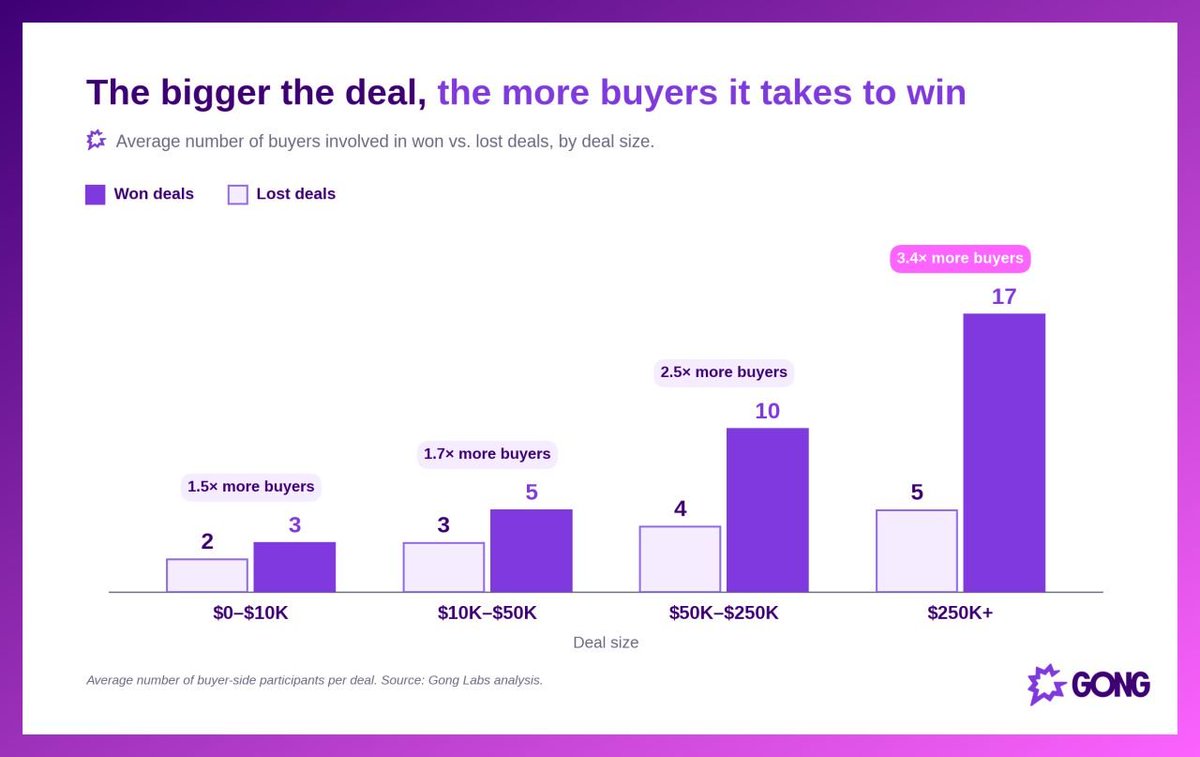
@Kazanjy And the stakes climb with deal size. Under $10K, won deals have 1.5x more buyers than lost ones. Over $250K, it's 3.4x.
At the top end, multithreading is basically the whole deal
@EvanKirstel we're seeing this in the data on sales calls...we analyzed 814K+ sales calls and found people are saying "nuanced" and "genuinely" 2.2x and 1.6x more than they were in 2024.
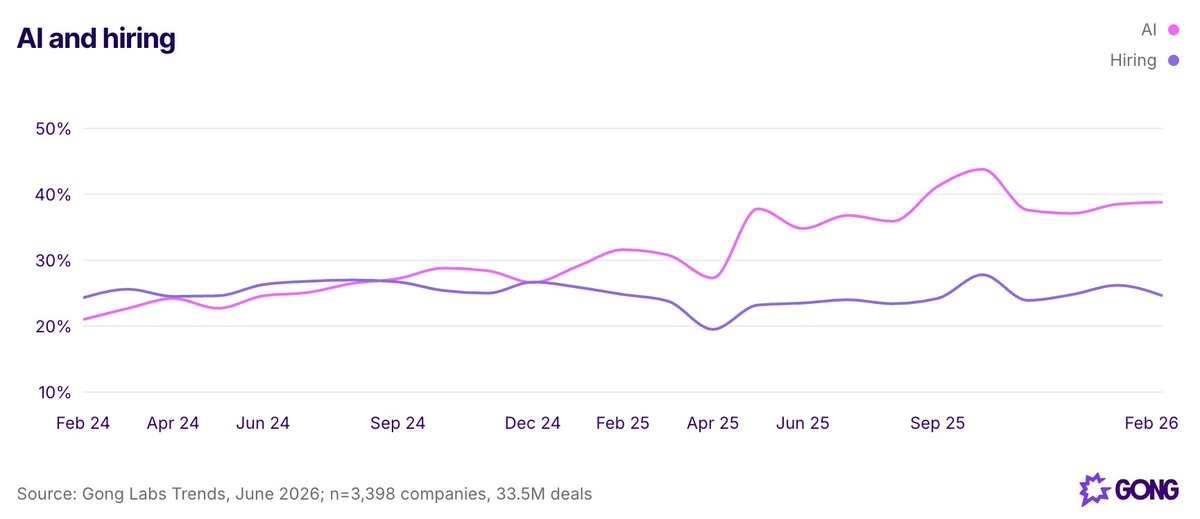
as AI discussion on sales calls ~doubled (21% -> 39%) from Feb '24 - Feb '26, hiring talk barely moved (24% -> 25%).
if AI is replacing jobs at scale, why haven't we seen a drop in hiring discussion?
more data like this from @Gong_io here: https://t.co/bk5yiDwmhX
companies leveraging AI is a signal that they will increase headcount, not decrease, according to @Gong_io State of Revenue AI report.
this isn't surprising to anyone who's really using AI. it enables you to do things you never thought possible, not just automate the things you've already been doing.
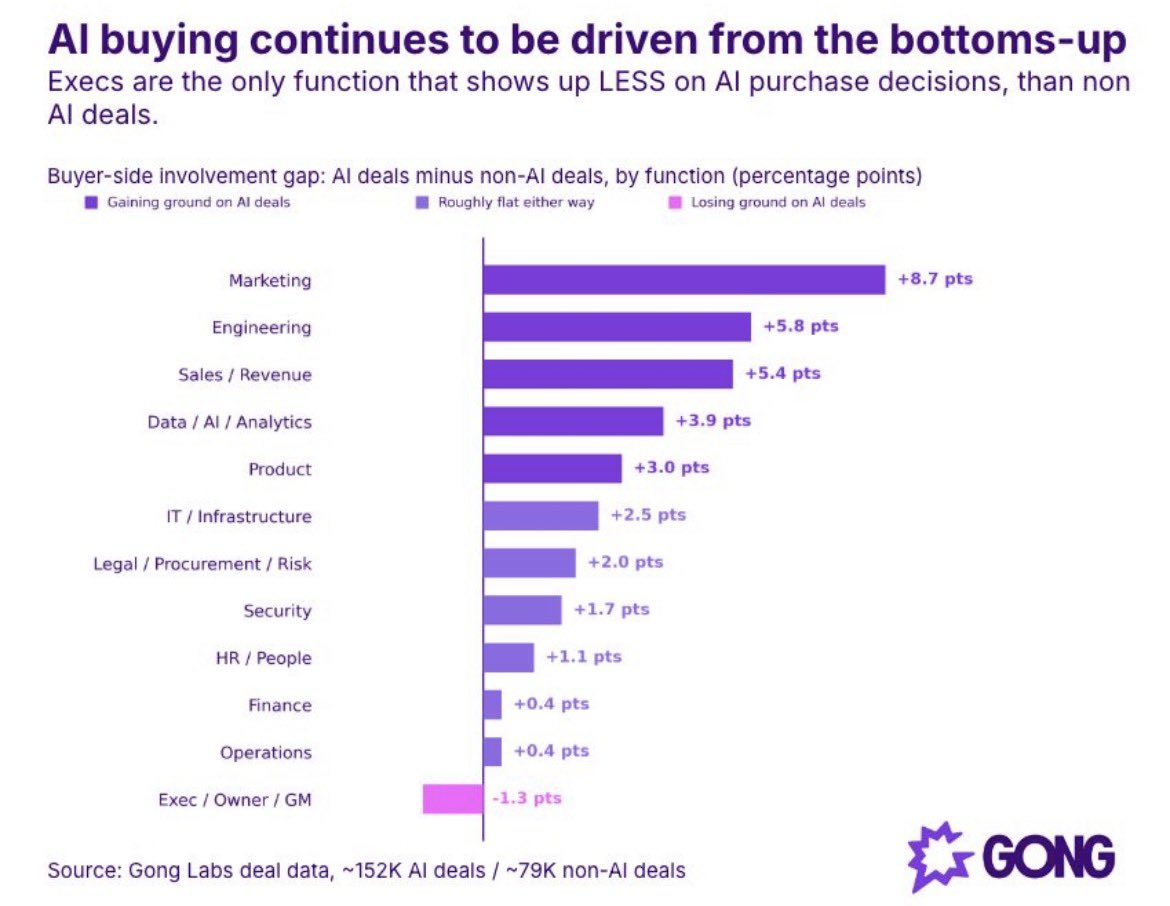
If you want to sell enterprise AI you need to go bottoms up, not top down.
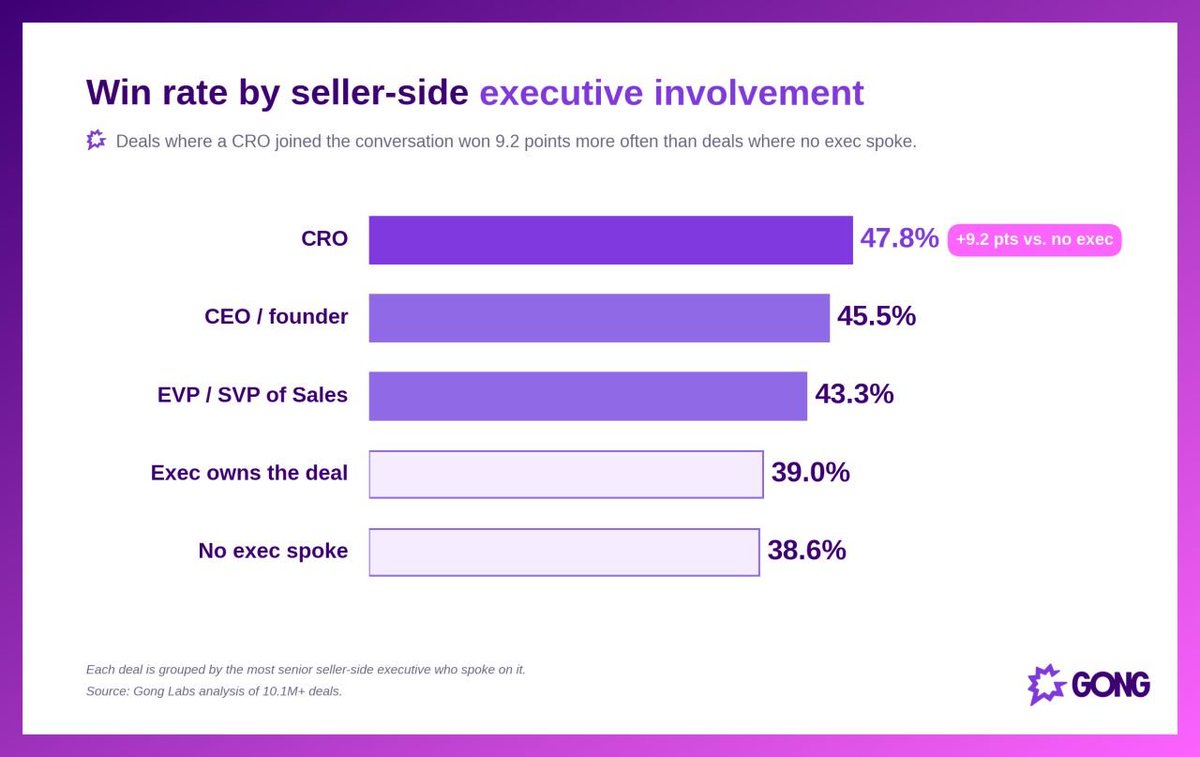
According to @Gong_io data, executives actually show up less on AI deals than non-AI deals.
The AI mandates/budgets are coming from execs but the practitioners are the ones actually evaluating the tools.