Postdoc @Mizzou, developer of ChromRec a chromatin model, Geometry, Chaos & Nonequilibrium Stat Mech lover, PhD in phys chem from FSU, engineer (BS & MS)
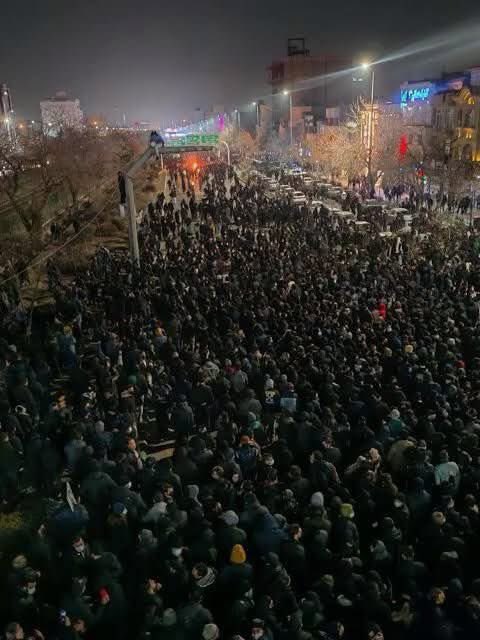
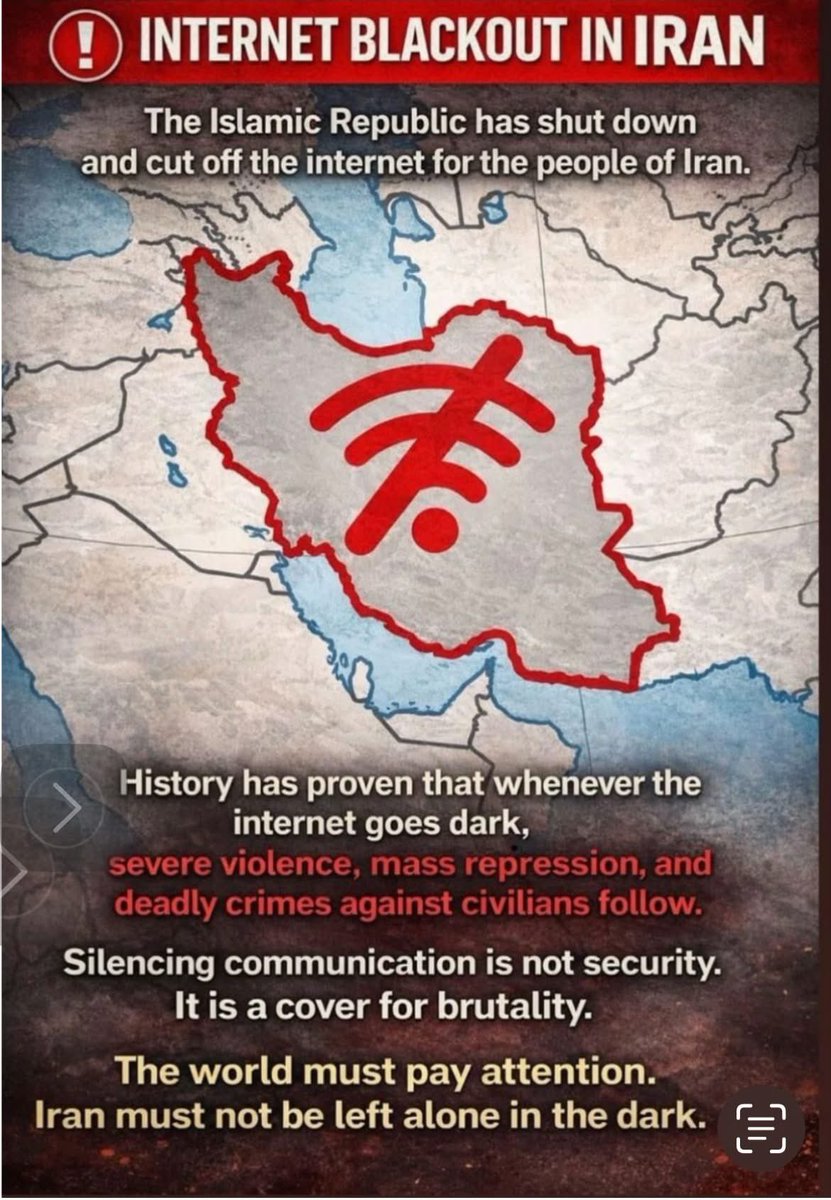
Courageous people of Iran rising up: Since December 28, 2025, in Iran, the people from all walks of life have been protesting and demonstrating in many large cities and small towns, demanding an end to the much-hated regime of the Mullahs that has failed them over and over again for the past 47 years. Despite heavy-handed crackdowns by the government’s riot police and militia, the brave Iranians are continuing their protest and are voicing their hatred for the current regime and their desire for freedom, justice, and regime change. Internet access and phone communications have been shut down by the government, and this is an ominous sign that the regime will intensify its brutality and crackdown in the coming days. Those of us who live in free countries in the world should become the voice of the Iranians inside Iran. We stand in solidarity with the Iranian people in their struggle and desire for freedom, justice, and a democratic government in Iran.
Excited to share the preprint of our recognition-based model for chromatin organization, "ChromRec", from histone octamers self-assembly to chromatin fiber, capturing physics & biological specificity!
Our new paper with Bill Hoover (Nosé-Hoover thermostat) explores chaos, phase-space contraction & entropy production (Λ) in a two-temperature cell model. We find Λ ∝ −δ^2.44, (δ = |Tx - Ty|), deviating from linear-response theory.
Our CACHE Challenge adventure is now published in Chemical Science! After identifying a winning hit series, we took it further—showing target-mediated effect in cells. A big thanks to our amazing team!
Stay tuned!
https://t.co/XjljDHirbR
#DrugDiscovery#ChemicalScience
Marco Rubio: “I don’t know of any nation on earth in which there is a bigger difference between the people and those who govern them than what exists in Iran.”
“No way is the clerics who run that country representative of the people of that country."
@mattallen12345 @TEAS_Actinides Using a combination of QM and MD simulations we showed why Sm2 and Eu2, having larger radii compared with Sm3 and Eu3, obtain smaller coordination numbers.
@mattallen12345 @TEAS_Actinides Nice work! Check out our (theoretical) paper on coordination of Sm2/3 and Eu2/3. We investigated their water exchange mechanism.
https://t.co/9C7UXKnK54
A team of @Mizzou, @MizzouChem researchers advances search for Parkinson’s Disease treatment with AI-powered software.
https://t.co/xNnGYvuV9g
#compchem
At (long) last, our paper on FRASE-based Hit-finding Robot (FRASE-bot) is out in Nature Communications. FRASE-bot helped us be among the winners of CACHE Challenge #1 and identify a few hits for Challenge #2.
https://t.co/rqnYkfMfir
#compchem
#compchem The long time overdue "polarizable" Spike protein preprint:
"Water-Glycan Interactions Drive the SARS-CoV-2 Spike Dynamics: Insights into Glycan-Gate Control and Camouflage Mechanism"
👉: https://t.co/xdgAbyDrQz
Full AMOEBA adaptive sampling simulations on the open and closed states and discussions around the solvent/glycan/protein interfaces.
Amazing work by @blazhynska. A huge thank to the great L. Lagardère and @OlivierApp and another fun collab with @leucinw & @prenbme.
This work was made possible thanks to the funding @ERC_Research (project EMC2) and @awscloud which granted us "a lot" of #GPUs time... Thanks also to @Genci_fr for "more" #supercomputing time...😅🤣😇#HPC #SARSCoV2 @TINKERtoolsMD@qubit_pharma@LCT_UMR7616