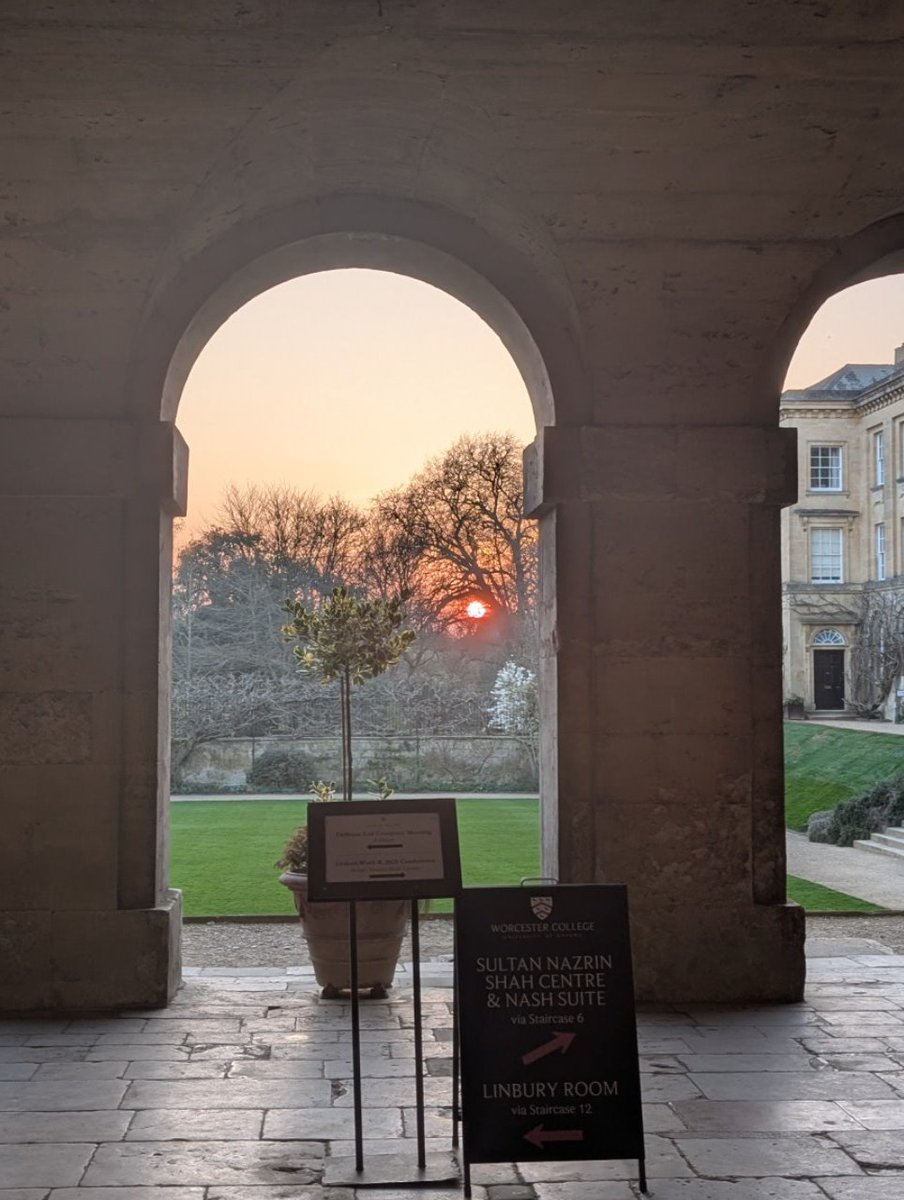
As the sun sets on a wonderful day of celebrating @UK_Wnt, we want to thank all attendees, presenters and sponsors for making this possible. @OxfordCancer, Company of Biologists, @CambridgeBiosci, @thermofisher
📢 Only few more days left to submit an abstract for #INTERPHACE2025 at @TheCrick or get an early-bird ticket! - deadline 13th Dec
Don't miss out on presenting your work in an interdisciplinary environment, network, or maybe even find new collaborators?
https://t.co/XIyWhfhubq
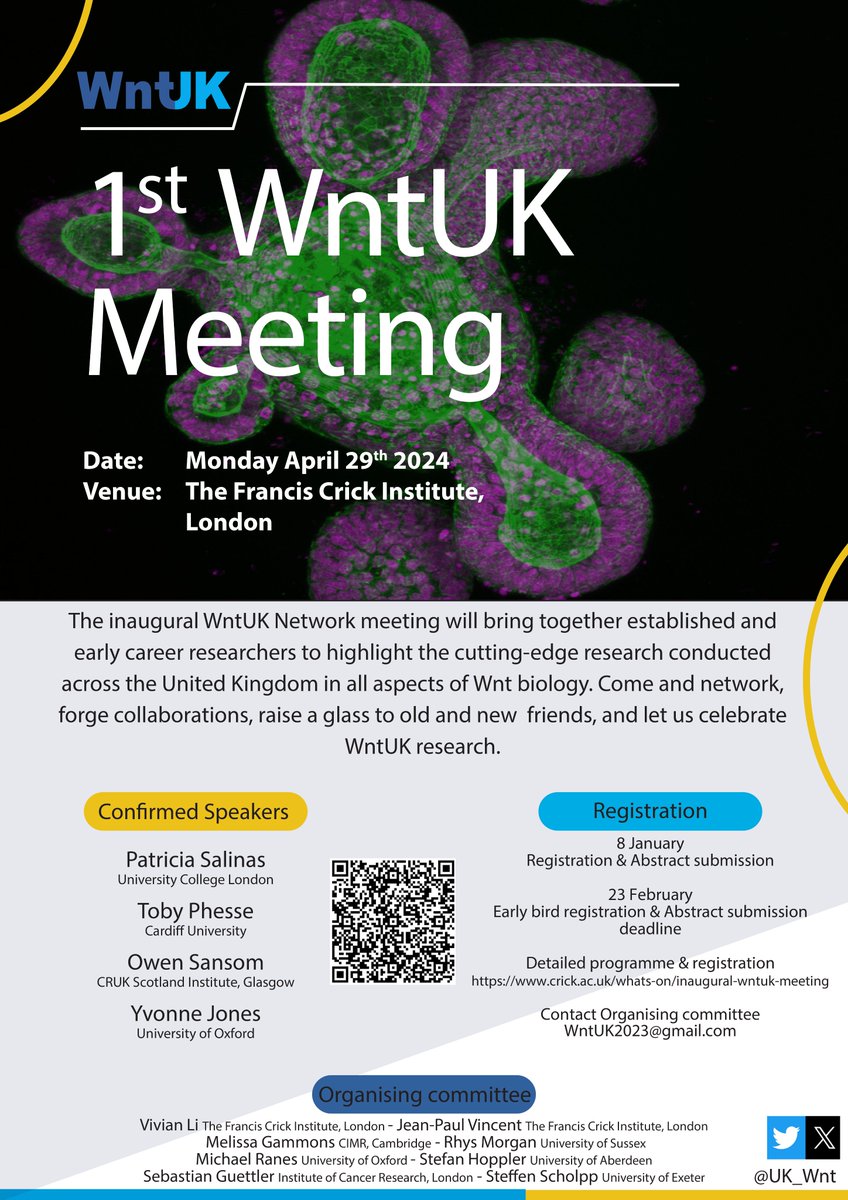
Pleased to announce that registration is now open for the inaugural WntUK meeting on Mon 29th April at @TheCrick Institute. Preliminary programme, registration and abstract submission below:
https://t.co/mJbbL0oCyP
Benefit from early bird registration fees up to 23rd Feb!
And today was the last day of our 2023 IMCBio Symposium! Today we were delighted to welcome Drs @HeadonLab, R. Ceccaldi, @arnaud_kr & Prof. O. Nureki!
Congrats to our M2 students for this lovely week under the sign of biology and sharing!
We've even added some stranger examples, such as 🐀chemotaxing in a maze towards 🧀! (Not exactly the mazes @robinsall studies...)
Please do let us know what you think, and in particular what examples of PDEs or particular dynamics you'd like to see! https://t.co/Mkhv9gC6Yh
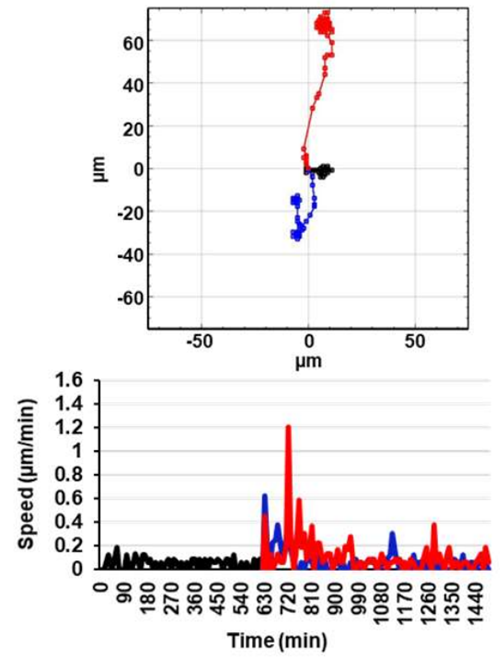
New preprint. Cells in embryonic skin move apart quickly following division, dispersing themselves across the tissue and making it easier for them to find and enter hair follicles. Migratory direction and speed are influenced by physical tension.
https://t.co/s7ITg5PLcl
These plots of cell tracks and speed show the behaviour. The track of a mother cell up to division is in black and those of its daughters in blue and red. Mother moves slowly and randomly, but the daughters spread apart rapidly in bursts over the 3 hours following division.
I enjoyed talking to @laurenjyoung617 last Friday. She asked great questions and produced this nice article on our recent work describing the genetic basis of fingerprint pattern types from my rambling answers.
Out now! Genome-wide association scans in Han Chinese individuals, combined with a trans-ethnic meta-analysis, reveal genetic regions associated with specific fingerprint patterns
#sciencetwitter#fingerprints
https://t.co/B9CUALSbrI
As well as understanding the superficial trait of fingerprint pattern type, this work helps to shed light on the process of human limb development and the genes that underlie it.
The choice between fingerprint types of arch, loop or whorl is influenced by genes involved in growth and shaping of the developing fingers.
https://t.co/D5rnUijWsI
We review recent findings on roles of cell movement and mechanics, in conjunction with cell signalling, in the generation of hair and feather patterns and encourage researchers to consider these processes when studying the biological pattern formation.
https://t.co/7kcuV6ZKWb
Very happy to have contributed to this issue on biological pattern formation late last year, with Mariya Ptashnyk and Kevin Painter. We focussed on how the small, numerous structures, like hair follicles, branches or projecting intestinal villi, are produced within large organs.
In this blog, Guest Editor @BlindMath introduces us to his theme issue, 'Recent progress and open frontiers in Turing’s theory of morphogenesis'. https://t.co/ODMXwRYrpq https://t.co/7LykeUA3pI #patternformation#AlanTuring#embryogenesis
Turing originally presented his influences as chemicals, though he and others were aware that different processes could be at play. Experimental work has substantiated Turing's ideas, but often with many more than just the two chemical signals that he chose as a simple example.