We've assembled the first draft of a #FlyLabList https://t.co/qd0d1oAkiT, aiming to include all labs doing Drosophila (any species) research. Our goal is to help our colleagues find Fly Labs in particular geographical locations & to gain an accurate number of Fly Labs worldwide.
🪰Droso peeps! Pleased to inform you that the 35th French Drosophila Meeting will take place from the 14th to the 17th of October 2024 at the Lazaret holiday village in Sète. Looking forward to seeing many of you for this exciting scientific meeting! 🪰https://t.co/ENmTV3RMV2
Extremely happy and grateful to welcome Daniela @cecalev in the lab for her PhD! 🧫 Luckily for both of us, Benoit has been setting up everything in the lab and tissue culture since September. Now we're 3! Xploring X-linked dosage compensation @CbiToulouse
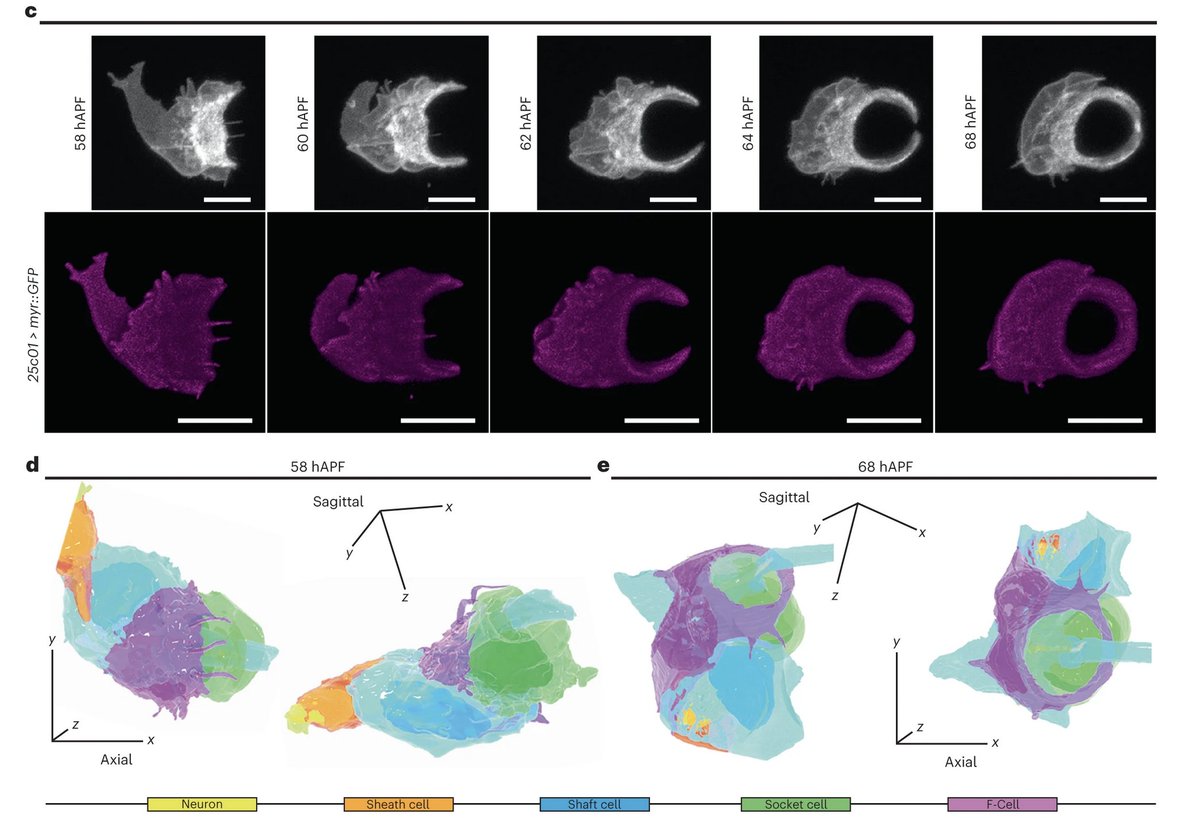
A new story, spearheaded by Federica Mangione is out @NatureCellBio!🎉
Federica observed the association of non-neuronal epidermal cells with the developing mechanosensory bristle. (1/2)
Cool new study from @taponlab, showing interaction between neuronal and epithelial cells.
Ensheathing of tactile bristles by F-cells enables touch sensing, possibly through bio-chemical/mechanical signaling.
https://t.co/Wti2Zk7dHV
Email I sent in response to @NatureComms´s request for me to act as a reviewer today (part 1 of 2).
#OpenAccess isn´t open if those of us in developing countries are economically excluded from publishing equitably.
Don't miss this great developmental bio meeting in Roscoff! May 22-26.
Deadline extended to Feb. 20th! I hope to see many of you there!
Submission website found here
https://t.co/62yZIV7sCF
We are hiring a computational biologist to work the developmental origins of pediatric cancers. Contact me if interested #scRNAseq#spatialtranscriptomics 👇🏻
Glad to share our lastest preprint.
Crosstalk between chromatin and the transcription factor Shavenbaby defines transcriptional output along the Drosophila intestinal stem cell lineage. https://t.co/wlDzpZR9Hc
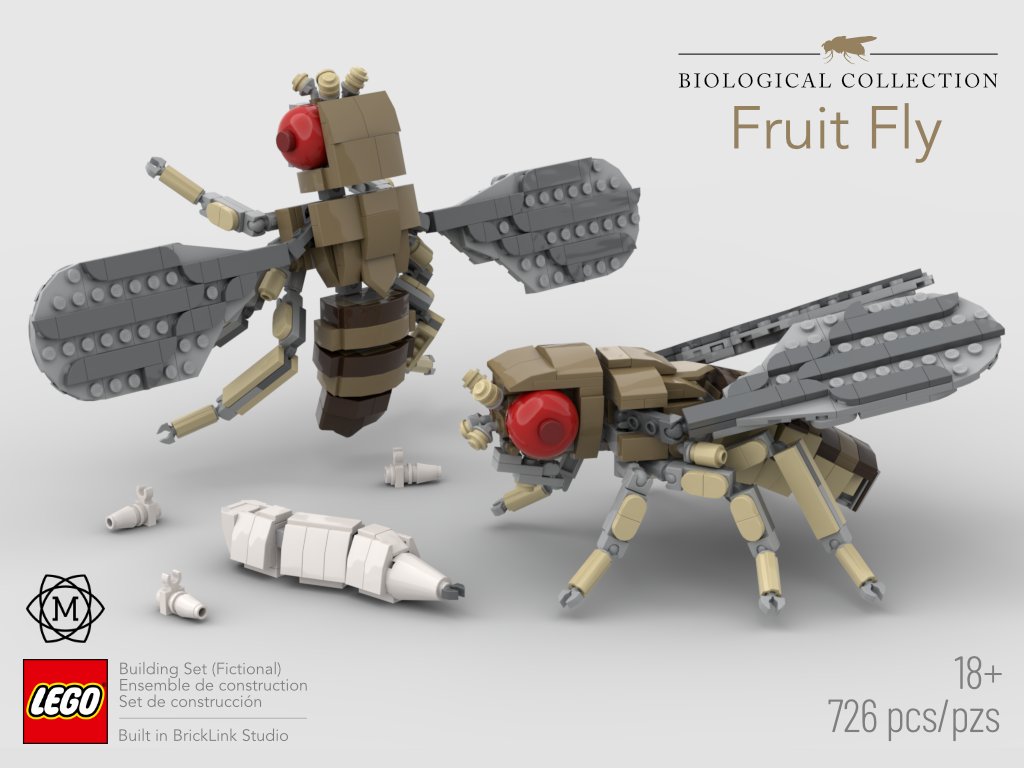
I designed the model to have adjustable limbs, wings, and even a retractable mouth.
Researchers that study fruit flies have uncovered the genes that are important for "building" the fly and its many body parts during development.
2/n
Male and female flies differ – males have smaller abdomens with a darkened posterior, while females have a larger abdomen with a lighter underside.
Researchers who study fly genetics need to control which males and females mate, so these differences are crucial to know.
3/n
Many of the important fly genes result in changes to morphology, or "phenotypes", that make them different from "wild type" flies.
I designed this set to include some of these mutants, such as a fly mutant for the "white" gene, which has white eyes...
4/n
I designed another #LEGO set inspired by the "model" organisms of biological research!
This time, it's the tiny but mighty fruit fly #Drosophila melanogaster, which researchers have used to study all manner of biological processes.
1/n