Should we just recycle all our plastic waste?
I wrote in the ETH #Zukunftsblog about the potential side-effects of #plastic#recycling, and that we might run in trouble if we don't also think about the #chemical level
https://t.co/LvZIwYwHnI
McPartland et al. is exciting because we demonstrate that plastic chemicals can activate GPCRs, in particular adenosine and melanin receptors. This is significant because GPCRs are rarely considered as targets for chemical disruption. Novel mechanism here!
https://t.co/unDSTe0QRT
Our new #openaccess study on PVC flooring unveils concerning findings: 16% of all new products still contain regulated substances like DEHP or lead, likely due to recycling. We need more transparency for a #safe and #sustainable#CircularEconomy! 🧪🌍
https://t.co/Tpx32zXfxn
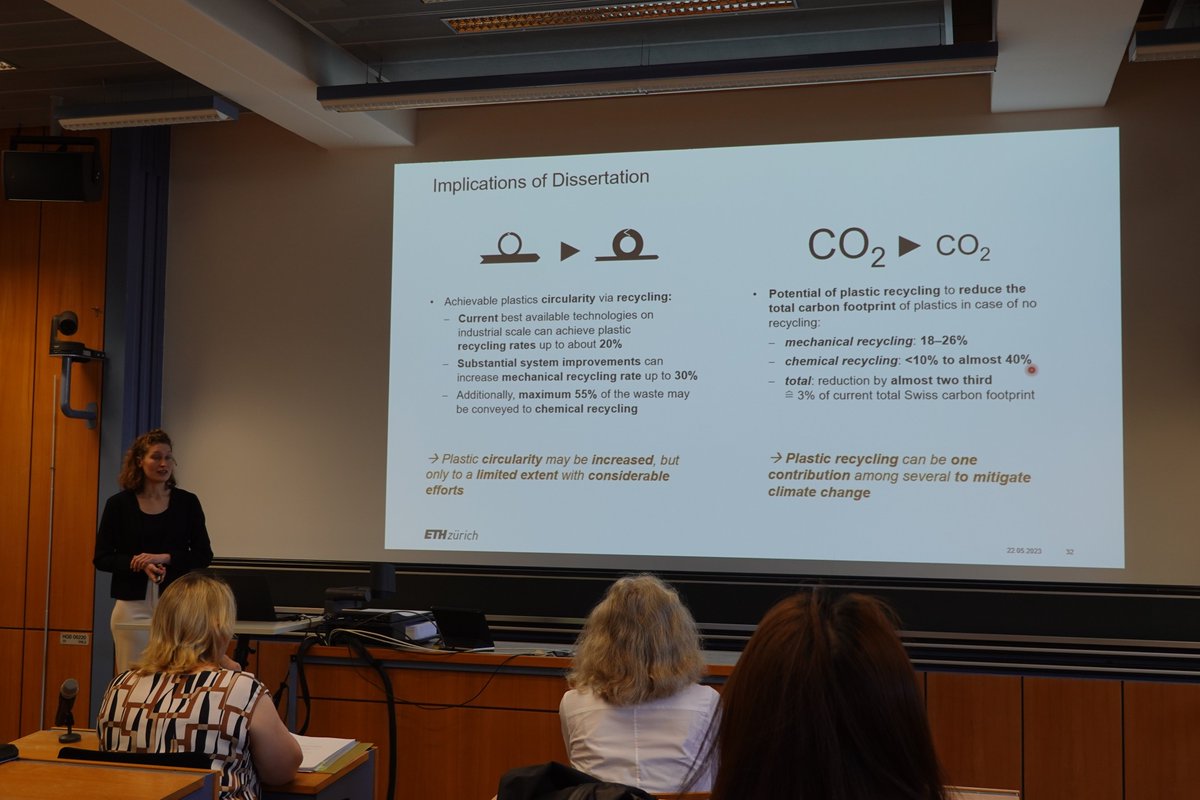
🎓Congratulations to @MagdalenaKlotz for her brilliant PhD defense!
♻️She modeled the material flow of #PlasticRecycling in Switzerland, assessing the circularity and #ClimateChange impact of the system!
📜Check her project and publications:
https://t.co/x1CiwDvuKc
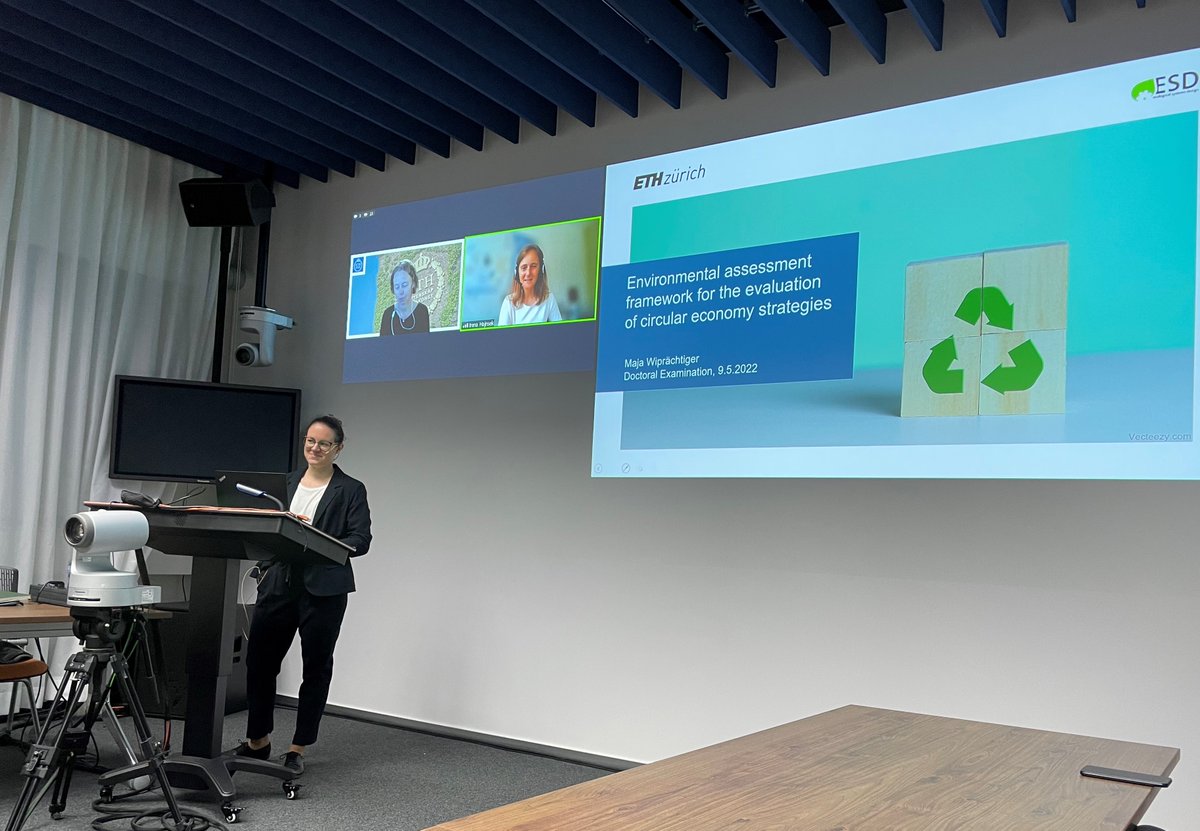
Congratulations to Maja Wiprächtiger for her successful #PhD defense!
In her PhD thesis, she defined an assessment framework to evaluate the #environmental#sustainability of #circulareconomy strategies and applied it to several case studies.
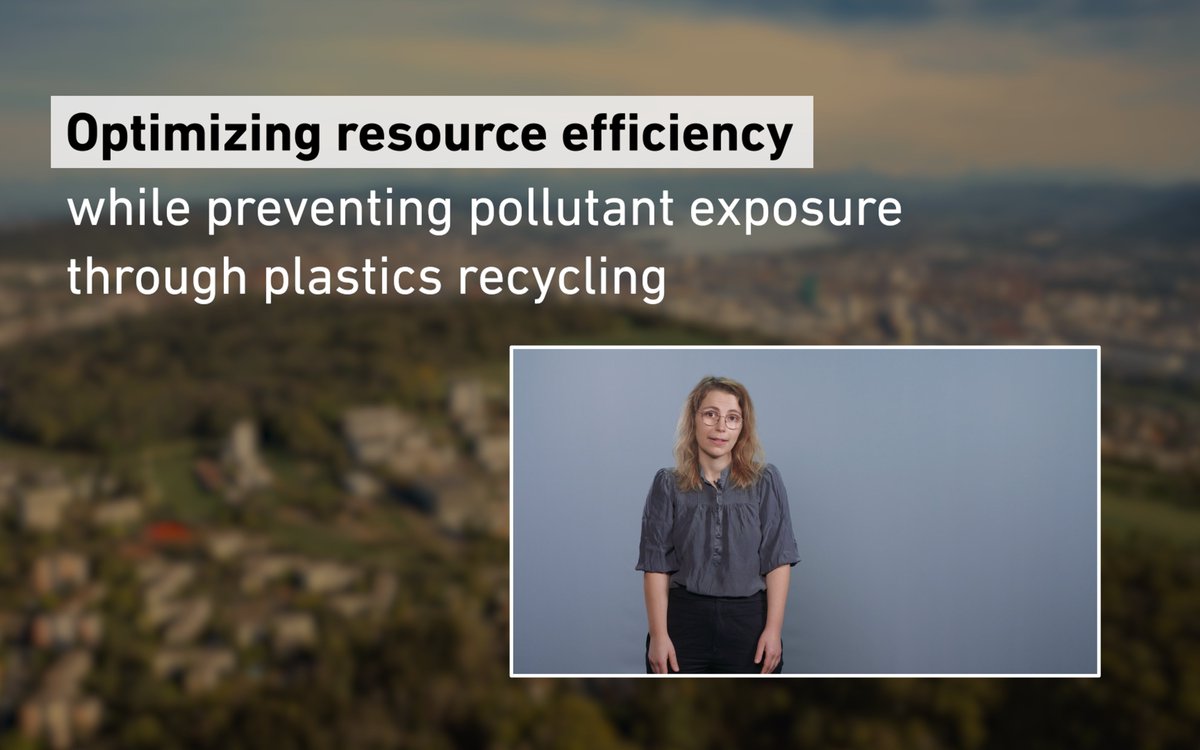
“Which #hazardouschemicals are part of the #plastics around us? It is not so easy to say” explains @HeleneWiesinger, PhD student at ESD.
Do you want to know more about her research on chemicals in plastics? 🧪
Check her short video: https://t.co/GRyaHNAmTQ
#Hazard#Chemicals
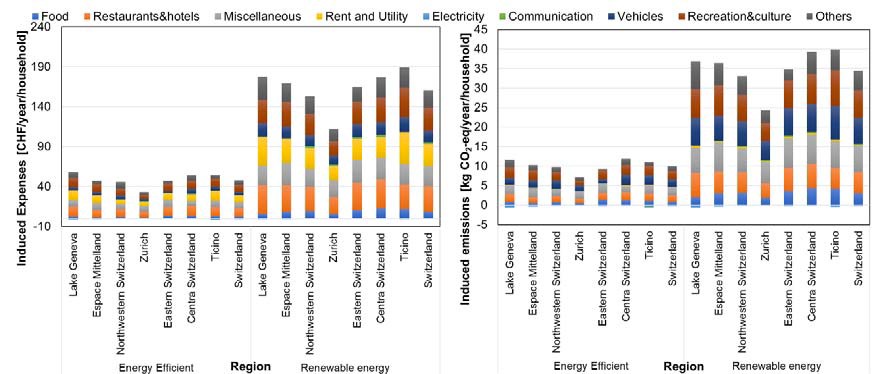
Our recently published #datamining study from @Cisbat_ on evaluating the rebounds by switching to energy-efficient devices, and renewable energy in Switzerland show that higher income and bigger households have higher total rebounds. For details check: https://t.co/lHlzAmQKp7
In our recent article we develop a #machinelearning methodology to estimate #rebounds in housing industry. Checkout the details here https://t.co/wBJwbBdDLH @ElsevierConnect
The dark side of plastics consumption: our recent article published in @naturesustainab shows how the growing environmental #footprint of #plastics is driven by #coal combustion occurring in the production phase.
https://t.co/PvodeO0rxK
Data uncertainties, assumptions in #modeling choices and incomplete knowledge make it hard to interpret #environmentalfootprint values. Our new paper proposes a #globalsensitivityanalysis protocol to achieve higher robustness in results. @ELSenviron https://t.co/HIlw8AqMJS
.@HansenB_ECHA at #ipcp workshop: We need a predictive chemicals management to reduce the friction in the system (chems are regulated today once they become economically successful).
We can’t manage what we don’t know. It's Time to Reveal Chemical Identities of Polymers and UVCBs for #SaferChemicals. Have a look at our latest opinion paper @ETHZ_ESD @EawagResearch#ChemicalsInOurLife. https://t.co/KNerDjFY6q
ETH-Forschende untersuchten #Chemikalien in #Kunststoffen und fanden eine unerwartet hohe Anzahl von potenziell besorgniserregenden #Substanzen in #Plastik. Bei Chemikalien in alltäglichen #Kunststoffprodukten mangelt es an Transparenz.
https://t.co/jLkI9ggG12