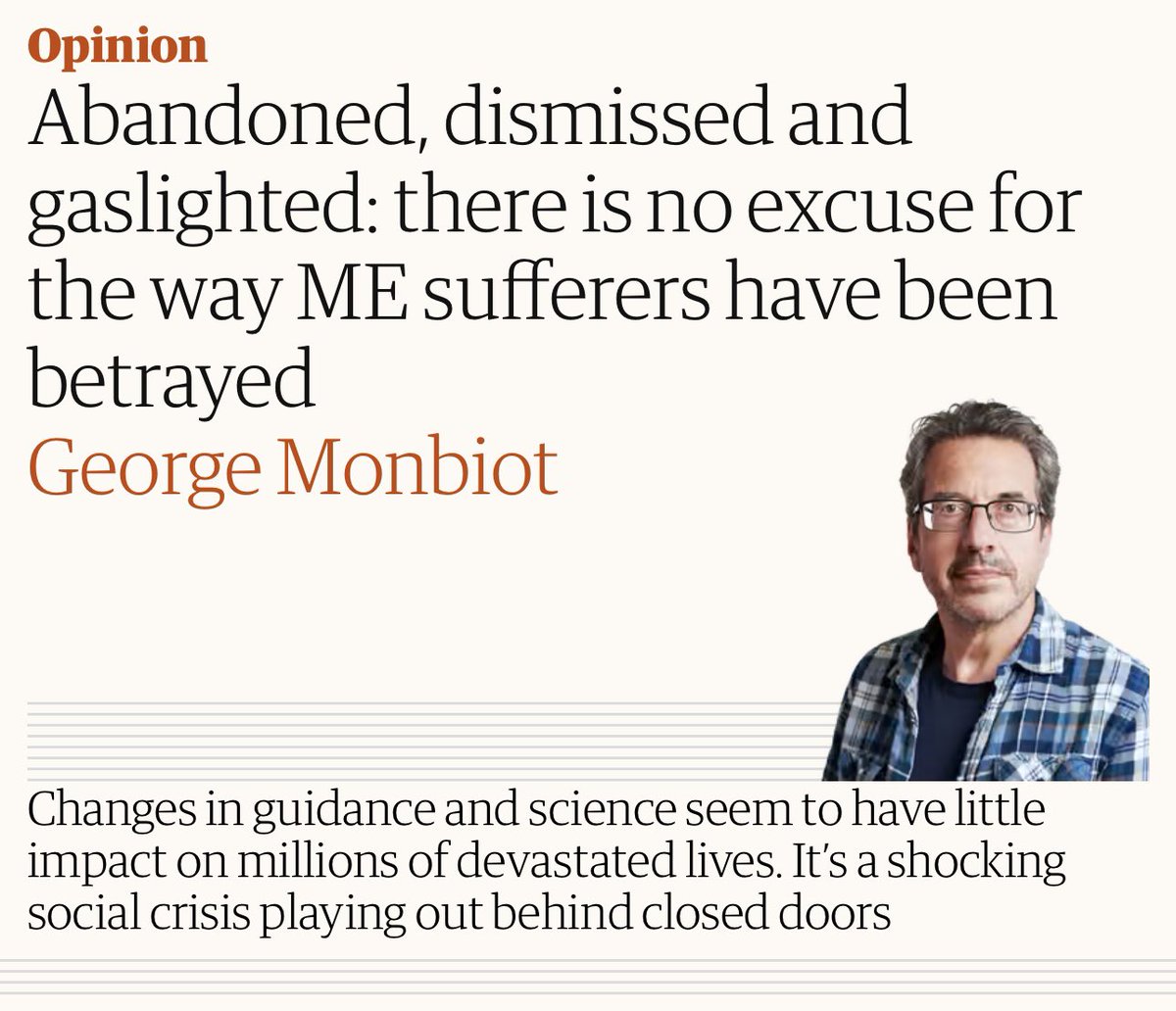
@lewis_goodall Would it be possible for you to open up an #ME discussion based on this article. Many of us have been totally abandoned, often abused and belittled for decades. Friends have died or have taken their own lives as it’s unbearable.400,000 of us would be very grateful.
A new study supported by the PolyBio Research Foundation has found that people with Long COVID harbor persistent populations of highly cytolytic CD8+ T cells directed against SARS-CoV-2 but also the herpesviruses Epstein-Barr virus (EBV) and cytomegalovirus (CMV). 2/
https://t.co/Ls5nkt7eqj
I will persistently reiterate this stance:
Future #MECFS trials need mechanism-based subgrouping, objective outcomes where possible, and PEM-required case definitions.
Otherwise, we will continue to waste money on studies that offer few new insights. #LongCovid#MECFS
Today is my birthday. I turned 40.
But nobody knows it anymore, except my close family.
Because I am socially isolated due to Long Covid for four years now.
People simply forgot me.
They forgot us.
Die OECD stellt fest, dass Mitgliedsländer die hohen ökonomischen und menschlichen Kosten von LongCovid bisher noch unterschätzen. Deutschland und die Niederlande gelten eher noch als Vorbilder. Es ist eine Katastrophe dass es so wenig Forschung dazu gibt https://t.co/sOmZxmzmeX
Two men died at the ATP Finals.
In a COVID-aware world, we notice patterns. In a denialist one, we explain them away.
If every player collapsed at once, we’d call it a catastrophe. But when it happens quietly, one by one, event after event, we call it a sad coincidence.
Brainstem Reduction and Deformation in the 4th Ventricle Cerebellar Peduncles in Long COVID Patients: Insights into Neuroinflammatory Sequelae and “Broken Bridge Syndrome” 😳😳 https://t.co/lphRf8cIV5
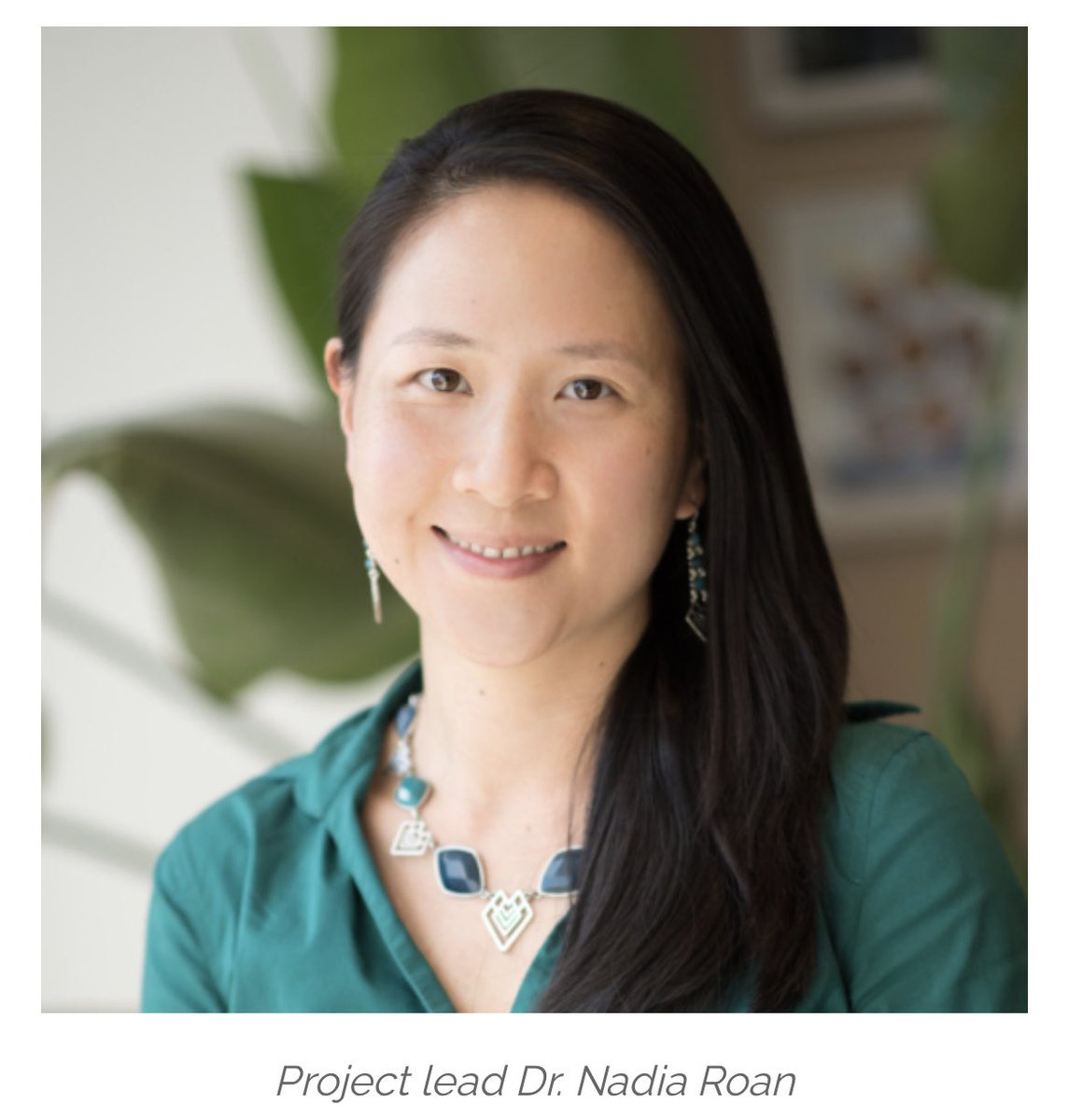
I’m overwhelmed with profound gratitude. I became the first female Japanese scientist to receive the Keio Medical Science Prize in its 30-year history 🙏🏼 #KeioMedicalSciencePrize#WomenInSTEM#Immunology
Also, huge congratulations to @brangwynnelab!
https://t.co/HpSAl6OaDF
How to Love Someone With Long Covid (Even When It’s Hard)
Let’s talk about something brutal.
When you get sick and stay sick, people disappear. That’s not a flaw in your personality or your worth. That’s human behavior. Animal behavior, actually.
Let me rewind.
Decades ago, I dated someone I loved deeply. She had this deep belief, that if the passion fizzled, it was over. That was the whole rulebook for her: no fireworks, no future. And maybe when you’re young, that feels like truth. But I had already seen what love actually looks like, the kind where your parents argue. and then hold hands shortly after. The kind where frustration turns into listening, and listening, turns back into love, like some weird emotional tide.
So when she asked me, “Is it over?” I was confused. Like… why would she even think that?
Later, I learned something that changed me.
You don’t have to feel love to show it.
Almost always, the showing comes first.
When you do the loving thing as a caregiver, lover, friend, and cook their favorite meal, run the errand, sit through their bad day, something inside shifts. Love grows out of the act in you. It’s a feedback loop. Not a feeling. A practice. Both of my deepest relationships got stronger the moment I stopped chasing emotional proof and just acted out of little acts of me doing loving things. And you know what? The feeling always followed. I loved them more. I was loved back more.
This is where we bring in Long Covid.
Millions of people have been living through something that most of the world pretends isn’t real. Something that doesn’t show up on the surface, but eats through their body, their energy, their memory, their sense of self. And if they are lucky enough to have a partner, or a parent, or a friend who’s still around, chances are, you are also struggling.
Because illness drives people away.
It always has.
It’s not new. Throughout history, when people got sick, they got abandoned. Leprosy. Tuberculosis. Polio. People didn’t just suffer the disease, they suffered being cast out.
We’re no different. Just more polite about it.
And if you’re the one still here, caring for someone who’s chronically ill, let me say this: Your instincts will betray you. There’s a weird effect that illness has on caregivers. It makes you want to retreat. You’ll find yourself pulling away. Not because you’re cruel. But because your brain is screaming for safety. Normalcy. Simplicity. And right now, the sick person you love is the opposite of that.
This is where I remind you: You are an animal.
I listen to this podcast called Tooth and Claw. It’s full of bear attacks and wild animal stories. One of the hosts says something that stuck with me:
“If you see a behavior in animals across a wide population, it’s probably an animal behavior.”
Well guess what? Caregivers disappearing when someone gets sick, and that’s an animal behavior. Human animal behavior. Our biology is hardwired for survival, and that means distancing from perceived danger. Sickness triggers something ancient in us. Something deep. Something hard to override.
But here’s the thing.
You can override it.
It starts with remembering who they are, not who they are now, in bed, groaning, or angry, or falling apart, but who they were. Who you fell in love with. Who made you laugh until you cried. That version of them still exists, even if it’s buried under symptoms and fatigue and grief.
Remember this too: In sickness and in health wasn’t poetic fluff. That vow wasn’t written for fairy tale weddings. It was a survival pact. It came from generations of people who watched their children die of infections. Who lost partners to fevers. Who suffered and stayed. That phrase was carved out of real history, when illness wasn’t rare (Just look up how many children died pre-1930s) it was expected. And now here we are again.
Modern medicine gave us the illusion that we were safe. That sickness was temporary. That suffering was manageable. But Long Covid shattered that illusion. And most people born after 1960 have no emotional blueprint for this.
We’re flying blind.
If you’re the one who’s sick, here’s something you need to hear: You’re not being ignored because you’re annoying or boring or selfish. You’re being ignored because your suffering triggers something ancient and uncomfortable in people. They don’t know how to sit with it. Most weren’t taught how. Their avoidance isn’t always a conscious choice. It’s an emotional reflex.
In the book How Emotions Are Made, Lisa Feldman Barrett explains that emotions come first, and logic comes after. We don’t decide how to feel — we feel, and then decide based on that. So when your loved one shrinks from your pain, or snaps at you, or stops checking in, ask yourself: Are they choosing that? Or is it an emotional response they don’t even recognize?
Think about the last time you stubbed your toe on something, and shouted at an inanimate object. “Damn it!” That wasn’t a planned reaction. That was your animal brain in action.
That’s what we’re dealing with. Not cold indifference. Biology.
So what can you do?
If you’re a caregiver, do one loving thing today. Not because you feel warm and fuzzy. But because it’s the right thing. Make tea. Rub their back. Sit in the room quietly. Do it even if they don’t thank you. Do it even if they’re upset. Because the feedback loop still works. It works on you. You’ll feel more love just from acting in love.
If you’re a patient, and your family member is cold or distant, try this: If you have the energy, think a loving thought toward them. Even if they’re not giving it back. Just thinking it can soften something inside you. Maybe it leaks out. Maybe it doesn’t. But you’ll feel it. And maybe — just maybe — that loop starts to close.
None of us chose this.
But we can choose how we respond.
We’re not just animals.
We’re animals with memory.
With words.
With stories.
Let this be one of them.
@CaroleBruce17 "These markers did not change according to how active the patients were, consistent with the view that graded exercise therapy, which aims to gradually increase activity levels, is unlikely to be helpful."
Bravo @rhysblakely 👏
It's terrifying that a mental health professional, with a poorly researched idea, can steer government thinking & effect the way in which a biomedical illness is widely viewed, in relation to 'treatments' & social welfare support. For decades.