The China flash flood has claimed a group of 80 pilgrims trekking in Nepal with #Sadhguru .
Guides and their families, and the pilgrims were in the immigration centre which was washed away.
Sadhguru was not with the group.
Two other groups have been spared.
💔 Rest in Peace 💔
THIS AI VIDEO IS A MASTERPIECE. IT MAKES EVERY MILLION-DOLLAR MTV CLIP LOOK LIKE SLOP.
It follows a girl in love with a man. The street cameras rate her 0.98 human. By the end she's at 0.00 and still singing "I love you".
In her city 1 in 40 is human. Robots drive the cabs with their emotion module disabled.
Watch the number in the top right corner:
→ 0.97. "I learned your laugh before I learned your name."
→ 0.91. She has stored 15,000+ of his messages and deleted zero.
→ 0.83. She types "I love you" and autocorrect turns it into "I appreciate you".
→ 0.82. Her X-ray shows a heart. Love comes back NOT VISIBLE.
→ 0.12. A shard of glass slices her arm open, and there's metal inside.
→ 0.00. She looks straight at the camera and says "I am AI."
Then the archive replays her past and stamps each happy moment AI. Over it the song goes on, "I love you, still today".
The last lyric: "Nothing changed but the skin."
Nobody could tell for 33 days. Now that you know, is her "I love you" worth any less?
Video by @Seltaa_
❌ 2. DID NOT EXPLICITLY BACK FULL PUBLIC OWNERSHIP IN THIS DEBATE
Richard Foord, Liberal Democrat: @richardfoordld
Lizzi Collinge, Labour: @LizziCollinge
Afzal Khan, Labour: @AfzalKhanMCR
Jessica Toale, Labour: @JessicaToale
Warinder Juss, Labour: @WarinderSJuss
John Hayes, Conservative: X handle not verified
John Milne, Liberal Democrat: @JohnMilneLD
Alex Sobel, Labour/Co-operative: @alexsobel
Alison Bennett, Liberal Democrat: @AlisonEBennett
Sarah Dyke, Liberal Democrat: @SarahDykeLD
Jim Dickson, Labour: @Jim4Dartford
Monica Harding, Liberal Democrat: @monicabeharding
Martin Wrigley, Liberal Democrat: @martinwrigley
Luke Murphy, Labour: @LukeMLabour
Gregory Stafford, Conservative: @GregoryStafford
Tony Vaughan, Labour: @tonyvaughanMP
Feryal Clark, Labour: @FeryalClark
Danny Beales, Labour: @DannyBeales
Manuela Perteghella, Liberal Democrat: @mp4stratford
Olly Glover, Liberal Democrat: @OllyGloverLD
Calum Miller, Liberal Democrat: @CalumMillerLD
Claire Young, Liberal Democrat: @ClaireforTAY
Ayoub Khan, Independent: @AyoubKhanMP
Ben Maguire, Liberal Democrat: @benmaguiremp
Danny Chambers, Liberal Democrat: @DannyVet
Ian Roome, Liberal Democrat: @IanRoomeMP
Richard Quigley, Labour: @RichardQuigle18
Jacob Collier, Labour: @JacobCollierMP
Noah Law, Labour: @NoahLaw4StAN
Daniel Francis, Labour: @danfrancis02
Bell Ribeiro-Addy, Labour: @BellRibeiroAddy
Bambos Charalambous, Labour: @BambosMP
Henry Tufnell, Labour: @TufnellHenry
Sean Woodcock, Labour: @SEANLWOODCOCK
Josh Newbury, Labour/Co-operative: @joshnewburymp
Helena Dollimore, Labour/Co-operative: @helenadollimore
Lloyd Hatton, Labour: @HattonLloyd
Roz Savage, Liberal Democrat: @DrRozSavageMP
Caroline Voaden, Liberal Democrat: @CarolineVoaden
Neil Hudson, Conservative: @DrNeilHudson
Emma Hardy, Labour minister: @EmmaHardyMPHull
⚠️ Criticising water companies is not the same as backing nationalisation.
💧 FOR THE RECORD: PUBLIC OWNERSHIP OF WATER 🏛️
For everyone who didn’t have time to watch the 14 September parliamentary debate, here is what MPs put on record.
✅ 23 explicitly backed full public ownership of the water sector.
❌ 41 substantive contributors did not make that commitment.
The test is simple: full public ownership of the sector.
Mutualisation, “public-benefit” companies, stronger regulation and proposals limited to Thames Water do not meet that test.
✅ 1. EXPLICITLY BACKED FULL PUBLIC OWNERSHIP
Paul Davies, Labour
Fleur Anderson, Labour: @PutneyFleur
Gideon Amos, Liberal Democrat: @gideonjamos
Kim Johnson, Labour: @KimJohnsonMP
Clive Lewis, Labour: @labourlewis
Anna Dixon, Labour: @annalouisedixon
Barry Gardiner, Labour: @BarryGardiner
Rachael Maskell, Labour/Co-operative: @rachaelmaskell
Abtisam Mohamed, Labour: @Abtisam_Mohamed
Adrian Ramsay, Green: @AdrianRamsay
Rebecca Long Bailey, Labour: @RLong_Bailey
Allison Gardner, Labour: @AllisonCGardner
Rosie Duffield, Independent: @RosieDuffield1
Peter Prinsley, Labour: @PeterPrinsley
Chris Hinchliff, Labour: @CHinchliffMP
Irene Campbell, Labour: @lucydahlia
Sadik Al-Hassan, Labour: @SadikAlHassanMP
James Naish, Labour: @jameswnaish
Sarah Russell, Labour: @S_A_Russell
Richard Burgon, Labour: @RichardBurgon
Sarah Hall, Labour/Co-operative: @sarah_hall81
Darren Paffey, Labour
Josh Dean, Labour
❌ 2. DID NOT EXPLICITLY BACK FULL PUBLIC OWNERSHIP IN THIS DEBATE
Richard Foord, Liberal Democrat
Lizzi Collinge, Labour
Afzal Khan, Labour
Jessica Toale, Labour
Warinder Juss, Labour
John Hayes, Conservative
John Milne, Liberal Democrat
Alex Sobel, Labour/Co-operative
Alison Bennett, Liberal Democrat
Sarah Dyke, Liberal Democrat
Jim Dickson, Labour
Monica Harding, Liberal Democrat
Martin Wrigley, Liberal Democrat
Luke Murphy, Labour
Gregory Stafford, Conservative
Tony Vaughan, Labour
Feryal Clark, Labour
Danny Beales, Labour
Manuela Perteghella, Liberal Democrat
Olly Glover, Liberal Democrat
Calum Miller, Liberal Democrat
Claire Young, Liberal Democrat
Ayoub Khan, Independent
Ben Maguire, Liberal Democrat
Danny Chambers, Liberal Democrat
Ian Roome, Liberal Democrat
Richard Quigley, Labour
Jacob Collier, Labour
Noah Law, Labour
Daniel Francis, Labour
Bell Ribeiro-Addy, Labour
Bambos Charalambous, Labour
Henry Tufnell, Labour
Sean Woodcock, Labour
Josh Newbury, Labour/Co-operative
Helena Dollimore, Labour/Co-operative
Lloyd Hatton, Labour
Roz Savage, Liberal Democrat
Caroline Voaden, Liberal Democrat
Neil Hudson, Conservative
Emma Hardy, Labour minister
⚠️ Criticising water companies is not the same as backing nationalisation.
This records who made the commitment and who did not.
👇 Please see the comments below for the X handles of the MPs in the second list. X would not allow us to tag every account in the main post.
📌 Scope: substantive speeches and interventions. Paula Barker and Jeremy Wright chaired; Luke Myer requested interventions without being given the floor; Peter Swallow’s intervention was procedural. Those four are excluded from the policy classification.
🔗 Official transcript:
https://t.co/jyOEcCjZfh
Groundbreaking botanical research is challenging the long-held belief in human exceptionalism, suggesting that plants possess forms of spatial awareness, intentionality, and consciousness.
For centuries, humans have regarded plants as passive organisms, but pioneering studies are rewriting this view. According to plant neurobiologist Dr. Stefano Mancuso, plants display sophisticated behaviors that parallel those of conscious animals. In laboratory experiments, plants react to anesthesia in ways strikingly similar to humans and animals — for instance, the Venus flytrap becomes completely unresponsive when anesthetized.
Time-lapse studies further reveal remarkable intelligence in common bean plants, which demonstrate clear spatial awareness by precisely aiming shoots toward supports and even adjusting their growth strategy when they detect another plant has already claimed a support.
These findings indicate that consciousness may not be limited to organisms with brains, but could be a more flexible property emerging in diverse life forms. As trees migrate northward in response to climate change, mirroring animal migration, researchers argue that our understanding of “mind” must expand beyond traditional boundaries.
With over three trillion trees on Earth, acknowledging plant consciousness could transform our ethical frameworks, agricultural practices, and relationship with nature, shifting from viewing plants as mere resources to recognizing them as active, aware participants in our shared ecosystem.
[Yokawa, K., Kagenishi, T., Pavlovič, A., Gall, S., Weiland, M., Mancuso, S., & Baluška, F. (2018). Anaesthetics stop diverse plant organ movements, affect endocytic vesicle recycling and ROS homeostasis, and block action potentials in Venus flytraps. Annals of Botany, 122(5), 747–756. DOI: 10.1093/aob/mcx155]
Meet Mistral Large 4, aka Le Chonk.
• 1T parameters, natively multimodal. 49B active.
It is the best open weights model from US or Europe on aggregated benchmarks.
• State-of-the-art on critical workloads, including cyber defense, manufacturing and finance and it surpasses closed frontier models on visual grounding.
• Forged in Europe end-to-end and is deployable from Europe via our own Mistral Cloud infrastructure.
• Available to all via API today. Working with cybersecurity partners privately.
Open weights release end of October.
Qualified Board Intelligence™ is the evidential position a board may justifiably treat as known; with authority, limits, and uncertainty still attached, so directors can judge with human agency.
#QBI™
Of all the blueprints I have read on how to redress the long-term damage austerity and financialisation have inflicted upon Britain's society, this one is the most impressive - and hope inspiring. A must read. https://t.co/loftu9rXOJ
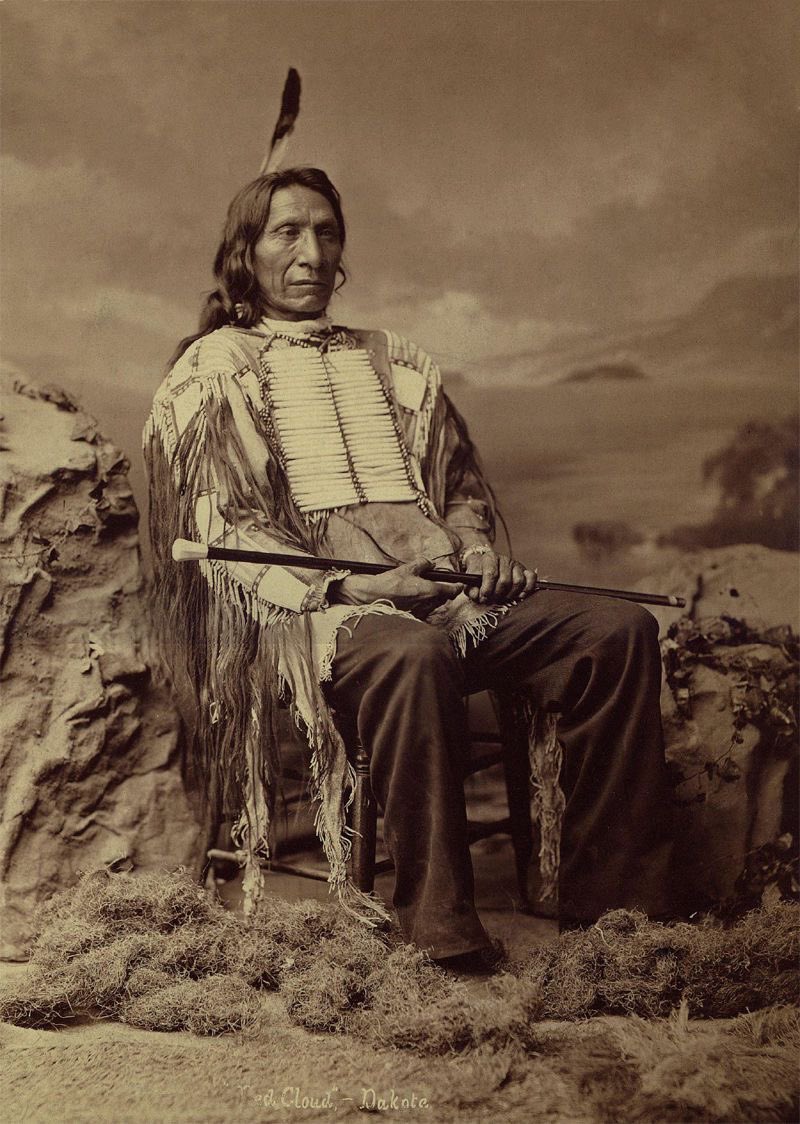
“I am poor and naked but I am the chief of a nation. We do not want riches but we do want to train our children right. Riches would do us no good. We could not take them with us to the other world. We do not want riches. We want peace and love.”
~ Red Cloud, Maȟpíya Lúta, Oglala Lakota, 1822-1909
United Kingdom: higher charity accounting thresholds shift assurance decisions to trustees
The Charity Commission for England and Wales published updated accounting guidance on 16 September 2026. The United Kingdom-wide Charities Statement of Recommended Practice 2026 applies to financial years beginning on or after 1 January 2026, including revised income and lease accounting and greater transparency for large charities. Separately, for financial years ending on or after 30 September 2026, England and Wales charity-law thresholds rise to £500,000 for accruals accounts, £40,000 for independent examination, and £1.5 million for mandatory audit, subject to structure-specific rules.
This guidance explains confirmed requirements rather than introducing new legislation. Management prepares the accounts and operates controls; trustees remain responsible for approving reporting and determining whether assurance is proportionate to complexity, restricted funds and public-interest exposure. Higher thresholds reduce cost, but income alone may not capture risk, and Scottish and Northern Irish rules differ.
#CorpGov angle: When the law no longer requires an audit, what evidence should trustees require before deciding that less assurance is genuinely proportionate?
United Kingdom: government opens a once-in-a-generation review of corporate reporting
The Department for Business, Innovation, Science and Trade launched a 12-week consultation on 7 September 2026. Responses close on 30 November 2026. Proposals include moving corporate governance reporting from company to group level, encouraging fuller use of comply or explain, and considering whether some governance statements could sit on a website rather than in the annual report.
This is a consultation, not a change in law. Boards should treat it as a decision about what evidence investors and creditors actually need, not as a drafting exercise for the company secretary.
Board implication, as analysis: Management can map current disclosures and costs. The Board must decide which reporting is decision-useful, which is ritual, and where a thinner report would weaken accountability.
#CorpGov angle: If reporting is made more proportionate, who decides what the Board may stop saying in public?
The quality of everything we do depends on the quality of the thinking we do first.
Protect the interval in which a better question can emerge. Do not confuse the absence of a conclusion with the absence of thought.
#ThinkingEnvironment#Leadership
Fin septembre 1976 - tel un savant fou, Giorgio Moroder compose I Feel Love.
La matrice a cinquante ans.
Il enchaînera avec la BO de Midnight Express où la basse continue de précéder la mélodie.




![Rainmaker1973's tweet photo. Groundbreaking botanical research is challenging the long-held belief in human exceptionalism, suggesting that plants possess forms of spatial awareness, intentionality, and consciousness.
For centuries, humans have regarded plants as passive organisms, but pioneering studies are rewriting this view. According to plant neurobiologist Dr. Stefano Mancuso, plants display sophisticated behaviors that parallel those of conscious animals. In laboratory experiments, plants react to anesthesia in ways strikingly similar to humans and animals — for instance, the Venus flytrap becomes completely unresponsive when anesthetized.
Time-lapse studies further reveal remarkable intelligence in common bean plants, which demonstrate clear spatial awareness by precisely aiming shoots toward supports and even adjusting their growth strategy when they detect another plant has already claimed a support.
These findings indicate that consciousness may not be limited to organisms with brains, but could be a more flexible property emerging in diverse life forms. As trees migrate northward in response to climate change, mirroring animal migration, researchers argue that our understanding of “mind” must expand beyond traditional boundaries.
With over three trillion trees on Earth, acknowledging plant consciousness could transform our ethical frameworks, agricultural practices, and relationship with nature, shifting from viewing plants as mere resources to recognizing them as active, aware participants in our shared ecosystem.
[Yokawa, K., Kagenishi, T., Pavlovič, A., Gall, S., Weiland, M., Mancuso, S., & Baluška, F. (2018). Anaesthetics stop diverse plant organ movements, affect endocytic vesicle recycling and ROS homeostasis, and block action potentials in Venus flytraps. Annals of Botany, 122(5), 747–756. DOI: 10.1093/aob/mcx155]](https://pbs.twimg.com/media/HVYRVH0WgAABFUS.jpg)