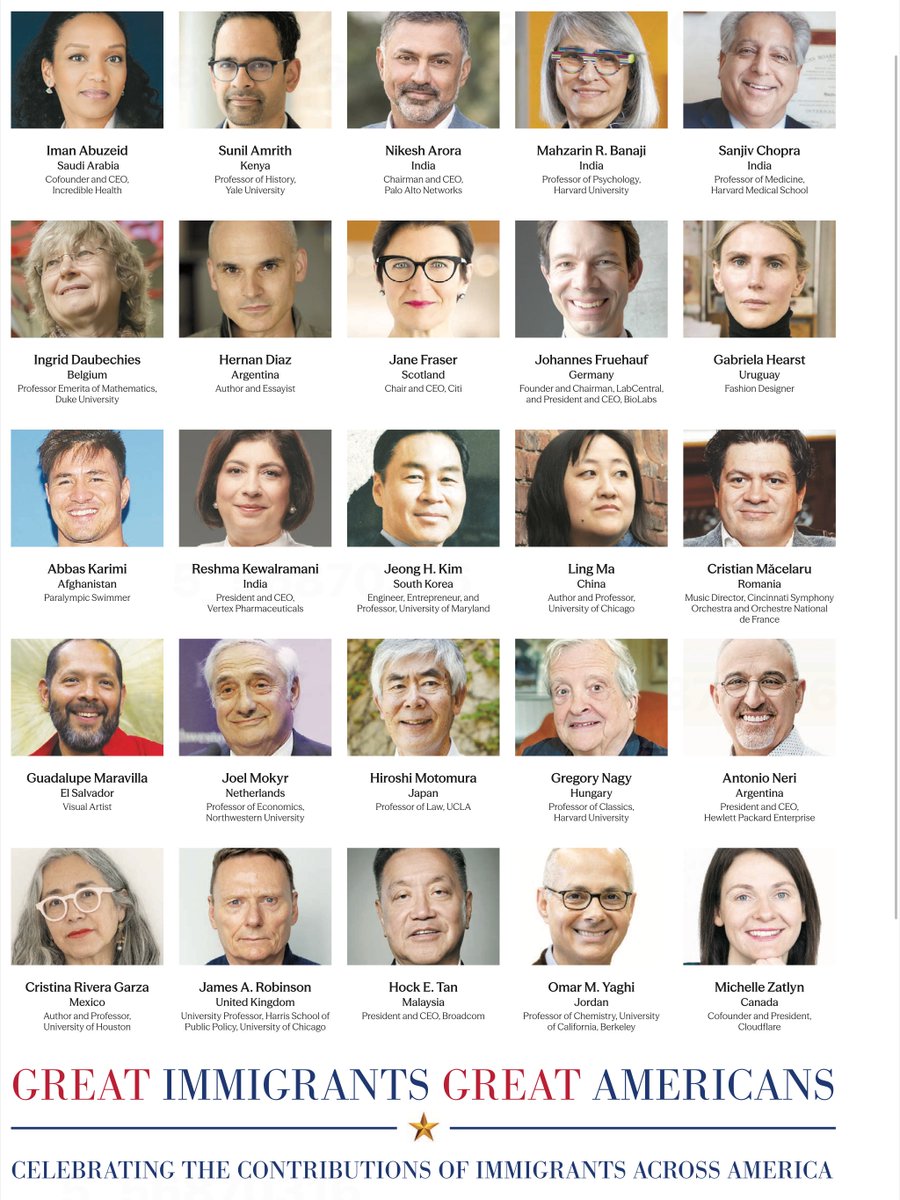
On our 250th birthday, celebrating the contribution of immigrants and international collaboration
—46% of people with doctoral-level degrees working in US science and engineering fields are foreign-born
—41% of the science and engineering research published by US authors in 2024 included international collaborators
—20% of physicians working the the USA were born and educated abroad
@ACarnegieFdn and @TheLancet
https://t.co/0e8pYHjvR5
Fem coses.
A aquells que no fan mai res no
els tinguem en compte;
si no és di'ls-hi això:
"Feu coses o calleu. No sigueu
el femer que destorba el vianant".
I si volen parlar, no els
admetem disputa. Fem coses"
- Joan Salvat-Papasseit
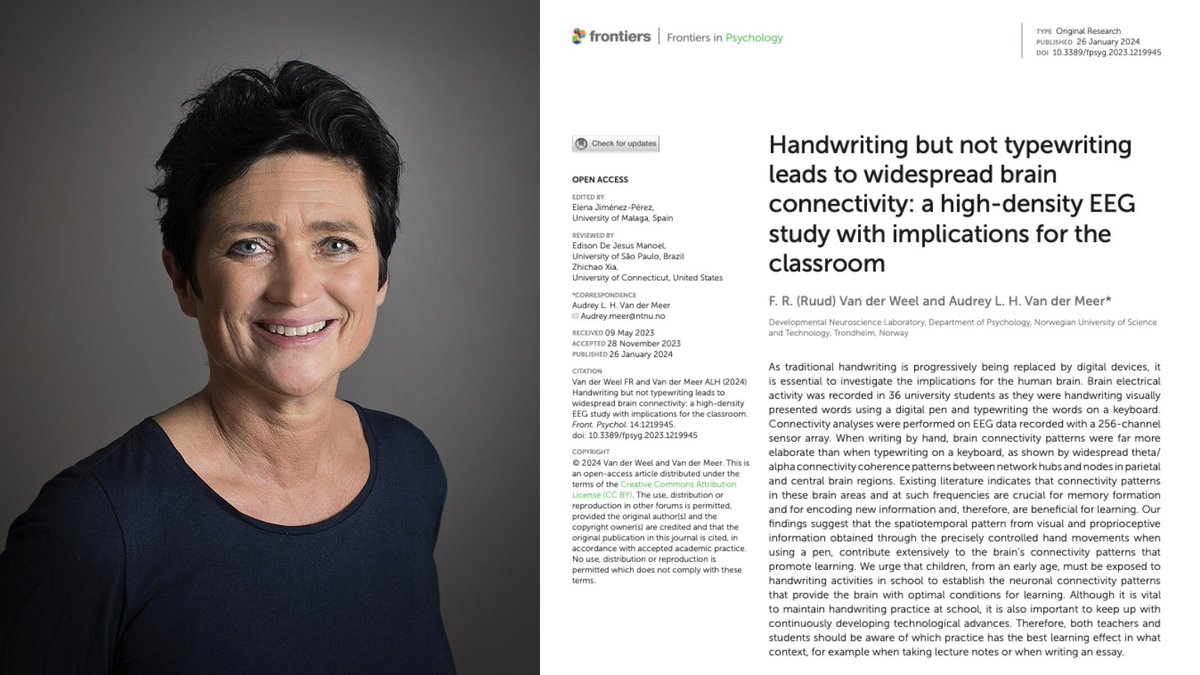
A Norwegian neuroscientist spent 20 years proving that the act of writing by hand changes the human brain in ways typing physically cannot, and almost nobody outside her field has read the paper.
Her name is Audrey van der Meer.
She runs a brain research lab in Trondheim, and the paper that closed the argument was published in 2024 in a journal called Frontiers in Psychology. The finding is brutal enough that it should have changed every classroom on Earth.
The experiment was simple. She recruited 36 university students and put each one in a cap with 256 sensors pressed against their scalp to record brain activity. Words flashed on a screen one at a time.
Sometimes the students wrote the word by hand on a touchscreen using a digital pen, and sometimes they typed the same word on a keyboard. Every neural response was recorded for the full five seconds the word stayed on screen.
Then her team looked at the part of the data most researchers had ignored for years, which is how different parts of the brain were communicating with each other during the task.
When the students wrote by hand, the brain lit up everywhere at once.
The regions responsible for memory, sensory integration, and the encoding of new information were all firing together in a coordinated pattern that spread across the entire cortex. The whole network was awake and connected.
When the same students typed the same word, that pattern collapsed almost completely.
Most of the brain went quiet, and the connections between regions that had been alive seconds earlier were nowhere to be found on the EEG.
Same word, same brain, same person, and two completely different neurological events.
The reason turned out to be something nobody had really paid attention to before her work. Writing by hand is not one motion but a sequence of thousands of tiny micro-movements coordinated with your eyes in real time, where each letter is a different shape that requires the brain to solve a slightly different spatial problem.
Your fingers, wrist, vision, and the parts of your brain that track position in space are all working together to produce one letter, then the next, then the next.
Typing throws all of that away. Every key on a keyboard requires the exact same finger motion regardless of which letter you are pressing, which means the brain has almost nothing to integrate and almost no problem to solve.
Van der Meer said it plainly in her interviews.
Pressing the same key with the same finger over and over does not stimulate the brain in any meaningful way, and she pointed out something that should scare every parent who handed their kid an iPad.
Children who learn to read and write on tablets often cannot tell letters like b and d apart, because they have never physically felt with their bodies what it takes to actually produce those letters on a page.
A decade before her, two researchers at Princeton ran the same fight using a completely different method and ended up at the same answer. Pam Mueller and Daniel Oppenheimer tested 327 students across three experiments, where half took notes on laptops with the internet disabled and half took notes by hand, before testing everyone on what they actually understood from the lectures they had watched.
The handwriting group won by a wide margin on every question that required real understanding rather than surface recall.
The reason was hiding in the transcripts of what the two groups had actually written down.
The laptop students typed almost word for word, capturing more total content but processing almost none of it as they went, while the handwriting students physically could not write fast enough to transcribe a lecture in real time, which forced them to listen carefully, decide what actually mattered, and put it in their own words on the page.
That single act of choosing what to keep was the learning itself, and the keyboard had quietly skipped the choosing and skipped the learning along with it.
Two studies. Two countries. Same answer.
Handwriting makes the brain work. Typing lets it coast.
Every note you have ever typed instead of written went into your brain through a thinner pipe. Every meeting, every book highlight, every idea you captured on your phone instead of on paper was processed at half depth.
You did not forget those things because your memory is bad. You forgot them because typing never woke the part of the brain that would have made them stick.
The fix is the thing your grandmother already knew.
Pick up a pen. Write the thing down. The slower road is the faster one.
A new feature @ScienceMagazine on the clusters of cells that enhance the spread of cancer, and what can be done to break them up @ScienceVisuals
https://t.co/xNAOF834mU
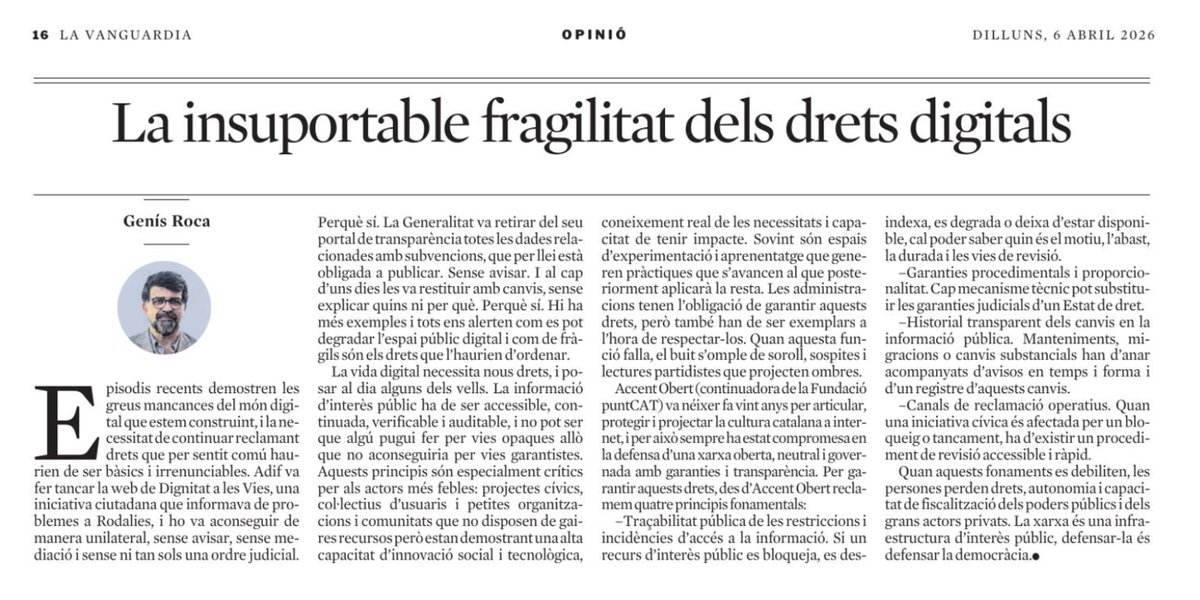
Episodis recents demostren les greus mancances del món digital que estem construint, i la necessitat de continuar reclamant drets que per sentit comú haurien de ser bàsics i irrenunciables.
https://t.co/TSD85d9utx
Bloqueig de webs sense ordre judicial, dades públiques que deixen de ser accessibles...
Cal garantir l'espai digital:
1️⃣ Traçabilitat de bloquejos
2️⃣ Garanties procedimentals
3️⃣ Registre de canvis en info pública
4️⃣ Canals de reclamació
Llegeix el manifest https://t.co/7OwFSIibz2
🚨XXIV Curso de Puesta al día en Tratamiento Antitrombótico. De la evidencia científica a la práctica clínica 👉 Inscríbete: https://t.co/oUP9UabxiF
🔷Novedades en #trombosis cerebral
🔷#Anticoagulación en poblaciones especiales
🔷Tratamiento antitrombótico y #mujer
🔷#Laboratorio “avanzado” aplicado a la patología trombótica
👨⚕️👨⚕️Coordinan:
Dr. Ramón Lecumberri, @ClinicaNavarra
Dr. José Mateo Arranz, @HospitalSantPa, @HemostasiaStPau
📅 12 y 13 de marzo de 2026
📍Sitges (Barcelona)
👉 Más info: https://t.co/oUP9UabxiF
#SETH #FormaciónSETH #trombosis #hemostasia #FormaciónContinuada #TratamientoAntitrombótico
La OMS retira a España el estatus de país libre de sarampión. NO es un simple sarpullido: puede causar neumonía, encefalitis, amnesia inmune o secuelas de por vida. Uno de cada cinco no vacunados es hospitalizado, uno de cada diez niños pierde audición y uno de cada mil muere.
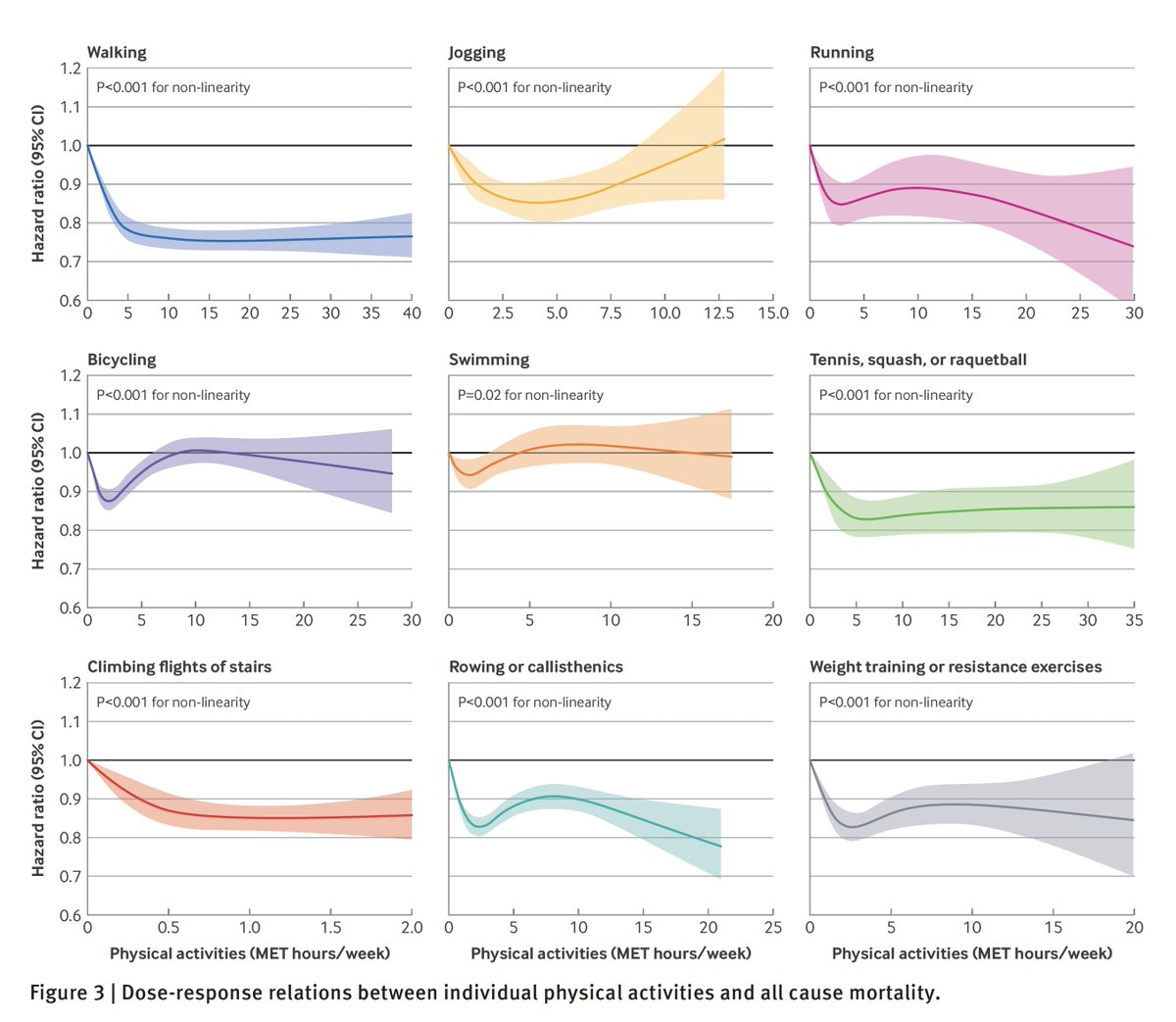
Physical activity and the reduction of all-cause mortality, from 2 very large prospective cohorts
1. The relationship is non-linear, suggesting a threshold effect for many types of exercise as seen below
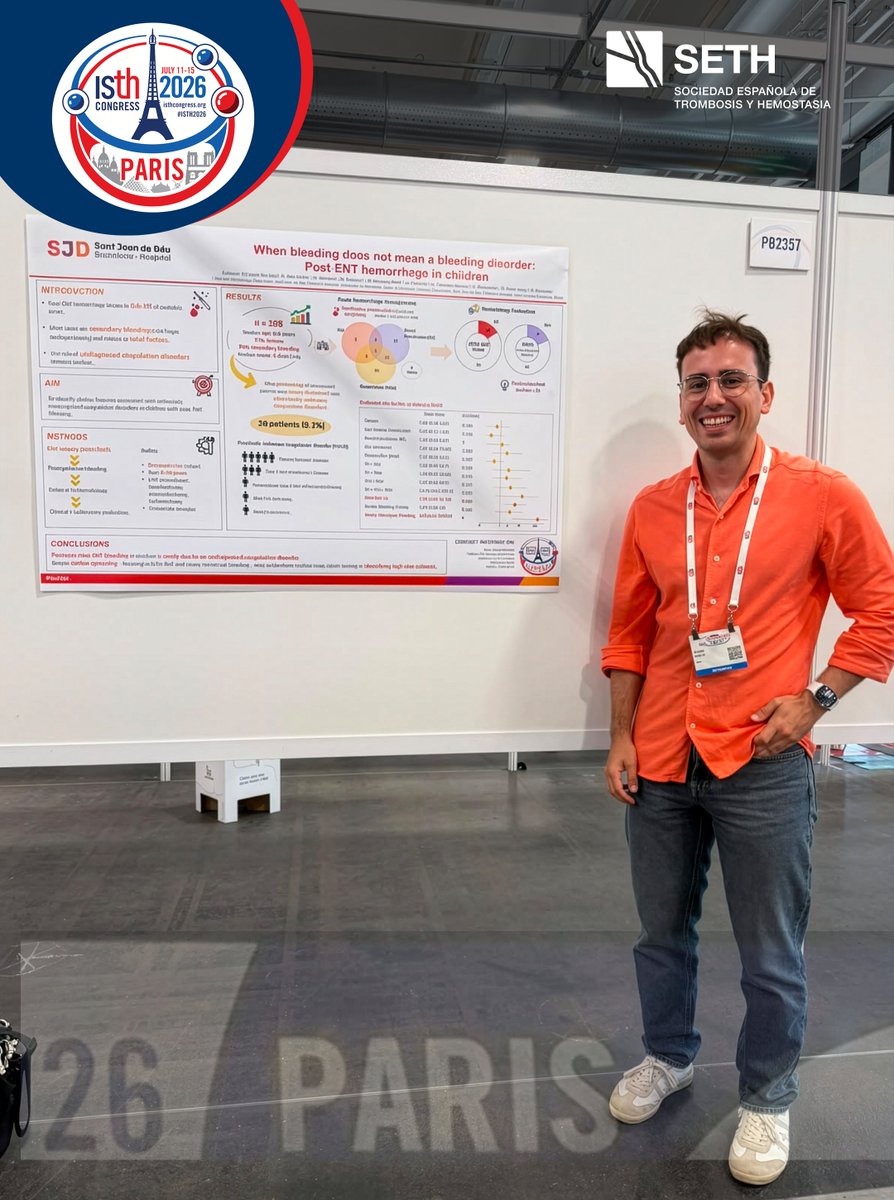
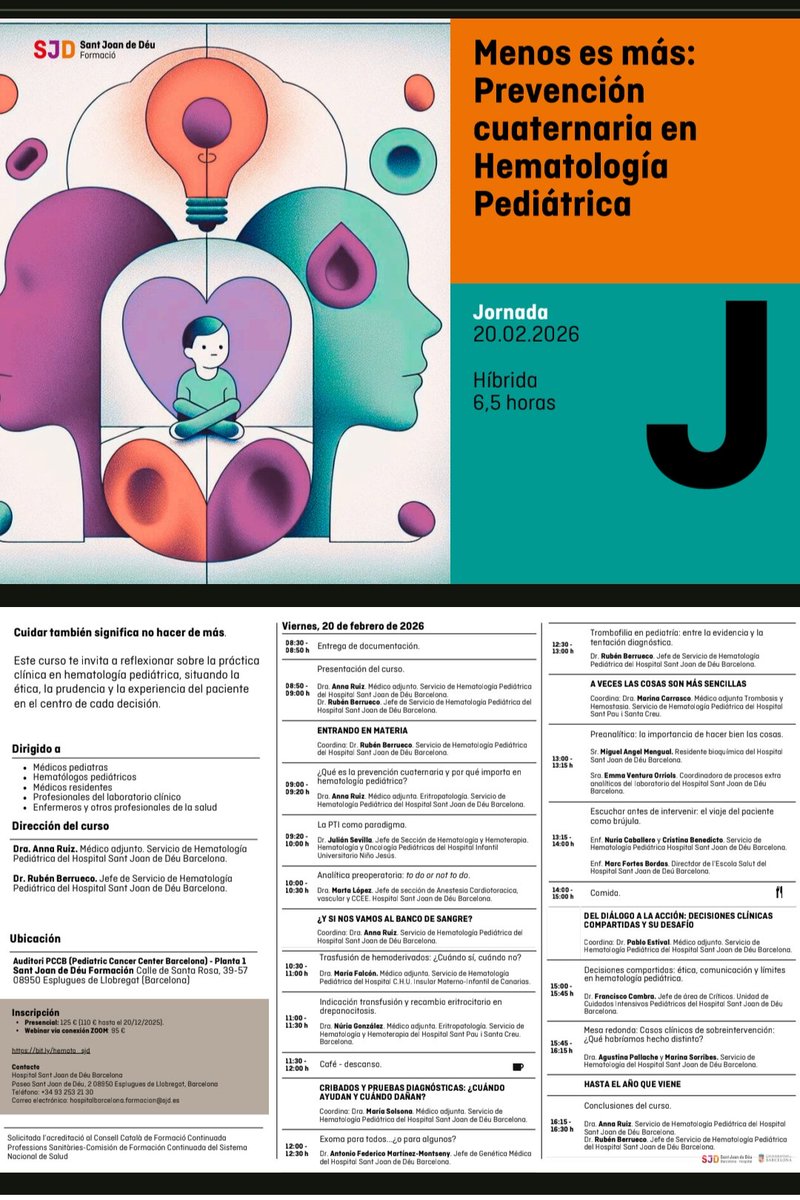
Desde el servicio de hematología pediátrica de SJD organizamos el curso “Menos es más: prevención cuaternaria en hematología pediátrica” (20 febrero 2026, presencial u online). !Gracias!
info e inscripciones:
https://t.co/yoI9090xYU
🧵
Una pregunta que se hace mucha gente y que a mi me interesa mucho es ¿QUE PASARIA SE ERRADICARAMOS LOS VIRUS RESPIRATORIOS ESTACIONALES (influenza, rinovirus, coronavirus comunes, RSV…)? Suena ideal… pero en biología, eliminar algo casi nunca es gratis. Veamos por qué
1/15
🔹 10 anys amb el Banc de Sang i Teixits impulsant la donació i trasplantament de moll d’os 🔹
L’any 2015, el Banc de Sang i Teixits de #SantPau@donarsang va ser designat com a únic centre de #Catalunya per a la donació de moll d’os per sang perifèrica. Aquesta decisió es va prendre gràcies a l’expertesa i llarga trajectòria de #SantPau en l’àmbit de la donació i el trasplantament de moll d’os.
🌍 Des d’aleshores, més de mig miler de persones han donat cèl·lules mare a Sant Pau per ajudar pacients d’arreu del món. Aquest gest és vital, ja que només en un de cada quatre casos el donant pot ser un familiar; en la resta, cal recórrer al Registre de Donants de Medul·la Òssia (REDMO), gestionat per la Fundació Josep Carreras @CarrerasIJC .
💉 Avui dia, prop del 95% de les donacions es fan a través de la sang perifèrica, connectant-se a una màquina similar a la de la donació de plasma. Es tracta d’un mètode no invasiu i amb grans avantatges: no requereix passar pel quiròfan i només cal prendre una medicació durant quatre dies abans, a més de col·locar una via a cada braç el dia de la donació.
El trasplantament de medul·la òssia és fonamental en el tractament de leucèmies, limfomes, malalties no malignes de la sang, fallades medul·lars i immunodeficiències.
🙌 Ser donant de moll d’os pot significar donar vida a algú, aquí o a qualsevol lloc del món. Per això és tan important que cada vegada més persones s’hi sumin.
👉 Informa’t i fes-te donant: https://t.co/vc89eHsFZ4
#MésAvantguarda