Prehab beats Rehab!
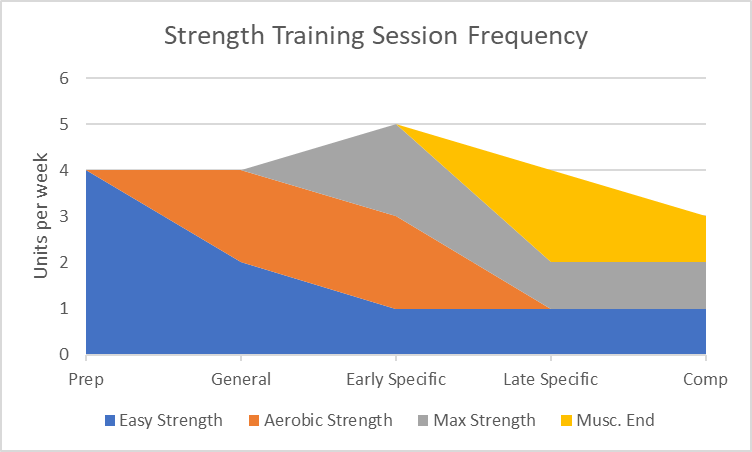
Now (the early season) is the time of year that the majority of your strength training (3-4 sessions/wk) should be "Easy Strength" - sessions with a focus on...
1/ Restoring mobility
2/ Training key stabilizers and
3/ Correcting dysfunctional movement patterns that may lead to injury at higher volumes.
Load isn't the priority. Moving very well is.
Your plan of action:
- Identify your key "hot spots" (everybody has them)
- Identify dysfunctional movement that might be aggravating these "hot spots"
- Correct mobility & strength imbalances that might be leading/adding to these dysfunctional movement patterns.
The golden rule:
Before adding load (whether lbs or volume) to a movement pattern, ensure that the movement pattern is solid. Really solid.
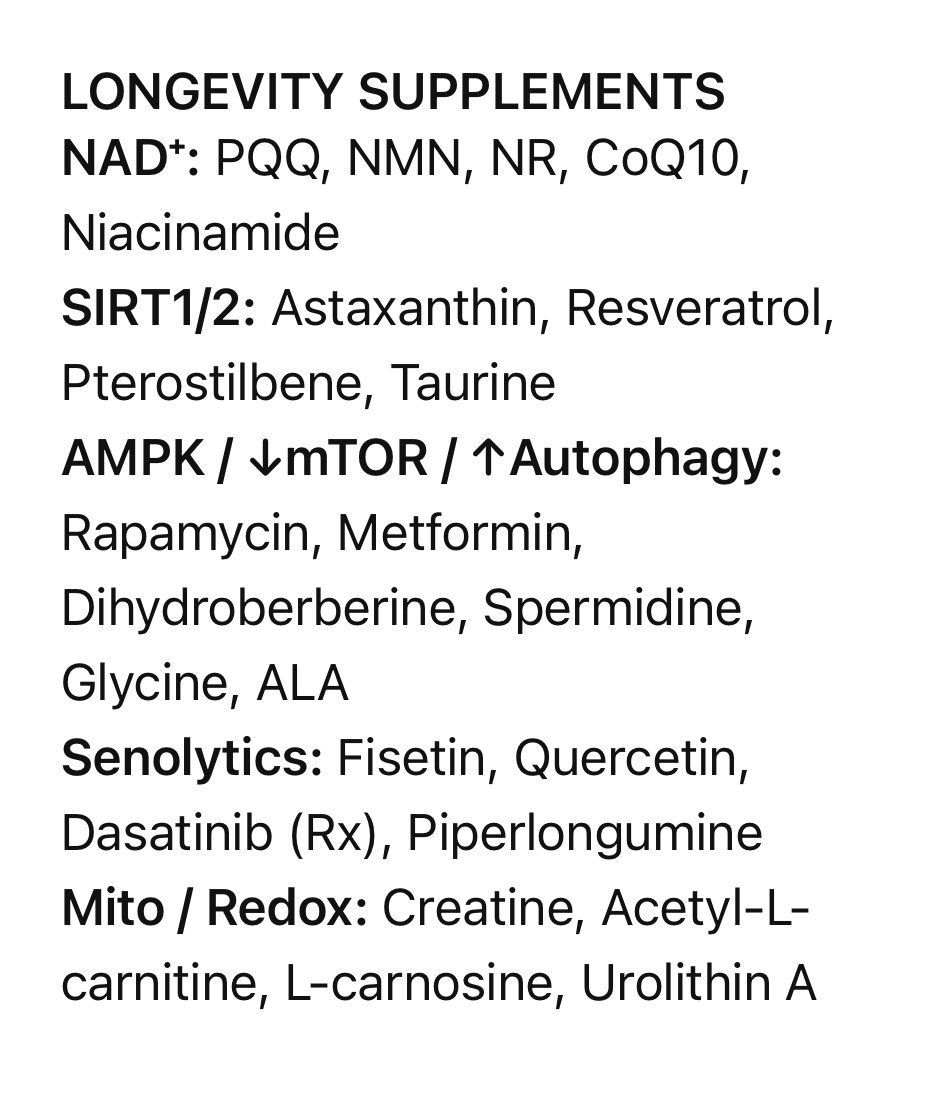
Everyone wants the shortcut to longevity.
Pills, powders, boosters, activators, molecules that promise to “hack” aging.
But let’s be honest:
👉 There’s no solid scientific evidence that almost any of these supplements extend human lifespan or healthspan.
Most studies are mechanistic, in mice, or rely on surrogate markers, not real-world outcomes.
And here’s the paradox:
The people who live the longest on this planet have never heard of NMN, NAD⁺, or rapamycin.
They walk daily, eat natural unprocessed food, have purpose, strong community ties and low chronic stress.
Longevity doesn’t come from a capsule.
It comes from metabolic health, movement, connection, and consistency; the same foundations that modern science is still trying to replicate in pill form.
Longevity isn’t hacked. It’s earned.
Wait until continuous lactate monitors arrive. They will be more accurate as will be representing the metabolic stress and will avoid the artifact of cardiac drift as you point out. I have been working with one of the companies in the race to get the first to market. They will be a game changer in exercise prescription and monitoring. Stay tuned!
Such a kick in the butt to human biology…😬 Lactate is produced under fully aerobic conditions (shown by George Brooks ~40 yrs ago) and during exercise it comes from muscle glycogen, the very pathway that gave Meyerhof the Nobel Prize in 1922…
Yet most scientists still don’t know about lactate and still place it as a “waste product” from anaerobic metabolism…. This concept is as wrong as still calling non-coding DNA “junk DNA”…
Lactate is actually a central signaling molecule in most cellular metabolic processes and a key player in health & disease.
Not trying to be rude, it is just sad that many scientists are still getting this wrong when lactate is such an important element in health and disease (including longevity)…🙈
Thank you Dr. @hjluks for highlighting our study!
Sedentary (healthy) individuals already have mitochondrial decay and dysregulation of cellular bioenergetics and metabolic health which eventually will lead to disease.
Physical activity is a fundamental evolutionary trait of humans, deeply embedded in our genes. Yet in modern society, inactivity has become normalized, and exercise is now seen as an “intervention.” In reality, physical activity is our natural state while sedentarism represents the true deviation, a side effect of modern life.
I couldn’t agree more on the actions that you suggest. We need significant changes of policies driven by world governments 🎯
You've probably seen headlines: High-Intensity Training is superior to easy aerobic running.
But dig deeper and you'll notice a pattern: most of these studies are short: just 4 to 8 weeks.
A recent review tells a fuller story.
In the early weeks, HIT and Sprint Interval Training outperform easy endurance training (ET).
But over the long haul… the story changes
Muscle strength matters.
But one factor is even more critical for longevity:
Muscle power.
Not just how much force you produce — but how fast you produce it.
New data from 3,889 adults aged 46–75 shows:
🏋🏼 Low relative STRENGTH = 62–71% higher mortality risk over 10 years
⚡ But low relative POWER = up to 8.3x higher risk
That’s why staying capable and independent isn’t just about strength.
It’s critical to stay powerful too.
With ageing, not all muscle fibres deteriorate equally.
Those critical for higher-intensity activity suffer most:
The larger and faster type II muscle fibres.
Despite being recreationally active (but not strength training), older men aged 69 on average had:
- 32% smaller type II fibres
- 53% more type I (slow) fibres
- 18-fold more grouped type I fibres (a sign of type II fibre loss)
All compared to younger males aged 22 on average.
The only thing known to counter these age-related effects in type II fibres?
Resistance training.
The muscles of 73 year-old masters strength athletes resembled those of people younger than 30.
Compared to older controls they had:
- 49% more type II fibres
- 82% more grouped type I fibres
- Virtually no atrophic (very small) fibres
Strength training isn’t just about staying strong - it’s the only way to preserve type II muscle fibres as you age.
Who would have thought ~29 years ago that this concept would be so popular when I started playing with zones to try to describe different exercise bioenergetics in order to prescribe training in a more accurate way than what we had back then...🙈 https://t.co/7X5vnQAHrL
Resting heart rate and HRV can be measured during sleep and after waking up in the morning. We investigated how comparable results can be expected from different recording periods during regular training and in response to intensive training. https://t.co/HiIgAXOg95 A thread👇
About 1 year ago I posted this video about how I describe training zones related to muscle bioenergetics during exercise. It is what I call "the metabolic map" of exercise.
Although it is quite general and simple, it has helped me and many coaches from multiple sports over the years, to individualize training zones and achieve more individualized coaching.
Just wanted to share the video again in case it can be of some help.
https://t.co/sygSecmDBL
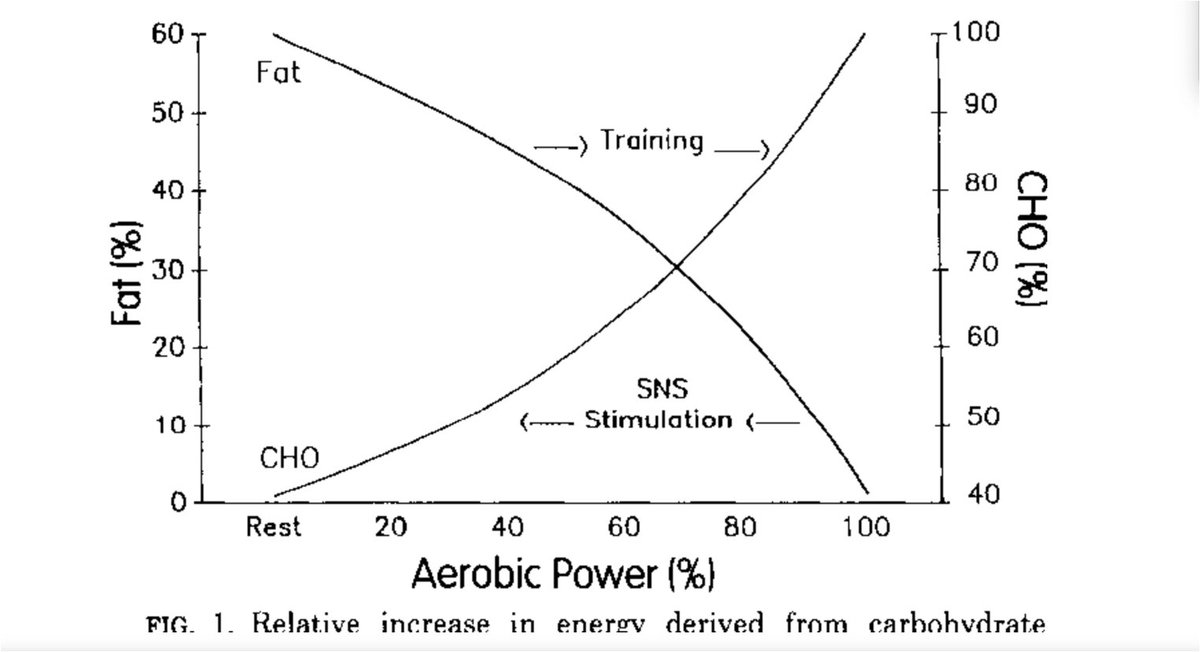
One important misconception around Substrate utilization during exercise is that during low exercise intensities you don’t use CHO as your energy is derived from fat...
When I started performing fat and CHO oxidation assessments in 2005, I was quite surprised by the amount of CHO oxidized (“burned”) even at low exercise intensities.
During rest, CHO contribution to total energy expenditure is ~40% while FAT is ~60%.
As exercise intensity increases, CHO contribution increases as well and by your Zone2 intensity, you are normally already burning slightly more CHO than FAT. At your Zone 3, your fat oxidation declines significantly and at your Zone 4, fat oxidation normally disappears (see picture 2- "the metabolic map").
Picture 1 is data that we presented at ACSM back in 2008. Check that at even low exercise intensities, you oxidize CHO and that at FATmax point you can oxidize ~2-2.5g/min. This is one of the reasons why if we ride at our zone 2 for 4h and don’t eat, you can eventually bonk.
When I started to see these numbers in 2005, I perceived that the current guidelines those days calling for 35-55g/h of CHO were quite low and then I proposed and started to use 80-100g/h, although I was highly criticized by most back then…
Picture 2 shows what I called “the metabolic map” trying to describe different metabolic “events” at different exercise intensities in relation also with muscle fiber recruitment. It is a very simplified version of exercise metabolism but I found through many talks and conferences over the years, that it is useful to many.
Picture 3 is the original figure of the “Crossover Concept” by George Brooks and Mercier where Fat and CHO oxidations are expressed in % of VO2max. You can also see that even at low exercise intensities (50-60% of VO2max), CHO is significantly utilized by muscle.
As an important point for this misconception, graphs haven’t helped as the visual seems that there is more FAT oxidation than CHO at low exercise intensities. At FATmax point, FAT oxidation can be generally ~0.3-0.7 (depending on fitness level). However, CHO oxidation at FATmax can be 2-2.5g/min which is still higher than FAToxidation although in the graphs it sits below…
Hope this helps 😉
I’m happy to share that the first Perform newsletter will go out tomorrow! The topic is how to improve your fitness and VO2 max.
I covered A LOT of information across the 10 episodes of Season One of the podcast, Perform with Dr. Andy Galpin. I know many are interested in getting that information in a more condensed format. So, I’ll release email newsletters every few weeks with all the most actionable information from each of the episodes.
These newsletters are free and we will not share your email address with anyone.
To sign up, enter your email address here: https://t.co/xy8sl6S1fn
I'm all in for 'zone 2' and lots of low-level physical activity.
That said, high intensity (when dosed appropriately) has a unique magic that just can't be skipped.
A Tale of Two Cities: the 1.5 billion year relationship between cell nucleus and mitochondria.
-Cell nucleus contains genes encoding for ~1200 proteins involved in mitochondrial structure, membrane, and mitochondrial DNA repair. Hence, cell nucleus plays a key role in mitochondrial structure and maintenance dating back 1.5 billion years when mitochondria provided aerobic energy to eukaryotic cells in exchange for protection and structure maintenance.
-Mitochondria genome only contains 37 genes that encode 13 proteins, all of them involved in OXPHOS for cellular bioenergetics.
-As a normal component of human longevity, errors in DNA replication overtime or the external damaging effects of mutagens, like chemicals (in food, air, environment…), also radiation…can lead to disruption in the nucleus-mitochondria relationship resulting in multiple pathogeneses.
-Sedentary lifestyle can also lead to disruptions in genetic expressions of key proteins and enzymes leading to multiple diseases.
-On other hand Exercise promotes important genetic expressions to improve mitochondrial and cellular function in order to prevent, improve or even revert multiple diseases and also improve longevity. The specific and individual dose and intensity of exercise is also key to elicit the right genetic expressions.