🚨 Jensen Huang says AI won’t end the world by 2030!
@JOBhakdi thinks the real debate is only getting started.
He points out that several top AI leaders have raised serious safety concerns, while NVIDIA also has a strong incentive to keep the AI buildout moving.
The bigger issue is what comes next.
AGI could bring huge gains in productivity, but also major disruption to jobs, regulation, and the economy.
And then there’s ASI, where the stakes get much higher.
The real question isn’t just how smart AI can get. It’s whether we’ll know when to stop pushing it. $NVDA
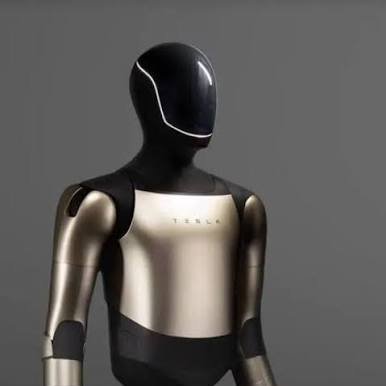
🚨 Tesla employees are reportedly wearing camera backpacks to teach Optimus how humans move
@JOBhakdi points to Giga Berlin, where selected workers are said to be recording movements for robot training behind the scenes.
At the same time, reports from China suggest Optimus components are starting to move in larger volumes.
That makes Tesla’s strategy pretty clear:
Train the robots inside its own factories first, then scale from there!
But Jo also makes an important distinction.
Optimus could be huge long term, while Cybercab may be the more immediate business once the tech and regulation are ready.
One is the bigger dream. The other may start making money first. 🚀
$TSLA
🚨 Tesla just added 28 Robotaxis in Texas in one shot!
@JoBhakdi breaks down the latest DMV data:
→ 19 new Model Ys
→ 9 new Cybercabs
→ 476 total registered vehicles
→ 67 Cybercabs
That puts the Cybercab fleet roughly 50% above launch-day levels.
The next milestone to watch? 100 Cybercabs!
But there’s still an important caveat: registered doesn’t always mean actively serving riders, and street trackers still show a smaller number in operation.
And hanging over all of this is the NHTSA audit.
So the fleet is clearly growing. The bigger question now is whether regulation can keep up with the ramp.
$TSLA
🚨 Tesla may be closer to Optimus production than the market thinks 👀
@thejefflutz points to reports that Tesla’s robotics team has started auditing three Chinese suppliers tied to core Optimus components.
That matters because supplier audits usually happen when a company is getting serious about quality, compliance, and production readiness.
Oppenheimer is still cautious on the timeline and says Optimus could face more delays.
But the bigger question isn’t just whether Tesla can build robots.
It’s whether Optimus can show enough real intelligence to justify scaling them.
If these supplier reports are accurate, Tesla may be getting closer to answering both questions.
$TSLA
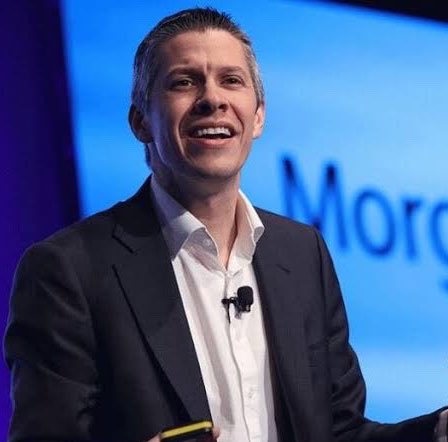
🚨 Morgan Stanley thinks Tesla + SpaceX may already be building the blueprint for physical AI.
Jeff @thejefflutz breaks down the idea:
SpaceX brings compute, Starlink connectivity, and capital.
@Tesla brings energy, manufacturing, data, and eventually Optimus at scale.
Then add Terrafab, Megapacks powering compute clusters, shared suppliers, and robots acting as edge data nodes.
That starts to look less like two separate companies and more like one connected AI infrastructure stack.
The bigger shift is this:
AI value may move from better chatbots to intelligence that can actually act in the physical world.
And Tesla + SpaceX are trying to own the hardware, energy, compute, connectivity, and bots needed to make that happen. 🚀
$TSLA $SPCX
🚨 Wayve just scored a major production deal with Mercedes-Benz!
The two companies signed a definitive agreement to integrate Wayve’s AI Driver into future Mercedes vehicles.
Wayve says its system is already integrated into Mercedes’ production architecture using Mercedes hardware and MB.OS, with testing underway across Germany, the US, and the UK.
That’s a big step for end-to-end AI driving.
@wayve_ai is moving from proving the tech works to getting it into real production cars.
🚨 Chris Camillo thinks Robotaxi is Tesla’s near-term test..
but Optimus could be 100–1,000x bigger!
@thejefflutz breaks down Chris' view that if Tesla can prove it can scale Robotaxi in the real world, it does more than validate autonomy.
It shows Tesla can take AI, compute, manufacturing, and software and turn them into a real business at scale.
That matters because Optimus is a much harder problem.
Humanoid bots need generalized intelligence, training, inference, manufacturing, and economics all working together.
Chris thinks that opportunity could eventually support a $10–$20 trillion valuation!
So Robotaxi may be the proof point. Optimus could be the much bigger bet. 🔥
$TSLA
🚨 Starlink Gen 3 is starting to look less like a satellite network and more like an AI data center in orbit.
@thejefflutz highlights that SpaceX’s FCC application for up to 100,000 Gen 3 satellites has now entered formal review.
Elon says each satellite could eventually deliver around 10 Tbps, with a path to 100+ Tbps, while running at roughly 250 kW.
But the biggest twist is onboard compute.
Gen 3 could include a SpaceX-designed NVIDIA Vera Rubin NVL72 computer, which starts to blur the line between communications satellite and orbital AI infrastructure.
Add Starship, faster terminals, direct-to-phone ambitions, and SpaceX’s push toward massive orbital compute...
Starlink may be evolving into something much bigger than global internet. $SPCX $NVDA
🚨 Tesla just added 9 more Cybercabs to its Robotaxi fleet.
According to Texas DMV data, that brings the total to 67 Cybercabs now registered.
The bigger thing to watch now is whether these additions start coming faster.
$TSLA
🚨 Tesla FSD just cleared another European country, with a much bigger EU decision only days away!
@thejefflutz breaks down Czechia becoming the 7th European country to approve FSD Supervised, bringing Tesla to 15 countries worldwide.
The catch? Those 7 European approvals still represent only about 11.8% of the population needed toward the EU’s 65% threshold.
So there’s still a long way to go.
Czechia also says FSD will operate under certain conditions, with drivers still required to supervise the system.
The bigger takeaway is momentum.
Tesla keeps adding countries one by one, but Oct. 6 is the date that could determine whether this stays incremental or gets much bigger, much faster.
$TSLA
🚨 Tesla’s Cybercab ramp may be accelerating faster than the registration numbers suggest.
@thejefflutz is tracking Texas DMV data, and Tesla is now at 448 registered Robotaxi vehicles:
390 Model Ys
58 Cybercabs
But the more interesting signal is the VIN sequence.
Jeff estimates Cybercab production may have gone from roughly 100–150 per week in August to a possible 300+ per week run rate by mid-September.
Tesla still appears to be ramping carefully, likely pausing to make fixes, improve factory yield, update hardware like embedded Starlink, and match software and regulatory readiness.
The fleet is growing. But the VINs may be telling us the factory is moving even faster.
$TSLA
🚨 Morgan Stanley’s Adam Jonas just laid out one of the clearest cases yet for why Tesla and SpaceX keep looking more connected.
His view: both companies are working toward the same goal, turning energy into intelligence in the physical world.
SpaceX brings Tesla:
Compute
Connectivity
Capital
Tesla brings SpaceX:
Robots
Data
Energy
Manufacturing
And the overlap already runs through chips, AI hardware, batteries, solar, materials, vendors, talent, and culture.
The takeaway is simple:
Tesla and SpaceX may still be separate companies, but the stack is already converging.
$TSLA $SPCX
🚨 Jeff Bezos has almost the opposite AI take from most people!
Instead of AI replacing humans, he thinks it could eventually create a labor shortage!
@TeslaLarry breaks down the idea: AI speeds up the “dream-build loop,” making it easier to turn ideas into real products.
That means the limit may shift from what we’re capable of building to what we can imagine.
More invention → more businesses → more work → more demand for people.
They also point to Amazon as an example of technology creating huge value by saving people time and lowering costs.
The bigger idea is simple: AI may not make humans less useful.
It could make human ideas more valuable. $AMZN
🚨 Oppenheimer says Tesla is starting to look less like a car company and more like a full Physical AI platform.
The firm reiterated its Perform rating, but highlighted Tesla’s push deeper into vertical integration, especially chips, compute, Cybercab manufacturing, and AI infrastructure.
One of the biggest pieces? Semiconductors.
Oppenheimer called Tesla’s move into chip manufacturing bold but important, arguing that the knowledge built through Dojo could help Tesla design and improve future chips across vehicles, autonomy, and robotics.
They’re still cautious on Optimus, with more ramp delays possible, and said Dojo itself didn’t create a major compute advantage.
So the message is pretty balanced:
Tesla’s AI stack is getting broader and more vertically integrated, but execution still has to catch up with the vision.
$TSLA
🚨 Ron Baron has about $30 BILLION invested, and he says “the time to buy $TSLA is now.”
His biggest reason? FSD.
@TeslaLarry breaks down Ron’s view that FSD adoption is already around 1.4 million users and growing fast, with safety and convenience becoming bigger reasons to own a Tesla.
Larry sees the same thing personally. He says FSD is a major reason older drivers and even his own son wanted Teslas.
That matters because FSD isn’t just software revenue.
It can also become a demand driver for the car itself.
If more people start buying Tesla because they want the self-driving experience, FSD could end up pulling vehicle demand higher too!
$TSLA
🇨🇿 Tesla FSD just got another green light in Europe, and the timing is HUGE
Czechia has now cleared FSD Supervised for public roads, making it the 7th EU country to approve the system.
Tesla says rollout to Czech customers will begin soon.
And this comes just about two weeks before the EU’s Technical Committee on Motor Vehicles votes on bloc-wide authorization on October 6. 👀 $TSLA
🚨 Tesla’s biggest Robotaxi catalyst may not be Cybercab or regulation..
It could be FSD v15!
The jump is huge: roughly 10B parameters vs. about 1B in v14.
Elon and Ashok have both pointed to V15 as the key step before Tesla can really scale the fleet.
Early v15 builds are already running in Robotaxis, and Ashok hinted the next major merge could help unlock 24/7 service.
That’s the real unlock!
More hours on the road → more rides → better economics → faster fleet growth.
If v15 delivers, @Robotaxi could move from a limited rollout to something much bigger very quickly.
$TSLA