Today, Sri Lanka won.
We all wanted system change and a new political culture, and the people have delivered.
It doesn’t matter which party cleans up the country, as long as it gets done. The people have placed their faith in the NPP. Let’s hope they will meet these high expectations and let’s give them our fullest support to succeed.
While we were far from securing a seat in Parliament, I would like to believe our efforts to build awareness, inspire hope, and advocate for a new kind of politics played a small role in shaping this outcome. For that, we are grateful.
One of the greatest victories in this election is the overwhelming rejection of corrupt politics. For decades, we have longed for a day like this, where the nation comes together to demand better. Today, that dream feels a little closer.
Another remarkable outcome is the unity we see across the electoral map. For as long as we can remember elections have divided us along lines of race and religion. For the first time, we see a Sri Lanka united.
We are proud of what has been achieved. Sri Lanka has won today, and that is what truly matters.
Thank you for your support.
#lka #GenElecSL
After speaking with 100s of sales folks and refining our product over countless months, I’m excited to finally introduce https://t.co/l1ahD3SSAN!
We know that following up is one of the most overlooked yet crucial aspects of sales. It demands time and effort but is essential to moving deals forward.
That’s why we built MidFunnel. To make following up fast, easy and impactful.
Watch the video below to see what we’ve been cooking.
#MidFunnel
No response from @anuradisanayake ? Three official letters handed over to NPP head office. 15 unanswered calls from relevant assist, after a non committal initial response. Multiple calls and text to multiple NPP EC members. If the PRESIDENT, opposition leader and other candidates can engage, why is AKD and @RajapaksaNamal silent? We can provide and footage of other interviews. No mudsling or malicious questions. The conversation is strictly on policy, values, vision and track record.
Please retweet and tag these two candidates if you would like to have them engage.
Undecided voters are still a sizable number according to many polls. Many younger voters are undecided. Why not engage ?
#SriLankaDecides2024 100 retweets should get their attention
Virtually nobody is pricing in what's coming in AI.
I wrote an essay series on the AGI strategic picture: from the trendlines in deep learning and counting the OOMs, to the international situation and The Project.
SITUATIONAL AWARENESS: The Decade Ahead
Today I formally launched my campaign for Parliament at the Wattala Town Hall.I will contest from the Gampaha district and lead the @CentenarySL nominees from across the nation. Why launch my campaign now ? As a new party taking on the establishment…we are not wasting anytime.
YOUR STARTUP IS NOT YOUR HORCRUX
A list of 40+ guidelines I've learned about being a founder, while serving as an (imperfect) 2-time founder & CEO, early-employee-COO, advisor, and investor.
CURATE YOUR TRIBE
“Founder-friendly” often means “we’ll do whatever it takes to win a deal, including offering excessively generous terms to the company and founders.”
These investors change their tune when markets turn. Seek those who are “founder-fair” in any environment. They won't overpay in a hot market but won't abandon you in a tough one.
Parting ways with resentful people will greatly benefit your culture. Just as contempt is irreversible in a marriage, resentment is irreversible in a working relationship.
Continue being the final round interviewer for candidates longer than you think. CEOs who stopped at 500 employees often regret not doing it longer.
Your partner at home can make you a 0.5x or 2x leader. Choose wisely.
❝ There are three ways to motivate people: money (mercenary), purpose (missionary), or journey (pilgrim). Everyone is self-interested, but they differ in their source of fulfillment and meaning.
Generally: mercenaries are short-term thinkers, missionaries are long-term thinkers, and pilgrims are somewhere in the middle.
Pilgrims are typically more intrinsically motivated; mercenaries and missionaries are usually more extrinsically motivated.
To achieve PMF, optimize for hires who are “long-term greedy.” They think in years, not months, and this is critical to weathering the twists and turns in a startup. This probably means missionaries or pilgrims.
After PMF, hiring mercenaries occasionally is probably unavoidable — especially in leadership to find people who have “been there, done that”.
MIND-MELD WITH YOUR TEAM
Write a user manual (e.g., “working with Claire”, h/t @chughesjohnson).
❝ Always speak last. - @JeffBezos
Early in your career, you might have been taught to “lead with the answer”. As a leader, you have to unlearn this quickly… or at least apply it selectively. You’re not supposed to have all the answers. If you do, you need to hire better people.
There are 4 types of discussions a CEO leads: "we should do this," "we should do this unless you convince me otherwise," "we might want to do this, what do you think?" and "I don't think we should do this, but I’m suggesting it in case any of you think we should." Make sure your team knows which kind of discussion it is.
If you're already thinking "we should do this,” don't ask your teams opinion -- just tell them. A great team will rally and get it done. On the other hand, there's nothing more demoralizing than asking for their opinion, and then overruling them with what you actually wanted in the first place.
A great way to create a safe space if you're smart, intense, and opinionated (like most CEOs) is to argue against yourself out loud. Saying "I think this is a dumb idea but I'm going to say it anyway," or "The reasons not to do what I said are..." makes it clear that your views are fallible like everyone else's.
IT TAKES A VILLAGE
Everyone who joins your company before PMF deserves to be treated like founding team. Be generous with them, especially if they were mission-critical.
❝ The terms "Founder and "founding team" refers to a mindset, not a start date. Promote later hires who excel into those categories.
Offer early exercise. It costs the company nothing except some administrative overhead, but it can massively impact the taxes and financial burden on early employees.
There is no good reason not to offer restricted stock (instead of options) for your first few employees, early exercise for anyone who asks, and an extended exercise window for anyone who leaves on good terms.
Once your company is 7-8 years old with a $1-2B+ valuation, ensure employees can sell secondary shares in a compliant manner that doesn’t pose risk to the company.
WATCH OUT FOR PRICE'S LAW
❝ 50% of the work is done by the square root of the people on a team. - Price’s Law
Price’s Law explains why companies move slower as they grow:
- a 25-person org does sqrt(25) * 2 = 10 peoples’ worth of work = 40% leverage
- a 400-person org does sqrt(400) * 2 = 40 peoples’ worth of work = 10% leverage
- a 10,000-person org does sqrt(10,000) * 2 = 200 peoples’ worth of work = 2% leverage
One way to mitigate this:
- Avoid creating a 100-person “team” (which would do the work of 20 people)
- Break them up into 10 autonomous teams of 10, each independent of "stakeholders" on other teams. This allows them to achieve sqrt(10) * 10 * 2 = 62 peoples' worth of work.
This is embodied in many of Amazon’s tenets: 2-pizza teams, “every team must expose service interfaces and communicate only via those interfaces,” etc.
OWN YOUR TITLE
The “Voice of the CEO” is real even if you don’t want it. People will (over)react to anything you say, except for the ones who have known you long enough to treat you as fallible. (h/t @waseem).
Every CEO has an archetype -- CTO-CEO, CPO-CEO, or CRO-CEO. Know your archetype, and make sure your founding team complements your skills. The same applies to cofounders.
❝ Forgive yourself for being intense. Almost every good CEO is. But learn to dial it back when necessary.
Hard decisions should always feel hard. If they don’t, you’re becoming too much of a sociopath. But the first time for hard decisions—giving rough feedback, firing someone, or doing a layoff—is the hardest.
Learn to give great speeches during all-hands. Limit them to 5 minutes, barring exceptional circumstances. If your team isn’t hyped after at least one all-hands per quarter, you might need to practice your public speaking.
EARN YOUR TITLE
The wins belong to the team. The word “I” should probably not appear in launch announcements or milestone celebrations.
The buck stops with you. Take responsibility for missteps and hard decisions. But avoid making them about you — your communications to your team, investors, or public should use the word “I” sparingly.
“(Co)Founder” is a technically-permanent title, but the moral authority and respect it bestows is not permanent. The best founders bring their A-game and earn their team’s respect — every week, every month, every year.
As a founder before you have a team, you probably built unassailable conviction after hearing 100 no's. When proven right, don’t become an egotistical asshole. You’re wrong just as often as everyone else. You were just really right about this thing.
As a founder after you have a team, you sometimes need to make gut decisions with the confidence you're right -- more right than everyone else. There is no room for impostor syndrome. But a good leader is low ego and quickly admits when they’re wrong. Striking this balance between abject humility and utter confidence is the hardest tightrope.
If you struggle with culture, get a coach to do a 360° review. You might not like what you hear but work your damnest to fix everything anyway.
EARLY ON, GETTING TO PMF IS THE ONLY THING THAT MATTERS
Your product doesn't matter for product market fit. The quality of the problem does, and it should be painful enough to drag PMF out of you.
Your vision should influence how you build; but it’s usually a bad idea to let it affect what you sell or how you sell it.
Don’t build a large team — ideally not more than a 2-pizza team — before PMF.
Until PMF, do things that don’t scale (h/t @paulg)
POST-PMF, YOUR MAIN JOB IS TO ALLOCATE PEOPLE AND CAPITAL EFFECTIVELY
Too much money will burn a hole in your pocket even if you're aware of the risk (h/t @sarahtavel). Constraint breeds creativity.
Zero-based budgeting is how the best executives make capital allocation decisions.
Great founders succeed by hiring execs smarter than themselves in specific domains.
Great execs succeed the same way — leaders should hire smarter people all the way down (in increasingly specific domains). Promising VPs often fail because they don’t hire better or more experienced people. (h/t @jasonlk)
After you have PMF, ask yourself — for the things that matter — “will this break if we scale 10x?” (h/t @Bouazizalex)
DON'T MAKE YOUR STARTUP YOUR HORCRUX
❝ Don’t make your startup your horcrux. Put your soul into your company. But if your startup dies, a part of you shouldn't die with it.
If you’re shutting down after trying hard, take care of yourself and your team. Good investors don’t mind getting <1x back on their investment. Bad investors don’t matter.
Read these: Venture Deals, High Output Management, High Growth Handbook, The Messy Middle, and Influence: Science & Practice.
❝ If you’re considering giving up, ask yourself: “if my company disappeared tonight, would I wake up and choose to start it again?” If the answer is no, it might be time to sell or wind down.
Until then… sell broomsticks if you have to. (h/t @gilbug)
How to be an elite startup employee
The "social contract" that helps you become a rockstar employee at (most) high-autonomy, early-stage startups. Distilled from my (imperfect and incomplete) experience serving as an early employee & COO, then a founder.
Practice the subtle art of giving a damn
Your company owes you nothing. You owe your company nothing. Work like hell anyway, because work ethic is a habit.
The interview process is the one of the few places where there's no such thing as coming on too strong. Early-stage companies want people who want to be there. Hedging or playing hard to get — especially if you are seriously considering much later stage (or worse, FAANG) companies — can actually be a cause for concern.
There are two definitions of ownership: owning outputs vs. owning outcomes. When a manager and direct report disagree on whether the employee is “exhibiting ownership”, this is why… the employee is doing a good job at specific tasks / deliverables / outputs, but the manager sees a lack of ownership over outcomes.
Ownership over larger and larger outcomes is how you progress in a (well-run) organization.
High horses have no place at a startup, so don't get on one.
Almost everything worth doing is hard.
There are two kinds of people: those who live to work, and those who work to live. If you are joining a startup, it should probably be the former — your work should be a meaningful source of value in your life.
The one non-optional capability to make it in a startup is emotional resilience. If you need a day off to "process" news at work, you probably shouldn't be working at a startup.
Try to understand what the CEO, founders, and execs are obsessed with and staying up at night thinking about. Sometimes it’s as simple as just asking in a 1:1.
Be
— high authenticity = say what you think
— high integrity = mean what you say
— high reliability = do what you mean
— high agency = do without being told
— low ego = do even if you disagree
Find others that operate the same way, and appreciate you for doing all of these things.
If you truly have low ego, you’ll find it easy to “disagree and commit.” All too often, people take this to mean “disagree and obey,” which isn’t good enough. The “commit” part is essential. E.g., if a VP of Revenue disagreed with their CEO and then truly committed… then their Sales Director shouldn’t even be able to tell that they VP had disagreed. There should be that much solidarity and trust.
Find a crew of amazing people. Then make the most of it.
Find a company where you can trust leadership. It frees you up to focus on actual work without cognitive load.
The Maslow's Pyramid of amazing people is Integrity → Competence → Authenticity → Good Taste.
If you are working on problems that have meaning for you, with people you have affection for, the rest is gravy.
Write a “user manual” for people you work with. (h/t @chughesjohnson) It will save a lot of heartache and misunderstanding in the future.
Deeply understand behavioral styles. Frameworks like DISC make this easy. Internalizing these styles can really open your eyes to how differently people communicate.
Not everyone has to like you, but you probably can’t thoroughly piss off your manager, manager’s manager, CEO, or multiple immediate peers.
In a high autonomy culture, the best managers want you to manage them. They won’t tell you what to do (except in rare cases), but instead will give you a goal to run at… and expect you to pull them in when you need help.
An employee’s job is to execute on their mandates and create leverage for their manager, in that order.
A manager’s job is to unblock, enable, and accelerate their employees, in that order.
An early stage startup does not have an obligation to proactively “develop its people”. At a good startup, you are wearing so many hats and solving so many problems that you are growing and developing without even trying… and others around you are trying to do the exact same thing. No one has the time to think about “developing” you. If you need help, you need to identify that and ask for it.
Don’t expect that every company welcomes politics or "bringing your whole self” to the workplace, or work-life balance. There’s nothing wrong with wanting these things in your workplace, but there’s also nothing wrong with your company not wanting those things in the workplace. This is the culture-fit assessment: the company decides what its culture is, you decide what your values are, and both parties assess during the interview and employment relationship whether those things are a match for each other.
Teammates come and go. The customer and the problem persists.
Life is long and a multi-turn game. If you went through highs and lows with a group of people you respect, it’s a waste to not keep in touch with the ones you cared about.
A (healthy) dose of anxiety and urgency is essential
At an early stage startup, speed is more important than velocity. This is because your advantage is agility. When you can change direction on a dime, the direction matters less than the pace.
The only thing that works for cracking GTM in the early days is throwing shit at the wall, seeing what sticks, and doubling down on that. The “best practice” stuff really only matters post-PMF. (While there are no obviously “right” answers, there are definitely obviously “wrong” answers that you should quickly reject for your product / market / segment.)
Building a startup means feeling bad constantly. When you don’t have PMF, you feel bad. When you do have PMF, everything breaks and your customers might get angry at you and you feel bad. There is no feeling good. (h/t @mwseibel).
The best definition of PMF is that people want to buy your thing faster than you can make it. (h/t @mwseibel / @ycombinator).
The essential differentiator of a startup (as opposed to a small business) is growth (h/t @paulg).
(The right kind of) experience matters
Spend your 20s trying to discover the things you’re amazing at, that you can harvest the rest of your life.
Spend your 30s trying to find the people you respect and vibe with, that you can work with the rest of your life. (h/t @ericbahn)
The definition of “being strategic” is the ability to optimize across multiple dimensions to achieve a global rather than a local maximum. The more dimensions you can optimize across, the more strategic you are.
A salesperson who considers product strategy in their process is one notch more strategic than one who doesn’t.
If that person also takes into account gross margin and LTV calculations when comparing two deals, they’re one notch higher up.
If they can consider mandates from the exec team and board in evaluating opportunities, that’s yet another notch.
An MBA has no relevance to building a startup. Being successful at a large company (>1,000 people) has no relevance to building a startup. This doesn’t mean these are adverse signals, but they aren’t obviously helpful signals either.
A banking or consulting background has one relevant skillset for building a startup: the willingness and ability to work long hours, under pressure. That’s it.
All things equal, a person who has 2-3 years of work experience at a quality company is an order of magnitude better than that person as a fresh graduate.
All things equal, a startup hire who has been early at another startup for 1-2+ years before is an order of magnitude better than someone who hasn’t.
All things equal, a founder who has founded and run another startup for a meaningful period of time before is an order of magnitude better than someone who hasn’t.
All things equal, a founder who has been early at another startup for 1-2+ years before is 2-3x better than someone who hasn’t.
All things equal, a team that has worked together before for a meaningful period of time will operate 2-3x faster than one that hasn’t.
Ask and you shall receive (help)
"Mentors" outside the company who are several steps ahead of you in their career almost never make sense (h/t @alexisohanian). Instead find either a mentor within your company (ideally but not always your manager); or find a near-peer to meet regularly with that you can jointly problem-solve with; or find someone who's one step ahead in their career.
Even better -- find a support group. Especially if you're going through a hard time, but ideally always. Build vulnerability based trust.
If you find that you still have a lot of unresolved stress or emotional trauma, consider doing a mushroom journey.
Cognitive load and context-switching are the mind-killer. Pay to alleviate these things at work and — if you can swing it or afford it — in your personal life too.
Learning to give, get, and solicit feedback is a skill worth it's weight in gold.
The Maslow’s Pyramid of scaling yourself and your organization is learning how to Do it yourself → Hire people to do it → Outsource it → Automate it → Not do it at all. It turns out that most things don't need to be done.
The visa fiasco is a taste of things to come the further along an RW administration progresses, just like the taste of things we faced the further along his previous administration progressed. No surprises here. Truly a master in the art of squandering opportunities. Sri Lanka can’t progress with a soft hand on corruption and the corrupt.
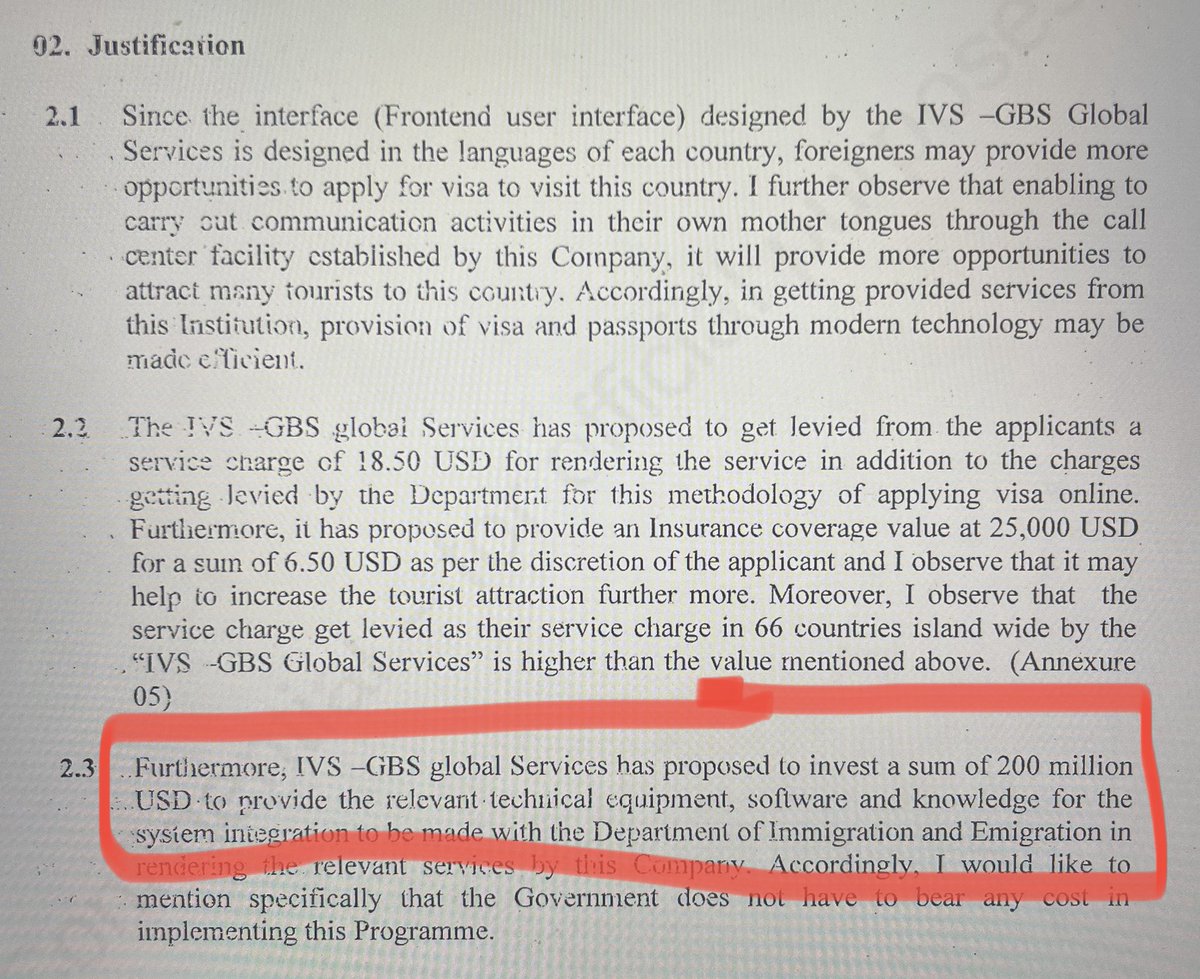
Can this be real?! IVS-GBS global to invest USD 200 million (tech for website and cameras?) as per Cabinet Memo justifying outsource at USD 18.50+/visa. @VFSGlobal added later to original consortium? Where did this investment go? #SriLanka Gov MUST answer unless below is fake!
The brilliance of some RW’s administrations on display. They take one step forward, shoot themselves in the foot, then take ten steps back and call it stability. Corruption and progress can never coexist.
This applies in Sri Lanka too .. AFAIK @RW_UNP is not generally referred to as a corrupt politician. But clearly we can't say that about people he surrounds himself with.
One day we too need a president who says the same as President Bukele - (s)he will not have rogues in her/his team. Everyone will be investigated (retroactively and into the future) and the crap ones will go to jail.
Big @firstround news today!
We’re launching Product-Market Fit Method (a free intensive 14-week experience for early founders building epic B2B SaaS companies) and publishing the first session on our internal framework for all to read (with benchmarks, Looker's real data, and tactical advice from iconic enterprise founders).
Even though finding product-market fit is the single most important thing for a startup, it’s still underexplored and seen as more art than science. We wanted to change that.
I’ve personally talked to hundreds of founders about this topic, digging into what they did in the first 6-9 months of company building. (We’ve published dozens of those interviews on The Review in our “Paths to PMF” series.) This video previews some of what we learned — thanks to @christinacaci, @zachperret, @lloydtabb, @jboehmig, & @jaltma for sharing their lessons!
In addition to that research, we’ve also drawn from our own 20 years of data and 500+ pre-PMF investments. What emerged was a very consistent set of patterns for sales-led B2B companies — the basis for our new framework and PMF Method’s 8 tactical sessions.
In the program, we help early founders discover what customers really want, build the right v1 product, and close their first enterprise sales. We ran a beta version late last year with a tight-knit group of founders (ex Stripe, Plaid, Airbnb, Twitter, Greenhouse, Grammarly) and the feedback was great — my personal favorite was: "I feel like I shaved 12 months off the time it would take us to get to PMF.”
Here are a few key dates and details:
- The Summer 2024 session of PMF Method runs 5/29 - 8/28.
- Application deadline is 11:59 PDT May 7th.
- Any early founder working on a new B2B SaaS company is welcome to apply. Bonus points if you’re technical, have a clear product idea but haven’t raised yet and are <12 months into working full time on your idea.
- PMF Method is 100% free. It costs you $0 and we own 0% of your company.
Like with The First Round Review and Angel Track, our mindset is to openly share knowledge that we’ve put hundreds of hours of work into curating with the broader startup community, and give it away for free. That’s why we’ve also published our framework, so every builder can use this resource, even if they don’t do the program (it’s linked in the next post).
Check out the links below for more details. Can’t wait to read applications!