Welcome to @HighSignalDaily.
The world is incredibly noisy, and it’s so easy to miss the stories and breakthroughs that actually matter. The ones that give us real reasons for hope.
That’s exactly why I started this account.
The focus is high-signal developments,
and progress that points toward a better future.
Humanity is capable of remarkable things, and a lot of that work is already happening.
More signal. Less noise.
Hit follow to join the journey ❤️
4/ Traditional cooking with wood, charcoal, and dung causes millions of premature deaths each year, mostly among women and children. Current trends put universal access in Africa decades away.
Source: IEA Clean Cooking in Africa 2026 report https://t.co/pgOv5PChlN
3/ However, population growth in the region still outpaced progress in 2024, so the total number of people without access to clean cooking continued to rise. Nearly 2 billion people globally still lack clean cooking, with half of them in sub-Saharan Africa.
4/ The model still depends on mobile money infrastructure and works best for basic lighting and charging rather than high-power appliances. It is a financing and remote-control innovation layered on existing solar hardware.
Source: https://t.co/5WRwyLRShv
3/ Companies using this approach have deployed systems serving over 11 million households. The main gains are replacing kerosene lamps, reliable phone charging, and powering small businesses. All without waiting for grid extension.
4/ Coverage is still incomplete in some regions, so millions of newborns remain at risk. The idea is simple. The impact is not.
Source: https://t.co/brdNG4Owp8
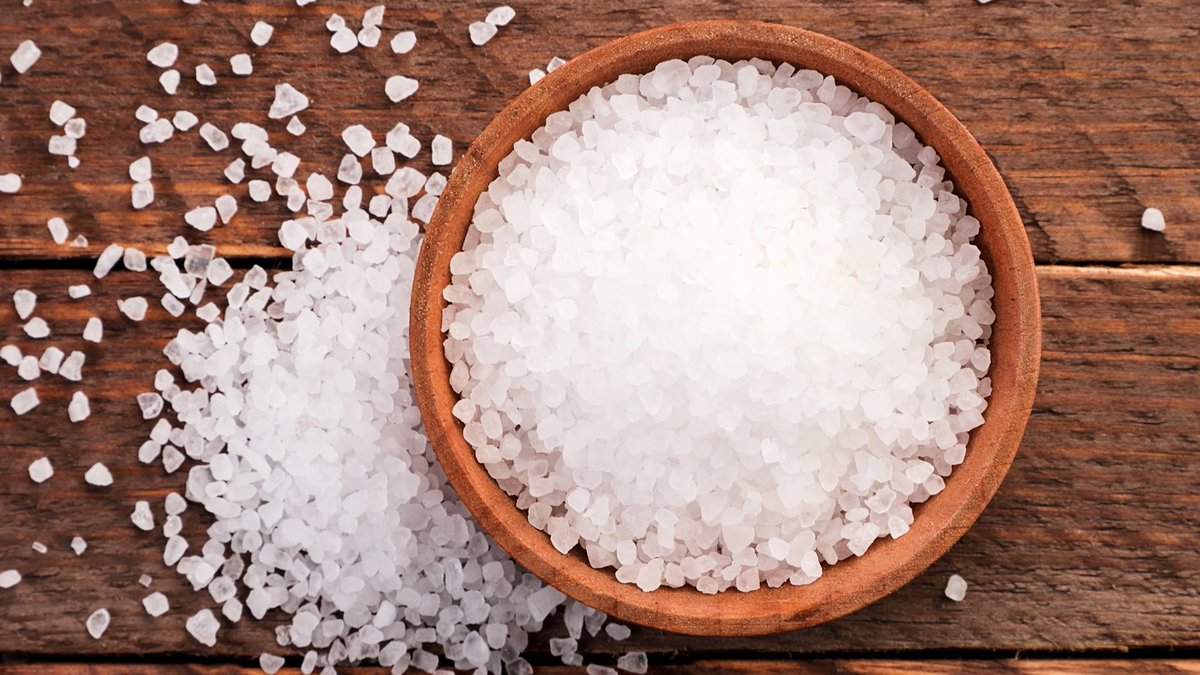
3/ Universal salt iodization has prevented an estimated 720 million cases of clinical iodine deficiency disorders — about a 76% reduction — and roughly 20.5 million cases a year at peak scale. Studies also estimate around $33 billion in economic benefit through improved cognitive development and future earnings.
3/ This is large-scale infrastructure progress that rarely dominates headlines. More than 2 billion people still lack safely managed drinking water, and gains remain uneven by region and income.
Source: https://t.co/m2zAt1Gcj7
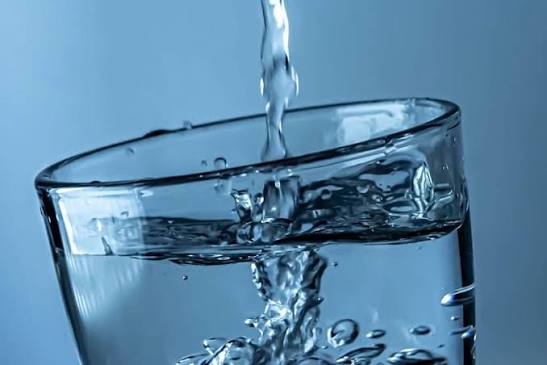
Between 2015 and 2024, 961 million people gained access to safely managed drinking water available at home, free from contamination, and delivered through improved sources.
@Mukeskumar25 That’s exactly why it worked.
The simplicity is the feature. It was built to stop people dying with something cheap enough to use almost anywhere.
Profit would have got in the way.
One of the most effective medical interventions of the 20th century is also one of the simplest: a mixture of salt, sugar, and water.
Oral rehydration therapy (ORT) treats the dehydration that kills people with severe diarrhea. It works because of a basic biological mechanism — sodium and glucose together help the gut absorb water that would otherwise be lost.
Ambitious science policy is worth taking seriously. The strongest part of this is the operating system around discovery: autonomous labs, longer grants, and more room for radical ideas.
The real test is whether we can show the work speeding up in concrete ways: shorter experiment cycles, better replication, faster paths from proposal to result, and more ideas actually making it to verified outcomes.
4/ It does not stop diarrhoea, it simply prevents the dehydration that would otherwise kill. That limitation is also what makes it so scalable: no needles, no refrigeration, no trained staff required in most cases.
https://t.co/5pLL0NdyWw
3/ Estimates suggest ORT has saved between 50 and 70 million lives since it began to be scaled in the late 1970s. The World Health Organization adopted it as a core part of its diarrheal disease control program. A full course costs roughly 50 cents.