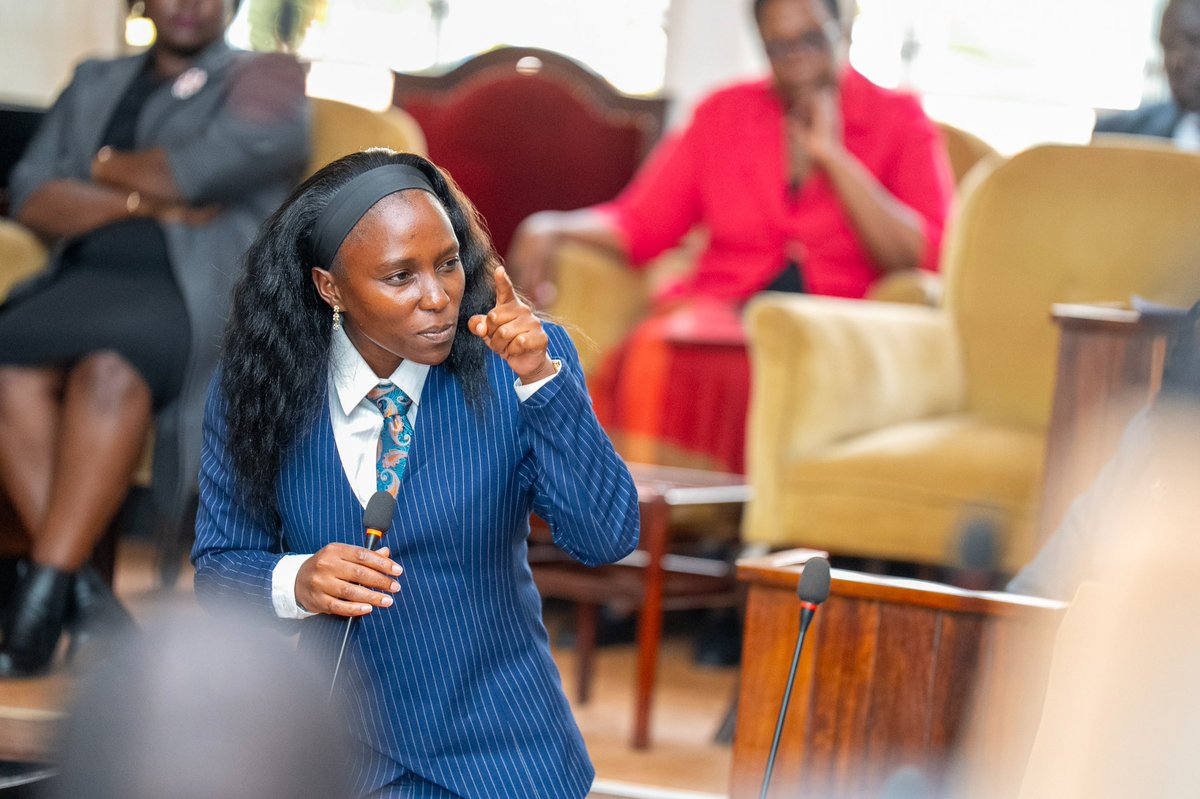
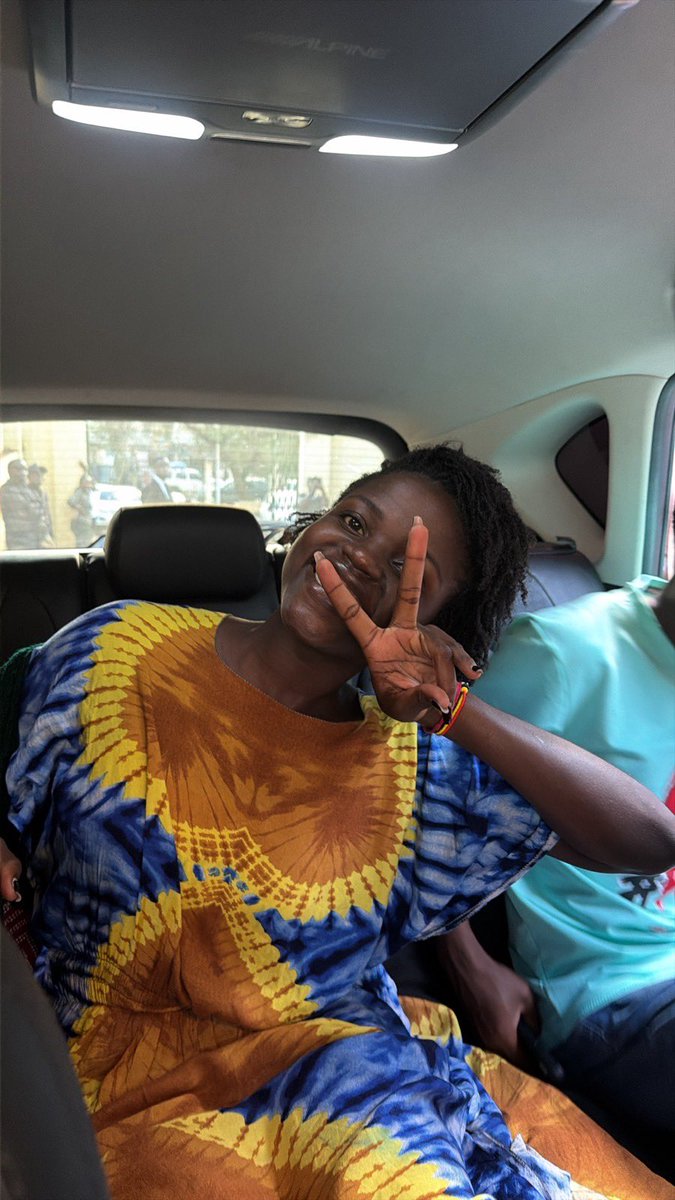
As the elected leaders for older person across Kampala swore in, we reminded them that their voice on issues affecting the people of Kampala is still important.
We requested them to lead with integrity and never to forget the needs of the people they represent.
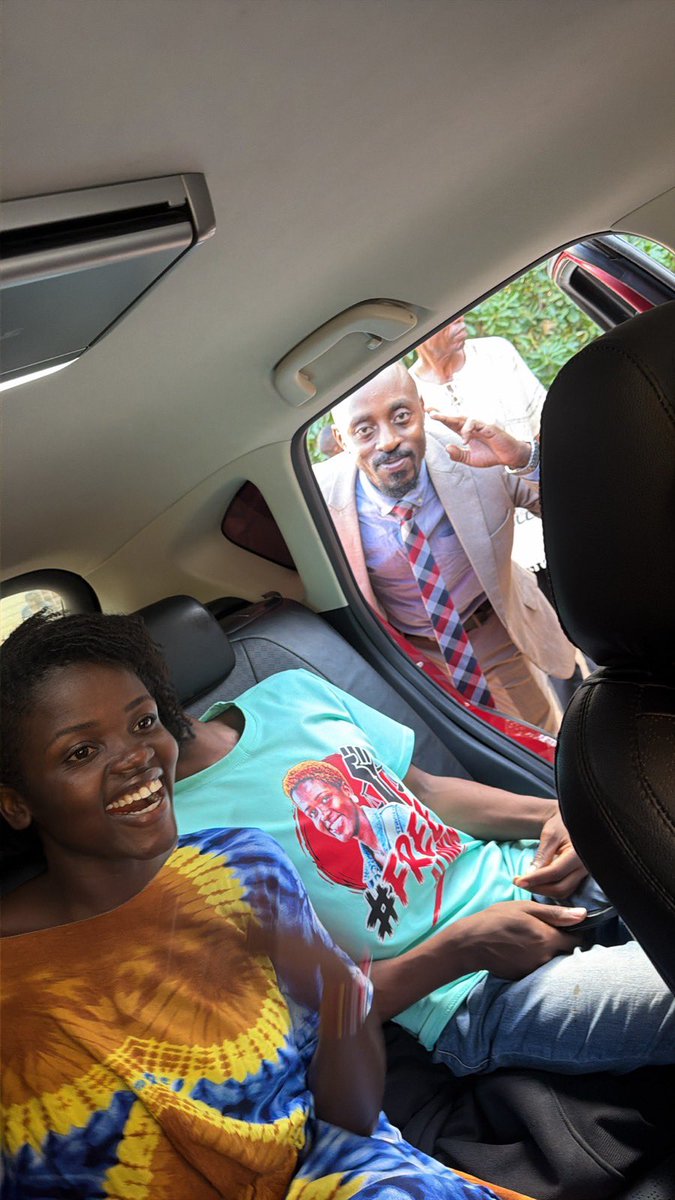
Last Sunday afternoon, I was abducted. In the hours that followed, many of you spoke up, posted, shared, condemned it, and refused to look away.
I am deeply grateful. Your voices, your courage, and your solidarity mean more than I can say. Thank you so much.
The state has...
Alhamdulillah for another year of life. Ya Allah, thank You for the blessings of breath, health, guidance, and faith. May You make my coming year better than the last!
Today in council, the first budget framework paper was read to council for discussion so that the aspirations of the people of Kampala are captured.
We also demanded that the EC is questioned on how their officers connived with particular individuals to remove and replace original nomination forms of elected leaders with fake documents which were stamped by those same officials.
Always pleasure receiving you at our office in Adjumani.
Be our Ambassador & drum our conservation message to Protect Zoka Centtal Forest Reserve.
It is our noble duty to protect & conserve mother nature & our forests in specific.
Come again!
INVESTORS CAN EYE KOLOLO!
Since our World War dead memorials at Nakivubo (now Ham) Stadium & Constitution Square can disappear, tycoons can also take Kololo Grounds.
Has @NRMOnline govt ever sought input of @MODVA_UPDF Monuments & Historical Sites in these deals?
@KagutaMuseveni
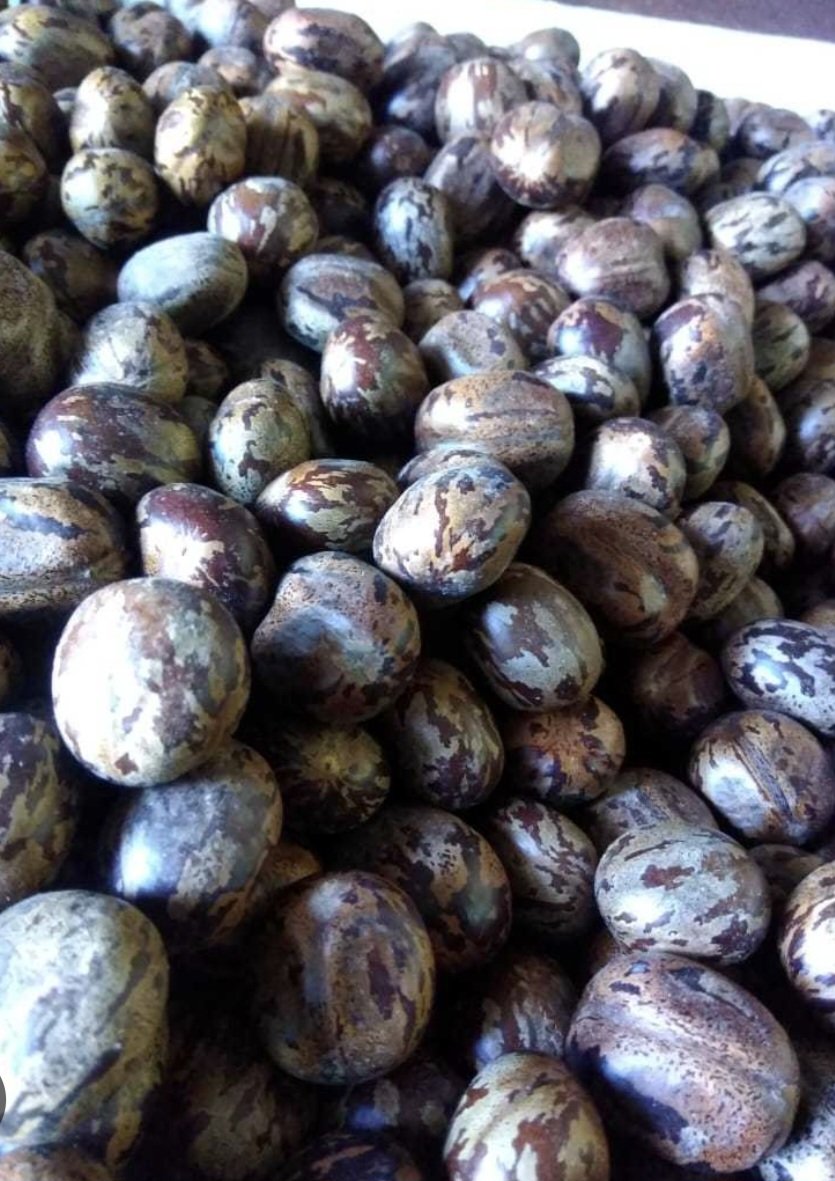
PUBLIC FOOD SAFETY ALERT: Poisonous seeds found mixed with beans in local markets
MAAIF has received complaints and verified evidence that rubber tree seeds (Hevea brasiliensis) are being fraudulently mixed with beans sold in some markets, notably in Agago District, posing a potential risk to public health.
1. HOW TO IDENTIFY THEM:
-Beans are flat or kidney-shaped. Rubber seeds are round like a marble.
-They have a shiny grey-white colour with dark brown/black spots and stripes.
-They have a small white dot where they were attached to the pod.
-See photos attached. If you see them, they are NOT beans.
2. WHY THEY ARE DANGEROUS:
These seeds are *NOT FOOD*. They are not edible.
I. They contain natural poison (cyanogenic glycosides) that can cause food poisoning.
II. If eaten raw or cooked with beans, they can cause: severe stomach pain, vomiting, dizziness, headache, weakness and diarrhoea.
III. Children are at higher risk. Chickens and pigs can also die if they eat many.
This is a case of *Food Adulteration*- accidental or intentional mixing of non-food items with food, which is illegal and dangerous.
3. WHAT CONSUMERS SHOULD DO:
Before buying:
I. Pour the beans on a flat tray and look through them before you pay.
II. Buy from trusted traders who clean their beans.
Before cooking:
-Sort thoroughly on a table or large plate. Remove ALL round mottled seeds, stones, and broken beans.
-Wash beans 2-3 times with clean water.
- Do not cook if you are not sure-bring a sample to your extension worker or Health Centre.
If someone has eaten them:
-Do not wait. Go immediately to the nearest Health Centre/Hospital and carry some of the seeds to show the health workers.
4. WHAT TRADERS AND MARKET LEADERS SHOULD DO:
I. Never store beans in sacks that were previously used for rubber seeds or other non-food items.
II. Always clean and sort beans before putting them on sale.
III. Market leaders ( SAS, Agricultural Police & Market Masters) should inspect produce regularly.
5. MAAIF APPEAL:
We call upon all LC1, LC2, Parish Chiefs, and VHTs to spread this message. Food safety is everyone's responsibility.
Eat Safe. Stay Healthy. Sort Your Beans Before Cooking!
BIG NEWS FOR PUBLIC WIFI OPERATORS!
Following earlier engagements and public notices announcing targeted enforcement, @UCC_Official met with the Kampala City Traders Association to address unlicensed public Wi-Fi hotspots nationwide.
Hon. Nyombi Thembo announced a multi-stakeholder committee to review possible licensing arrangements, enabling eligible resellers to operate lawfully. Registration will open next week for all WiFi hotspot resellers to provide their details.
On the compliance deadline, we cannot extend it or legitimise unlawful operations, but discussions will explore possible solutions. This is your chance to be counted, heard and part of Uganda's digital future- the lawful way!
#ConnectedUganda2030
#DigitalUganda
95% of things on this are irrelevant.
A baby needs 4 things.
1. warmth
2. Feeding, shower and number 2
3. Sleeping
4. Hospital
The rest is luxury by parents.
1. Warmth: Babies don't care if it's Gucci or a cheap one from DT.
2. Feeding: If the mother has milk, this is free. If she doesn't, babies won't care the brand of formula unless they're allergic. In villages they even go straight to cow's milk.
3. Sleeping: Babies don't care even if they're sleeping on the side with mom and dad.
4. Hospital: I'm a doctor and can tell you that it doesn't matter which hospital as long as you see a good doctor and from experience, a good doctor can be found in an expensive one and a cheap one. Even another option is going to government but buy drugs for yourself.
Raising a child is soooo cheap, it's parents with expensive desires. If it wasn't cheap, then it would've been like a Benz. You can't find a poor man owning one but at least, everyone will own a child and raise them within their means.
Get a child, raise them within your means. Don't use them to quench your childhood traumas of going to school with Mr. Picfare math set when rich kids had Oxford sets. Now you feel like your child has to be the one with Oxford... If you can afford it, fine but it doesn't matter.
In a failing education system, where we went to school may not matter. We are all in the same sinking boat. In a country where a student both at Makerere and the Giraffe University can go 3 years till graduation date without their marks reflecting, honestly where’s the difference?
My point here is, we should aspire to have a country with almost level education institutions. Where leaders don’t compare where they studied, but brag to other people out of this country how wonderful all our schools and universities are in order to attract education tourism.
What does it serve me as a leader when it’s only Makerere that can train the best skills to this 48m population? Will everyone go to Makerere? Makerere at the moment can only accommodate 35k of us. Our goal would be to advocate and pressure government and private players to offer the same quality just like “Makerere”
If one or two universities are able to offer quality, what happens? Access to that quality becomes a monopoly, it then becomes expensive for the same people we lead!
What happens if we don’t pressure or advocate for better quality and standards in other universities? Well, they will graduate doctors and nurses that are “incompetent” And you🫵I mean you reading this, are going to find this “incompetent” doctor in the operating room standing between you and your creator!
You are going to die because a building under construction by that “incompetent”engineer is going to collapse on your head. You will lose a limb in an accident because that engineer failed to label a blind spot on a highway.
And an incompetent policy maker will keep you in poverty! Even when it feels surreal to attend a top school or university, ask yourself, am I the only good doctor, engineer etc the country needs, will I treat myself and every other person of the 48million, or what can I do to make sure everyone can access quality education that is also affordable?
I sign out
Last evening, we held a high-level consultative meeting with Mobile Network Operators (MNOs) and licensed Internet Service Providers (ISPs) to address the operation of unlicensed public Hotspots nationwide.
We primarily focused on the widespread disruption caused by illegal public hotspot operations, market distortions, and the urgent need to safeguard the integrity of digital infrastructure.
During extensive deliberations, licensed operators under the Internet Service Providers Association of Uganda (ISPAU), led by their chairman Godfrey Sserwamukoko, raised serious concerns about the proliferation of unauthorised public hotspots.
It was highlighted that unauthorised entities purchase bulk high-speed fixed broadband, fibre-to-the-home, and fixed wireless access from licensed networks and illegally resell connectivity to the public without proper authorisation or tax compliance.
We have noted that this practice creates unfair market competition, distorts pricing structures, and deprives the government of billions in revenue.
Furthermore, they raised concerns about infrastructure safety, as unauthorised routers are frequently mounted on utility poles without commercial or safety approvals, posing serious risks, including electrocution and maintenance difficulties.
The meeting acknowledged the complexities of the digital market and engaged in deep reflection on industry-wide compliance, consumer protection, and regulatory enforcement.
Following rigorous discussions, the session reached agreement on critical aspects to govern the sector moving forward:
1. Addressing Illegality: There was an unequivocal consensus among all participants that unlicensed public Wi-Fi operations constitute an economic crime and a direct breach of the UCC Act, 2013. The meeting resolved that illegal operations must be systematically identified and halted to protect the formal telecommunications ecosystem.
2. Formalisation and Onboarding: We emphasised the need to establish a structured framework to integrate willing and eligible operators into the formal regulatory space. We are exploring robust onboarding guidelines, clear definitions of market activity, and fair compliance pathways to encourage legitimate business participation without compromising industry standards.
3. The discussions underscored the need for robust billing and subscription-tracking systems. We have agreed to optimise monitoring tools to accurately track data consumption, address pricing discrepancies and prevent market exploitation by unregulated resellers.
4. Enforcing Disconnection and Takedowns: To root out persistent non-compliance, members affirmed the implementation of strict enforcement measures. This includes the immediate identification and disabling of illegal network access points, the removal of unauthorised routers from public infrastructure, and active collaboration with authorities such as the Uganda Revenue Authority to block the importation of unverified equipment.
While the transition requires a delicate, gradual balance to safeguard consumer access and market stability, decisive enforcement is non-negotiable.
@UCC_Official remains committed to fostering a secure, competitive, and legally compliant digital environment that safeguards consumer rights, protects data privacy, and supports sustainable national development.
Young traders are shaping the future of intra-African trade. Let’s help ensure their voices count.
Join us for the Youth in Trade Charter Validation Webinar under the theme: “From Consultation to Ownership - Young Cross-Border Traders Validating Their Charter.”
📅 Thursday, 22 October 2026
🕑 2:00-4:00 p.m. EAT
💻 Online via Zoom
🔗 Register here:
https://t.co/7JTL52k9YU
Developed by young cross-border traders and Cross-Border Trade Associations (CBTAs) through consultations across Africa, the Charter enables young traders and their representative organisations to understand, exercise, monitor and advocate for relevant trade-related rights and commitments, while strengthening accountability and meaningful youth participation in intra-African trade. It seeks to complement and support the operationalisation of the @AfCFTA Protocol on Women and Youth in Trade.
Young traders and CBTAs will lead this validation session, with facilitation support from @ICOYACA, @AGRA_Africa and @GenAfrica_. As Champions, your experience and insights can help ensure the Charter responds to young traders’ realities and becomes an instrument they understand, own and use.
📄 Read the Zero Draft Charter:
https://t.co/t93AL4WGt3
Read the Charter, bring your perspective and join us as we move from consultation to ownership. Please also share this invitation with young traders and trade associations in your networks.
@_AfricanUnion@AUYouthProgram@MastercardFdn@ITCnews@ye_community@UN@UNESCO_Addis@AoctahWactaf@jumuiya@COMESA_HQ@SADC_News@AfriYBC@youthhubafrica@CBTA@OneYoungAfrica@AU_WGYD@APRMorg
People are understandably frustrated by what appears to be an overnight collapse in electricity service delivery following the transition from UMEME to UEDCL (@UEDCLTD). However, many are overlooking a fundamental reality. UMEME was a private company operating under a commercial model. Its survival depended on efficiency, revenue collection, customer satisfaction, and profitability. UEDCL is a government-owned entity. The incentives are fundamentally different.
Even before taking over the main distribution network, UEDCL was already responsible for electricity distribution in many of Uganda's most remote and challenging areas with small hydroelectric dams to generate power. Districts such as Kanungu were under its management while UMEME concentrated on the main grid and major commercial centres. Yet even then, service delivery in many remote areas were a persistent challenge.
What many people fail to appreciate is that organisations inherit institutional cultures. Certain attitudes that become entrenched within public institutions do not disappear simply because a larger mandate has been handed over. In many government entities, efficiency is often not the determining factor between success and failure. Salaries will be paid, offices will remain open, and operations will continue regardless of whether performance improves or stagnates. Consequently, efficiency becomes an aspiration rather than an imperative.
Many public agencies proclaim a commitment to customer service while displaying little urgency when service actually deteriorates. Ugandas experience this reality daily. Delayed responses, weak accountability, and a lack of urgency have become familiar characteristics across numerous government institutions that interact directly with the public.
Another challenge is the corrosive effect of patronage and nepotism. With recruitment influenced by connections rather than competence, organisations become vulnerable to the gradual infiltration of individuals who occupy positions without possessing the practical capability to deliver results. Competence is not measured by certificates, diplomas, or degrees hanging on a wall. Competence is measured by performance, initiative, problem-solving ability, and the capacity to deliver outcomes under pressure.
There is also a frequently overlooked factor: organisational chemistry. Successful service delivery depends not only on individual competence but also on teamwork, trust, discipline, and camaraderie. A few weak links, internal divisions, poor supervision, or a lack of shared purpose can compromise the effectiveness of an entire organisation. When that happens, even technically qualified personnel can find themselves operating within a dysfunctional system.
Can UEDCL adopt and sustain the performance culture of at lease UMEME (which had its own challenges) that private operators are compelled to maintain. Infrastructure can be transferred overnight. Vehicles, offices, substations, and networks can all be handed over. But a culture of efficiency, accountability, urgency, and customer focus cannot be transferred through a handover document.
Ultimately we do not care whether the electricity distributor is public or private. We care whether the lights stay on, faults are repaired promptly, and service is reliable. Ownership is irrelevant to the consumer. Performance is everything.
UEDCL...@UEDCLTD there has not been a day in the last 3 weeks where we didn't have a power shutdown, I badly wanted to defend you against the accusations of incompetence but the shutdowns in kulambiro,kyanja-kungu is too much, mukisusiza
Help me make sense of this. So, a traffic officer stops me, runs my car number in his machine, and tells me I have a fine I have never paid for ‘reckless driving’. The fine, it shows, was issued to someone whose name I’ve never even heard about. But the car details are mine. And I have never given my car to anyone in the said period, or any other - not even a mechanic! So, we called the said person in loud and asked him if he knows me. He said he knows ‘Spire Kiggundu the cartoonist’ but has never met him beyond seeing him on X. When the officer went on to explain and ask more questions, the guy sounded unamused, and hang up. Confused, the traffic officer let me go and told me to go and try appealing if I’m sure it’s a mistake. I failed to make sense of the whole thing. How could that be? @PoliceUg
One Ugandan, paid with money collected from Ugandans in various forms to run this country, and equipped with guns, uniforms and other gear purchased with Ugandans’ money, is using those resources to abduct and torture Ugandans, then gloating about how he will kill more Ugandans, torture them and make them disappear.
Other Ugandans are saying, “Look, this Ugandan is a threat to us as Ugandans. He is destroying a fundamental part of our social contract, in which the people entrust a few individuals with the power to govern the country.” We must not forget that when this power is abused, Ugandans have the power to take it back. Fundamentally, power belongs to the people.
The question to answer is not whether I used a phone line registered in my mother’s name rather than mine. That is merely a decoy. The real question is whether some Ugandans are considered more Ugandan than others. Are we saying that when some people’s opinions do not prevail, they must be abducted, tortured or killed? If anyone agrees with that, I would consider them a cabbage. Only a cabbage could think that way and find pleasure in abducting, torturing and killing fellow Ugandans.
The past fortnight and a few days have been trying, but they have not broken me. Instead, they have strengthened my courage. I have drawn strength from your solidarity and support, which have encouraged me to believe that the future of this country is not as broken as we might imagine. There is still a flicker of hope, and if we find the right way to nurture it, our country will ultimately be set free.
I reiterate, without fear, that Uganda is not a monarchy. The people of Uganda deserve a say in the transition of their country, and fear must never be used as a tool to silence them or shut them up, especially at a time when their voices matter most.
I once again express my gratitude for your support. And I must say that, contrary to what they expected, **I will not go quiet. I will not keep silent. I will not flee into exile out of fear. I will stay until the very end.**
We are going to defend this country, as provided for under Article 3 of our Constitution. When the Constitution is abused and the rule of law gives way to the rule of an individual, we have a constitutional duty to resist and defend our Constitution and our country. In doing so, we shall not be breaking the law; we shall be exercising our constitutional mandate.
The struggle continues, and we shall prevail over fear. The demand remains: Arrest Muhoozi and free all political prisoners
Thank you, comrades. Thank you, fellow Ugandans.