The distinctive psychopathology of NMDAR-antibody encephalitis compared with primary psychoses: an international, multicentre, retrospective phenotypic analysis - The Lancet Psychiatry https://t.co/HmF9aB9T4W
✨Calling all early-career & senior researchers‼️
We are planning next year's series of talks and would like to hear your suggestions
Are you interested in presenting your own research or have a researcher you would love to hear from? Let us know here: https://t.co/kg2S4FLNVL
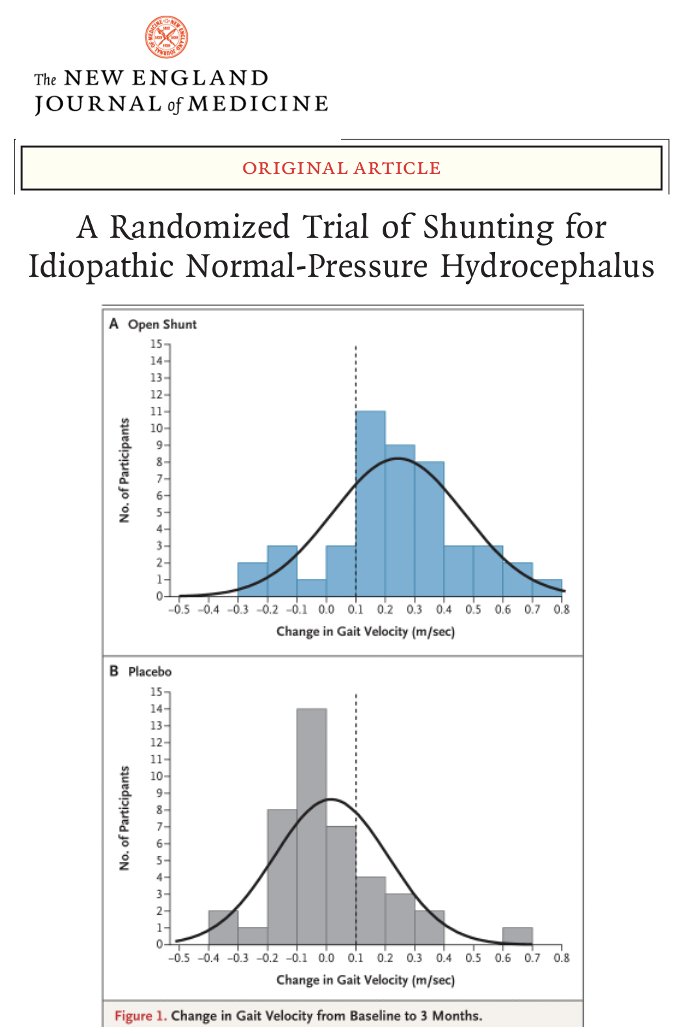
To shunt or not to shunt, that is the (NPH) question? The first large randomized trial of shunting for normal pressure hydrocephalus (NPH) just dropped in NEJM, and there was clear benefit for walking, and it favored the group receiving shunts. Spoiler alert: Walking improved, however thinking (cognition) and bladder function did not.
Key Points:
- NPH is a condition usually presenting in older adults where fluid builds up in the brain and it associated w/ trouble walking, memory and thinking challenges as well as bladder incontinence.
- Shunting significantly improved walking speed and balance compared w/ placebo.
- No meaningful change in cognition or bladder control observed at 3 months.
- Risks included subdural bleeding and headaches, underscoring the need for careful follow up.
My take: NPH has always been a tricky area for clinicians when trying to decidr 'to shunt or not to shunt.' Here are 5 points that resonated w/ me: 1- Shunting in well selected persons can restore some walking ability in NPH. 2- Thinking did not improve at 3 months. 3- Incontinence showed no clear benefit. 4- Risks to always discuss w/ people considering shunts should include bleeding and headaches (as not uncommon). 5- Walking gains may possibly reduce falls and boost independence, however we must be careful as sometimes improved walking w/o improved balance, can actually trigger falls.
https://t.co/yCnSCpclPL @FixelInstitute@ParkinsonDotOrg@alzassociation@SfNtweets@SfNtweets@NEJM
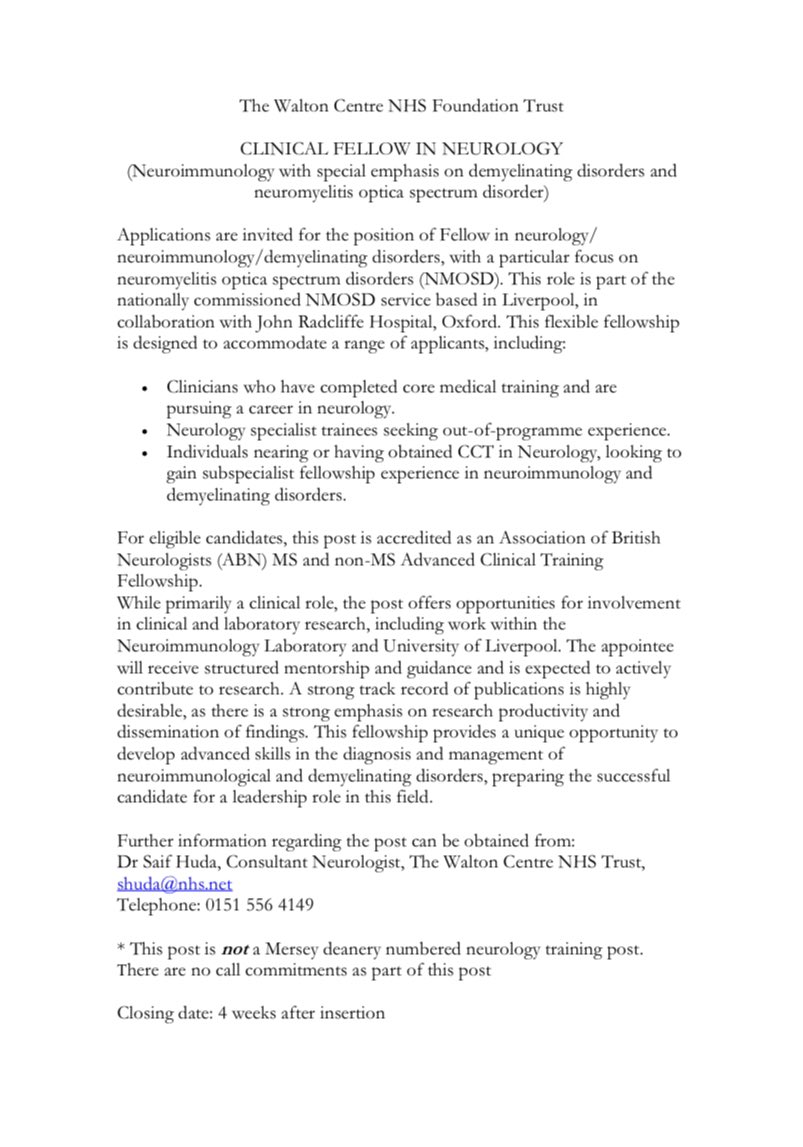
📣Clinical Research Fellowship📣
Applications open for an exciting Clinical Fellowship in neurology / neuroimmunology / demyelinating disorders with a particular focus on NMOSD at the Walton Centre.
Details below:
Prospect’s annual Top Thinkers shortlist has arrived! Chosen thinkers include @anneapplebaum, @RebeccaSolnit, @NesrineMalik and many more.
Vote for your favourite—and tell us who should have been on the list but isn’t.
https://t.co/GyKIgdU5UT
📣Job Opportunity📣
Advanced clinical training fellowship in neuroinflammation (MS and NMOSD focussed) at the Walton.
For more information, see link below:
https://t.co/rCq4XBfkDl
🗓️Save the date!
We're pleased to announce that Neuroimmunology & MS 2025 research & academic meeting will be held in Edinburgh on 11 - 12th Mar 25.
Registration & call for abstracts opening soon!
For more info visit our website https://t.co/ERRw0VPXG6
#neuroimmunology_MS_25
The 2025 ABN Clinical Research Training Fellowships are open for applications! 🩺🧠
We encourage the brightest UK neurology trainees in undertaking world-leading clinical neuroscience research 🌟
Interested? Know someone? Info here: https://t.co/EQGuPfTm9b