The Michael J. Fox Foundation for Parkinson’s Research (MJFF) awarded Lysoway Therapeutics $3.4 million in funding to support therapy targeting the TMEM175 protein. ="https://t.co/YomY3wgmMQ" class="read-more">Read More</a> https://t.co/YomY3wgmMQ
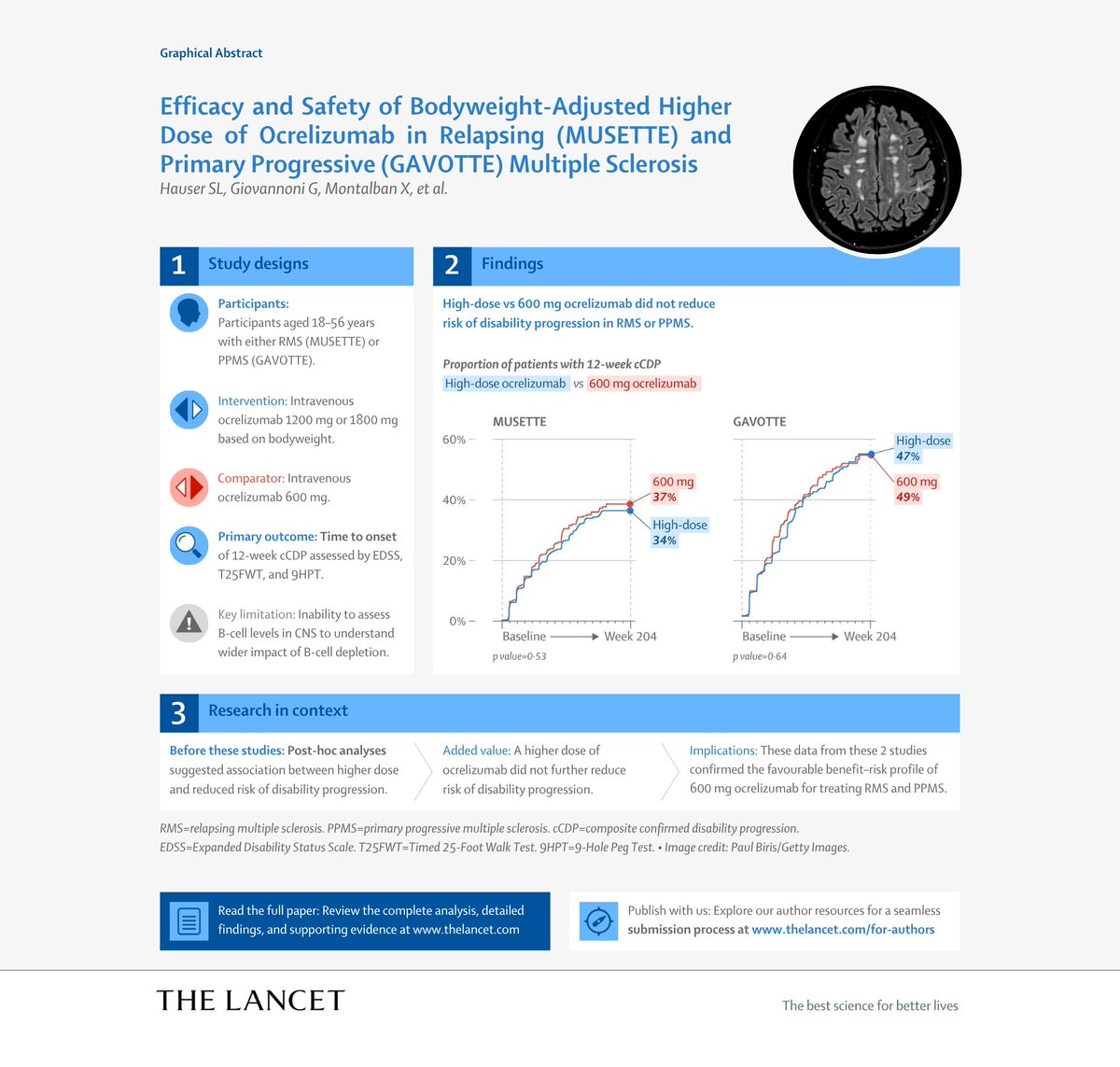
A study in The Lancet examines the impact of ocrelizumab in older patients with primary progressive multiple sclerosis & those with more advance disease. It finds that ocrelizumab was superior to placebo, with stronger effect on hand function (see infographic).
Read more: https://t.co/5h7n4oNNhJ
A change in the brain's immune cells may help explain why some people with Alzheimer's disease develop dementia while others remain cognitively healthy.
New discovery from Bart De Stroop @KU_Leuven & team @VIB, @UKDRI & @muna_tx.
Learn more 🔗 https://t.co/nJ4vVHAjTX
Ocrelizumab, a monoclonal antibody, is already approved for people with relapsing or primary progressive multiple sclerosis.
In The Lancet, two phase 3 trials suggest a higher dose of ocrelizumab did not further reduce the risk of disability progression; however, data confirm the favourable benefit–risk profile of 600 mg ocrelizumab.
Read more: https://t.co/7MyHM9x6lR
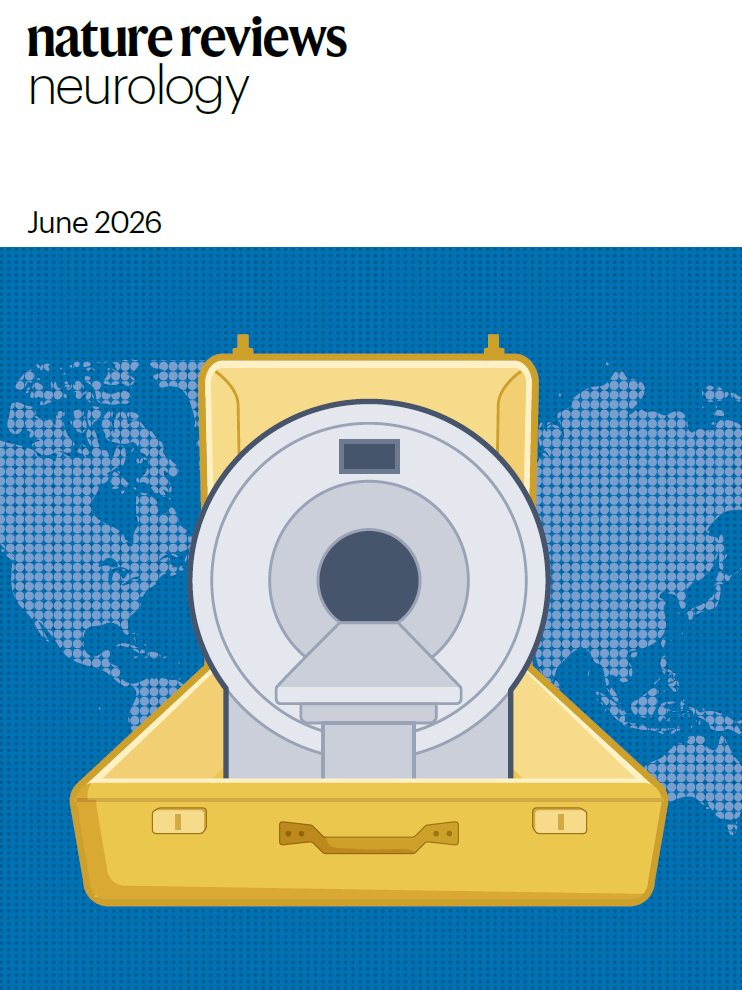
Our June issue, which includes articles on chronic traumatic encephalopathy, plasma biomarkers for Alzheimer disease, and the long-term neurological effect of SARS-CoV-2 infection, is now live! https://t.co/HCmnpdCtKO
New issue of Neuron is now online! This week's issue is a mini Special Issue on AI. It features Perspectives from Srini Narayanan and colleagues, Blake Richards and colleagues, as well as Q&As with Danilo Bzdok and David Sussillo.
https://t.co/FRK7jiLsqn
We will always remember Ignacio Echeverría and all the victims of the London Bridge terrorist attack.
On the 9th anniversary of the tragedy, we have gathered at London Bridge to lay a wreath in their memory.
Always in our hearts. 🇪🇸🇬🇧
https://t.co/QQS4yRjlJ5 On the cover: In this issue of Neuron, Du et al. @DuSiling show that repeated microglial depletion enables peripheral monocytes from both the blood and skull bone marrow to infiltrate the brain and engraft as monocyte-derived macrophages with distinct identities. Inspired by a passage from the Zuo Zhuan (“The first beat of the drum rouses the soldiers’ spirits; the second weakens their resolve; by the third, they are exhausted”), the artwork depicts three rounds of microglial depletion gradually exhausting the endogenous microglial niche. The two advancing armies represent distinct peripheral sources of invading cells: one arriving from the blood, illustrated by the army bearing the red flag, and the other emerging from the skull bone marrow, portrayed as descending from the mountains. Artist credit: Ying Xu.
Excellent Clinical Practice article in @NEJM on secondary prevention after ischemic #stroke.
A practical case vignette summarizing contemporary strategies for risk factor management and mechanism-specific prevention.
🔗 https://t.co/KH1KbJx2ZI
@JacopoImberti
🧑🏻⚕️Hoy se conmemora el Día de la Investigación Hospitalaria, una fecha que reconoce el valor estratégico de la ciencia y del conocimiento generado desde nuestros hospitales para transformar la asistencia sanitaria y mejorar la vida de las personas @ANIH_1