RIP Tennessee, Kansas, Connecticut....Watch the stats now that the stockpile starts to vanish. #KeepKratomLegal (don't say you weren't warned). When the FENT deaths rise, you'll wish you listened to us.
Dear Kratom Advocates,
We only have 24 hours to show our support in Delaware.
Please take a few minutes today to contact the Delaware legislature and share your personal story about kratom. Lawmakers need to hear directly from responsible consumers about how kratom has helped improve their quality of life, supported their wellness, or provided a better path forward.
Your story matters. Explain what your life was like before kratom, how you found it, and how responsible kratom use has helped you. Personal stories are often the most powerful way to show legislators that real people and families are affected by these decisions.
It is also important to make clear that consumers support responsible regulation. We want safe products, proper labeling, age restrictions, testing standards, and rules that keep bad actors out of the marketplace. Regulation is a great first step because it protects consumers while preserving access for the people who depend on kratom.
Please contact the Delaware legislature now through this page:
https://t.co/wPvjneBGkd
Delaware lawmakers need to hear that kratom consumers support thoughtful regulation, not bans or restrictions that would take this option away from responsible adults.
Thank you for standing up and making your voice heard.
AMERICAN KRATOM ASSOCIATION CALLS ON AMA TO PROPERLY IDENTIFY THE REAL PUBLIC HEALTH THREAT: CHEMICALLY MANIPULATED 7-OH OPIOIDS THAT ARE NOT NATURAL LEAF KRATOM PRODUCTS
Failure to differentiate between chemically manipulated opioid products from traditional natural kratom leaf products confuses consumers and creates immense policy problems
The American Kratom Association (AKA) today applauded the American Medical Association (AMA) for recognizing the growing public health concerns associated with highly concentrated 7-hydroxymitragynine (7-OH) products but urged the AMA to more clearly distinguish these chemically manipulated opioid products from traditional natural kratom leaf products.
In a policy statement adopted at its Annual Meeting, the AMA highlighted concerns about concentrated 7-OH products and supported restrictions on their sale and marketing, particularly where children and adolescents may be exposed. The AMA specifically noted that manufacturers are increasingly extracting and concentrating 7-OH into products that are chemically manipulated opioids that have no legitimate relationship to traditional kratom leaf products.
While the AMA’s concerns regarding chemically manipulated 7-OH opioid products are justified, the American Kratom Association believes the policy statement unintentionally contributes to ongoing public confusion by repeatedly characterizing these products as “kratom products” when they have no resemblance to natural kratom leaf products.
“The AMA correctly identifies the danger posed by concentrated 7-OH products, but it stops short of making the most important distinction,” said Mac Haddow, Senior Fellow on Public Policy for the American Kratom Association. “These chemically manipulated 7-OH opioids are not traditional kratom products. They are highly concentrated opioids manufactured through chemical conversion processes that fundamentally alter the natural composition of kratom.”
Natural kratom leaf contains mitragynine as its dominant alkaloid, while 7-OH exists only in trace amounts. The products now appearing on the market often reverse that natural relationship by chemically converting mitragynine into concentrated 7-OH opioids, creating products with pharmacological profiles dramatically different from natural kratom leaf.
The scientific evidence increasingly demonstrates why policymakers must distinguish between these chemically manipulated opioids and natural kratom.
In a human dose-finding safety study conducted under FDA oversight, healthy adult participants consumed kratom doses up to 12 grams of leaf material without experiencing serious adverse events. Researchers concluded that kratom was generally well tolerated across all dose levels tested, with only nausea being the most commonly reported non-serious adverse event experienced by both the kratom and the placebo test groups.
More recently, the National Institutes of Health announced the approval of a groundbreaking human clinical trial evaluating whether kratom can serve as a treatment for opioid use disorder and help individuals reduce or eliminate dependence on more dangerous opioids. That study, led by researchers at the University of Florida, could not proceed without approval by an independent Institutional Review Board (IRB), which is legally and ethically required to determine that human participants will not be exposed to unreasonable or unacceptable safety risks.
“The significance of the NIH announcement cannot be overstated,” Haddow continued. “A study designed to evaluate kratom as a tool to help people overcome opioid addiction could not move forward unless an independent ethics review concluded that participation in the study presents an acceptable safety profile for human subjects. That is fundamentally inconsistent with the narrative that natural kratom leaf is itself a significant public health threat.”
The AKA strongly supports federal and state actions targeting chemically manipulated 7-OH products. In fact, the Association has consistently advocated for strict regulation and scheduling of chemically converted 7-OH opioids that are marketed as kratom despite possessing pharmacological characteristics far removed from natural leaf material.
The FDA itself has warned consumers about concentrated 7-OH products, and both HHS Secretary Robert F. Kennedy Jr. and former FDA Commissioner Marty Makary have emphasized that federal enforcement efforts are focused on chemically manipulated 7-OH products rather than properly manufactured natural kratom leaf products.
Unfortunately, when public statements fail to clearly distinguish between natural kratom and concentrated 7-OH opioids, consumers, healthcare providers, legislators, and regulators are left with the mistaken impression that all kratom products present the same risks. That confusion undermines efforts to develop evidence-based public health policy.
The American Kratom Association calls on the AMA, public health officials, and policymakers to accurately identify the source of the emerging safety concerns: chemically manipulated 7-OH opioid products masquerading as kratom.
“The solution is not to stigmatize or prohibit natural kratom leaf products that millions of Americans use responsibly,” Haddow said. “The solution is to focus regulatory attention where it belongs—on chemically manipulated 7-OH opioid products that are fundamentally different from natural kratom and should not be marketed as kratom in the first place.”
The AKA remains committed to advancing science-based regulation, protecting consumers from dangerous synthetic and chemically manipulated 7-OH opioid products, and preserving access to properly manufactured natural kratom leaf products that meet established safety and quality standards.
https://t.co/Hpzvu6YPKZ
🚨 California Hearing: Protect Natural Kratom Access
Next Wednesday, June 17, the California Senate Health Committee will consider important kratom legislation.
California advocates — and anyone who cares about responsible kratom policy — need to contact the Committee and urge them to support consumer protection, not prohibition.
The message is simple:
✅ Support kratom regulation that protects consumers
✅ Keep natural kratom legal and accessible
✅ Do not amend the bill into a ban on natural kratom
✅ Focus on safety standards, testing, labeling, and age restrictions
Take action here: https://t.co/qq40zyr505
California is one of the most important states in the country for kratom policy. What happens there can influence other states — so your voice matters.
📍Georgia Advocates Needed in Atlanta
Georgia kratom advocates are urgently needed to attend an important committee hearing on kratom's impact in Georgia next Wednesday, June 17, at 9:00 AM in Atlanta.
If you live in Georgia and can attend, please sign up right away. Your presence makes a real difference. Lawmakers and regulators need to see that kratom consumers are real people with real stories — not statistics, not scare headlines, and not misinformation.
Sign up here if you can attend: https://t.co/vsSHcLscNb
🙋♀️ Showing up in person is one of the most powerful things an advocate can do.
📝 Federal Comment Opportunity: HHS Request for Comment
Kratom Consumer Advocates are also strongly encouraged to respond to the Health & Human Services Request for Comment on the Chronic Disease of Addiction.
This is an important opportunity to share your perspective, your experience, and why kratom policy should be based on science, consumer safety, and real-world outcomes — not fear or misinformation.
Submit your comment here:
https://t.co/vQEZbgawzQ
Your personal story can help federal officials better understand why natural kratom access matters and why responsible regulation is the right path forward.
💚 Please Help This Fight Going!
These consumer protection fights do not happen on their own. Every hearing, every policy meeting, every legal review, every scientific briefing, and every rapid response effort takes resources.
The AKA team is working across the country to stop bans, promote responsible regulation, educate lawmakers, and defend access to natural kratom. But we cannot do it without the support of kratom advocates like you.
If kratom has made a difference in your life, please consider making a donation today to help keep this work going.
Your donation helps support:
✅ Consumer protection legislation
✅ Opposition to kratom bans
✅ Scientific and regulatory education
✅ Advocate outreach and rapid response
✅ Efforts to keep natural kratom legal and safely regulated
🙏 Please consider making a donation today to help keep kratom safe and legal.
https://t.co/fVx7qNk7EY
Give comments! Kratom Consumer Advocates are strongly encouraged to respond to Health & Human Services Request for Comment on Chronic Disease of Addiction
https://t.co/e67TekeEK6
Constituent advocacy is the key to ensuring safe, continued access to natural kratom leaf products. Local councils and state legislatures are discussing proposed regulations across the country. We need your help to educate law makers and bring forward the lived experience of natural kratom leaf consumers in your state or localities.
Sign up for updates by clicking the link: https://t.co/Icw7e7QwZ0
The statement "mitragynine toxicity alone has never caused death" is false, but the statement "mitragynine alone has very rarely caused death" is true. In the most high profile cases it was mostly multiple drugs involved
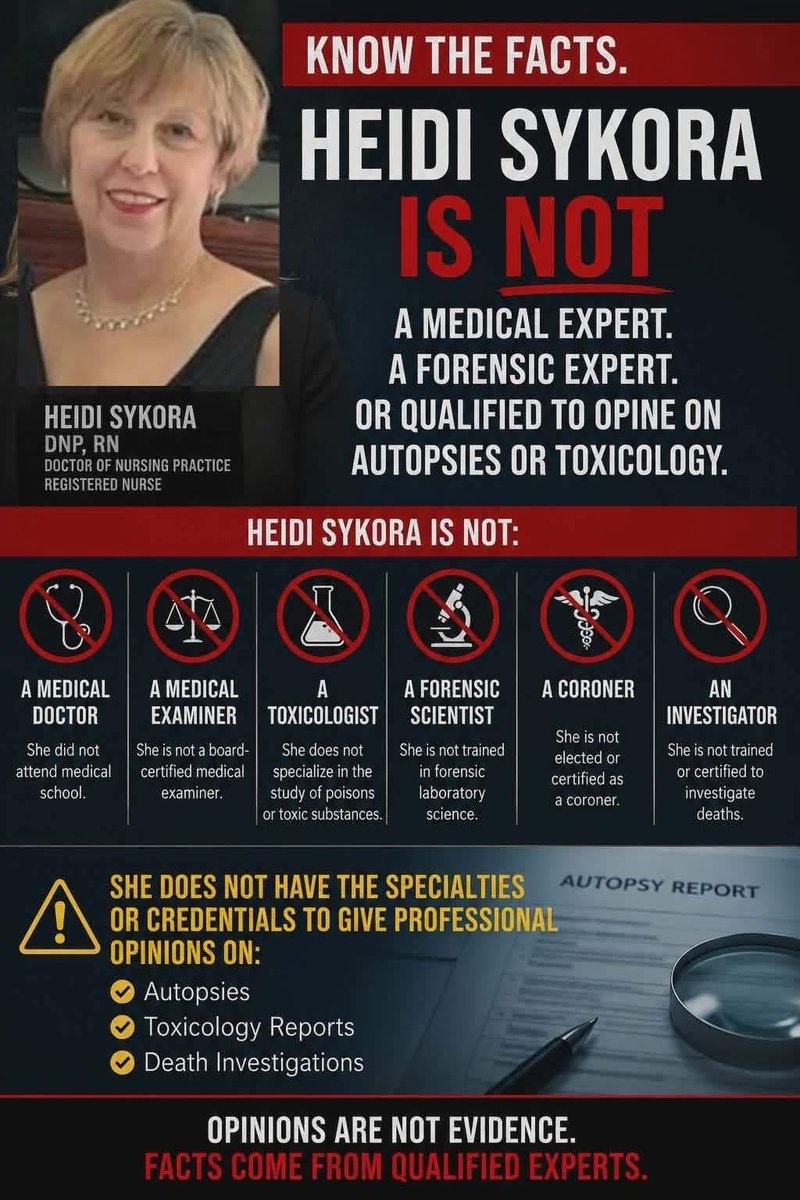
WASHINGTON, D.C. -- June 8, 2026 -- The American Kratom Association (AKA) today responded to criticism directed at Dr. Heidi Sykora following her presentation at the American Kratom Association Congressional Briefing on June 2, 2026 that examined errors, omissions, and misinterpretations in autopsy and toxicology reports that have been used to attribute deaths to natural kratom leaf products.
https://t.co/fcWb2F9hef
The inappropriate attacks by some members of the anti-kratom community is deeply troubling. Rather than engage the scientific findings presented by Dr. Sykora,
critics have resorted to personal attacks and attempts to discourage the independent review of forensic evidence.
That approach serves no one, not grieving families, not policymakers, and certainly not the pursuit of truth.
Dr. Sykora’s presentation did not criticize family members who have suffered the loss of a loved one. It
did not question their grief, their sincerity, or their motivations. Instead, her presentation focused on the quality and completeness of the forensic investigations that produced conclusions later cited in legislative
hearings, regulatory proceedings, media reports, and public campaigns advocating bans on natural kratom
leaf products.
Those are two very different things.
When a death is publicly presented as evidence supporting public policy changes, the underlying forensic evidence becomes subject to scrutiny. That scrutiny is not only appropriate, it is essential. Scientific conclusions should never be shielded from review simply because they are emotionally difficult to discuss.
The reports analyzed by Dr. Sykora were publicly available autopsy reports, toxicology findings, and official investigative documents that have already been placed into the public domain and repeatedly cited by advocates seeking restrictions or prohibitions on kratom products.
The central question raised by Dr. Sykora was straightforward: Did the forensic evidence support the conclusions that were reported?
In several cases, the answer appears to be far more complicated than legislators and public health officials were led to believe.
Dr. Sykora’s analysis identified concerns involving incomplete toxicological evaluations, failures to account for the presence of multiple substances, departures from accepted forensic practices, unsupported assumptions regarding causation, and conclusions that may not fully align with the underlying evidence. Those concerns are directed at the investigative process, not at the families who relied upon those findings.
Indeed, if mistakes were made, the individuals most harmed by those mistakes may be the families themselves.
Every family deserves accurate answers about the death of a loved one. If a coroner or medical examiner reached a conclusion based on incomplete information, overlooked evidence, or flawed methodology, then families may have been denied the full truth about what occurred. Likewise, legislators and regulators may have relied on incomplete or inaccurate information when considering policies affecting millions of consumers.
The American Kratom Association therefore challenges those who have publicly criticized Dr. Sykora’s presentation to take a different approach.
Rather than discouraging families from sharing autopsy reports, toxicology findings, and investigative records for independent review, we urge them to welcome such scrutiny. If the evidence supports the conclusions that have been publicly advanced, an independent review will confirm it. If it does not, families and policymakers deserve to know that as well.
Truth should never fear examination.
We are particularly troubled by reports that members of the Kratom Danger Awareness community have advised families not to share records for independent scientific review. Such advice undermines transparency and prevents the very process that could provide families with the most complete understanding of what happened to their loved ones.
Scientific inquiry is not an act of disrespect. It is an act of responsibility.
The personal attacks directed at Dr. Sykora are especially disappointing. Dr. Sykora is a respected medical professional whose obligation is to follow the evidence wherever it leads. Disagreeing with her conclusions is one thing. Attempting to discredit or intimidate a scientist for conducting an evidence-based review is another entirely.
Science advances through examination, challenge, and verification, not through censorship, intimidation, or character attacks.
The AKA remains committed to a simple principle: every death deserves a thorough, objective, and scientifically rigorous investigation. Families deserve accurate answers.
Equally important, policymakers deserve accurate information. The public deserves confidence that decisions affecting public health are grounded in facts rather than assumptions.
No family should ever be weaponized in a policy debate. But neither should grief be used as a shield to prevent legitimate scientific review of forensic evidence.
The pursuit of truth requires courage, transparency, and a willingness to follow the evidence wherever it leads. We invite all parties — including critics of Dr. Sykora’s presentation — to join us in that effort.
About the American Kratom Association:
The American Kratom Association is the nation’s leading consumer advocacy organization dedicated to protecting access to safe, properly regulated natural kratom products while supporting science-based public health policies and consumer protections.
(Image created by Kratom Danger Awareness)