I'M A PSYCHOLOGIST, and I can often tell when someone's “depression” may actually be years of emotional exhaustion from living with a narcissistic partner.
Here are the signs:
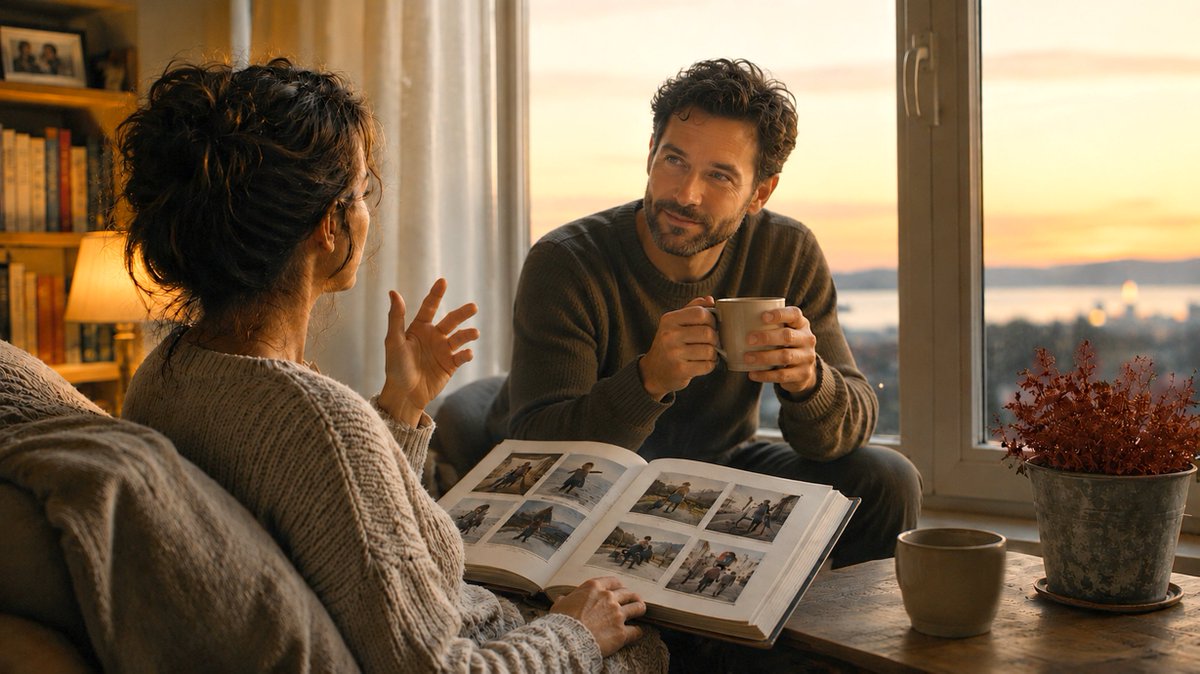
Nous aimons imaginer nos souvenirs comme des archives, mais il s’agit plutôt de reconstructions. Lorsque nous nous souvenons d’un épisode de notre vie, le cerveau n’en restitue pas une copie intacte ; il reconstruit l’événement à partir des éléments qu’il en a conservés.
Cette reconstruction s’effectue depuis le présent. Et lorsque nous racontons ce souvenir, nous le mettons en forme avec ce que nous sommes devenus, les connaissances que nous avons acquises et les mots dont nous disposons désormais pour donner sens à notre expérience. Un même événement peut ainsi être raconté très différemment à vingt ans d’intervalle sans que l’un des deux récits soit nécessairement faux. Notre mémoire autobiographique est, en ce sens, une œuvre narrative permanente.
Cette souplesse explique une part des erreurs et des distorsions de notre mémoire, mais elle n’est pas pour autant une faiblesse. Elle pourrait même être l’une de ses propriétés les plus précieuses. Car cette capacité à extraire et à recombiner des éléments de nos expériences passées nous permet aussi de construire mentalement des événements qui ne se sont pas encore produits. Les mécanismes qui servent à nous souvenir participent ainsi directement à notre capacité d’imaginer l’avenir.
Notre mémoire n’est donc pas seulement tournée vers ce qui fut. Sa nature reconstructive nous permet aussi de concevoir ce qui pourrait être. D’une certaine manière, nous nous souvenons du passé depuis le présent pour mieux imaginer l’avenir.
Pour ceux qui veulent en savoir plus :
https://t.co/dZXiFfRelH
For more than 20 years, Norwegian neuroscientist Audrey van der Meer has investigated how handwriting shapes the human brain.
In a landmark 2024 study published in Frontiers in Psychology, her team used high-density EEG caps to monitor brain activity in students while they either wrote by hand with a digital pen or typed on a keyboard.
The difference was dramatic. Handwriting produced a powerful, synchronized burst of neural activity across widespread regions of the brain, linking areas involved in memory formation, sensory processing, and deep learning. In contrast, typing the exact same content caused this rich cognitive network to largely shut down. Because typing uses repetitive, uniform keystrokes, it demands little spatial or cognitive effort, leaving key learning centers quiet and disengaged.
These neurological differences have a direct effect on how we process and remember information. Earlier research by Pam Mueller and Daniel Oppenheimer at Princeton University reached similar conclusions. Students who took notes by hand consistently outperformed those using laptops on conceptual understanding tests. Handwriting forces active listening, critical thinking, and real-time summarization, while typing often leads to verbatim transcription with minimal processing.
Our brains function as part of an embodied biological system. Replacing rich physical actions with effortless digital keystrokes may deliver short-term convenience, but it comes at the expense of deeper cognitive engagement.
The solution is simple and timeless: pick up a pen.
[Van der Meer, A. L. H., et al. (2024). Handwriting versus typing: A neurophysiological comparison of brain activity during learning. Frontiers in Psychology, 15. DOI: 10.3389/fpsyg.2024.1234567]
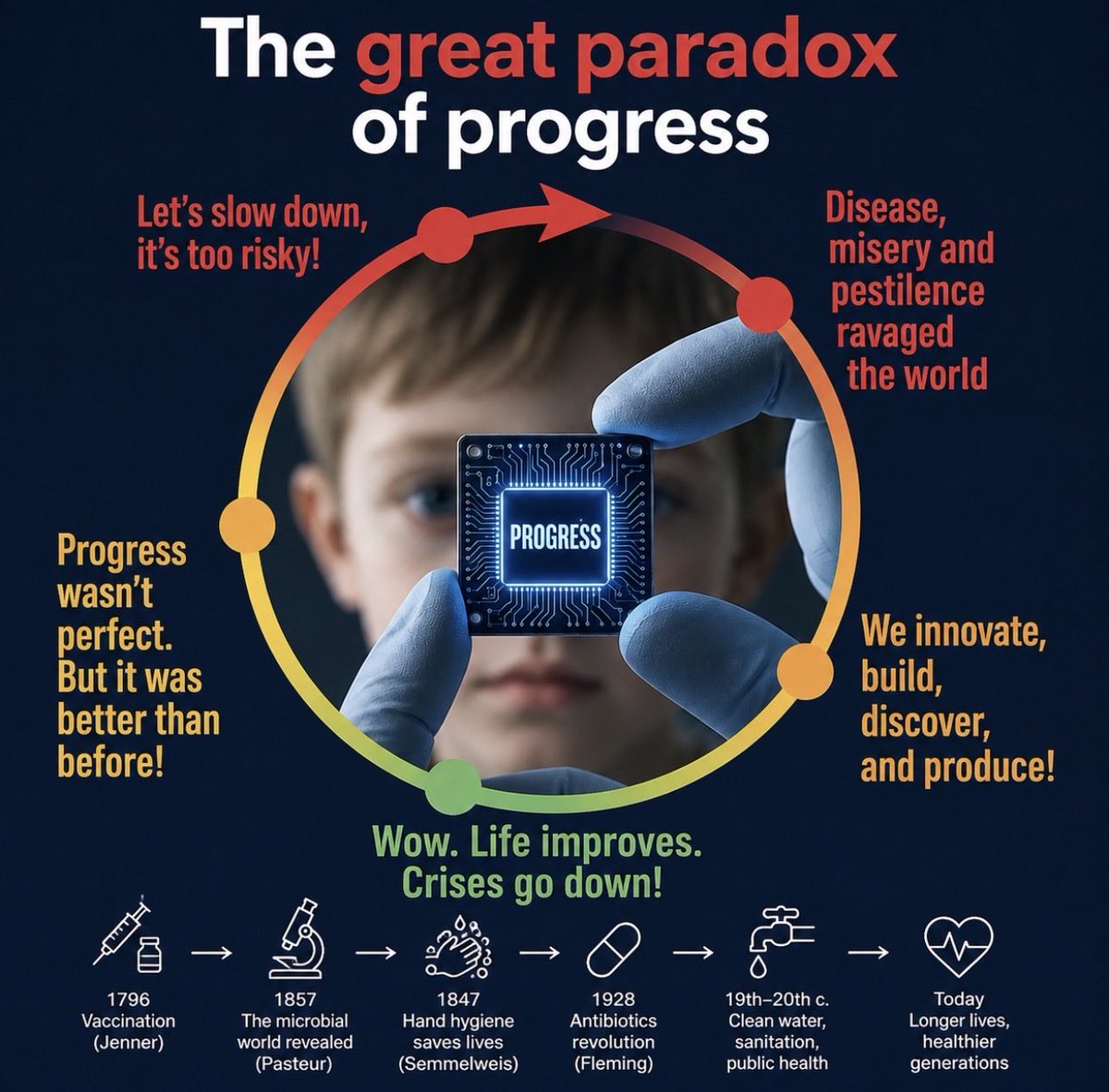
People love to say we should go back to a time when food was natural, medicine was simple, and we weren’t surrounded by synthetic chemicals.
There’s just one problem.
That world existed.
And people died young in it.
For most of human history, a contaminated glass of water could kill you. A small cut could become a fatal infection. Childbirth was dangerous. Pneumonia was deadly. Smallpox killed hundreds of millions.
Then something extraordinary happened.
We started understanding the world around us.
Jenner gave us vaccination.
Pasteur helped reveal the microbial world.
Semmelweis showed that something as simple as washing hands could save lives.
Fleming discovered penicillin.
Chemists learned to purify water, make medicines, disinfect wounds and manufacture molecules that nature either couldn’t provide or couldn’t provide in sufficient quantities.
And life expectancy soared.
Today we are so protected by those advances that we have the luxury of forgetting what life was like without them.
We romanticize “natural” and fear “synthetic” because generations of science have insulated us from many of the natural things that used to kill us.
Nature isn’t good.
Synthetic isn’t bad.
Those are descriptions of origin, not measures of safety or value.
The irony is that many of the people most afraid of modern chemistry are alive long enough to fear it because of modern chemistry.
Progress has a strange side effect:
Eventually people forget what it saved them from.
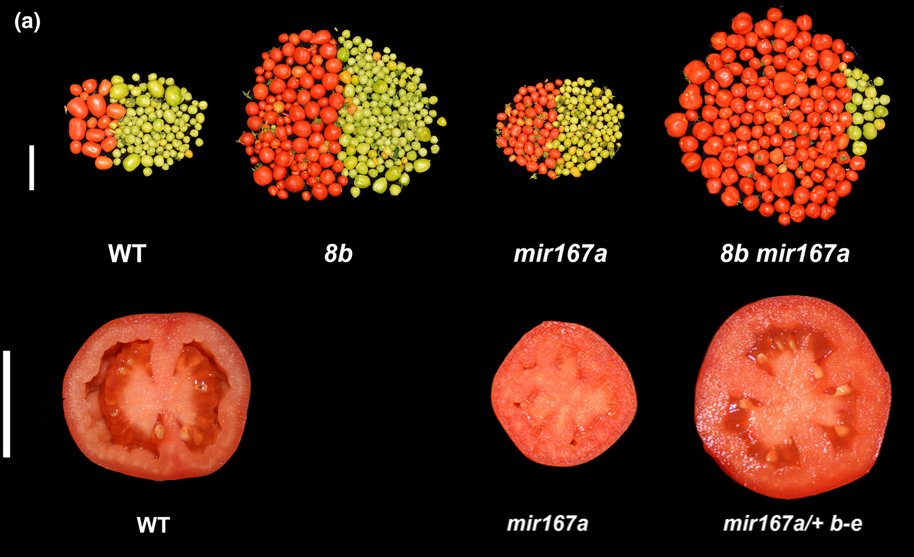
6× more ripe tomatoes &
10× the total weight of ripe fruit than wild-type.
For tomatoes, no fertilization usually means no fruit.
gene-editing just rewrote that equation.
Scientists found a genetic switch that could help tomatoes produce fruit even when cold weather makes normal fertilization difficult and here is their story:-
Every tomato starts as a flower.
But cold weather can disrupt pollen and fertilization.
No fertilization often means no tomato.
So scientists asked a fascinating question:
What if we could make the tomato grow anyway?
Researchers discovered an important genetic system involving a tiny regulatory molecule called miR167.
It helps control genes involved in flower development and fruit formation.
Think of it as part of the plant’s genetic switchboard.
Then they used CRISPR to alter that system.
And something remarkable happened.
The plants started producing tomatoes without fertilization.
It’s called parthenocarpy - and it effectively bypasses one of the steps most vulnerable to cold.
Then they tested the plants during cold winter conditions.
The edited plants produced fruit earlier and continued setting fruit when normal plants struggled.
By harvest, they produced 6× more ripe tomatoes and 10× the total weight of ripe fruit.
There are still important questions about fruit size, taste, quality and how this performs in commercial varieties.
But this is what people often miss about gene editing.
Scientists didn’t randomly “change DNA.”
They understood the biology.
Found the bottleneck.
Identified the genetic switch controlling it.
Then changed it.
That’s the real promise of gene editing.
Not simply changing plants.
Understanding them well enough to solve problems biology couldn’t solve on its own.
Read books. Read everything. Read history to learn how societies grow strong and then fall apart. Read physics to understand that the universe doesn't care what you think. Read biology to see how amazing and delicate your body is. Read psychology to learn how often your brain tricks you. Read philosophy to ask better questions. Read economics to understand what motivates people. Read literature to experience thousands of lives while you live just one. Read poetry when regular words aren't enough for how you feel.
Using spider silk and plant fibers, the common tailorbird can stitch leaves together to create a deep, cup-shaped nest that is lined with soft materials.
My mind is blown. My ADHD brain wants this so bad! Experience endless fun with The Twisting Magic Gear Globe. Spin it, twist it, and watch the gears come to life.
Shop now: https://t.co/rcab1HWv6O
An NIH-funded study indicates that some bone-marrow derived cells in circulation penetrate the walls of the blood-brain barrier as we age. The new research linked these outsiders, which adopt immune behaviors in the brain, with reduced risk of Alzheimer’s disease.
Learn more: https://t.co/sOZGhkBb5d
US President Donald Trump is calling for health officials to split up combo vaccines targeted at multiple diseases into individual jabs spread out over time, starting with the MMR shot. Here's the scientific evidence that explains why it's a bad idea.
https://t.co/p7vVnNT6G7
J’ai consacré ma vie professionnelle à la santé des autres, parfois au détriment de la mienne. Je fais partie de ces médecins auxquels on confie sa santé ou celle de ses proches.
Je ne gagne pas un centime grâce à mon activité sur X. Je n’ai aucun lien financier avec l’industrie pharmaceutique et n’en ai jamais eu.
Ce qui me motive ici est beaucoup plus simple : promouvoir la santé, transmettre ce que je sais et donner à chacun des outils pour réfléchir et mieux résister à la désinformation.
Lorsque je combats quelque chose ici, ce sont des idées, jamais des personnes.
C’est pour moi une question d’éthique et de déontologie.
Et pourtant, je découvre régulièrement des comptes suivis par plusieurs dizaines, parfois plusieurs centaines de milliers de personnes, qui m’ont bloquée alors que je n’ai jamais interagi avec eux.
Cela me laisse surtout avec une question.
Comment, en 2026, alors qu’une immense partie des connaissances de l’humanité est accessible en quelques clics, peut-on diffuser autant de désinformation en matière de santé ?
Naïveté ?
Monétisation ?
Bulle informationnelle ?
Appartenance tribale ?
Besoin de reconnaissance ?
Conviction devenue imperméable à la contradiction ?
Probablement un mélange différent selon les personnes.
Je n’ai pas de réponse simple.
C’est juste une réflexion que je me fais pendant quelques minutes de pause entre deux patients, dans la vraie vie d’un centre hospitalier universitaire.
(Pas de rapport avec la photo. Je l’ai prise il y a quelque temps et je la trouve jolie… 😊)
😅 J’ai cru au moins 3 fois qu’il allait tomber…
Ce skieur japonais a flirté avec la chute tout du long, a rattrapé chaque déséquilibre au dernier moment… et a quand même terminé sa course 👏
#JO2026
Soudan 🇸🇩
Comment les Émirats Arabes Unis (EAU) arment les FSR au Soudan, qui commettent actuellement un génocide ? Simple. Ils achètent des armes dans les Balkans, les font livrer en Libye et les font transporter au Soudan via des mercenaires Colombiens⤵️
Gisèle Halimi s'est toujours battue contre le colonialisme et a défendu les droits des Palestiniens. Que Charlotte Gainsbourg, qui vient de signer une infâme tribune en soutien d'Israël, incarne la grande Gisèle est un affront à sa mémoire !





![Rainmaker1973's tweet photo. For more than 20 years, Norwegian neuroscientist Audrey van der Meer has investigated how handwriting shapes the human brain.
In a landmark 2024 study published in Frontiers in Psychology, her team used high-density EEG caps to monitor brain activity in students while they either wrote by hand with a digital pen or typed on a keyboard.
The difference was dramatic. Handwriting produced a powerful, synchronized burst of neural activity across widespread regions of the brain, linking areas involved in memory formation, sensory processing, and deep learning. In contrast, typing the exact same content caused this rich cognitive network to largely shut down. Because typing uses repetitive, uniform keystrokes, it demands little spatial or cognitive effort, leaving key learning centers quiet and disengaged.
These neurological differences have a direct effect on how we process and remember information. Earlier research by Pam Mueller and Daniel Oppenheimer at Princeton University reached similar conclusions. Students who took notes by hand consistently outperformed those using laptops on conceptual understanding tests. Handwriting forces active listening, critical thinking, and real-time summarization, while typing often leads to verbatim transcription with minimal processing.
Our brains function as part of an embodied biological system. Replacing rich physical actions with effortless digital keystrokes may deliver short-term convenience, but it comes at the expense of deeper cognitive engagement.
The solution is simple and timeless: pick up a pen.
[Van der Meer, A. L. H., et al. (2024). Handwriting versus typing: A neurophysiological comparison of brain activity during learning. Frontiers in Psychology, 15. DOI: 10.3389/fpsyg.2024.1234567]](https://pbs.twimg.com/media/HP6OF9aWkAA0E7P.jpg)