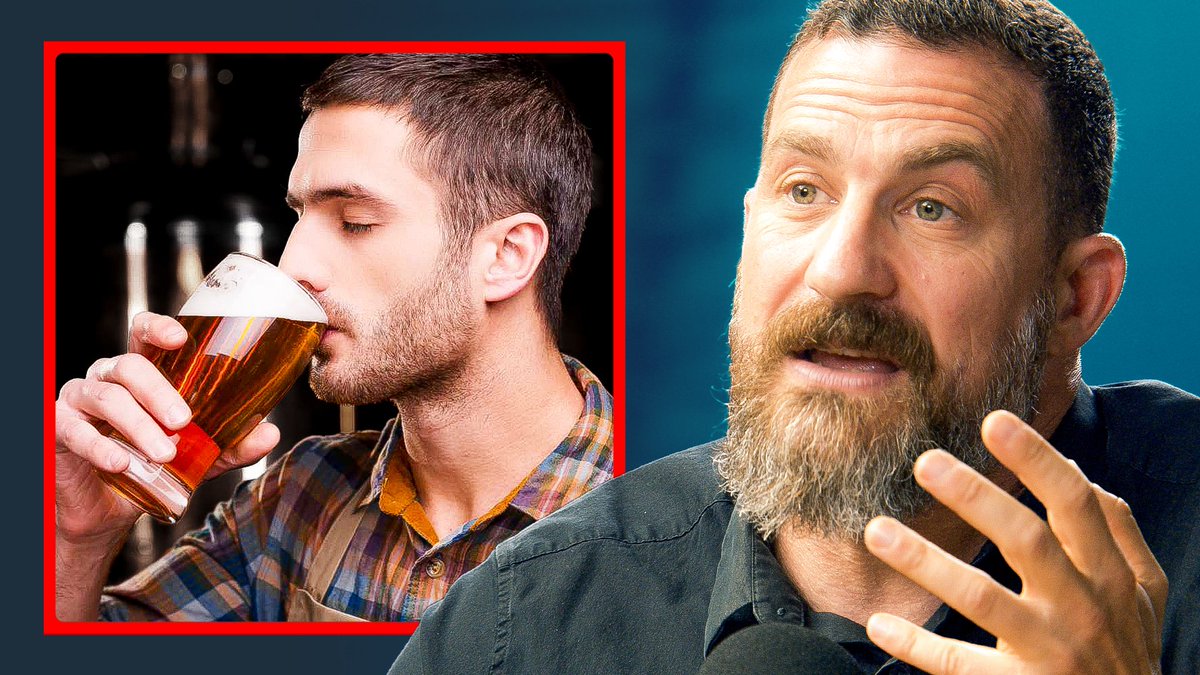
Will putting red light on your balls triple your testosterone?
The science might surprise you.
As it turns out, multiple animal studies have shown benefits of red / near infrared light applied to the testes.
One study examined the benefits of a red laser to the balls of animals with spinal cord injury, which impairs testicular function and thus testosterone.
The light increased testosterone - at 810 nm.
Another study - infrared light at 890 nm increased the volume of the testicles and the testosterone output after chemical sterilization.
A pretty big improvement, once again by shining light directly on the balls.
Another one here, showing similar results.
Restores T back to normal levels after chemical testicular impairment.
It also hugely improved markers of sperm health:
➥ Sperm count
➥ Motility
➥ Viability
➥ Morphology
Overall improving male fertility.
Now why exactly does this happen?
These studies have shown us that the light induces a few biochemical changes in the testes.
For instance, inflammatory cytokines TNFα and IL-1β were markedly decreased with light in some animal studies.
Meanwhile the anti-inflammatory cytokine CSIF was increased.
Apoptosis, which is cell death, measured by caspase 3, was also decreased.
Inflammation + cell death in the testes is a core cause behind low T and infertility, as the cells there are needed to churn out healthy sperm and testosterone.
Oxidative stress is also lowered by this type of light.
The ratio of GSH/GSSG - the usable vs used forms of glutathione - was increased,
meanwhile the production of free radicals (DFC absorbance) was decreased.
Oxidative stress will impair steroid production by influencing steroidogenic enzyme expression + activity, and physically destroys the cells needed for it.
Red light lowers it.
They also showed physical improvement of the testes.
The seminiferous tubules, the area in which sperm are made, a big improvement in their function and structure is seen.
How does red light do this?
The main reason is due to the light's effect on mitochondria.
Certain wavelengths of light act on an enzyme called cytochrome c oxidase in this organelle, and activates it.
This causes:
◇ Greater ATP production
◇ Less free radical production
◇ Better NAD+/NADH ratio
all of which are vital to cellular health.
Additionally, the reduced free radical production:
◇ Impacts gene expression / intracellular signaling
◇ Prevents cell damage
◇ Lowers inflammation
Again - very protective especially for the Leydig cells which produce testosterone.
Much of infertility / low T is driven by oxidative stress and inflammation in the balls.
Red light helps.
I'll link our red light products below.
@TelkomZA Your privacy policy is missing and T&C’s are not easy to follow when purchasing contracts through your site. Might want to look into that. How do users know what they’re agreeing to.
Landowner David Hampton planted larch pines in a douglas fir forest in Oregon in the shape of a giant, 300 feet smiley face 🙂
Every autumn the larch pines turn orange and the smiley face stands out.
https://t.co/nau532GFAp
🟡 Honey is 80% sugars and 20% water.
🟡 To make one pound of honey, the bees in the colony must visit 2 million flowers, fly over 55,000 miles and will be the lifetime work of approximately 768 bees.
🟡 A single honeybee will only produce approximately 1/12 teaspoon of honey in her lifetime.
🟡 A single honey bee will visit 50-100 flowers on a single trip out of the hive.
🟡 Honey is the ONLY food that includes all the substances necessary to sustain life, including enzymes, vitamins, minerals, and water; and it's the only food that contains "pinocembrin", an antioxidant associated with improved brain functioning
[📹 macrofying]
This man has rescued and adopted dogs who have lost the use of their back legs, and every day he walks them to the dog park, where he reattaches their 'wheels,' so they can play. Faith in humanity restored 🐾 send your love to this sweet family! ❤️