Seismic surveys and sediment cores suggest that dozens of deep pockmarks on the sea floor were created when Arctic methane stores were disrupted by climate change after the last glacial maximum – and scientists warn it could happen again https://t.co/kJRva1Dx1l
Ancient iceberg scratches suggest the Great Lakes once had a reverse snowbelt: for thousands of years, lake-effect snow likely fell more on western shores than eastern ones. https://t.co/8We44JFTGY
The House budget bill that includes NASA funding just cleared a key hurdle, advancing out of the Appropriations Committee.
This is the first funding bill for FY 2027 to be released and reach this stage, establishing congressional intent and rejecting the worst of the Office of Management and Budget’s proposed cuts to NASA. https://t.co/aAky96gjej
Chains of high-energy electron avalanches may very likely be making clouds glow, flicker, and flash with gamma rays. But are they also the elusive cause of lightning? https://t.co/M67XwMkrmT
A fast stream of solar wind could trigger G2 geomagnetic storm conditions overnight, boosting aurora chances across parts of the northern U.S. https://t.co/ysrLg3FkAs
Scientists say amino acids produced by life are distributed differently and more diversely than amino acids produced by non-living chemical reactions, thereby providing a truer signature of life. https://t.co/WwC82UPRAr
HAT-P-70b Through The Eyes of MAROON-X: Constraining Elemental Abundances of Metals and Insights on Atmosphere Dynamics
https://t.co/yTJ1fZHMKJ #astrobiology#exoplanet
The National Space Operations Centre has released the April report on the threats from space-related hazards. 🛰️ 🌍
In April, there were:
➡️ 68 uncontrolled re-entries
➡️ 1,194 in-space collision warnings
➡️ 223 newly registered objects in orbit.
👉 https://t.co/SOdYpwl3JE
The retina is one of the most energetically expensive tissues known to science. And yet, birds’ retinas manage without a key energy-saving tool: oxygen. New research explores how. https://t.co/Ful3jkIQ6J
Antarctic ice holds a faint trail of radioactive iron-60 from interstellar dust—and between 40,000 and 80,000 years ago, that trail unexpectedly thinned as the solar system moved through nearby clouds. @ConversationEDU@physrevlett https://t.co/lYcvNOzrMv
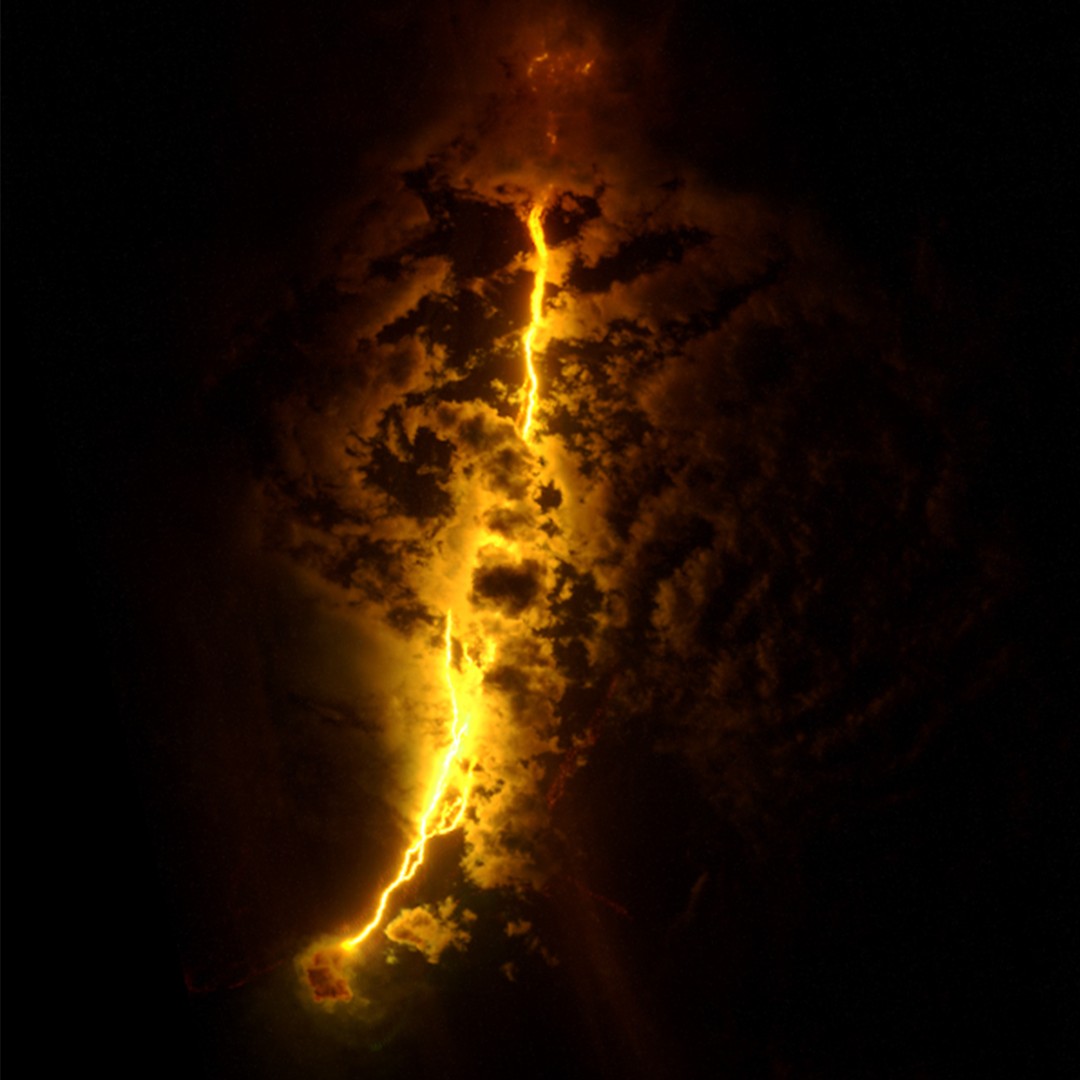
A river of lava glowing in the dark, captured from space 🌋
Landsat satellites, a joint mission between @Nasa and @USGSLandsat, don’t always take the night off. By special request, they can collect nighttime imagery that helps scientists monitor erupting volcanoes, wildfires, glaciers at twilight, and more.
This nighttime image from Landsat 9 captured Mauna Loa’s 11.3-mile-long lava flow on December 4, 2022, illuminating a plume of ash in the atmosphere above Hawaii. Swipe to see how it looked from the ground the next day.
Want to know what a certain volcano, wildfire, or icy landscape looks like after dark from space? Learn more about what Landsat can see at night and how to submit a special imagery request 👉https://t.co/P23tYWZSvx