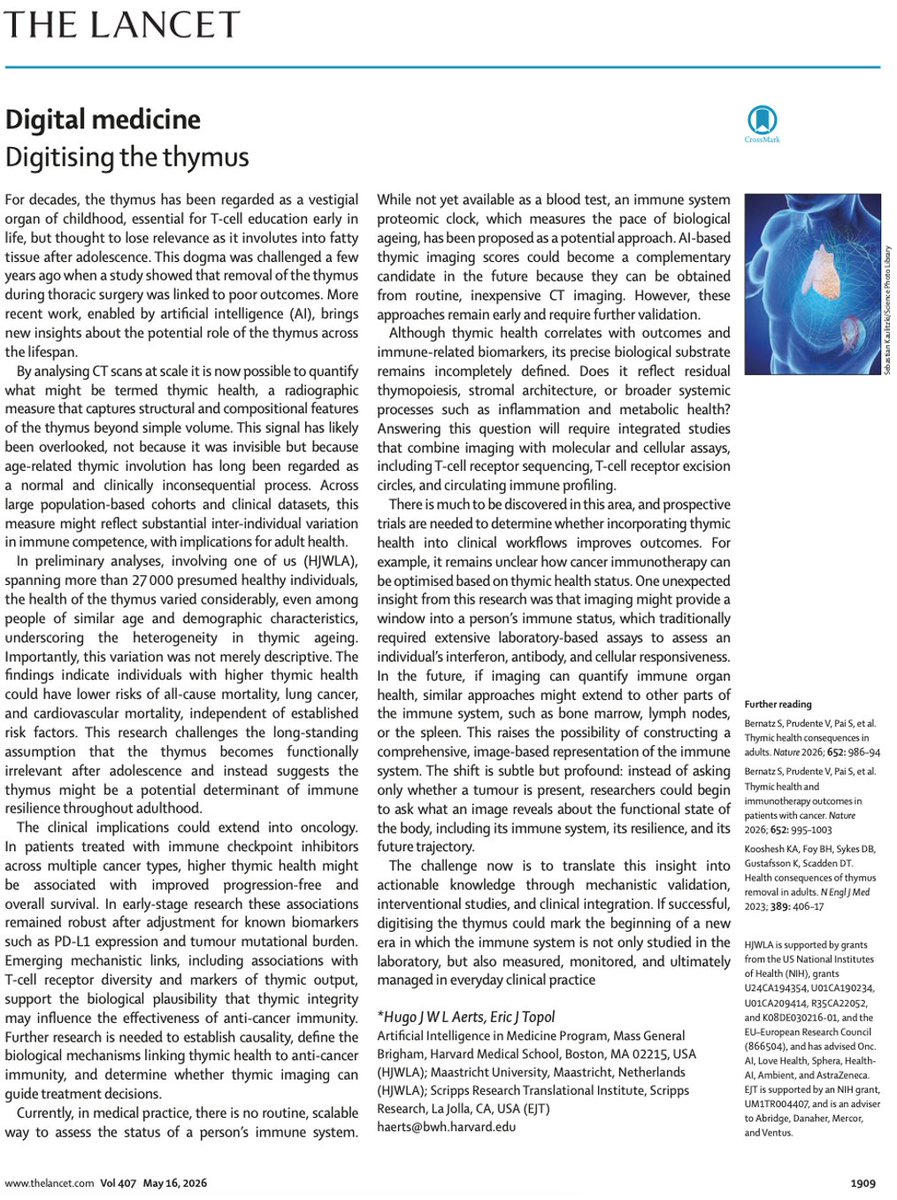
Excited to share our new @TheLancet Perspective with @EricTopol .
For decades, the thymus was considered largely irrelevant after childhood. Emerging evidence now suggests this “forgotten organ” may play an important role throughout life.
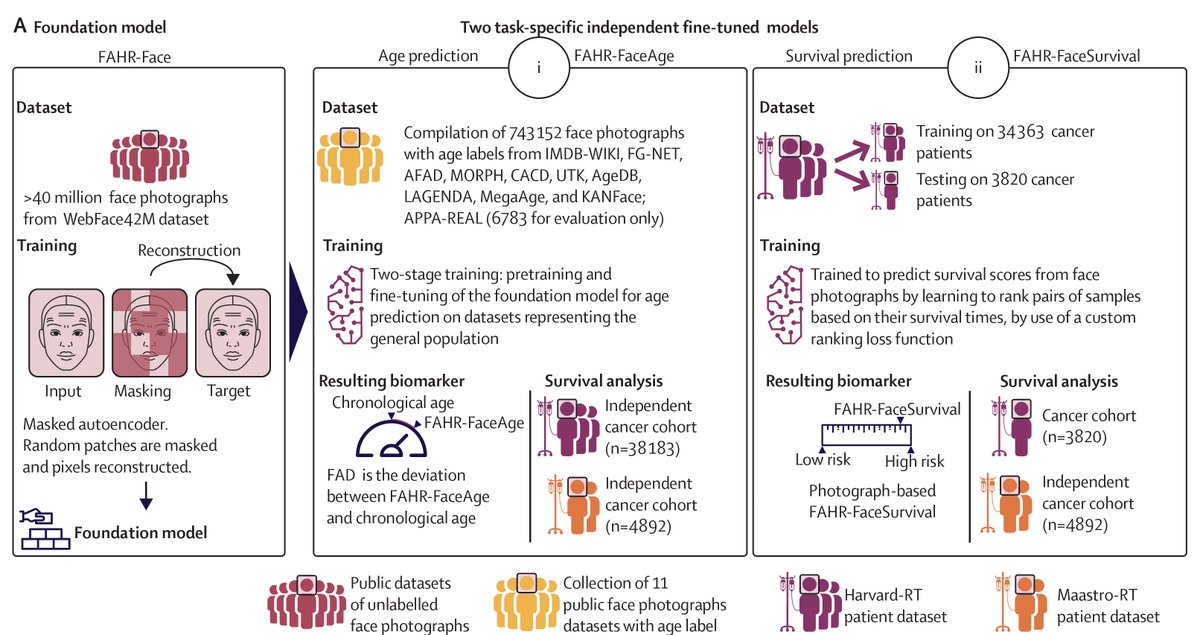
There's a lot in a face photograph about health that AI can detect, as seen in this foundation model of >40 million face images, including outcomes from cancer, biological age, influence of lifestyle factors, and survival @LancetDigitalH
https://t.co/l4AqDfl0s3
More validation for how critical health of the thymus is in adults, as assessed by AI of a chest CT.
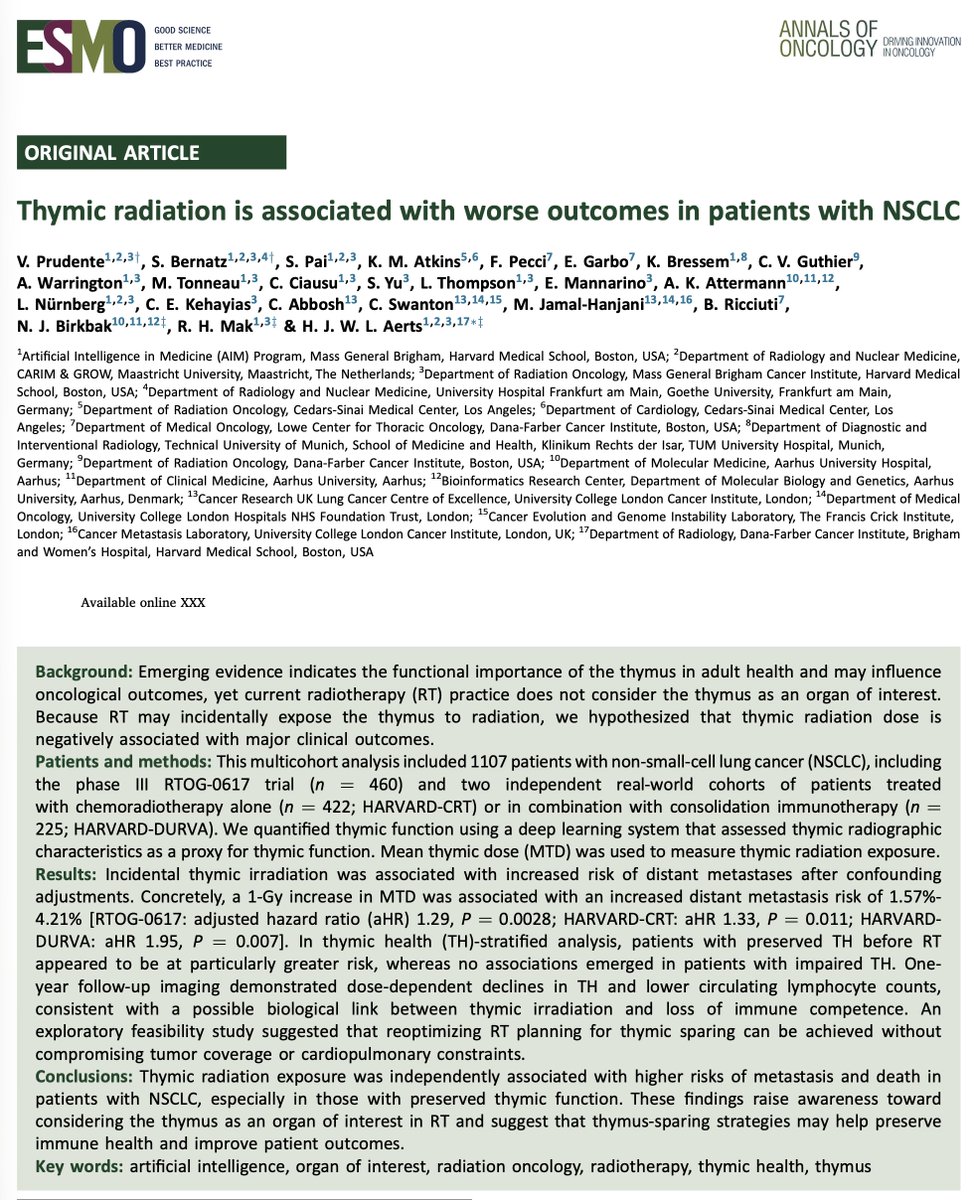
Thymus radiation exposure is linked to worse outcomes for cancer (non-small cell lung cancer) for distant metastasis and reduced survival @Annals_Oncology
open-access @HugoAerts@MGBResearchNews
https://t.co/I5dGTUJ2Pd
@dr_yakupergun@Annals_Oncology Exactly. The interaction with baseline thymic health is particularly interesting. Patients with a preserved thymus may also have the most to lose from thymic radiation. Prospective validation is the important next step.
@LungCancerEu Thank you for highlighting our work. This is exactly the question we hope to answer next: can protecting the thymus during radiation therapy help preserve immune health and improve outcomes for patients?
@clairepomeroy Thank you Claire for highlighting our work. The remarkable variation in thymic health between adults may tell us much more about immune health and aging than we previously appreciated!
@MitoHealthLLC@EricTopol@Annals_Oncology Thank you Ted. That is exactly the question this work raises. If the adult thymus remains important for immune health, we should start asking how we can preserve it, particularly during cancer treatment.
@Ethan_Smartsys@EricTopol@Annals_Oncology Exactly. The interaction with baseline thymic health is one of the most interesting findings. Patients with a preserved thymus may also have the most to lose when it is irradiated.
@EricTopol@Annals_Oncology Thanks Eric for highlighting our work! This raises an important question: should we start thinking about protecting the immune system as part of cancer treatment?
If the adult thymus matters, should we be protecting it during cancer treatment?
Our new study suggests that radiation exposure to the thymus is associated with worse outcomes.
Perhaps we should not only target the tumor, but also protect the immune system that helps fight it.
The #thymus was long thought to become useless after childhood. But researchers using artificial intelligence (#AI) and tens of thousands of computed tomography (#CT) scans have found that adults with healthier thymuses appear to be less likely to develop #cancer, heart disease and other illnesses linked to #ageing.
#sciencenewsdk @HugoAerts@nbirkbak
Read more: https://t.co/4qhf1ZDTI2
Excited to share our new @TheLancet Perspective with @EricTopol .
For decades, the thymus was considered largely irrelevant after childhood. Emerging evidence now suggests this “forgotten organ” may play an important role throughout life.
Thank you, @EricTopol! It has been a true pleasure collaborating on this perspective. Amazing to see how rapidly our understanding of this long-overlooked organ is evolving, and how AI and imaging may help make immune system health measurable at scale.
Challenging medical dogma, our understanding of the thymus and its impact on our health throughout lifespan has been completely revamped
w/ @HugoAerts@TheLancet
https://t.co/Wx4n7zeJwp
I wrote about this 6 weeks ago at Ground Truths when the 2 @Nature papers by @HugoAerts and colleagues came out. Today it's a "Health Alert"!
https://t.co/CgxBU7IAk1