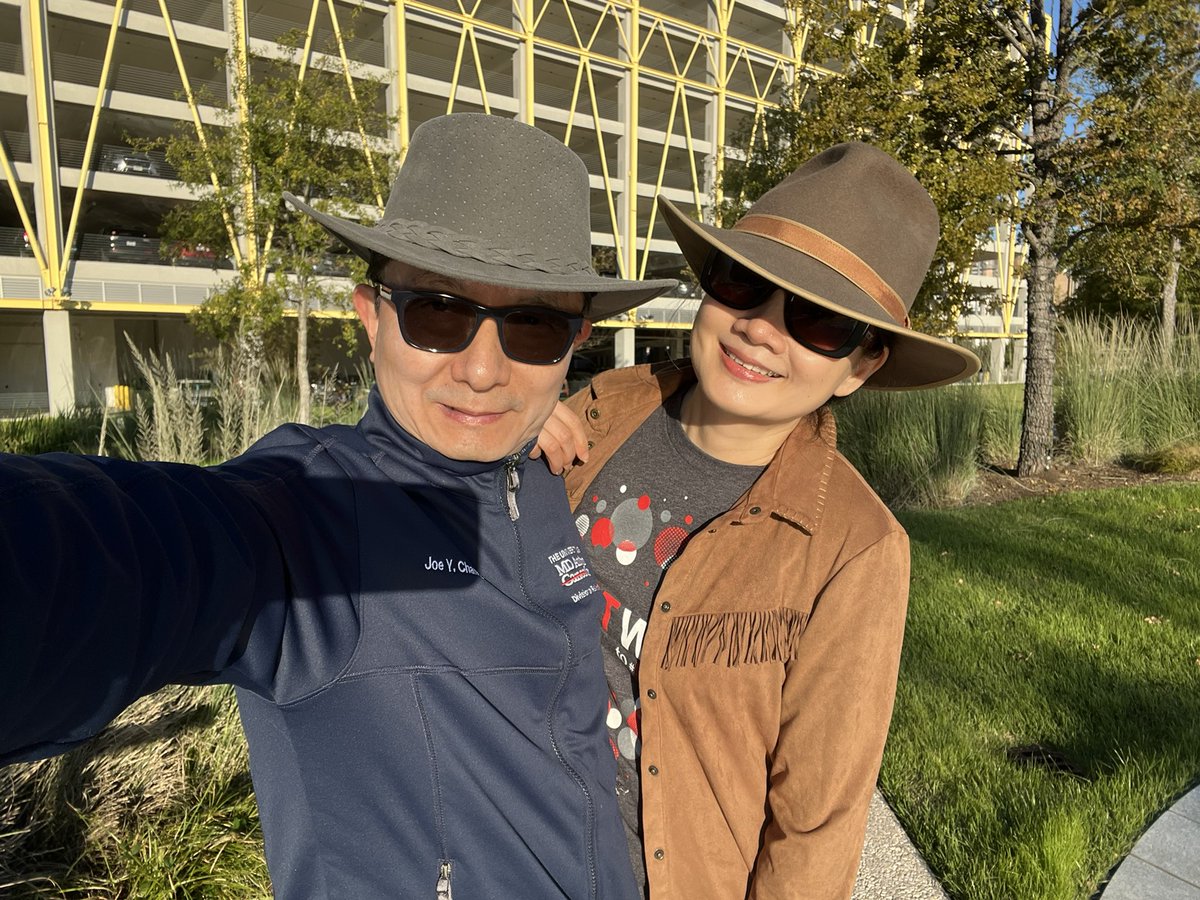
On this beautiful day, I’m grateful to join my MD Anderson colleagues and friends for the Boot Walk to End Cancer and to support cancer research.@UTMDAnderson
The @AmericanCancer now recommends prostate cancer screening every two years, starting at age 50, and annual screening starting at 45 for Black men as well as those with a strong family history.
Dr. Justin Gregg weighs in on the update. @CNN@JustinRGregg#EndCancer https://t.co/QDDfEGWCMJ
A new alliance brings together UT MD Anderson and P-Cure to evaluate the potential of a dual-modality approach that could enable physicians to select either proton or helium ions based on the specific disease.
Learn more. #EndCancer https://t.co/gj5qKoi4KS
Neither emulated analysis nor novel AI tools can overcome the limitations of insufficiently detailed information in population-based studies. Well-controlled prospective studies are needed to answer these questions.
JCO emulated trial, SABR vs surgery: surgery’s benefit was significant for all-cause mortality only; not lung cancer-specific mortality. That signals clinical imbalance, not inferior SABR: ECOG2 26% vs 7%, COPD 46% vs 26%. Salvage & nuanced treatment decision not in registry.
🌶️🌶️ A journal preprint demonstrates what's possible with lung SBRT as long as the prescription is Spicy enough. This is why all my prescriptions have a Dmin of 125% within the IGTV. @HoppeBrad https://t.co/qvFi5ek5dC
🚨📣 big news at #ESMO26: 🧵1/MASTERPLAN RCT shows adding SABR to perioperative chemotherapy for high-risk localized #pancreatic cancer ⬆️⬆️ median overall survival to 22.0 months vs 14.0 months (HR 0.45). #PancreaticCancer#RadOnc@TROGfightcancer in press @TheLancetOncol - https://t.co/KhPO4dgZd4
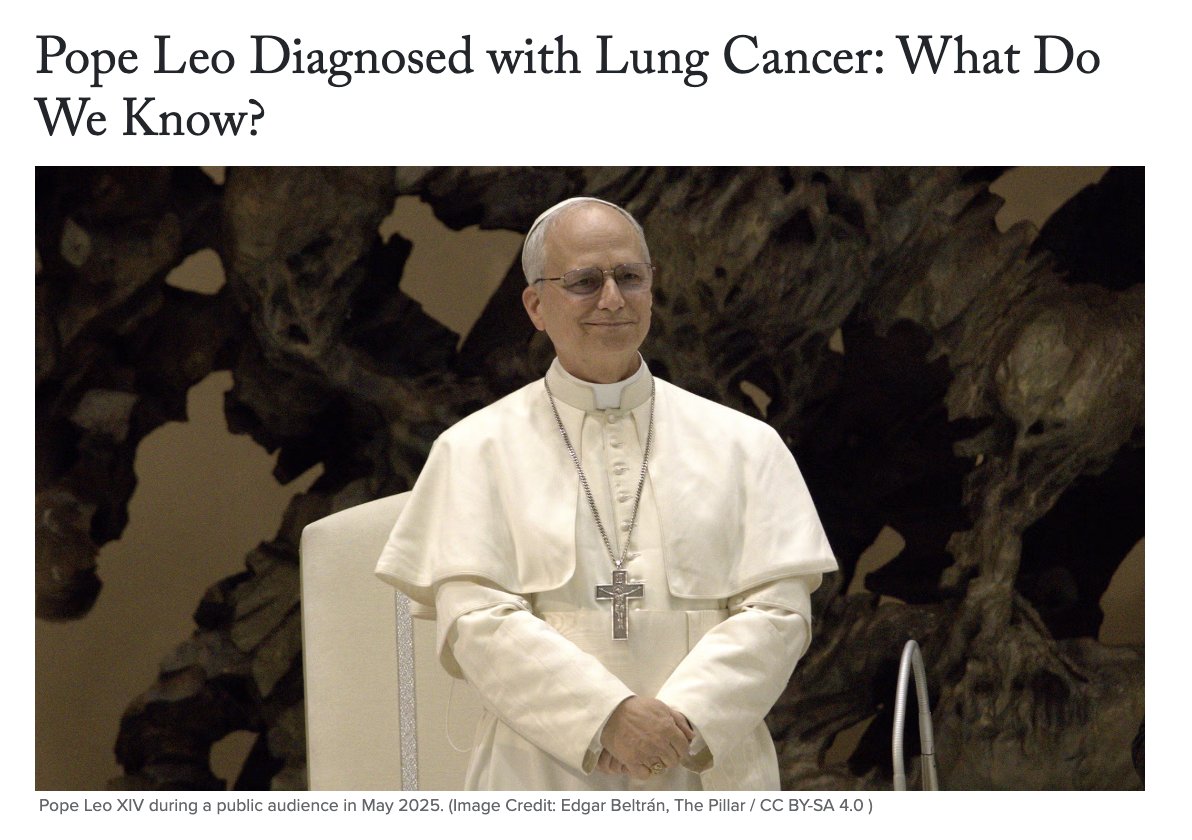
Alternatively, Pope Leo could have stereotactic ablative radiotherapy if his tumor is small, peripherally located, medium/high risk or refusal for lobectomy. 2025 ASTRO presentation comparing SABR vs VATS showed no inferiority in overall survival at 10 years. Manuscript will be published soon.
Pope Leo XIV has been diagnosed with lung adenocarcinoma.
While we had hoped for a different diagnosis, the fact that he was able to undergo a lobectomy is encouraging. Surgery is generally pursued when lung cancer appears localized and potentially curable.
Final pathology will help determine prognosis and whether additional treatment is needed.
Wishing the Holy Father a smooth and speedy recovery.
https://t.co/SYKUMxgVTK
@ProtonStorey With more advanced molecular biology and technology including AI, we should be able to obtain all biological information needed using biopsy tissue and/or circulating tumor cells or DNA in near future. Individualized approach is the best way to manage early-stage lung cancer.
MDT management is crucial for stage III NSCLC. For sure, we need more well-design clinical trials to better define the role of radiotherapy vs surgery in stage III NSCLC in the era of immunotherapy and molecular targeted treatment.
As we confront the world’s number-one cancer killer, we need novel biological insights and cutting-edge technologies to improve clinical outcomes for patients with lung cancer. The great news is that lung cancer survival has nearly doubled since I joined the field of thoracic radiation oncology 24 years ago.
Join us in Washington, DC tomorrow, Saturday, October 10 for #DCLung26 - a 1-day, comprehensive, @IASLC endorsed, multidisciplinary, discussion-based lung cancer CME update!
On-site registration available and join us afterwards for our inaugural gala!
https://t.co/gD0mjDeS8Y
Agreed.
1. Oligo-progression, oligo-persistent disease after IO are quite different biologically.
2. IO induced Oligo-met vs Oligo-met before any TX are quite different biologically.
3. For oligo-met before any IO, RT may need to deliver before any IO in order to achieve optimal outcomes .
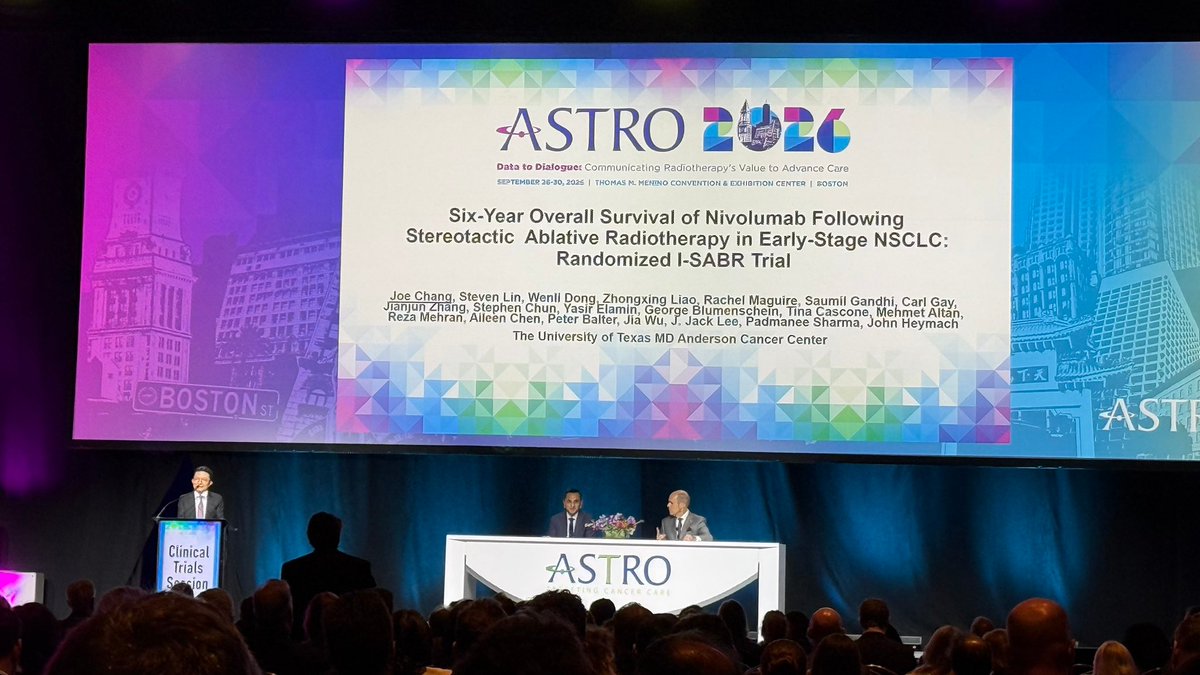
I-SABR Phase II Study Shows Improved Overall Survival With Immunotherapy Added to SABR in Early-Stage NSCLC - Joe Y Chang
@JoeChangMD
https://t.co/GJWgKpZhmG
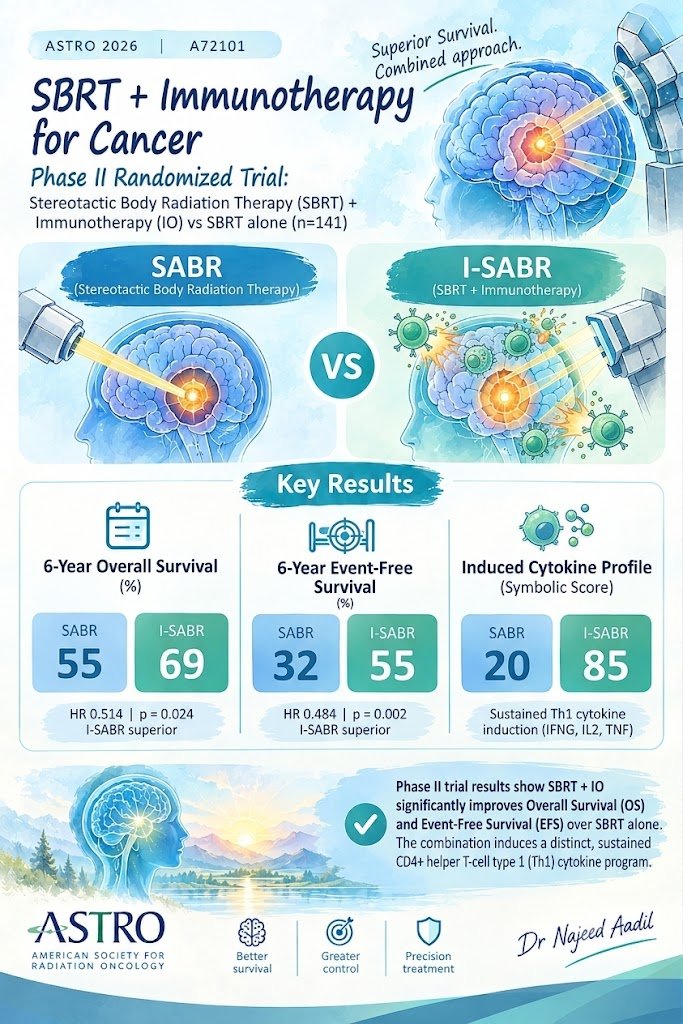
SBRT with immunotherapy significantly boosts long-term cancer survival. The 6-year overall survival reached 69% with the combined approach, compared to 55% with radiation alone. This major improvement is driven by a powerful, sustained immune response! #ASTRO26