The growing risk of a collapse of the Atlantic Meridional Overturning Circulation system, of which the Gulf Stream is part, is nothing less than the number one long-term security threat to our way of life in Britain, Europe and the Western world in the era in which we live.
The consequences on our societies of an AMOC collapse would be simply devastating for Britain especially, beyond anything imaginable but a full blown super pandemic or nuclear war — with scientists modelling temperatures dropping around 15.c and half of our arable land being lost.
This is just one of many climate catastrophes starring at us of the modelling and the observed data and is why it is why Labour has continued to place such importance on Net Zero and international climate talks despite the Greens and progressive activists now looking elsewhere post-October 7th and the Conservatives joining Reform in now campaigning against them.
It is also one of the most important areas our foreign policy has and must continue to diverge from Trump’s America, an active opponent to progress on this agenda. It is also why despite the huge security, technological and industrial risks they pose we need an active and substantive dialogue here as far as is possible with China — which Labour has pushed for.
Let me trace the timeline here because nobody's connecting it.
Step 1: Scrape the entire internet. Every book, every article, every conversation, every piece of art, every forum post. Do it without asking. Do it without paying.
Step 2: Train a model on all of it. Call it "artificial intelligence."
Step 3: Go to BlackRock's Infrastructure Summit and announce: "We see a future where intelligence is a utility, like electricity or water, and people buy it from us on a meter."
Step 3 is where you sell people's own knowledge back to them. On a meter.
They took the collective output of human thought, compressed it into a model, and now they want to charge you by the token to access a version of what you and everyone you know already created.
One Reddit user put it perfectly: "They stole all this data from us, the people, our life's work, creativity, art, by devouring the internet and blowing through all copyright laws. Now they want to sell it back to us in the form of a utility."
Imagine if someone photocopied every book in the public library, burned the library down, and then opened a subscription service for the copies.
That's the metered intelligence business model.
And they're pitching it to infrastructure investors as though they invented water.
Tech hubs are not built by slogans.
They are built by technical talent, founder-friendly rules, patient capital and universities that spin research into companies.
AI, deep tech and defence will concentrate in the cities where this flywheel is already turning.
The list below shows where this is and will happening:
Source: @dealroomco European Spinout Report 2025
There's a physicist at Stanford named Safi Bahcall who modeled this exact principle and the math is wild.
He calls it "phase transitions in human networks." When you're stationary, your probability of a lucky event is limited to your existing surface area: the people you already know, the places you already go, the ideas you've already been exposed to. Your opportunity window is fixed.
When you move, your collision rate with new nodes in a network increases nonlinearly. Double your movement (new conversations, new cities, new projects) and your probability of a serendipitous encounter doesn't double. It roughly quadruples. Because each new node connects you to their entire network, not just to them.
Richard Wiseman ran a 10-year study at the University of Hertfordshire tracking self-described "lucky" and "unlucky" people. The single biggest differentiator wasn't IQ, education, or family money. Lucky people scored significantly higher on one trait: openness to experience. They talked to strangers more, varied their routines more, and said yes to invitations at nearly twice the rate.
The "unlucky" group followed the same routes, ate at the same restaurants, and talked to the same 5 people. Their networks were closed loops. No new inputs, no new collisions.
Luck isn't random. Luck is surface area. And surface area is a function of movement.
The lobster emoji is doing more work than most people realize. Lobsters grow by shedding their shell when it gets too tight. The growth requires a period of total vulnerability. No protection, no armor, soft body exposed to the ocean.
That's the cost of movement nobody posts about. You have to be uncomfortable first. The new shell only hardens after you've already moved.
this is the best thing i’ve ever seen lol
why does it feel like riley is the only person building cool stuff
all these parallel claude orchestration sessions and everything i see here is boring
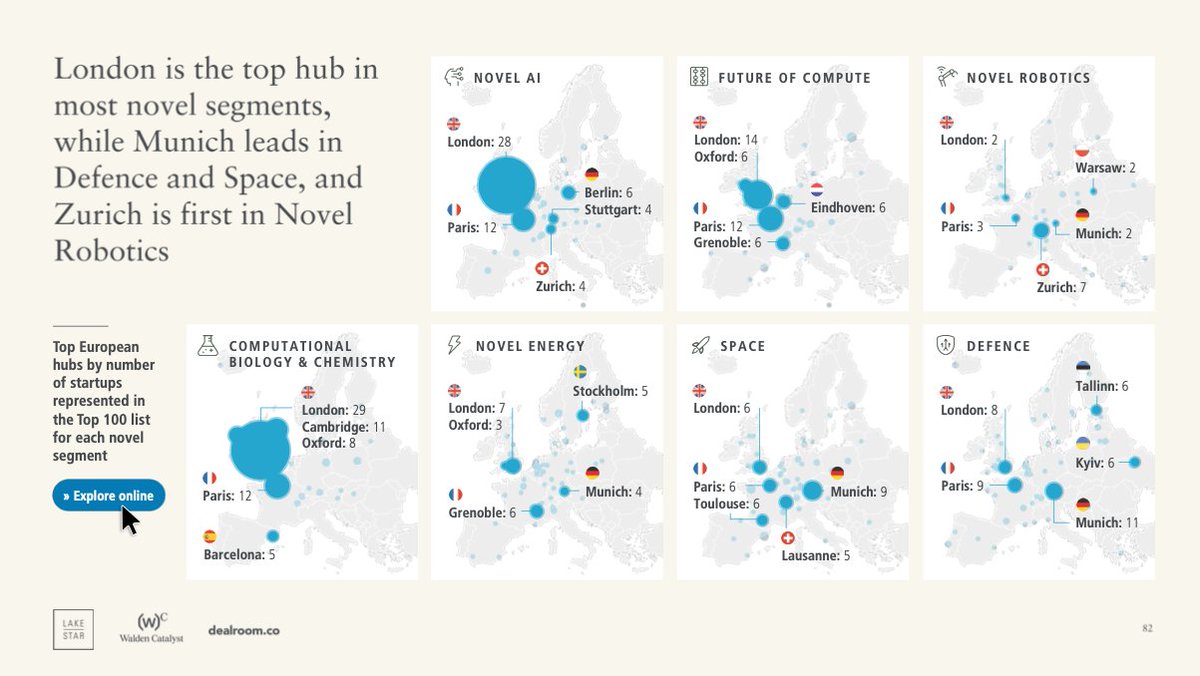
Deep Tech 2026 hubs in Europe. 🇪🇺
Top European hubs by number of startups represented in the Top 100 list for each novel segment.
🇬🇧London is the top hub in most novel segments.
🇩🇪Munich leads in Defence & Space
🇨🇭Zurich first in Novel Robotics.
Having a sector focus tech ecosystem policy is effective for your economy, talent, capital. Concentration of talent + capital matters.
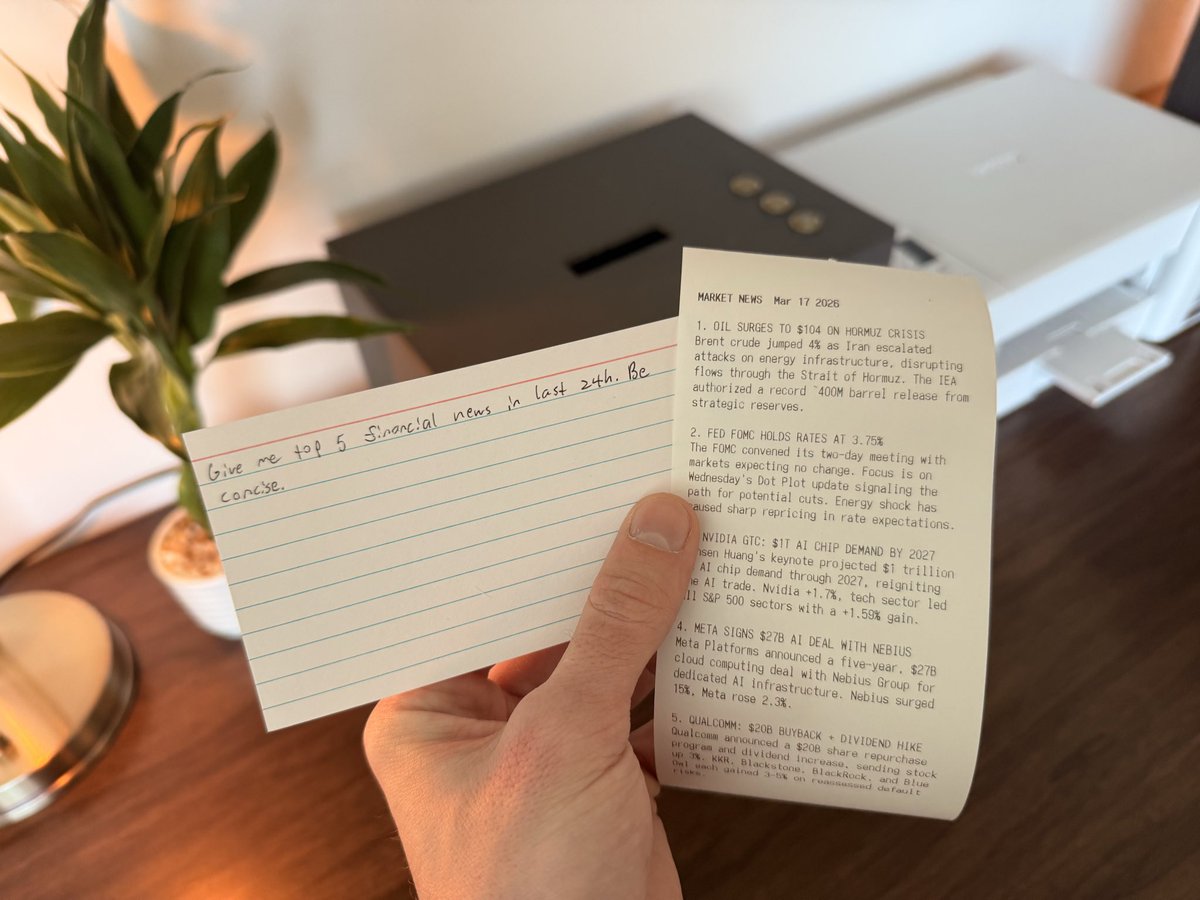
“Give me top 5 financial news in last 24h. Be concise.”
I write it on an index card
Put it in the screenless phone
It gives me what I request
No need for exposure to the poisonous “algorithm”
Personal agents are the future
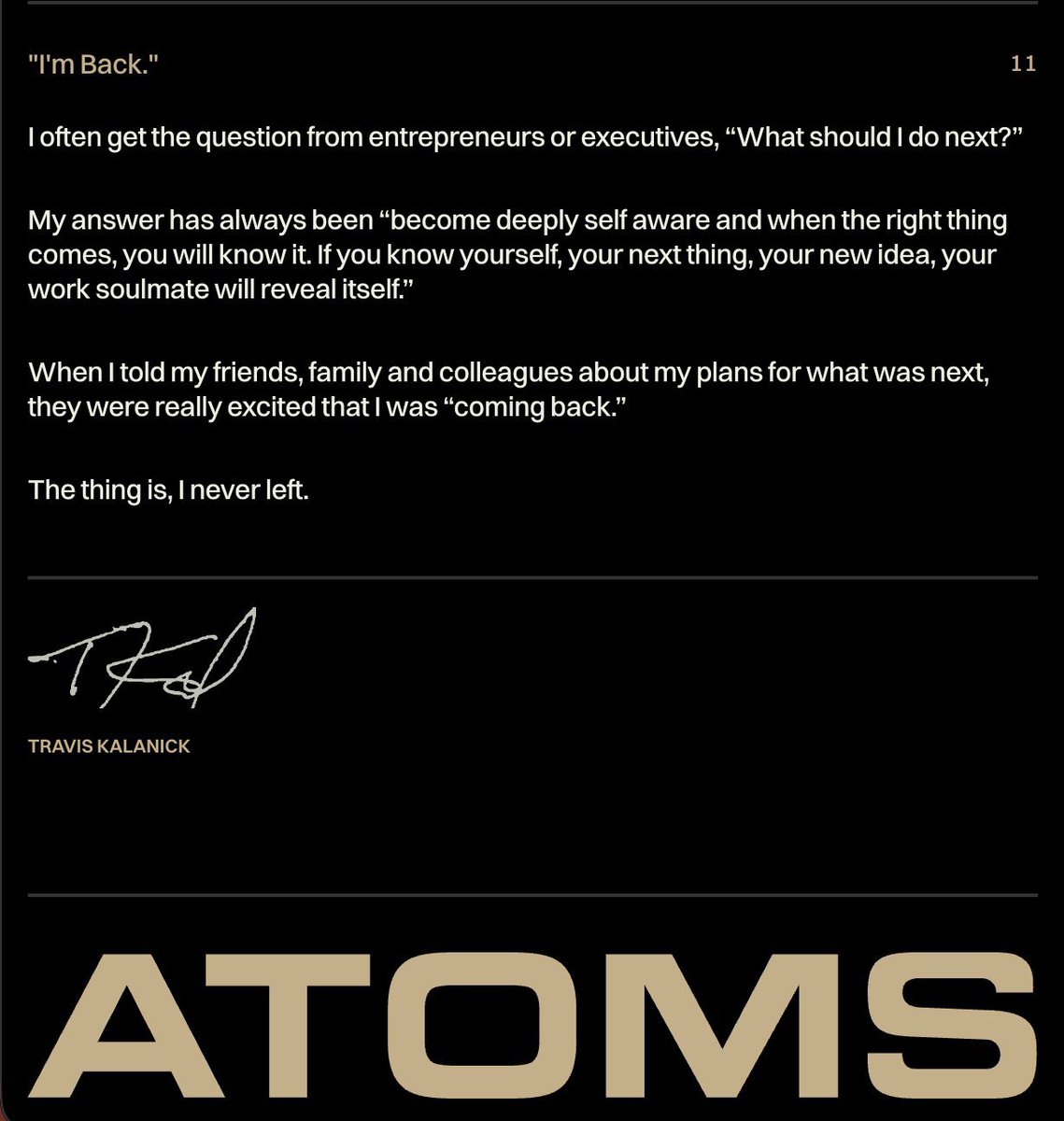
@andreasklinger The show @travisk put on announcing Atoms on TBPN, that statement, made me think exactly of this. Too rarely would you see such bravado from a European founder.
I think we'll get more open-source, community-driven, and transparent dashboards to help cities and countries monitor their KPIs and measure performance (society, economy, and technology).
This will help the debate and become more data driven.
Honey wake up. New edition of found hamburg just dropped 📫
⚔️ Kyrylo's call-to-arms for more successful founders to give back to the local scene
🌏 @Carbon13_news's green innovation event at 1KOMMA5°
💰 Overview of the funding landscape at Impact Hub
https://t.co/j7IBrrM869
Renaissance history is so much wilder and weirder than you would have expected. Very fun chatting w @Ada_Palmer about it.
Some especially fascinating things I learned from the conversation and her excellent book, Inventing the Renaissance:
Not only did Gutenberg go bankrupt in the 1450s (after inventing the printing press), but so did the bank that foreclosed on him, and so did his apprentices. This is because paper was still very expensive, and so you had to make this big upfront CAPEX decision to print a batch of 300 copies of a book - say the Bible. But he's in a small landlocked German town where only priests are allowed to read the Bible - so he sells maybe 7 copies. It’s only when this technology ends up in Venice, where you can hand 10 copies to each of 30 ship captains going to 30 different cities, that it starts taking off.
Speaking of which, the printing revolution wasn’t just one single discrete event, just as the computer revolution has been this whole century of going from mainframes -> personal computers -> phones -> social media, each with different and accelerating social impact. Books came first, but they’re slow to print, and made in small batches. The real revolution is pamphlets - much faster, much harder to censor. Pamphlet runners are how you can have Luther's 95 Theses go from Wittenberg to London in 17 days.
So much other wild stuff from this episode. For example, did you know that the largest and best-funded experimental laboratory in 17th century Europe was very likely the Roman one run by inquisitors? Ada jokes that the Inquisition accidentally invented peer review. The focus of the Inquisition is really misunderstood - it was obsessed with catching dangerous new heretics like Lutherans and Calvinists - it only executed one person for doing science.
And this leads Ada to make an observation that I think is really wise: the authorities and censors are always worried about the exact wrong things given 20/20 hindsight. When Inquisition raids an underground bookshop during the French Enlightenment, they don’t mind the Rousseau, Voltaire, and Encyclopédie, but they lose their minds about some Jansenist treatises about the technical nature of the Trinity.
More broadly, a lesson for me from this episode is that it’s just really hard to shape history in the specific way that you want to impact things. One of the most famous medieval scholars is this guy Petrarch. He survives the Black Death in the 1340s, watches his friends die to plague and bandits, and says: our leaders are selfish and terrible, we need to raise them on the Roman classics so they'll act like Cicero. So Europe pours money into finding ancient manuscripts, building libraries, and educating princes on classical virtues. Those princes grow up and fight bigger, nastier wars than ever before with new deadlier technology. And this, combined with greater urbanization and endemic plague, results in European life expectancy decreasing from 35 in the medieval period to 18 during the Renaissance (the period which we in retrospect think of as a golden age but which many people living through it thought of as the continuation of the dark ages that had persisted since the fall of Rome).
Anyways, the libraries Petrarch inspires stick around, the printing press makes them accessible to everyone, and 200 years later a generation of medical students is reading Lucretius and asking "what if there are atoms and that's how diseases work?" which eventually leads to germ theory, vaccines, and a cure for the Black Death (Ada has longer more involved explanation of how cosplaying the Romans results through a series of many steps to the scientific revolution). Petrarch wanted to produce philosopher-kings that shared his values. Instead he created a world that doesn't share his values at all but can cure the disease that destroyed his.
So much other interesting stuff in the full episode - hope you enjoy!
Timestamps:
0:00:00 - How cosplaying Ancient Rome led to the Renaissance
0:28:49 - How Florence's weird republic worked
0:38:13 - How the Medicis took over Florence
0:58:12 - Why it was so hard for Gutenberg to make any money off the printing press
1:17:34 - Why the industrial revolution didn't happen in Italy
1:23:02 - The slow diffusion of paper through Europe
1:41:21 - The Inquisition accidentally invented peer review
Look up Dwarkesh Podcast on Apple Podcasts, Spotify, YouTube, etc.
How do you build tech ecosystems?
Just as challenges evolve as a company scales, tech ecosystems also experience common pain points.
From capital and talent, to policymaking, priorities and urgencies change.
We unpack a useful model for assessing the stage of development of your tech ecosystem, where you might want to focus most, and how to use data to inform decision making.
@dealroomco - Building Ecosystems: The Tech Ecosystem Lifecycle
https://t.co/i9bTPHtuvm