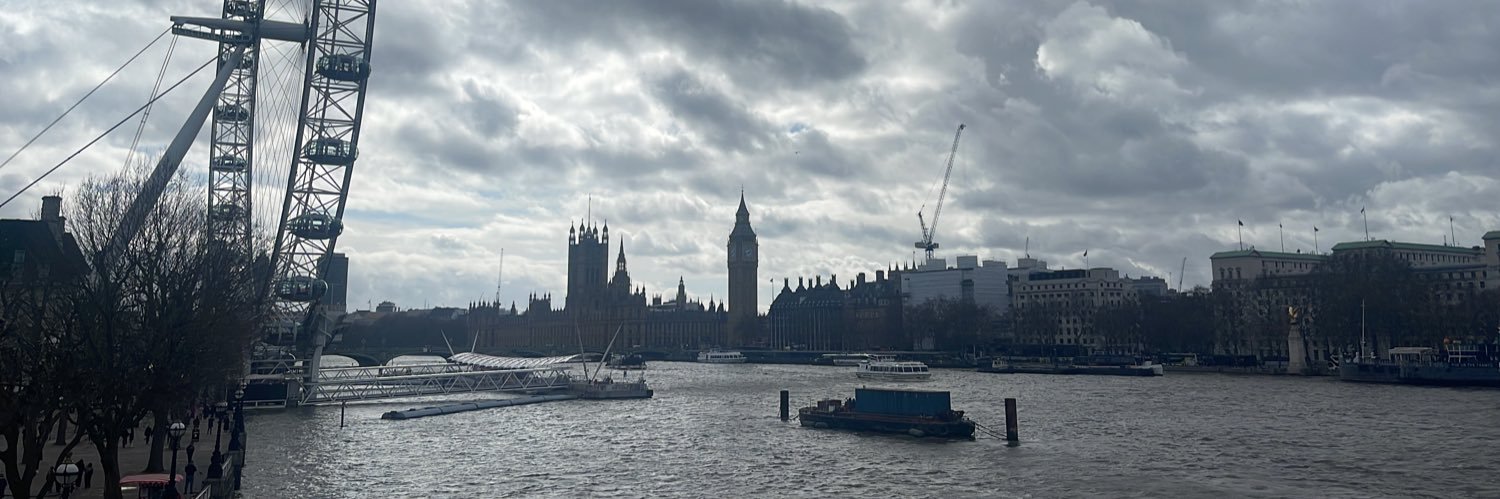
Nigel Farage will seek to make Britain a 'great power once again', Danny Kruger announced today.
Reform's head of preparing for government pledged to upgrade the country from its 'regional heavyweight' status to that of a 'leading economic, technical, diplomatic and security power’ in Europe.
Kruger set out the foundations of his party's approach to defence for the first time in a keynote address at The Spectator's National Security Summit. The intervention comes as the government faces mounting pressure to agree and publish its long-delayed defence investment plan, which is intended to explain how Britain will meet rising threats and address a £28 billion funding shortfall in its depleted defence base.
The delay has become increasingly conspicuous in the context of a more volatile global arena.
✍️ Noa Hoffman
Article | https://t.co/sqk76Ki0OA
"When will we see the defence investment plan?" - @TrevorPTweets
"Pretty soon" - McFadden
"What is pretty soon?" - Trevor
"It will be more like weeks than months." - McFadden
Trevor pushes McFadden about publishing the defence investment plan
https://t.co/OBytSuUWsZ
The choice of a UUV project forges narrative congruence with Pillar I, enabling AUKUS to be renewed as a "maritime dominance" pact. It's evolved to be more than just an Indo-Pacific venture - for Britain, this is about maritime lethality and deterrence in the Euro-Atlantic too.
The government has yet to issue public guidance on how to ready the whole of society for potential war, despite warning almost a year ago of the need to "actively prepare".
Discussions on homeland defence and wider national resilience and readiness are understood to be taking place behind closed doors.
But a network of local authorities and voluntary organisations that would play a key role in every part of the country should the UK ever come under armed attack appears to be largely in the dark about what they should be doing to better prepare.
Sky News has spoken to a number of experts who say that local resilience forums - the regional bodies that are responsible for supporting communities in any kind of emergency, from floods to conflict - need to become a lot more familiar with wartime planning.
Such a move though would require direction and coordination from the Cabinet Office and additional money from the Treasury.
Local government budgets are already stretched and - depending upon the level of government ambition - rebuilding the country's civil preparedness for potential conflict would require a whole new area of expertise, training and responsibility.
This is not an alien concept, however ⬇️
https://t.co/Xl46y1S1Wq
The rising defence investment under this Government comes with a fundamentally new Labour approach.
A Back British mission to boost skills, productivity and innovation across our UK communities.
At @GoodGrowthFdn this week, I laid how.
🗣️ Security Minister: "The world is a very dangerous place at the moment, I think more dangerous than at any point during my life"
@DanJarvisMBE explains that there are "a number of factors" that have made the UK less safe, causing the terror threat level to rise.
We're searching for the UK's next defence unicorn 🦄
13 British companies are now working with defence as part of a new £20 million fund which gives accelerated contracts to small, innovative startups across a range of tech and capabilities.
Read more: https://t.co/QiTvzkZvwk
🔴 “They’re just taking people from the streets now and trying to train them and bring them here... And they die every day.”
@DomNicholls received exclusive access to the Ukrainian war room turning the tide on Russia.
Find out about the technology ruthlessly ‘deleting’ Putin’s army he saw here👇
https://t.co/6P5bcMjEfn
A few final thoughts on the events of the past few days:
First, by far the worst result of the DoD contract saga has been the supply chain risk designation for Anthropic. In the worst-case scenario (Hegseth really did mean "no one who does business with the U.S. military may conduct ANY COMMERCIAL ACTIVITY with Anthropic"; the courts somehow uphold this or refuse to stay Anthropic's supply chain risk designation while they consider the issue, potentially for many months), this could spell death for the company. The DoD may have just killed the goose that lays the golden eggs, to the delight of our geopolitical adversaries.
But it's worse than that. As of Friday, every single investor in data center infrastructure suddenly lives in a world where the U.S. government feels that it would be acceptable, in one fell swoop, to significantly undermine the entire business model of a particular frontier lab. Congratulations, data centers have now become more expensive to build - for everyone (no, not just Anthropic). This also percolates to the business of every U.S. tech company generally (not limited to AI). Even those who dislike Anthropic need to understand that U.S. businesses, and investors in U.S. businesses, require a climate of business certainty. The U.S. government, by singling out a particular U.S. company in this fashion over a mere contractual disagreement, has *already* done great harm to the U.S. business environment. Especially if the courts don't swiftly strike this down, we're in for a really bad time.
Second, turning now to OpenAI's contract with the DoD, I invite everyone to be more pragmatic. The alternative to OpenAI providing services to the DoD was never going to be "DoD has no access to powerful AI and can't use it in automated AI weapons or domestic mass surveillance". The DoD's alternative to ChatGPT was MechaHitler. I leave it up to the reader to decide which of these two options is preferable.
Third, it is critical to understand that the U.S. military *needs* access to powerful AI. Our geopolitical adversaries will have access to powerful AI. Our geopolitical adversaries will use it on the battlefield. Terrorist organizations could also conceivably obtain access to powerful AI. The United States must, at the very minimum, be able to play defense on this field. But there is no way to do so without access to *truly* frontier models - and that means either Claude, ChatGPT or Gemini.
Fourth, and as an extension of the third point, our geopolitical adversaries WILL use fully automated AI weapons. They WILL use them without a human in the loop. They WILL do this before it is reasonably safe to do so. The cost of a human life in countries like Russia approaches zero.
This means that we will very soon live in a world in which there shall exist fully automated AI weapons. We get to choose only whether they are wielded solely by our adversaries or also by the U.S. military.
I personally hate the idea of fully automated AI weapons without a human in the loop, and I would strongly prefer it if no country developed them, ever. But they *are* coming, and it is useless to hide one's head in the sand and pretend that they are not. Given this, I personally fully support Anthropic's stance on helping the DoD develop fully autonomous weapons, but only when the models become sufficiently powerful to be used in this fashion in a *very* safe manner.
Three general things from this AMA:
1. There is more open debate than I thought ther ewould be, at least in this part of Twitter, about whether we should prefer a democratically elected government or unelected private companies to have more power. I guess this is something people disagree on, but…I don’t. This seems like an important area for more discussion.
2. I think the is a question behind a lot of the questions but I haven’t seen quite articulated: What happens if the government tries to nationalize OpenAI or other AI efforts? I obviously don’t know; I have thought about it of course (it has seemed to me for a long time it might be be better if building AGI were a government project) but it doesn’t seem super likely on the current trajectory. That said, I do think a close partnership between governments and the companies building this technology is super important.
3. People take their safety (in the national security sense) more for granted than I realized, which I think is a good thing on balance but I don’t think shows enough respect to the tremendous work it takes for that to happen.
Also, I am on the whole very grateful for the level of reasonable and good-faith engagement here. It was not what I expected.
Inside the “tense, painful” talks between the Treasury + MoD over the spending plan designed to transform the UK’s military
+ how those tensions tumbled into public view this week over Leonardo’s helicopter contract
With @Joe_Mayes + @kate__duffy
https://t.co/JWyiuZlu6D
This gets to the core of the issue more than any debate about specific terms.
Do you believe in democracy? Should our military be regulated by our elected leaders, or corporate executives? Seemingly innocuous terms from the latter like "You cannot target innocent civilians" are actually moral minefields that lever differences of cultural tradition into massive control.
Who is a civilian and not? What makes them innocent or not? What does it mean for them to be a "target" vs collateral damage? Existing policy and law has very clear answers for these questions, but unelected corporations managing profits and PR will often have a very different answer.
Imagine if a missile company tried to enforce the above policy, that their product cannot be used to target innocent civilians, that they can shut off access if elected leaders decide to break those terms. Sounds, good, right? Not really - in addition to the value judgement problems I list above, you also have to account for questions like:
-What level of information, classified and otherwise, does the corporation receive that would allow them to make these determinations? How much leverage would they have to demand more?
-What if an elected President merely threatens a dictator with using our weapons in a certain way, ala Madman Theory/MAD? Is the threat seen as empty because the dictator knows the corporate executives will cut off the military? Is the threat enough to trigger the cutoff? How might either of those determinations vary if the current corporate executive happens to like the dictator or dislike the President?
-At what level of confidence does the cutoff trigger, both in writing and in reality?
The fact that this is a debate over AI does not change the underlying calculus. The same problems apply to definitions and use of ethically fraught but important capabilities like surveillance systems or autonomous weapons. It is easy to say "But they will have cutouts to operate with autonomous systems for defensive use!", but you immediately get into the same issues and more - what is autonomous? What is defensive? What about defending an asset during an offensive action, or parking a carrier group off the coast of a nation that considers us to be offensive?
At the end of the day, you have to believe that the American experiment is still ongoing, that people have the right to elect and unelect the authorities making these decisions, that our imperfect constitutional republic is still good enough to run a country without outsourcing the real levers of power to billionaires and corpos and their shadow advisors. I still believe.
And that is why "bro just agree the AI won't be involved in autonomous weapons or mass surveillance why can't you agree it is so simple please bro" is an untenable position that the United States cannot possibly accept.
Tonight, we reached an agreement with the Department of War to deploy our models in their classified network.
In all of our interactions, the DoW displayed a deep respect for safety and a desire to partner to achieve the best possible outcome.
AI safety and wide distribution of benefits are the core of our mission. Two of our most important safety principles are prohibitions on domestic mass surveillance and human responsibility for the use of force, including for autonomous weapon systems. The DoW agrees with these principles, reflects them in law and policy, and we put them into our agreement.
We also will build technical safeguards to ensure our models behave as they should, which the DoW also wanted. We will deploy FDEs to help with our models and to ensure their safety, we will deploy on cloud networks only.
We are asking the DoW to offer these same terms to all AI companies, which in our opinion we think everyone should be willing to accept. We have expressed our strong desire to see things de-escalate away from legal and governmental actions and towards reasonable agreements.
We remain committed to serve all of humanity as best we can. The world is a complicated, messy, and sometimes dangerous place.
Breaking News: OpenAI said it would provide the Pentagon with A.I. tools, hours after technology by Anthropic, its competitor, was banned by President Trump. https://t.co/ZQ2VhDl9jR
In an exclusive interview with CBS News' @jolingkent, Anthropic CEO Dario Amodei said that the Pentagon’s decision to designate the AI company a supply chain risk is “retaliatory and punitive.”
The Pentagon made the designation, which restricts military contractors from doing business with Anthropic, after the company refused to give the military unfettered access to its AI model.
Breaking News: President Trump told federal agencies to stop using A.I. technology made by Anthropic, an order that could complicate defense work. The company had clashed with the military over how officials wanted to use its A.I. model. https://t.co/JrCoDeliPI
'Taken on its own terms, the bill improves flexibility. But flexibility is not the same as capability,' write Professor Vincent Connelly and @hamish_mundell in the latest #RUSICommentary.
https://t.co/JiAdb8Dnmx
Anthropic CEO Dario Amodei said Thursday the AI company “cannot in good conscience accede” to the Pentagon’s demands to allow wider use of its technology. https://t.co/p9S9wTMPa0