From an Israeli intel official in NAZA:
“I hack into the phone of a 12 year old girl. If a girl calls her mom, ‘Mummy,’ she says, ‘when are you returning home? Daddy just came back.’ That’s a message that would alert the system bc it contains the words ‘return’ and ‘daddy.’”
This builds on @yuval_abraham’s previous reporting on the (incomprehensibly evil) “Where’s Daddy” program the IDF built to learn when fathers were at home with their children so they could kill then all at once (along with anyone else killed in the building during the attack).
What is the big picture? The really big picture? I'll tell you. The 4,400 year old private interest-bearing moneylending system that's provided Western economies with their core dynamic is rapidly collapsing into an abyss of misallocated investments, over-leveraged and unpayable private debt, human redundancy, social inequality and headless violent reactions.
The system has already undergone two major civilizational collapses and numerous near-collapses. It relies on the relentless extraction of surplus from human activity and the environment, which is then monetised, leveraged and recycled as interest-bearing debt by greedy, uncultured, private elites and small-time emulators for their short-term gain. Accumulating assets and recirculating money as private debt is perversely regarded as the pinnacle of 'individual freedom'.
There is no inherent logic of permanence regarding the benefits temporarily enjoyed by the mass of workers and consumers during the brief social democratic era. Nor is there an inherent logic of environmental sustainability other than the clumsy, ex post facto and too easily manipulable price mechanism.
The replacement of this system, whilst avoiding the mistake of the demarketised, totally centralised command economy, depends on the democratic issue of currency as a public utility with investments targeted towards long-term social and environmental needs. That simple? The system was built on a disarmingly simple principle, and the elite are desperate that we should never understand it or regard it as replaceable.
While China tries to apply the principle of public purpose in a cagey game with the financialised, dollar-dependent global system, in the post-Keynesian neoliberal West only @TheGreenParty has made noises about this core issue. What stands in the way? Oligarchic power, relentless indoctrination, miseducation, ignorance, cynicism, demoralisation and absence of will. This system has crushed the West's soul and narrowed its intellect. Fyodor Dostoevsky was one of the few who regularly drilled down to the bedrock.
"You know, for instance, beforehand with positive certainty that this man, this most reputable and exemplary citizen, will on no consideration give you money; and indeed I ask you why should he? For he knows of course that I shan’t pay it back. From compassion? But Mr. Lebeziatnikov, who keeps up with modern ideas, explained the other day that compassion is forbidden nowadays by science itself, and that that’s what is done now in England, where there is 'political economy'."
The International Monetary Fund, IMF, is holding up Jamaica as an example for the world of how to collect more taxes without leaning harder on taxpayers.
In its latest Fiscal Monitor, released on Monday, the Fund singles out Tax Administration Jamaica for growing the number of people and companies paying taxes while cutting back on audits.
READ MORE HERE: https://t.co/q6XvRpAzOm
Für alle die sich hier darüber aufregen, dass ich sage der Staat sollte den Grundbedürfnissen und der Würde der Menschen dienen, was wollt ihr dann denn eigentlich!?
What started as two young actors waiting for class became a friendship built on respect, trust and years of shared memories. Through every chapter, we’ve stood by each other and celebrated the good times. That bond has remained something I’ll always be grateful for, my friend.
Folks have insulted:
My Southern drawl.
My loc’d hair.
My clothes.
My shoes.
My intelligence.
I’ve been called a ghetto Black
b!t€h.
Now @JDVance says I don’t belong and should leave the very country my ancestors helped build.
This is a lot y’all. It is.
104 Iranian sailors, many in their late teens, unarmed, thousands of miles away at a training event with other nations.
Their final words to the US warship that slaughtered them "we are unarmed".
The law of armed conflict states survivors to be recused - the US ignored this.
My book on the Jeffrey Epstein scandal, published in 2022, ended with the point that intelligence assets engaged in blackmail, like Epstein, are no longer needed (and thus became expendable) because the surveillance state can retrieve blackmail directly from your devices or plant incriminating material on them.
Four years later, they are just saying it out in the open.
From 2023 to 2026, Google Earth's updated satellite imagery shows what's left of Gaza.
The images reflect what Human Rights Watch has already found: Israel has caused deliberate, widespread destruction throughout Gaza ⤵️
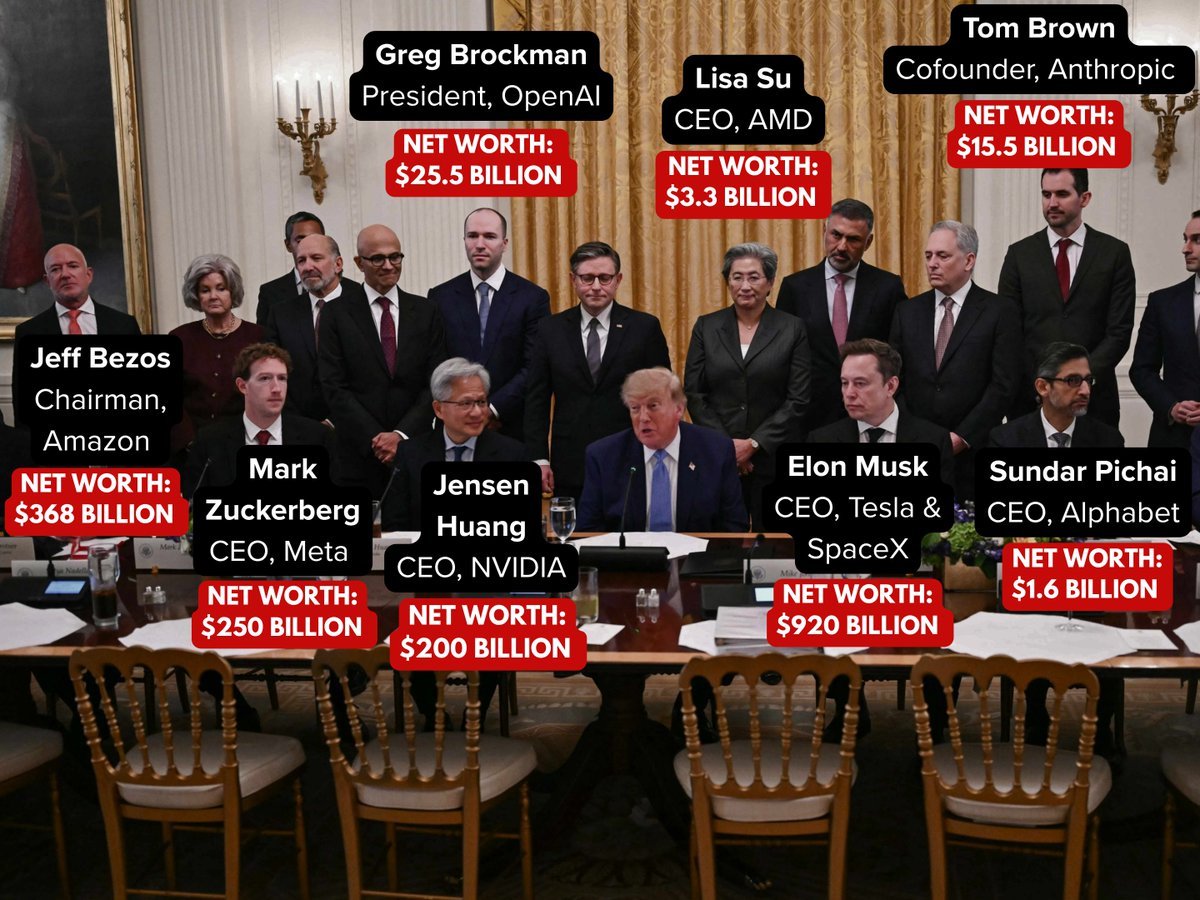
The fundamental difference between the US and China is that in China this bunch of jumped-up barrow-boys and computer nerds wouldn't be allowed anywhere near the President and political decision-making.
For more than two months, I have been working on a truly horrific story about one of the gravest war crimes committed by the United States since Vietnam: The bombing of the Shajareh Tayyebeh school in Minab, Iran. It was one of the first targets struck in the opening hours of the war on February 28, 2026.
At least 156 people were killed in the U.S. cruise missile strikes—120 of them were children and 26 were teachers. We spoke to survivors, first responders, parents, doctors, teachers, psychologists, and other witnesses. Some of them had never before shared their experiences of that day.
It would be impossible to do justice to what happened in Minab that day with words alone. In more than 25 years in journalism and reporting on war, I do not believe I have reported on a more heinous single crime.
Massacre at Minab: The School That Became a Grave
https://t.co/6zcGDYIzCC
Please share this story with as many people as you can.
🇯🇲🥇 BREAKING NEWS: JAMAICA STRIKES GOLD!
Brandon Brown has won GOLD in Optoelectronic Technology at WorldSkills Shanghai 2026, sharing the top honour with a competitor from Korea!
This is a landmark moment for Jamaica and the Caribbean. #WorldSkillsJamaica
I'm reposting this below because it's a very clear condensation of the three major claims the holders of big capital - banks, hedge funds, sovereign wealth funds, corporations, insurance funds, private pension funds, very rich individuals etc. - require us to keep believing. Suggest a programme of public spending and investment to reboot an ailing economy, and you'll have these warnings immediately fired back at you. Should we worry? Yes and no. It's very complex, so it's a long read and I'm forced to omit a lot of stuff, but bear with me, I'll try to boil it down.
The claims:
1. Taxes and government borrowing from international bond markets fund public spending.
2. These international bond markets will discipline any government that runs an unfunded deficit, principally by jacking up yields to make borrowing more expensive.
4. Capital will flee the country and invest elsewhere.
OK, spoiler for those short of time. Are any of these claims true? Yes, but only because Western nations continue to believe them and keep electing politicians who, along with central bankers, operate their fiat money systems in accordance with the global system these claims represent. Politically and ideologically yes, technically no. We're conditioned to think that this belief system is 'reality'. This is how belief systems have always worked - metaphysical claims on reality are what the philosophers call 'ontology', often selected and justified by naturalised ethics - this is real, it's just the way things are and it's good (or evil). The basis of this particular and very recently established (300 years or so) belief system is that capitalist markets are good (fair, efficient etc.) and national states representing organised workers are bad (tyrannical, inefficient etc.). So let markets work their magic and allow the state to intervene minimally only when they hit problems (crashes, recessions, unemployment etc.) that can always be overcome - calm down, no sweat, just keep it going. Politics is reduced to the degree of intervention we should tolerate, nothing more, but, whenever possible, less.
So, the bankers, economists, politicians and hacks you see on the telly all the time looking knowledgeable, clever and rational - steady hand on the tiller! - are either 1) subjects of an ontological-ethical belief system they want you to be subjects of too, or 2) liars who know it's just a belief system but want people to keep believing it's real and letting it run as a globally locked-in system because it enriches them and their pals.
A little more detail - what are these bond markets and why can capital just up and run off somewhere else when it wants? Bonds first appeared in C12 Venice as forced loans to fund a war. It all went pear-shaped, the Doge was executed by a mob of angry rich people and hired thugs, and loans were consolidated into a fund called the Monte Vecchio. It paid 5% interest - hey guys, free money to make us richer! - so the richies enjoyed it and didn't press for the repayment of the principal because that would reduce the interest, which later became known as the 'yield' as secondary markets developed in which more interest could be extracted. So, don't ask for it all back, just keep it rolling, forever if you can. Free money forever, and even more when freely trading on secondary markets with discounts. Usurer's Heaven on Earth!
In those days central banks and paper money didn't exist. So governments relied on metallic coins accumulated by the richies extracting labour and produce and doing dodgy deals on coin markets like the Rialto. After that a lot of stuff happened regarding coins and metal, but if we fast forward to the C16 coin values were set by decree (face value) rather than metallic value. Between C17 and C19 paper currencies were issued backed by silver and gold reserves. Government bonds were centralised first in C17 Netherlands. Of course the VOC (Dutch East India Company) loved this as a fairly reliable stash for its boatloads of spare dosh paying yields. Bonds were more reliable than the unstable private banking system because government land and tax were the endless assets of last resort - they even had VAT!
The UK set up its central bank in 1694 under invited Dutch influence and immediately started selling gilts. The richies with spare dosh immediately fell in love with it. Things started moving faster in C18 as UK bondholders struck up friendly relations with politicians to establish dependency on secondary bond markets. Beginning with the famous 'coffee-house trade' - legend has it they liked coffee because it kept them alert while doing dodgy deals - secondary markets developed as a powerful force. The principle is simple - if bond buyers can get higher yields and lower prices in the secondary private trading market, governments are pressured to match them. But only if the politicians and central bankers are friendly. They have to be friendly. And it helps if they're believers in the magic of markets and the ethical notion that savers and investors are glorifying God by making themselves rich and trickling bits of it down to the Godly but less deserving poor.
Of course, now that we had central banks, paper money and government accounting ledgers, fiat currency was used in emergencies, such as the Napoleonic Wars and WWI, but that was kept quiet. The very idea that governments can create money endogenously (from within) by fiat - Franklin and Lincoln also did it in the USA - rather than relying on interest-bearing loans from private moneylenders calling themselves 'bondholders' must be seen as evil. Abandon hope all ye who do this, by Jove! J.M. Keynes worked in the Treasury during WWI, and legend has it that he saw officials fabricating bond sales in order to keep politicians and the public alike believing that private loans are essential.
Bond markets were rolled out across Europe in C19. Yes, the Rothschilds were heavily involved but let's not start blaming the Jooz because that's not the case. It was the richies combined doing it. In C20 a lot of stuff happened as the UK left the gold standard in 1931, then after 1944 Bretton Woods set up a gold exchange standard based on dollar convertibility and imposed capital controls to ensure at least some profits were reinvested in domestic economies. The richies didn't like any of this, and started circumventing these controls via the Eurodollar market.
Between 1971 and 1978 Western nations abandoned Bretton Woods and the gold exchange standard. Free-floating fiat money was adopted. The richies understood the necessity and potential advantages (for them) of this but also saw it as dodgy because people might get the idea that democratic (one day!) governments can issue currency to spend and invest, thereby crowding out mega-rich private lenders and cutting back on their free money. What better mechanism to impose fiscal discipline on governments than the secondary bond markets and their vicious cousin the FX (foreign exchange) markets? All they need are friendly politicians, bankers, economists and hacks. Easy gig - plenty of them, either true believers or practiced liars. So, after 1979, the plan was to set big capital free to circulate around the world, like it did in the (for them) good old days of Empire, funnelling it through global bond markets and FX markets, enriching themselves and simultaneously imposing strict fiscal discipline on governments.
By the way, lately, rapidly developing nations such as China have used massive dollops of public investment and capital controls to boost their economies. So the richies and their little helpers try to convince us to hate them as tyrants and watch as their economy eventually collapses into a vortex of unpayable debt - which it hasn't, of course, but we're supposed to live in hope.
In 1979 the first thing the Thatcherites did was abandon capital controls. Other Western nations got the idea and stock (the productive end is more risky, so careful!), bond and FX markets (less risky and lucrative!) - the 'money markets' - were rolled out globally after 1980 by a powerful politician/banker/investor/media alliance whose adherents firmly believe (or want us to) that money markets should discipline and control governments. Of course they also gift them safe savings and endless oodles of free money in the form of yields, but you know, that's just a little sweetener for the valiant 'risk takers'..... even though these markets aren't very risky.
Technical disempowerment would be quite simple - firm policies in the primary sales, central bank intervention, fixed-rate, non-tradable bonds and capital controls to throttle the secondary market and FX markets - but this would require coordinated policies initially across the G10.... or G8 first, because the Brits and Yanks wouldn't have it, would they? Some nation must be brave and set the ball rolling. We simply lack the politicians willing and able to do this. And we continue believing. Machiavelli said the best way to instill belief is fear - divine punishment. This is how it works. The markets are the divine supplier of fairness, efficiency, consumer democracy and prosperity to Godly (optional these days) sovereign individuals. Disobey them and we will be punished. Escaping this will be as big a leap for freedom as escaping from the Mediaeval Catholic Church.
Dan, that's neoliberal nonsense, and I wish the broad left would learn to think their way past it. It's not 'people' who set value but money markets, which maintain the position of money as a commodity and have far too much power. First we need to disempower them. The Chinese get this right - fund big infrastructure projects with state-backed policy banks, gradually reduce bond sales, set up capital controls to throttle the FX markets, and let big capital play catch-up in the supply chains to take advantage of their flexibility - i.e. "here, you can invest, own and sell in production sectors but only if we agree it's necessary and you can do it cheaper and more efficiently than we can". Of course, they have the advantage of being the world's manufacturing giant, but other nations could adopt similar policies in production/trading blocs. There's a lot more to it, but we need to start thinking past it.
@ColinM48126070 Yep. Start with a book called 'Reclaiming the State' by Fazi and Mitchell then start rummaging around the works of @ProfSteveKeen and the GOAT economic historian Michael Hudson. Michael's 'Destiny of Civilization' and 'Forgive Them Their Debts' are great starts.
This is what we said all along: higher yields (interest rates) don't slow investment down. It is driven by animal spirits and validation of past investments (Minsky). #LearnMMT
"you need debt crises to impose fiscal discipline"
Let me translate that into proper English: The rich need debt crises that create poverty, unemployment, pressure to lower wages and financially stressed households selling their assets cheap to enrich the rentier class.
In 2012, the #Eurozone was about to break. Greek citizens rejected austerity imposed by the European @EU_Commission, the @ecb and the @IMFNews. Since it is a sovereign country, it claims a right to draft and execute its own budget. Without Draghi's intervention (bond purchase programs that turned the Eurosystem into a dealer of last resort for government bonds), the Eurozone would be no more. Also, without activation of the general escape clause to get rid of the fiscal framework's limits on deficits and debts, the Eurozone would have blown up in 2020 in the aftermath of the pandemic.
Know your history.