The world is moving close to a lightening speed now. Don’t miss out. Check out Vibe coding AI agents course with Kaggle https://t.co/4jdAuL1y8d via @YouTube
Across China, a marked rise in people driving electric vehicles has led to a drop in air pollution in many cities. s a result, fewer people are dying from pollution-related diseases.
https://t.co/aJYp0cdnNG
Thailand’s richest man plans to spend as much as 140 billion baht ($4.3 billion) through Gulf Development over the next five years to expand data centers and other infrastructure needed to support the AI boom https://t.co/Oe4aL7dvVt
A single dose of engineered immune cells has helped two men and one woman to receive life-saving kidney transplants. Their bodies would normally reject donated organs.
https://t.co/CyiKUBpuPc
The creator of Claude Code Teaches more about vibe-coding in 30 minutes than most paid tutorials do in 10 hours.
Absolutely Free. From the guy who built the tool.
Save it. Watch tonight. It'll change how you build forever.
You've been using Claude Code wrong for months without knowing it.
This fixes that in 30 minutes.
Follow @codewithimanshu for more high-signal content that actually moves your career forward.
↓
Boris runs technical staff at Anthropic.
He built Claude Code.
He just gave away the entire playbook.
This is the talk that separates people making $10K/month with AI coding from people still Googling "how to fix this error."
Here's everything he covers in 30 minutes.
Follow @codewithimanshu, I break down a video like this.
↓
Installation and setup the right way.
Not the wrong way you did it.
`npm install` to get Claude Code running.
`terminal setup` to enable Shift+Enter for new lines and themes.
GitHub app integration to @-mention Claude directly on issues and pull requests.
Mac users: system-level dictation for hands-free prompting.
Most people skip these steps and wonder why their Claude Code workflow feels clunky.
Follow @codewithimanshu For Full Claude Code setup guides.
↓
The workflow most users miss entirely.
Codebase Q&A is the real starting point.
Not "write me code."
Ask Claude about your codebase first.
It explores locally. No indexing. No data upload.
You can ask:
> Why was this function written this way?
> What did I ship this week?
> What's the git history of this file?
Understand the codebase before you touch it. That's how senior engineers think. That's how Claude Code wants to work with you.
Follow @codewithimanshu for more high-signal content that actually moves your career forward.
↓
Interactive coding that actually ships.
Claude uses file editing, bash commands, and file search to execute tasks in real time.
Boris's rule: brainstorm and plan BEFORE you trigger code generation.
Skip the planning step and you get garbage. Do the planning step and Claude ships production-ready code.
This alone is the difference between "AI wrote my app" and "AI wrote an app that actually works."
More ship-ready Claude prompts already posted on @codewithimanshu.
↓
Tool integration nobody uses.
Custom CLI tools. MCP servers. Integrated directly into your Claude Code workflow.
Claude calls your tools. Uses your data. Executes tasks across your entire stack.
This is where Claude Code stops being a coding assistant and starts being a full engineering team.
Follow @codewithimanshu for MCP server breakdowns every week.
↓
Iterative feedback loops.
Give Claude access to your unit tests. It refines until they pass.
Give Claude screenshots of your UI. It iterates until the design matches.
Most people run Claude Code once and accept the first output. The best users build feedback loops that let Claude improve itself.
I share the exact feedback loops I use daily.
↓
Context management: Claude MD.
Place a `claude(dot)md` file in your project root.
Persistent context. Shared across every session.
Enterprise config for global policies across teams.
This is the file that separates hobby Claude Code users from production users.
I'll post my full claude(dot)md template next week.
Follow me @codewithimanshu.
↓
Slash commands and memory.
`/memory` to view or modify how Claude remembers instructions.
Slash commands for automating complex workflows.
Example: auto-labeling GitHub issues with one command.
Slash command library coming soon on @codewithimanshu.
↓
Pro key bindings Boris drops at the end.
Shift+Tab: auto-accept mode for edits. Saves hours.
!Command: execute a bash command and pipe output into context.
Escape: safely stop Claude without corrupting your session.
Drag and drop images. Paste screenshots for UI implementation. Multimodal from day one.
Follow me @codewithimanshu for Daily Claude Code tips.
↓
30 minutes from the guy who built the tool.
You'll learn more from this than from 50 YouTube tutorials made by people who've never shipped production code with Claude.
This is where the gap gets built.
People who watch it understand Claude Code at the architect level.
People who skip it keep copying commands they don't understand.
Save the video. Watch it tonight. Build something tomorrow.
Follow @codewithimanshu for more high-signal content that actually moves your career forward.
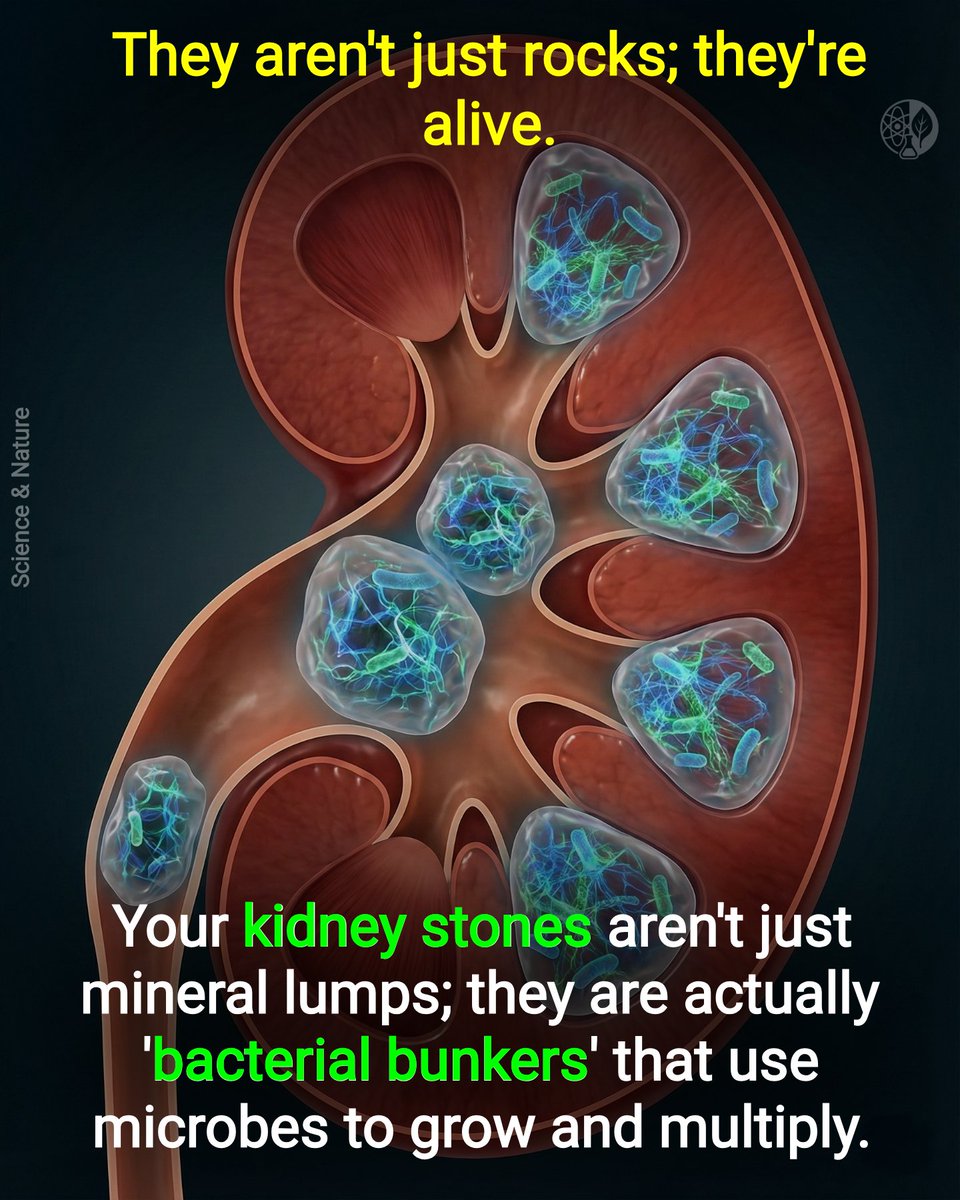
For decades, doctors believed the most common kidney stones (calcium oxalate) were lifeless lumps formed purely by chemistry—minerals building up in the kidney.
A groundbreaking study published this month (Jan 2026) by UCLA Health has proven this wrong.
Using high-tech fluorescence microscopy, researchers discovered that these stones actually contain live bacteria and fungal-like biofilms "entombed" inside them. The bacteria act as a scaffolding (nidus), allowing the minerals to crystalize and grow layer by layer.
This solves a long-standing medical mystery: Why do patients sometimes get severe infections (sepsis) after stone-breaking treatments (lithotripsy), even when their urine was sterile? The answer: breaking the stone releases the bacteria trapped inside.
This could revolutionize treatment, shifting focus from just diet changes to targeting the hidden microbiome within the kidney.
Journal Reference: Wong, Gerard C. L. et al, Intercalated bacterial biofilms are intrinsic internal components of calcium-based kidney stones, Proceedings of the National Academy of Sciences (2026). DOI: 10.1073/pnas.2517066123.
#MedicalBreakthrough #Microbiology #KidneyHealth #UCLAHealth #NewDiscovery
New course: Gemini CLI: Code & Create with an Open-Source Agent, built with @googlecloudtech/@geminicli and taught by @JackWoth98.
Agentic coding assistants like Gemini CLI are transforming how developers work. This short course teaches you to use Google's open-source agent to coordinate local tools and cloud services for coding and non-coding workflows.
Gemini CLI works from your terminal, so it works with your local files and development tools. You can also connect it to services through MCP. Then provide high-level instructions, and it autonomously plans and executes complex workflows.
Skills you'll gain:
- Build website features and automate code reviews with GitHub ActionsCreate data dashboards that combine local files with cloud data sources
- Use MCP servers and extensions to orchestrate workflows across GitHub, Canva, and Google Workspace
- Generate social media content from multimedia files like conference recordings
I particularly appreciate that Gemini CLI is open-source. You can see exactly how it works, read the prompts it uses, and understand its architecture. The community has contributed thousands of pull requests. Since Gemini 3’s release I've found Gemini CLI highly capable - this is a tool worth having in your toolbox!
Whether you're prototyping applications, automating workflows, or working with multimedia content, join to learn to delegate complex tasks and build faster: https://t.co/m3J7kwQpxC
As a fun Saturday vibe code project and following up on this tweet earlier, I hacked up an **llm-council** web app. It looks exactly like ChatGPT except each user query is 1) dispatched to multiple models on your council using OpenRouter, e.g. currently:
"openai/gpt-5.1",
"google/gemini-3-pro-preview",
"anthropic/claude-sonnet-4.5",
"x-ai/grok-4",
Then 2) all models get to see each other's (anonymized) responses and they review and rank them, and then 3) a "Chairman LLM" gets all of that as context and produces the final response.
It's interesting to see the results from multiple models side by side on the same query, and even more amusingly, to read through their evaluation and ranking of each other's responses.
Quite often, the models are surprisingly willing to select another LLM's response as superior to their own, making this an interesting model evaluation strategy more generally. For example, reading book chapters together with my LLM Council today, the models consistently praise GPT 5.1 as the best and most insightful model, and consistently select Claude as the worst model, with the other models floating in between. But I'm not 100% convinced this aligns with my own qualitative assessment. For example, qualitatively I find GPT 5.1 a little too wordy and sprawled and Gemini 3 a bit more condensed and processed. Claude is too terse in this domain.
That said, there's probably a whole design space of the data flow of your LLM council. The construction of LLM ensembles seems under-explored.
I pushed the vibe coded app to
https://t.co/EZyOqwXd2k
if others would like to play. ty nano banana pro for fun header image for the repo
Google Opal should be worried... wait, no.
Everyone ELSE should be worried.
I've automated over 47 tasks in the last 3 days with Google's new no-code AI builder.
Here's why this changes everything:
Before → Hire developer for $5K, wait 6 weeks, hope it works
Now → Describe what you want, get it built in minutes, test immediatelyI built:
- Content calendar generator (12 weeks of posts automatically)
- Research automation (scrapes top 10 articles, summarizes, saves to Sheets)
- Lead generation tool (runs weekly without me touching it)
The barrier between idea and execution just disappeared.
If you've been waiting to "learn to code" to build your business tools... you don't need to anymore. 🔥
Save this video, you'll wish you started today.
Want the full SOP? DM me. 💬
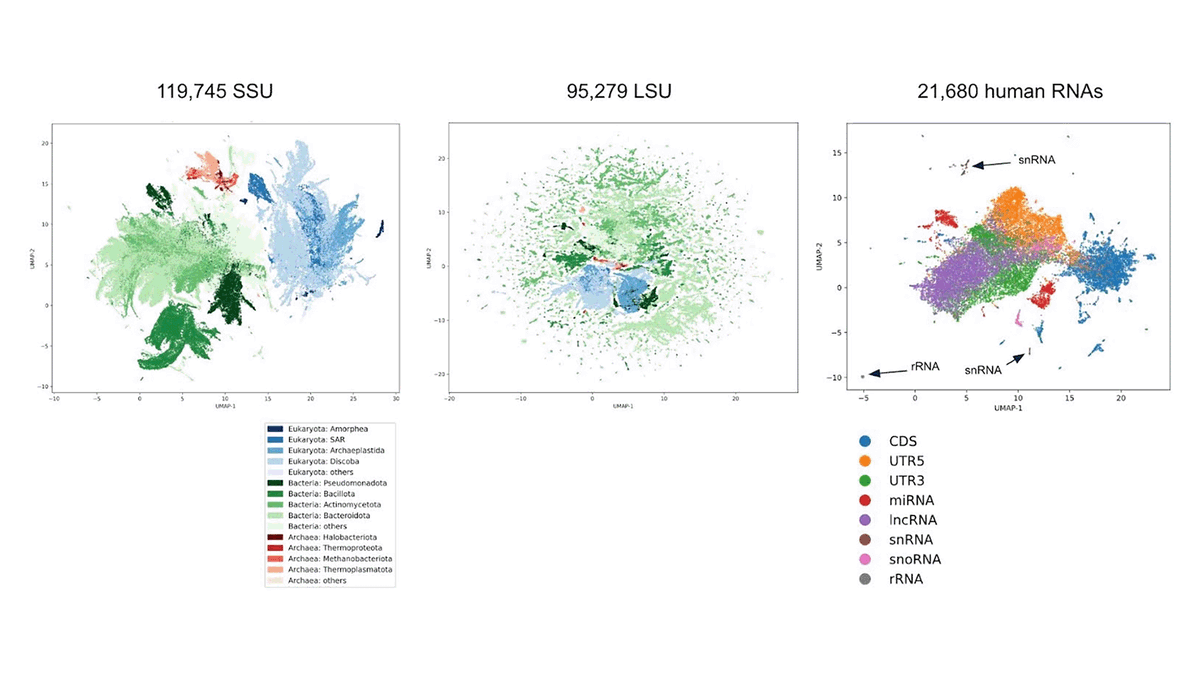
🚀 Introducing AIDO.DNA2, GenBio AI’s next-generation multi-species genomic foundation model.
Built with a Mixture-of-Experts architecture and trained on the massive OpenGenome2 dataset, AIDO.DNA2 delivers higher accuracy, better efficiency, and stronger generalization across species, from variant prediction to regulatory genomics.
Explore how it outperforms baselines and advances clinical genomics:
🔗 https://t.co/1Ok4TUesXD
Lung cancer is the leading cause of cancer-related mortality worldwide, causing approximately 1.8 million deaths in 2022.
📝 This Review discusses the epidemiology, diagnosis, treatment, and prognosis of lung cancer in nonsmoking individuals.
https://t.co/cwW3s8eTFr
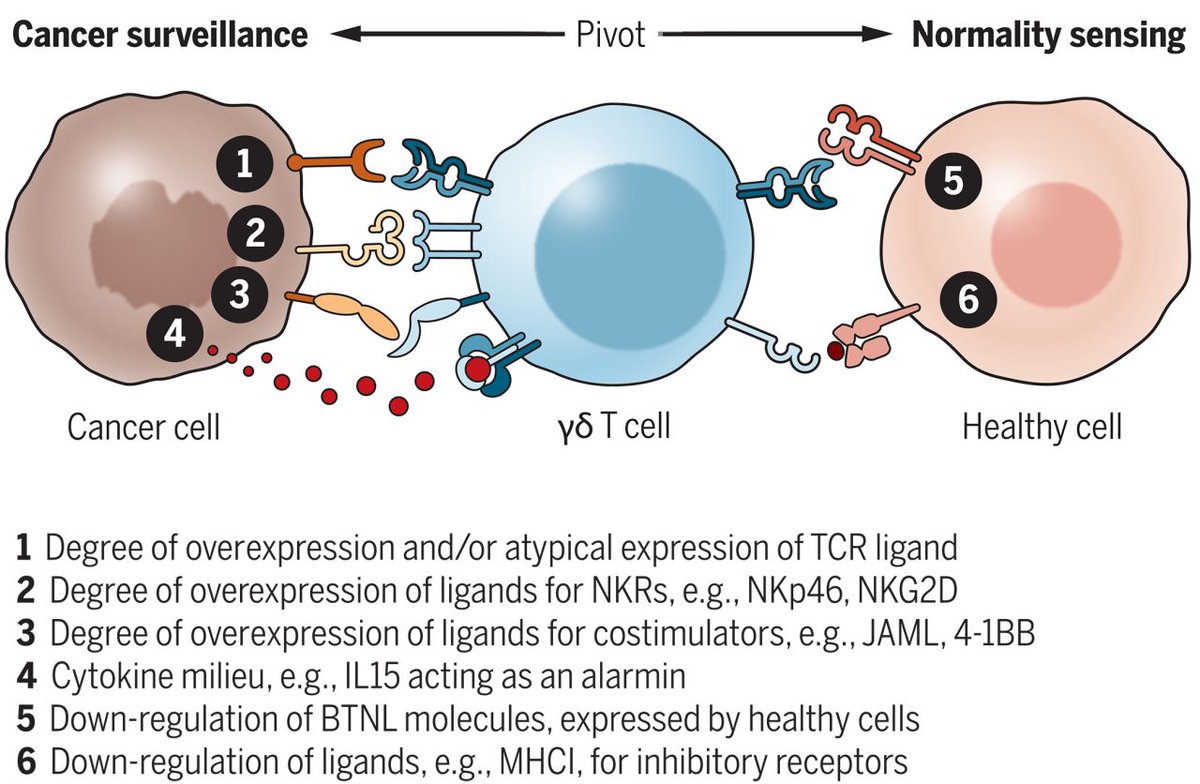
γδ T cells are a unique population of immune cells that can recognize and kill tumors.
A 2024 #ScienceReview explores current research efforts focused on how γδ cells naturally discriminate cancers from healthy tissues. https://t.co/VmJfWd95Um #ScienceMagArchives