Hello Twitter! Announcing the 21st Symposium of the International Association of Cyanophyte/Cyanobacteria Research (IAC21)!
When: 11th –16th August 2019
Where: Moreton Bay Research Station, North Stradbroke Island, Australia.
Website: https://t.co/VCJB90Uh9N
Spread the news!
Meet the THYLAPSE. Anna's paper on cyanobacterial thylakoids is online now, revealing the architecture of these fascinating membrane contact sites. Structures of Phycobilisome Arrays, too! Thanks for the great collaboration, Jörg Nickelsen! 🌱🦠🔬
https://t.co/mR4qaJ2nxD
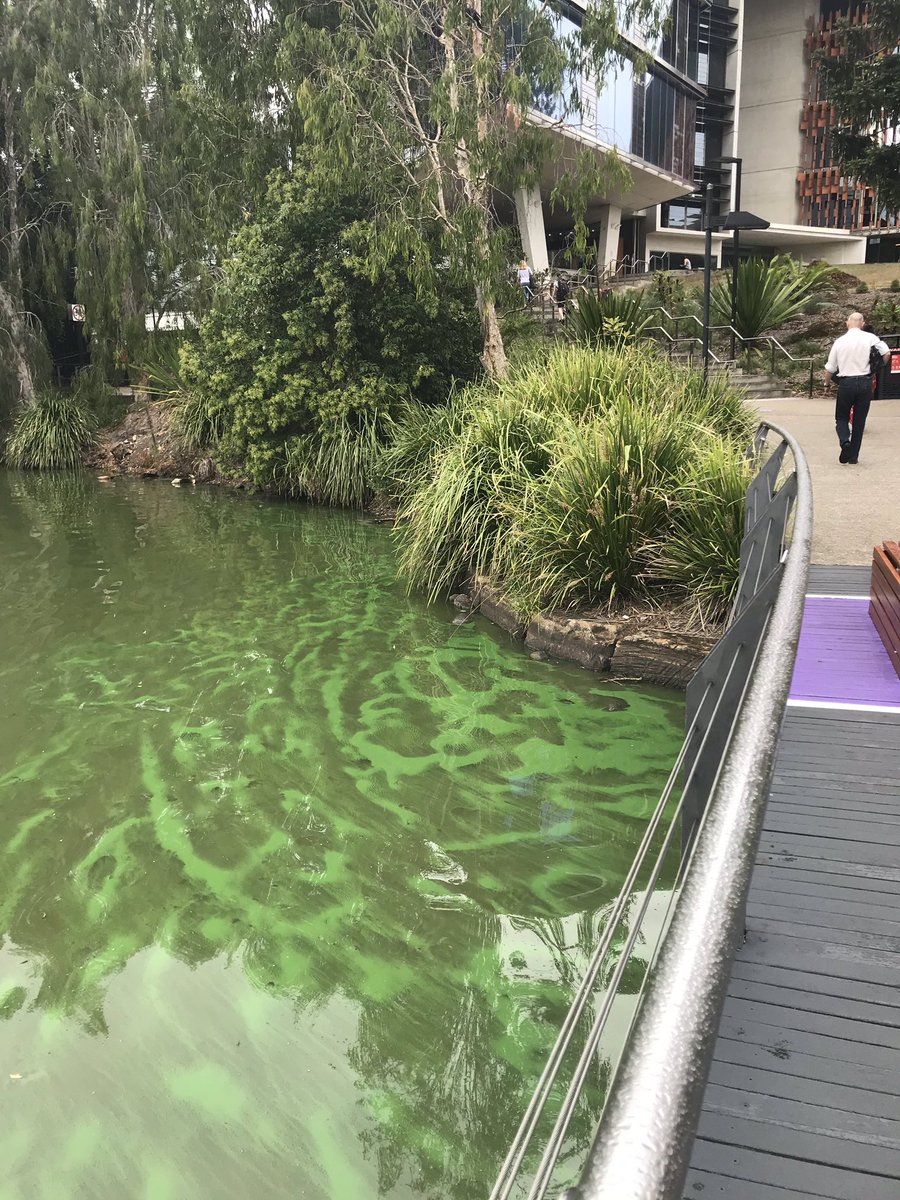
And found some great #algae#cyanobacteria among them a cyano with interesting cap, reproductive Oedogonium and Spirogyra, chain forming #diatom Melosira that blooms here in the spring, and a fun colony that I don't know.
Abstract deadline is soon approaching! Make sure you get your submission in before Sunday the 31st of March. We want to hear all about your cyanobacteria work from ecology, diversity, biotechnology to taxonomy. Get in touch if you have any questions🦠
Hello Twitter! Announcing the 21st Symposium of the International Association of Cyanophyte/Cyanobacteria Research (IAC21)!
When: 11th –16th August 2019
Where: Moreton Bay Research Station, North Stradbroke Island, Australia.
Website: https://t.co/VCJB90Uh9N
Spread the news!
Always something cool to discover when working with cyanobacteria ❤️ A strain isolated in 1979 was found to produce a very powerful herbicidal agent. Very interesting work published in @NatureComms https://t.co/f1h5TemPwJ
More than 200 scientists, 94 institutions, 369 lakes, 26 countries across #Europe This is the biggest #cyanotoxin & #phytoplankton survey in Europe and the second paper is out in @ScientificData Data!
Congrats @EviMantzou & @MECO_UniGe for all the effort!
https://t.co/nG2MlArRCd
We invite all involved with cyanobacterial research to attend the 21st Symposium of the International Association of Cyanobacteria - being held 11–16 August 2019 just a hop over from Brisbane city at the Moreton Bay Research Station, North Stradbroke Island, Australia.
IAC21 seeks to bring together researchers of all levels from around the world to facilitate networking as now more than ever, it seems critical #cyanobacetria research is shared with our colleagues, industry, environmental managers, the public, and government departments.
Our new article on the evolution of phycoerythin in picocyanobacteria (including a whole bunch of new non-marine genomes) is OUT NOW! in @FrontMicrobiol
༼ つ ◕_◕ ༽つ https://t.co/L4TmZMgLR2
Less than a month to go for submissions! Make sure you get your exciting biocrust work in. Have any questions? Don't hesitate to get in touch via reply below, DM, or our website. May the crust be with you 🏜️
@IAC21_Aus Hey guys, I've heard about the fish kills on the #DarlingRiver in AU...any hypotheses floating around that it was related to #hypoxia due to an #HAB? I read that much of the surrounding area is an agricultural area, perhaps there is #eutrophication taking place?
@Working_Handle Hi, great questions. Below is an article with good outreach to the general public. There are also collaborations looking into the microbial ecology of such systems who are asking similar questions!
@RomanisCaitlin
@stukhan @NeilanBGGM @ConversationEDU
https://t.co/claeFlGou4