"There’s no substitute for a very large crude carrier," I told Fox. "It’s a flow question."
Whatever Xi promised Trump regarding PRC support for Iran's war effort, there's just no scalable overland option by train, plane, or automobile:
https://t.co/Cnf0ZBpJdn
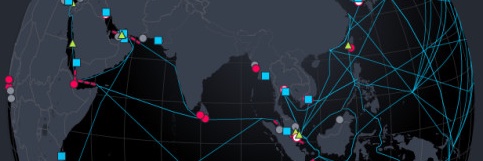
While you were sleeping, the Iran Revolutionary Guard Corps lined up five vessels, including two India-flagged LPG carriers and one Pakistan-flagged crude tanker to transit the Strait of Hormuz via Larak Island.
Around 5am they were positioned here (red square) and by lunchtime they had reached Gulf of Oman.
This re-routing of traffic via Iran's territorial waters evolved ~2 weeks ago and now between about a dozen ships can be tracked daily (excluding Iranian-flagged ships) via AIS. So far today (I'm posting this around 1620pm London time) I've seen these five ships (all going eastbound) plus another two bulk carriers (one westbound and another eastbound) clearly make the IRGC-controlled transit.
There are the usual dark tankers including US-sanctioned Sullana, a VLCC that accidently pinged pretending to be a service vessel sailing westbound plus another Comoros flagged dark fleet tanker with a fake MMSI number that left a telltale blip.
In additional to the two COSCO containerships turned back yesterday, I've found another three ships, one of them a bulk carrier signalling "Karachi food for PK", another saying "China owner crew - ex BIK china owner" as well as a livestock carrier. All appear to have been refused transit 24-26/3 and now at anchor, waiting. Why the two containerships were turned away wasn't clear. They were part of the Ocean Alliance which includes France's CMA CGM, perhaps that was why. At 18,000 TEU capacity each, that's a massive marine insurance bill, too.
Watching and collating this information daily for @WindwardAI at such a forensic level has shown me how Iran is consolidating control over Hormuz with its selective blockade.
Bulk carriers carrying agricultural products to and from Iran have access, as do select Pakistan/India energy commodities cargoes, and of course the dark fleet with oil and gas that is the revenue lifeline for the regime. And there are dark tanker transits by a well-known, baseball cap-wearing Greek shipping billionaire. One of his tankers turned up in India yesterday, another four have gone dark in the Gulf. How he is doing this takes some wily negotiating powers and deep contacts at government and commercial levels to make this happen.
Many of the bulk carriers sailing through are also Greece-owned, which brings me to the thorny question of whether or not tolls are being paid for transits. I've seen no primary evidence or direct attribution from people in a position to know, just hearsay and "sources". That's not to say it's happening. A UN Panel of Experts report on Yemen found that the Houthis were also extracting money for safe passage, even when all I ever heard was rumour and innuendo.
If there were tolls being paid, that would place those Greece shipowners in a particularly curly position, so perhaps if there are fees, they are being selectively imposed.
This is Houthis Red Sea playbook on steroids. Work for an IMO-style safe corridor goes on behind the scenes but in the meantime, the IRGC rules the waves (in the Strait of Hormuz at least).
Great to see @NavalWarCollege/@ChinaMaritime cited in @CNN/@pulitzercenter-@Ocean_ORN/@mongabay's penetrating multimedia probe quoting @IBKardon, @GordianKnotRay, @tshugart3 & @KimoFanell!
https://t.co/xpH32sv6xL
"more than 40 vessels...make up #China’s blue-water marine scientific research fleet, the world's largest, according to the China Maritime Studies Institute."
"The Xiang Yang Hong 01 made a similar journey. Shortly after operating in its deep sea mining license areas in the Northwest Pacific, the vessel entered the Bering Sea in August 2024 and operated for several days inside Russia’s EEZ, a move described by @rdmartinson88 of the US #NavalWarCollege’s #ChinaMaritimeStudiesInstitute as 'very rare, maybe unprecedented.'"
Background from my recent @USCC_GOV Statement for the Record: https://t.co/WgJaUOfLuB
"China possesses the world’s largest fleet of oceanographic research vessels, which conduct extensive seabed mapping and marine surveys—including in Bering Sea waters above the U.S.-claimed extended continental shelf, potentially in a direct challenge to American maritime claims.30 Such research can support #submarine operations and maritime domain awareness. While imperfect and under development, China’s effort to achieve maritime domain awareness throughout the water column and into the seabed is comprehensive and relentless. It draws in part on civilian and dual-use inputs, including the world’s largest organizational system for acquiring technology by all means possible and applying it for #military purposes; the world’s largest research and survey fleet, whose bathymetric analysis and mapping helps guide future submarine operations;31 and a national scientific system that provides globally-unparalleled incentives for world-class experts and their protégés to advance prioritized technological frontiers and explore the ocean depths."
Xi Jinping's most recent speech on maritime power articulates many of the priorities that differentiate PRC efforts (concrete, steel, and sea-water industrial policy) from dysfunction in US maritime industrial strategy and policy: https://t.co/zlGPkHhgvF
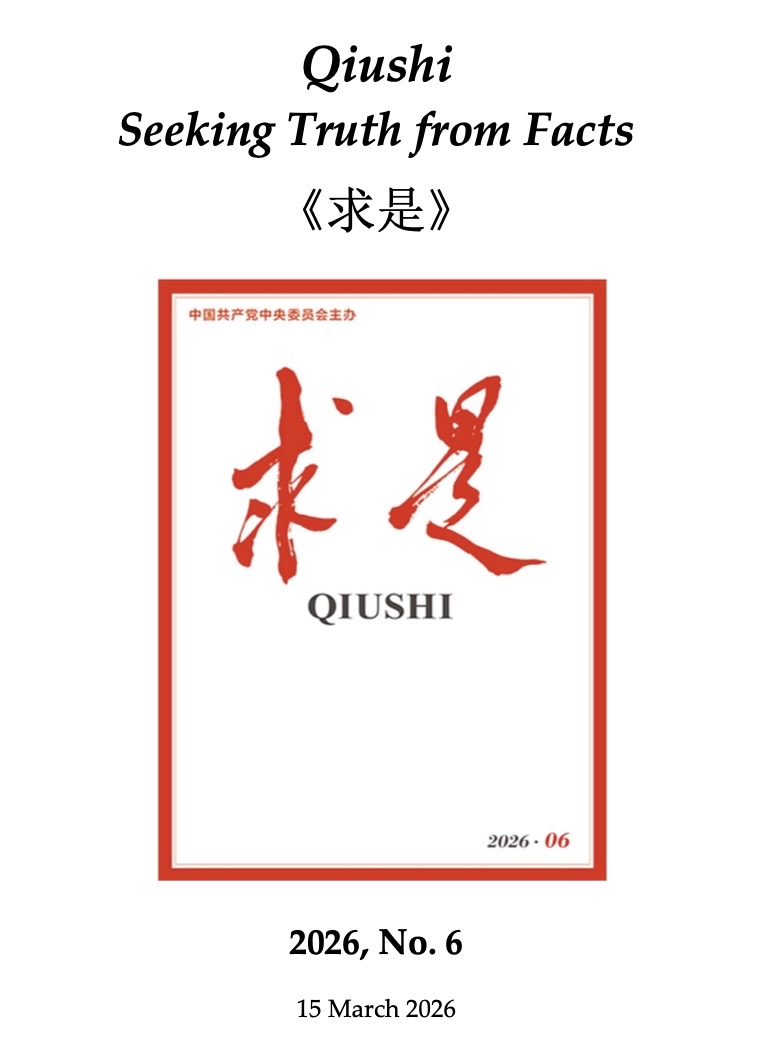
Qiushi (March 15, 2026): "The 21st century is the century of the ocean; whoever wins the ocean wins the future. China is one of the earliest nations in the world to develop and utilize the ocean ... We must deeply implement Xi Jinping’s vision to build a maritime power."
The United States has handed the Chinese an encyclopedia on its military doctrines.
The war involving the US and Israel is being monitored and recorded in real time by LEO satellite constellations such as Jilin-1, which are even capable of capturing 4K UHD video.
Today, China operates at least three LEO constellations comprising at least 300 satellites dedicated to espionage or dual-use purposes.
From the images constantly released about American bases, it is clear that the Chinese are building a true encyclopedia on U.S. naval and air doctrines.
Every ship positioning, fiend tactics, refueling time, ammunition resupply, everything is being monitored by Chinese satellites. This includes the exact location and behavior of air defenses, their mapped reaction times, missile trajectories, and reprogramming durations.
Nothing escapes the Chinese gaze. In this conflict, they have already mapped and publicly released data on multiple American bases in the region, even identifying the exact number and models of aircraft on the ground.
The war against Iran is giving the Chinese something they never had in the Ukrainian theater: the opportunity to study and document American forces in detail.
To give you an idea, in 2025 the Chinese recorded a video of Atlanta’s airport purely to demonstrate their capability.
I believe the same kind of videos are being produced daily on the American front against Iran.
Never in history has a U.S conflict been observed from the skies at this level, both tactically and strategically.
The price of the Iran war is high in many ways, as I have always said.
And this single episode is giving the Chinese decades of planning and improvement in one go.
(Atlanta Airport)
The United States has spent EIGHT TRILLION DOLLARS fighting and policing in the Middle East. Thousands of our Great Soldiers have died or been badly wounded. Millions of people have died on the other side. GOING INTO THE MIDDLE EAST IS THE WORST DECISION EVER MADE.....
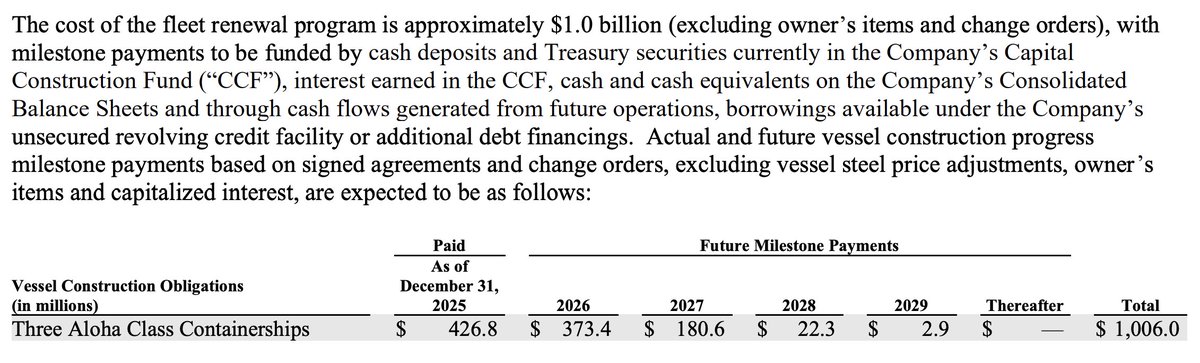
Matson's 2025 annual report shows that its three containerships being built at @PhillyShipyard now cost $335.3 million each (not including steel price adjustments, owner’s items, and capitalized interest). They are the most expensive containerships in the history of the world:
Carl Jung and the Trouble With Greenland: https://t.co/alazDhAKuG
A conversation on the Arctic, Western Hemisphere, Shadow Fleet, and Great Power Competition in General with the inimitable @AlexGabuev and his inscrutable #RussianSmile
What's driving great power competition in the Arctic today? And how do China and Russia perceive President Trump's approach?
@IBKardon and @AlexGabuev discuss: https://t.co/rYJdpcSPld
Carl Jung and the Trouble With Greenland: https://t.co/alazDhAKuG
A conversation on the Arctic, Western Hemisphere, Shadow Fleet, and Great Power Competition in General with the inimitable @AlexGabuev and his inscrutable #RussianSmile
One of those eight (Seatrium) has no orderbook. 7 of the 8 shipyards haven't delivered a commercial ship in the last 5 years, and all eight have combined for just 5 commercial deliveries so far this decade. None were delivered on time, and 4 were over budget.
New! 20 #Chinese (中文) #Naval/#Maritime#Law-Related Translations Published!
@NavalWarCollege/@ChinaMaritime Studies Institute Quarterly Review 1.3 (February 2026)—The Legal Struggle for #China’s Maritime Power: Strategy, Sovereignty, & Enforcement
https://t.co/mozfvQSiMm
Previous issues curated here: https://t.co/cpDA5wTw5U
From CMSI Director CAPT @ChrisHSharman, @USNavy (Ret.):
China Military Maritime Watchers: How does maritime law become an instrument of power & influence?
The China Maritime Studies Institute (CMSI) is pleased to announce the publication of our latest CMSI Quarterly Review – Translation Special Edition.
This volume brings together 20 archived CMSI translations to trace how the People’s Republic of China (PRC) built & operationalized a robust legal architecture in support of its strategic transition from a large maritime country to a maritime power.
Drawn from official and unofficial PRC journals, these articles reveal how maritime law has been used to legitimize expansive extraterritorial claims, establish legal “red lines,” & shape competitive behavior at sea.
Rather than reading history backward, the volume treats each article as a snapshot in time, capturing evolving PRC thinking—from China’s role in international maritime negotiations to the modern employment of law as an operational instrument.
As PRC maritime disputes intensify, understanding how China arrived at its legal positions—& how it intends to use them—matters more than ever.
We hope this collection of archived translations proves a valuable resource for scholars, warfighters, & policymakers navigating the Indo-Pacific’s increasingly contested legal terrain.
@JamesKraska/@julianku/@BonnieGlaser/@graham_euan/@djag2/@BuchananLiz/@justinburke/@RUMLAE