🇺🇸 Gettysburg 163 Live: July 3rd, 7:00 AM
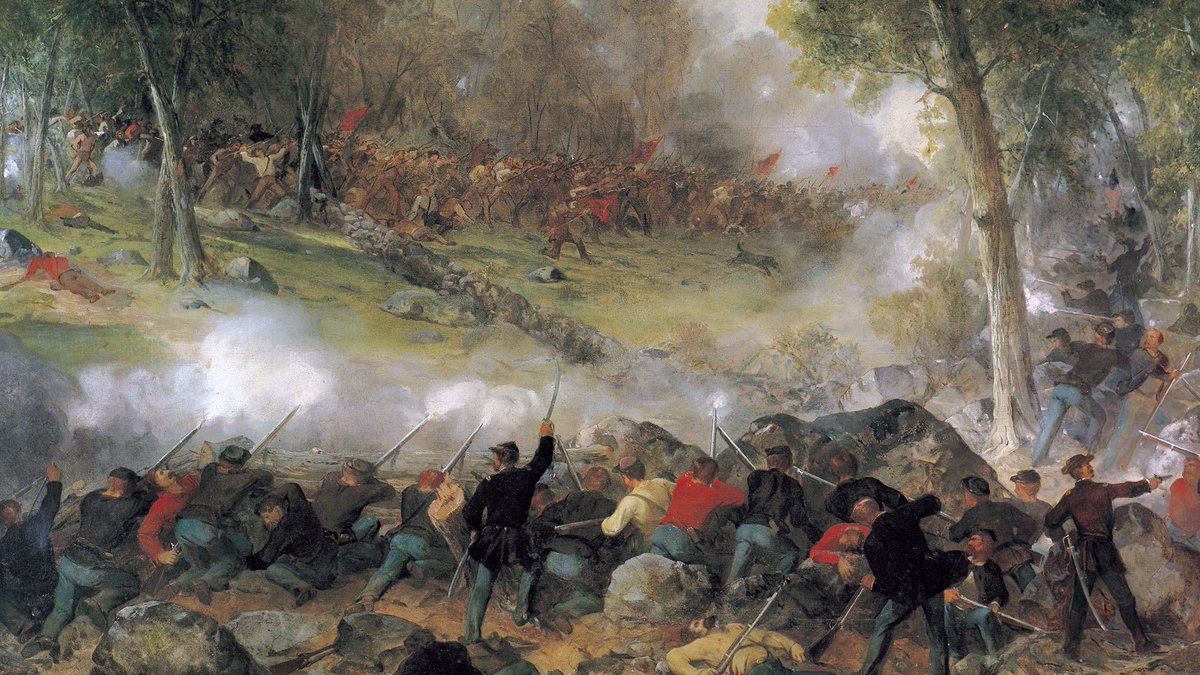
On Culp’s Hill, brutal close-quarters fighting continues as Union forces launch determined attacks to reclaim the ground lost during the night.
Choked by blinding gunsmoke, soldiers battle through the dense woods and jagged rocks in some of the most vicious and sustained infantry combat of the entire battle.
By mid-morning, the Union XII Corps is steadily pushing the Confederates back. The federal right flank is holding.
On this day in 1776, the United States was actually born. Not July 4. July 2. That's the day the Continental Congress voted to break from Britain, and John Adams was so certain of it that he predicted July 2 would be the great American holiday forever. He nailed everything except the date.
The vote came down to the wire, and one man had to ride through the night to save it. Delaware's delegation was split, one for independence, one against, which meant the colony's vote canceled itself out. The tie-breaker, Caesar Rodney, was 80 miles away in Delaware. He got word that he was needed and rode all night through a summer thunderstorm, sick and in pain, boots and spurs still on, and made it into Philadelphia just in time to cast Delaware's vote for independence.
The other holdouts fell into place too. In Pennsylvania, the men most opposed, including John Dickinson, deliberately stayed away from the chamber so their colony could swing to yes. South Carolina came around for the sake of a united front. When the roll was called, twelve colonies voted for independence and not a single one voted against. New York simply abstained, waiting on permission from home.
And so, on July 2, 1776, it was done. The colonies had legally, officially declared themselves free. The next day Adams wrote to his wife Abigail that this day "will be celebrated by succeeding generations as the great anniversary festival," with "pomp and parade, with shows, games, sports, guns, bells, bonfires, and illuminations." Fireworks and all. He was describing the Fourth of July two days early.
So why do we celebrate the 4th? Because that's the day Congress approved the final wording of the document explaining the decision, the Declaration of Independence. The vote to be free happened on the 2nd. The paperwork got finished on the 4th, and history remembered the paperwork.
The country was actually born in a rainstorm and a roll call on July 2, thanks in part to one sick man who refused to let a tie decide the fate of a nation.
🇺🇸 Gettysburg 163 Live: July 2nd, 4:45 PM
The Irish Brigade prepares to advance into the deadly Wheatfield. First, they experience an absolute first in U.S. military history.
Before they step forward, Father William Corby climbs onto a large boulder.
The men stand at order arms as he addresses them.
Catholics and Protestants alike then fall to their knees while Father Corby delivers a general absolution.
This is the first time such a ceremony has ever been performed in the United States military. It is a powerful and historic moment.
Reminding them of their sacred duty, Corby warns that the Catholic Church refuses Christian burial to any soldier who turns his back upon the foe or deserts his flag.
Moments later, Hancock orders the Irish Brigade into some of the fiercest fighting of the entire battle.
Going to give everyone a little heads up. We still have a few hours, but it will get really intense for a moment.
9 posts, one every 15 minutes, starting at 4 PM. Buckle up! 🫡🇺🇸
Hear from Head Coach Rassey! Join him in the rink all season long and secure your season tickets deposit.
🎟️ https://t.co/az73jwJdyB
#GoCrimson | #OneCrimson
🇺🇸 Gettysburg 163 Live: July 1st, 4:00 PM
As the Union line north of Gettysburg collapses, Brigadier General John Robinson orders the 16th Maine to hold the intersection of Oak Ridge and Mummasburg Road “at any cost.”
Realizing the order is a death sentence, Colonel Charles Tilden turns his 298 remaining men to face the oncoming Confederate tide.
For twenty desperate minutes, the outnumbered regiment fights a fierce rearguard action to cover the retreat of their entire division.
When they are finally surrounded, the soldiers defiantly tear their American and regimental flags into tiny pieces, hiding the fragments in their pockets to keep them from enemy hands.
While the regiment is completely overrun and captured, their sacrifice buys the vital time needed for thousands of Union troops to safely escape toward Cemetery Hill.
I passed a great hall, brighter than the moon at its zenith, and my mind declared it must be an illusion, or perhaps a mirage of the road-weary.
I had not believed the sign. OPEN 24 HOURS. In Japan we have convenience stores that never sleep, but they are small lanterns. This is a full provisioning hall the size of a riding ground, lit like noon, at the hour of the ox.
I went at 3 a.m. specifically to test it. I am not proud of this. I am a little proud of this.
Inside: one man mopping with great patience. One cashier. Music playing softly for no one. And the shelves — fully stocked, fully lit, fully ready, like a castle holding formation for an army that may never come.
"You are truly open?" I asked.
"We're always open."
Always. He said it the way mountains would say it, if mountains spoke.
"Who comes at this hour?"
"You did, man."
I had no answer. I bought an apple I did not need, out of respect. And a small cake, also out of respect.
In my land, the castle gates closed at dusk, and the whole town exhaled and went dark. America never exhales. Somewhere it is always 3 a.m., and somewhere a store is holding its doors open anyway, on the chance that one soul needs bread, or medicine, or simply to stand in the light a while.
A light left on all night is not commerce. It is a candle for whoever is still awake.
To the night clerks of America, keeping the vigil with a mop and a register: I see you. The town sleeps because someone does not.
I walked home as the sky turned grey. The store did not close behind me.
It never does. I find that I sleep better, knowing.
In 1675, New England was burning and the colonial army struggled to win.
The man who finally turned the tide wasn't a soldier.
He was a carpenter.
But he had learned how the Native American enemy fought.
This is the story of Benjamin Church
🧵1/5
Robert Sapolsky is a Stanford neuroscientist who proved chronic stress is the silent killer doctors ignore.
On Chris Williamson's podcast, he revealed 10 "normal" habits you do every day that wreck your sleep, mood, and nervous system:
1) Replay conversations in your head
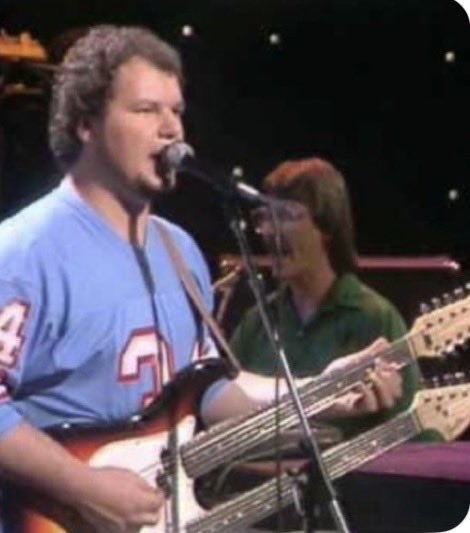
“Ride Like the Wind” by Christopher Cross peaked at #2 on the Billboard Hot 100 on this day in 1980. Personnel includes Michael McDonald, Lenny Castro and Michael Omartian. It was the first of four top ten singles for Cross and is essential yacht rock.
New article from Hush-Kit Aviation: The Case For the Lavochkin La‑7 Being The Greatest Fighter of the Second World War featuring out book 'Soviet Aces of World War 2'.
Read it here: https://t.co/fhGV07Y38W
#Aviation#Books#History#WWII
Let's be honest.
Canada didn't lose because of OT being 3 on 3.
Canada lost, in large part, to the best of their best - Makar, MacKinnon - failing at the biggest moments.
Makar and Toews let Matt Boldy go on an afternoon stroll in the park right past them, below.
MacKinnon flubbed a shot on a gaping net.
Makar gambles on the pinch in OT.
And I'm still not sure went MacKinnon thought he was doing on Werenski.
Then MacKinnon has the audacity to whine in his postgame comments.
Shameful stuff from MacKinnon.
And a very underwhelming performance by Makar in the tournament.
Thank you.