Official journal of the European Federation for Medical Informatics and International Medical Informatics Association #openaccess#digitalhealth#datascience
#EfficientNet-B3 is a reliable tool for early detection of Acute Lymphoblastic #Leukemia, offering high accuracy and computational efficiency. Clinical implementation requires addressing computational constraints and integration challenges #cancer#AI
🔗https://t.co/At0dYMUqQ4
#Digitalisation of research processes using #REDCap improved organisation and execution of research, leading to greater efficiency and transparency, reduced administrative workload and enhanced collaboration. #research#patientcare
https://t.co/RMbGZfCbxv
#MachineLearning based predictive tool #XGBoost model to estimate the risk of brain metastasis in #lungcancer patients demonstrates significant potential, offering clinicians a dynamic, #personalized#riskassessment visualization method.
Read more: https://t.co/pStuNprWZG
🚨 New Impact Factor Alert! The International Journal of Medical Informatics jumps from 3.7 to 4.1! #journalmetrics
Huge thanks to our authors, reviewers & readers for driving high-impact research in #medicalinformatics#healthtech
🚭Case study validates an IT framework for implementing mHealth tools like Sense2Quit app to support smoking cessation among patients with chronic conditions. User preferences, digital literacy & privacy matter for sustained success.
🔗https://t.co/kGb0czWn0q
#mhealth#smoking
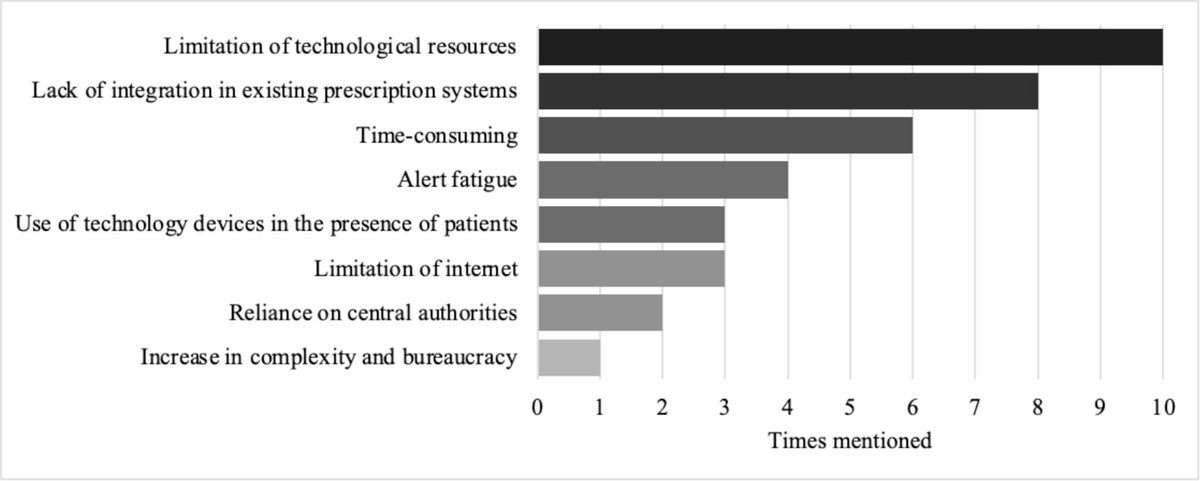
🧠How do primary-care #physicians feel about #AI in clinical settings?
A systematic review reveals mixed attitudes, concerns among doctors over job security, and key barriers like bias, training and implementation.
🔗https://t.co/5QVpsxR1nN
#healthcare#primarycare#digitalhealth
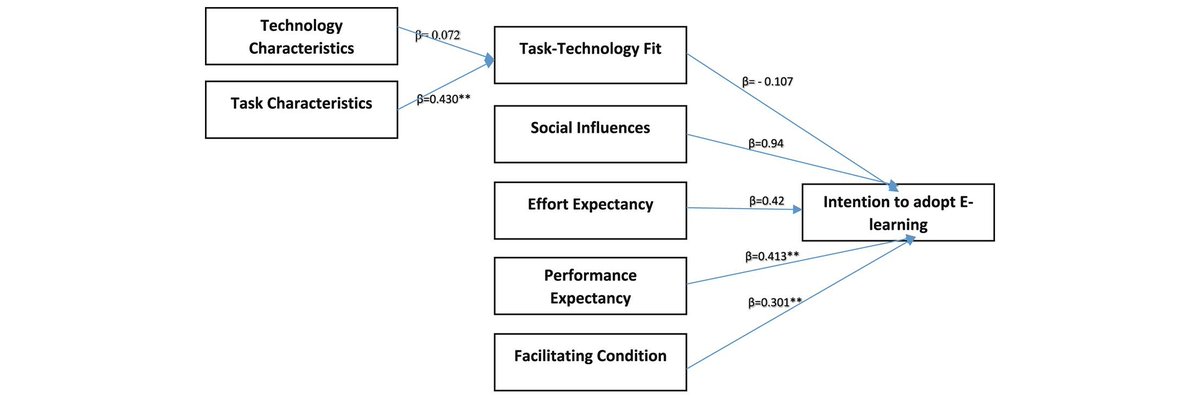
💊 What drives #pharmacists to adopt e-prescribing? A new case study highlights key factors:
✅Tech design
✅Social influence
✅Performance expectations
✅Support systems
Key insights on designing e-prescription systems.
https://t.co/spBtSnGwt4
#eprescription#pharmacy
Editor's choice: 87% of Australians aged 55+ use digital tech - use of wearables & health apps drops steeply after 75. Findings from the 45 and Up Study highlight where #digitalhealth is thriving and where #equity gaps remain. #healthyaging#publichealth
https://t.co/dPl13WPcPz
Exploring multi-stakeholder approaches for responsible #AI governance. A proposed model centers on patient needs, adaptability, transparency & empowerment that are key to ensuring AI is safe, effective & equitable towards service users #PatientEmpowerment https://t.co/FRqjJClyZb
ICD-11 implementation in European #oncology & #cancer registries highlights challenges in accuracy, consistency & clinician training. This study maps ICD-10 to ICD-11, offering insights for smoother adoption in health info systems #cancer#ICD10#ICD11 https://t.co/AGRFROZOW5
#AI-based tools for predicting Type-2 #diabetes treatment non-adherence show moderate to high predictive ability. More external validation across diverse populations are needed to enhance impact on #healthcare#HealthTech#MedicalResearch
https://t.co/2o9ba1KVqs
AI-enabled #obesity prediction: A systematic review & meta-analysis (411,580 participants) reveals gaps in advanced #AI techniques for high-risk groups. Understanding key factors is crucial for effective AI application in #health#healthtech https://t.co/AT3cvzKVDm
Again for PDA, we developed and validated a machine learning framework to explore the relationship between key genetic alterations and DNA methylation from the TCGA-PAAD and CPTAC-PDA datasets. This paper has been published on the @IJMedIn from @ElsevierConnect.
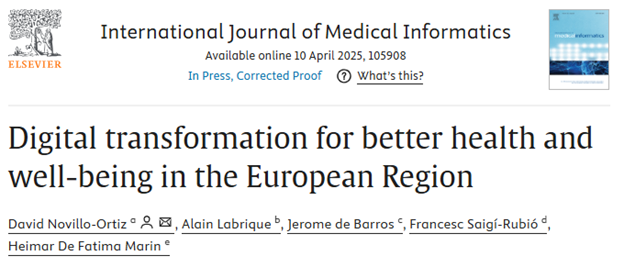
Excited to share a milestone over a year in the making: the special issue of @IJMedIn, dedicated to #DigitalHealth in the WHO European Region.
Thanks to our incredible authors and contributors, we have been able to take a closer look at:
🏥Digital health governance and policy
🆘ERIMS
📈Data exchange & EHRs
💻Telehealth expansion
🙋🏻Patient-centered digital health
🩺 SNL adoption
👩⚕️Digital competence profiles
📊HIS and CDSS
All these studies offer invaluable insights that can inform policy, strategy development, and inspire further research and innovation across Europe’s diverse healthcare systems.
A heartfelt thank you to the amazing co-editors: @alabriqu, @jdebarros28, @fsaigi.
Please note that all papers in this special issue are freely accessible for a limited time — don't miss the opportunity to download them within the next three months!
Let’s keep the momentum going. Which of these topics are you most interested in? Discover the studies here: https://t.co/0Lg7dRWzdB
📢 Revolutionizing patient referrals with SIPILINK!
An e-referral system connects General Practitioners (GPs) & hospitals, ensuring 93% timely responses. 100% of GPs and most hospital staff report better communication & patient care. https://t.co/nyBVYqszC3 #EReferral
🚨Cutting-edge ML research for Myasthenia Gravis! 🌟A new study achieves 76.5% accuracy in predicting myasthenic crisis risk using real-world clinical data. Explore how explainable AI can personalize treatment and improve outcomes. https://t.co/0nrS8bzSz9 #AIinHealthcare#ML
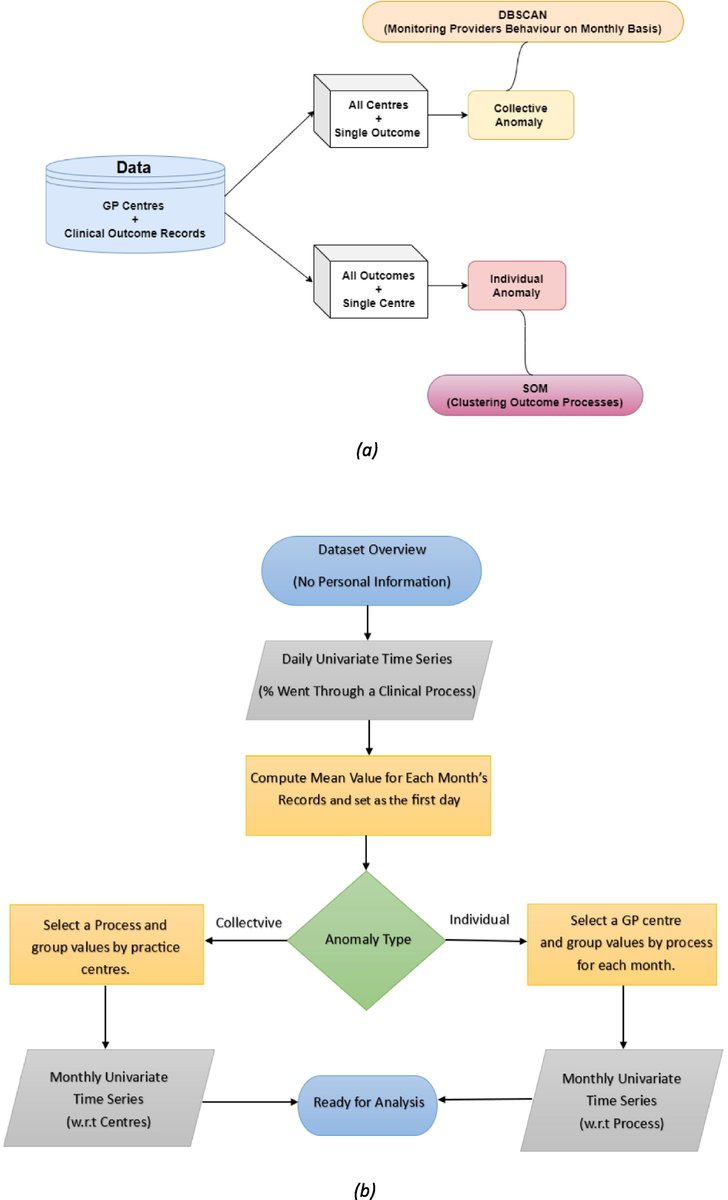
Revolutionizing healthcare: A new dual-strategy ML approach detects both collective & individual anomalies in time series data, improving decisions & safeguarding privacy. Learn more: https://t.co/niIdYnlyK0 #AIHealth#AnomalyDetection
EHRs in the WHO European region: A 2022 survey reveals progress, barriers, and the need for stronger legislation, interoperability, and patient-centered strategies. Explore the subregional analysis: https://t.co/y5Yw6WssVh #DigitalHealth#EHR
Meet 'survcompare': An R package bridging Cox models & machine learning for clinical predictions. Balances accuracy & interpretability, excelling in complex, high-dimensional datasets. Explore new insights: https://t.co/U2jSdnlHhO
#DataScience#ClinicalAI