🚗🚶🏿Are you driving or commuting to your office?
🍵☕Are you sipping your tea or coffee at home or the office?
📢Pause for a second - repost and spread the word to help #BeatPlasticPollution.
Every voice counts. Every action matters. 💚♻️
🇷🇼🤝🇪🇹 Advancing South-South cooperation for a greener, more climate-resilient future.
On 8 July 2026, @GGGI_Rwanda had the privilege of hosting a delegation from the Government of Ethiopia and @GGGIEthiopia during a knowledge exchange visit facilitated by the @cooperatio11565 (RCI).
The 5-day visit aimed to provide the delegation with insights into Rwanda’s experience in advancing green growth, climate resilience, sustainable urban development, and climate finance.
The discussion hosted by GGGI highlighted GGGI’s support to Rwanda in advancing green city development, mobilizing climate finance, improving energy efficiency, promoting sustainable waste management, restoring ecosystems, and unlocking innovative green investment opportunities. It also underscored GGGI’s role in strengthening institutional capacity, developing bankable green projects, and enhancing access to climate finance to accelerate Rwanda’s sustainable development goals.
GGGI Rwanda showcased its support in mobilizing more than US$61 million in green investments for transformative green growth projects across the just and inclusive energy transitions; adaptive and resilient landscapes; green, resilient, circular cities and infrastructure.
We thank the visiting delegation for the engaging dialogue and valuable knowledge exchange. Partnerships and peer learning remain critical to accelerating climate action, mobilizing sustainable finance, and delivering inclusive green growth. 🌍🌱
#GGGI #GGGIEthiopia #RwandaCooperationInitiative #SouthSouthCooperation #ClimateFinance #GreenGrowth #SustainableDevelopment #ClimateAction #AfricaRising #GreenCities #Ethiopia
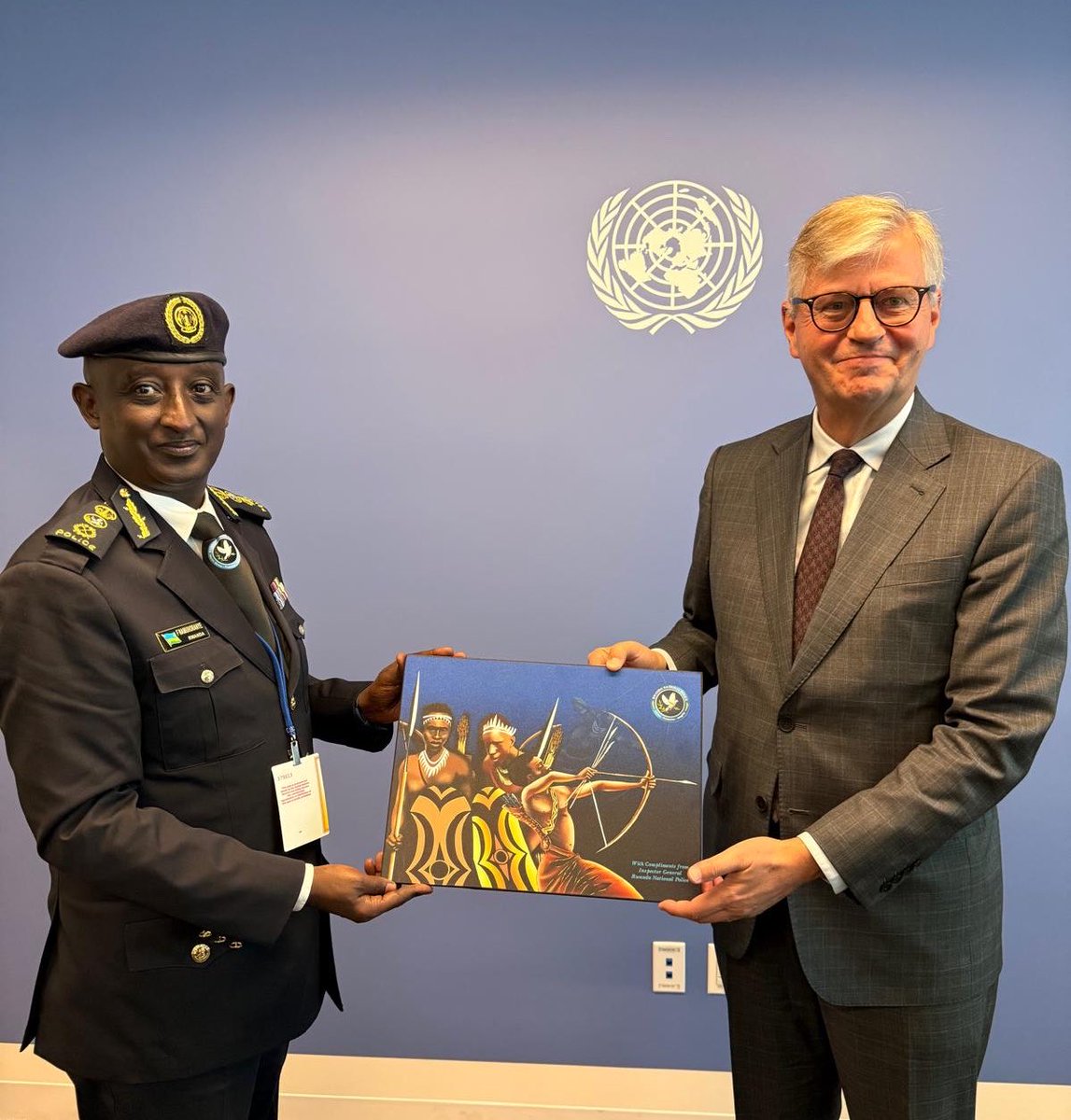
On the sidelines of the United Nations Chiefs of Police Summit (#UNCOPS) in New York, the Inspector General of Police, CG Felix Namuhoranye and Permanent Representative, Ambassador @martin_ngoga, met with the @UN Under-Secretary-General for Peace Operations, Mr. Jean Pierre Lacroix.
Their discussions focused on #Rwanda’s existing partnership with the @UN Department of Peace Operations.
Ashton Small 🏆🇷🇼🇬🇭
Disability is not inability is his push.. he’s grown a community of 200k people in 1 week. Road to 1 million, his story is deep and deserves to be shared with the world🌍
In our previous post, we looked at the potential risks of carbon markets for host countries and why it is important to identify and manage them effectively.
Today, we turn to another key aspect: Rwanda's Carbon Market Governance Framework
What is Rwanda’s Carbon Market Framework?
It is the national framework that sets the rules and systems for carbon credit generation and trading, and facilitates Rwanda’s participation in carbon markets under Article 6 of the Paris Agreement.
The framework establishes a governance and institutional structure that makes the carbon market possible, and provides further considerations regarding participation in carbon markets under Article 6 of the Paris Agreement.
Why does Rwanda have this framework?
✅ To position Rwanda as an attractive destination for carbon market investment and cooperation.
✅ To demonstrate the country’s commitment to facilitating voluntary cooperative approaches and other carbon market mechanisms in achieving NDC emission reduction targets.
✅ To establish clear carbon crediting strategies, guidelines, and institutional, legal, and governance frameworks for effective participation in carbon markets.
What does the framework do in practice?
1️⃣ Sets clear rules for carbon credit issuance
2️⃣ Ensures verification and credibility of emission reductions
3️⃣ Establishes a carbon registry to track credits
4️⃣ Enables trading mechanisms for both domestic and international markets
Who leads it?
Rwanda Environment Management Authority (REMA) under the Ministry of Environment (MoE), is the Designated National Authority (DNA) for Article 6.4 mechanism and carbon market in general. The main task of the DNA is to regulate the carbon market under Article 6 of the Paris Agreement.
This framework plays a key role in ensuring that Rwanda’s participation in carbon markets delivers real, measurable, and trusted climate impact.
📌 Stay with us as we continue exploring how Rwanda is positioning itself in global carbon markets. In the next post, we’ll take a closer look at key stakeholders involved in the framework and their roles.
#KnowCarbonMarkets #GreenRwanda #ClimateAction #Article6 #ParisAgreement #GGGI #GreenGrowth #NetZero #Sustainability #CarbonCredits #GreenEconomy
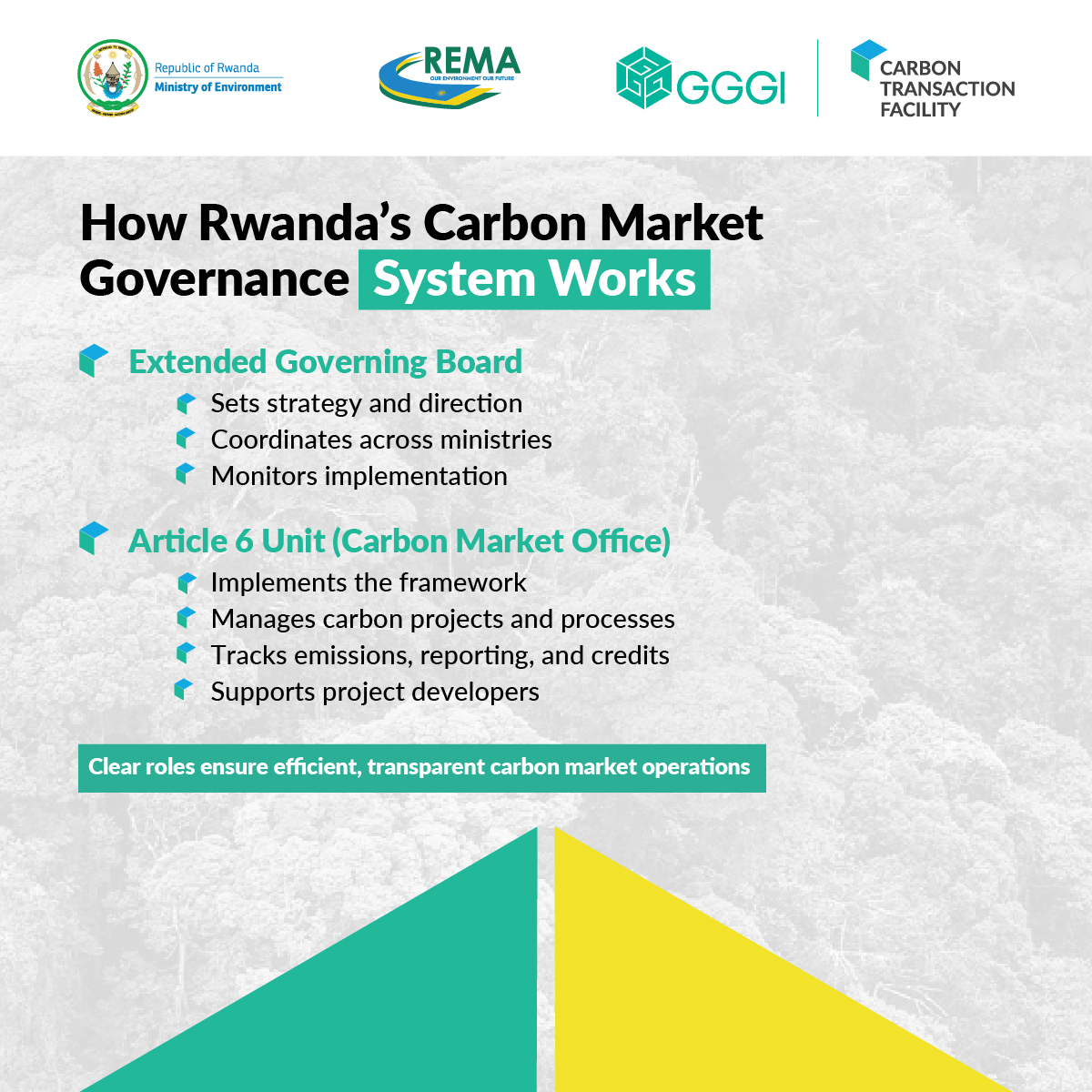
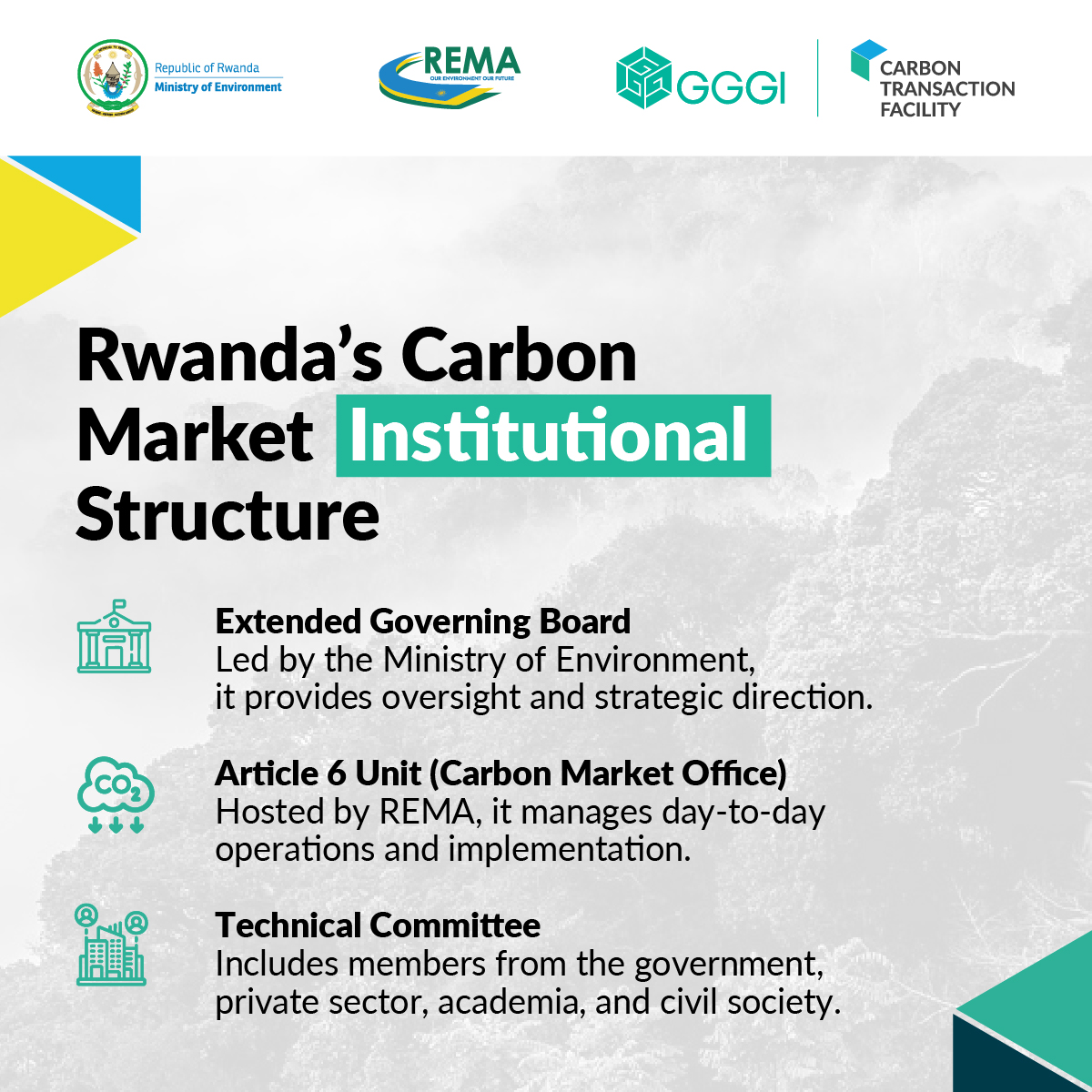
Building on our previous post, we introduced Rwanda’s Carbon Market Framework and its role in ensuring transparency, credibility, and alignment with national climate goals.
Today, we turn our focus to Rwanda’s Carbon Market Institutional Structure.
How is the system organized?
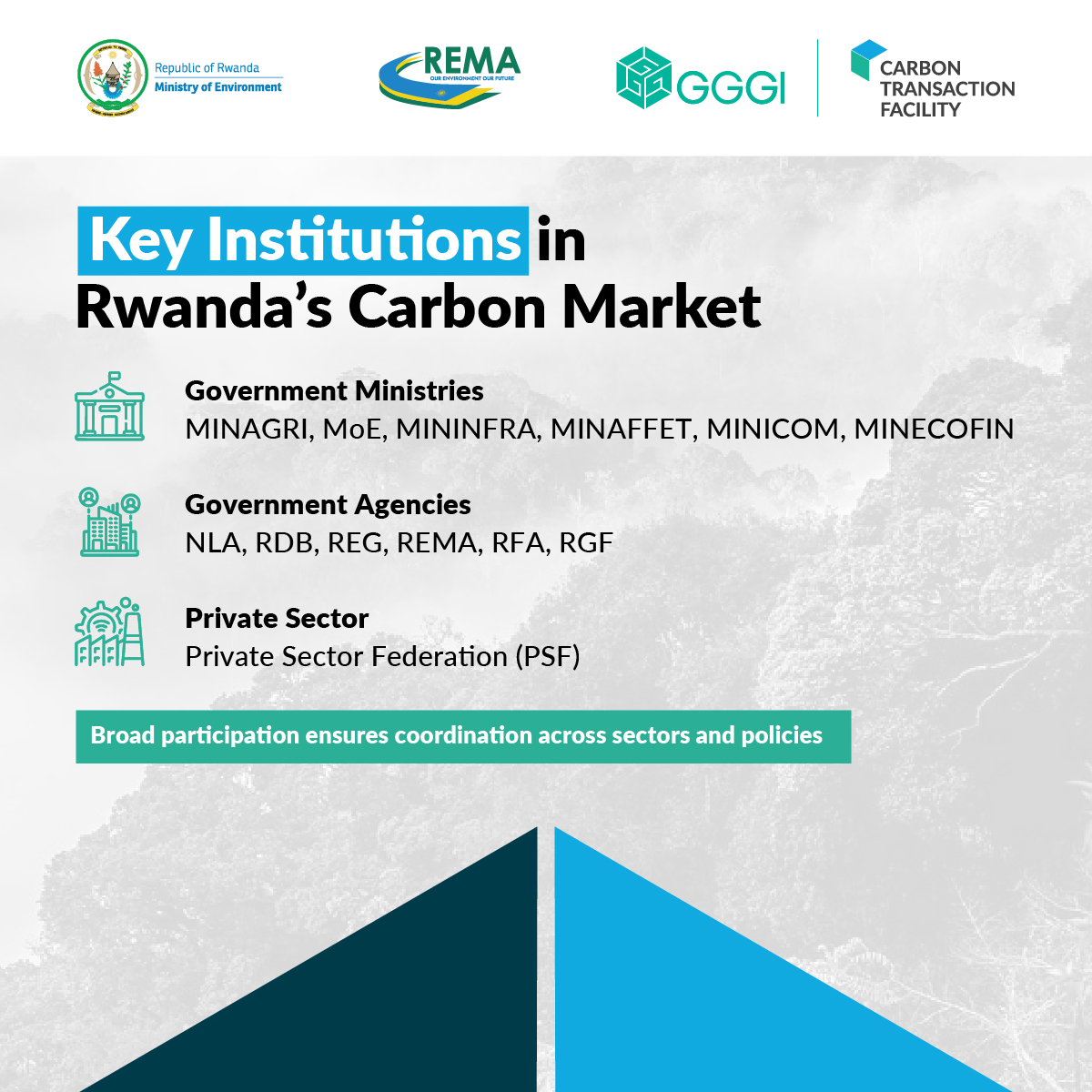
Rwanda’s carbon market operates through a structured, multi-level system designed to ensure coordination, accountability, and effective implementation.
The system is built around:
✅ Extended Governing Board – Senior representatives from relevant ministries and government institutions
✅ Article 6 Unit (Carbon Market Office) – Dedicated operational unit within REMA
✅ Technical Committee - Technical focal points from relevant ministries and institutions
How does the system work in practice?
1️⃣ The Extended Governing Board sets strategic direction, coordinates across institutions, and monitors implementation
2️⃣ The Article 6 Unit implements the framework, manages carbon projects, and oversees reporting and credit tracking
3️⃣ The Technical Committee reviews project requests, supports authorization decisions, and ensures compliance with Article 6 requirements and national priorities.
This broad participation and clear roles and responsibilities across institutions ensure strong coordination across sectors, alignment of policies and actions, and help ensure that Rwanda’s carbon market operates efficiently, transparently, and with accountability.
Stay with us as we continue unpacking Rwanda’s carbon market system. In the next post, we’ll explore how carbon projects are developed and approved within this framework.
#KnowCarbonMarkets #GreenRwanda #ClimateAction #Article6 #ParisAgreement #GGGI #GreenGrowth #NetZero #Sustainability #CarbonCredits #GreenEconomy
This past Saturday, 13 June 2026, the @GGGI_Rwanda team proudly joined thousands of runners in the #Kigali International #PeaceMarathon—celebrating unity, resilience, and a shared commitment to a better future.
Beyond promoting health and wellbeing, our participation reflects #GGGI’s dedication to building greener, more inclusive, and resilient communities.
Events like these remind us that #SustainableDevelopment is not only about policies and investments, but also about people, partnerships, and collective action.
We are proud to run alongside fellow Rwandans, visitors and partners in the spirit of peace and progress.
#GGGI #KigaliPeaceMarathon #RunForPeace #GreenGrowth #HealthyLiving #Rwanda #SustainableDevelopment
Thank you to our followers and partners for staying engaged in the carbon markets campaign.
In previous posts, we discussed the benefits of carbon markets, including economic and financial opportunities, how technology transfer can support emission reductions and innovation, and the environmental and social co-benefits they deliver.
Today, we turn to another important aspect: The potential risks of carbon markets for host countries.
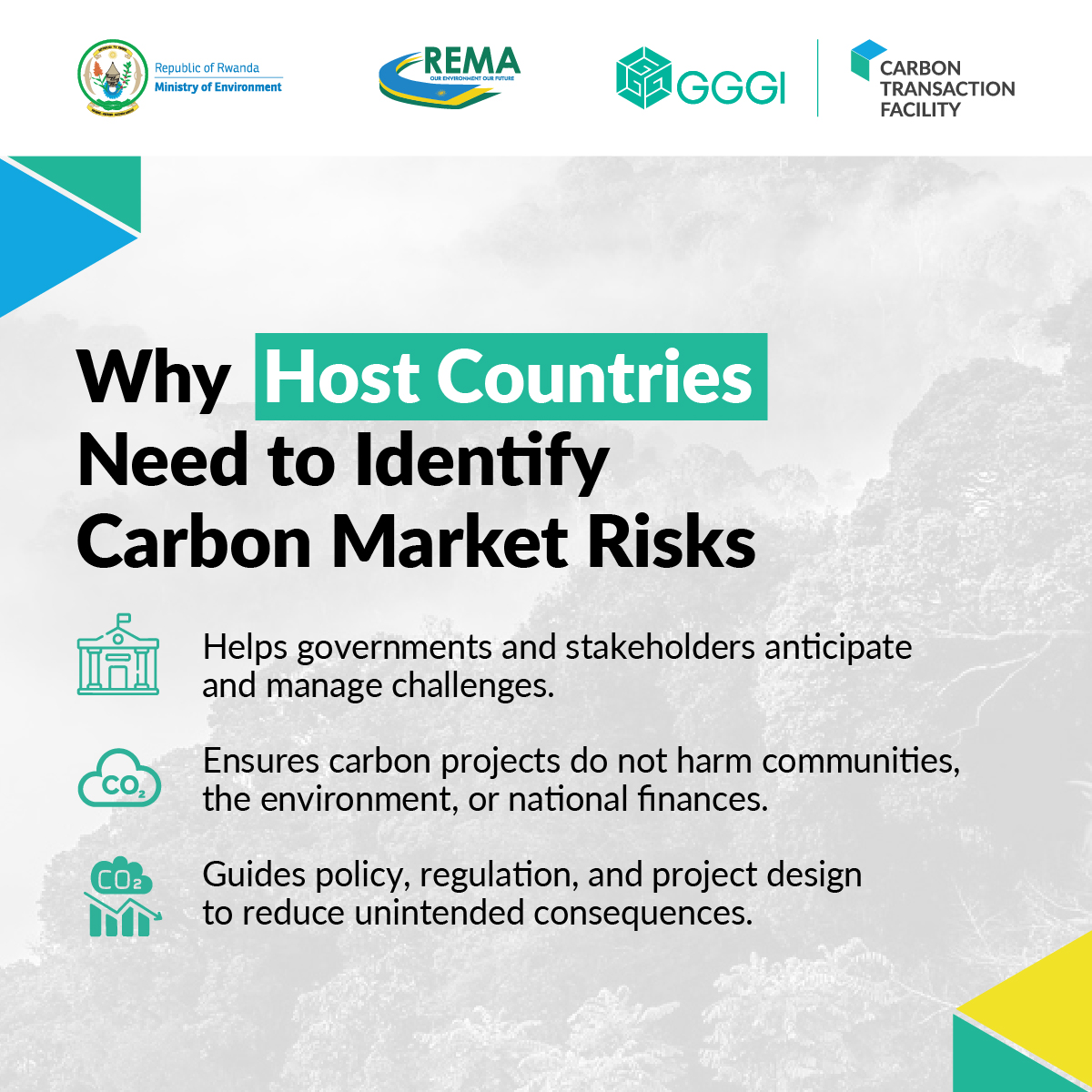
What do we mean by risks?
Risks refer to the possible negative consequences that host countries may face when participating in carbon markets, particularly under Article 6 of the Paris Agreement.
Why is it important to identify these risks?
✅ It helps host governments and stakeholders anticipate and manage potential challenges
✅ It ensures that carbon projects do not harm communities, the environment, or national interests
✅ It supports the development of strong policies and regulations to guide implementation
Key risks to consider:
1️⃣Economic risks
👉 Price volatility can affect expected revenues
👉 High transaction costs for monitoring, reporting, and certification can reduce project profitability
👉 Benefits may not be distributed equitably among investors, project participants, and local communities
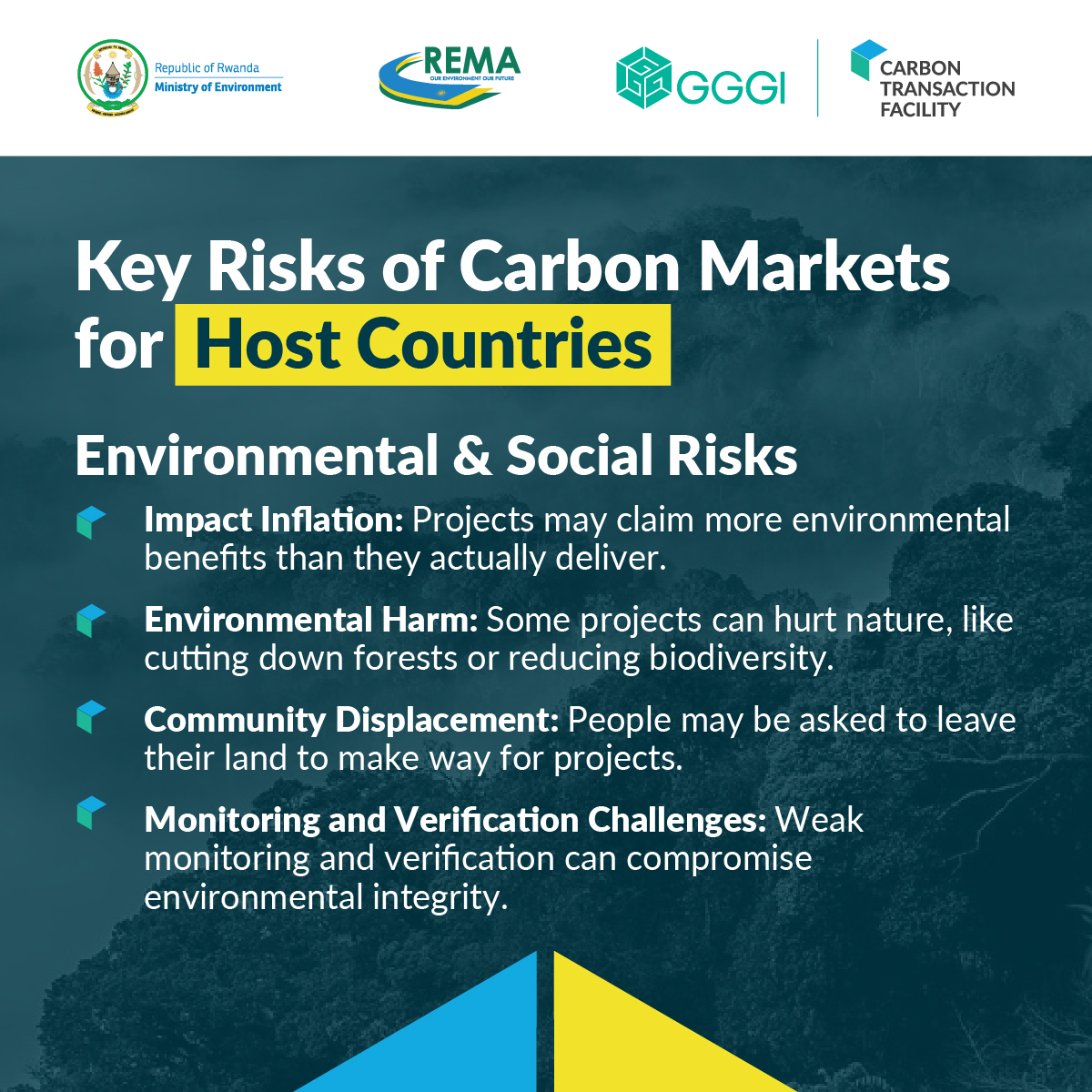
2️⃣ Environmental & Social risks
👉 Projects may overstate their environmental impact
👉 Some activities may unintentionally harm ecosystems
👉 Communities may face displacement or limited benefits
👉 Weak monitoring and verification can compromise environmental integrity
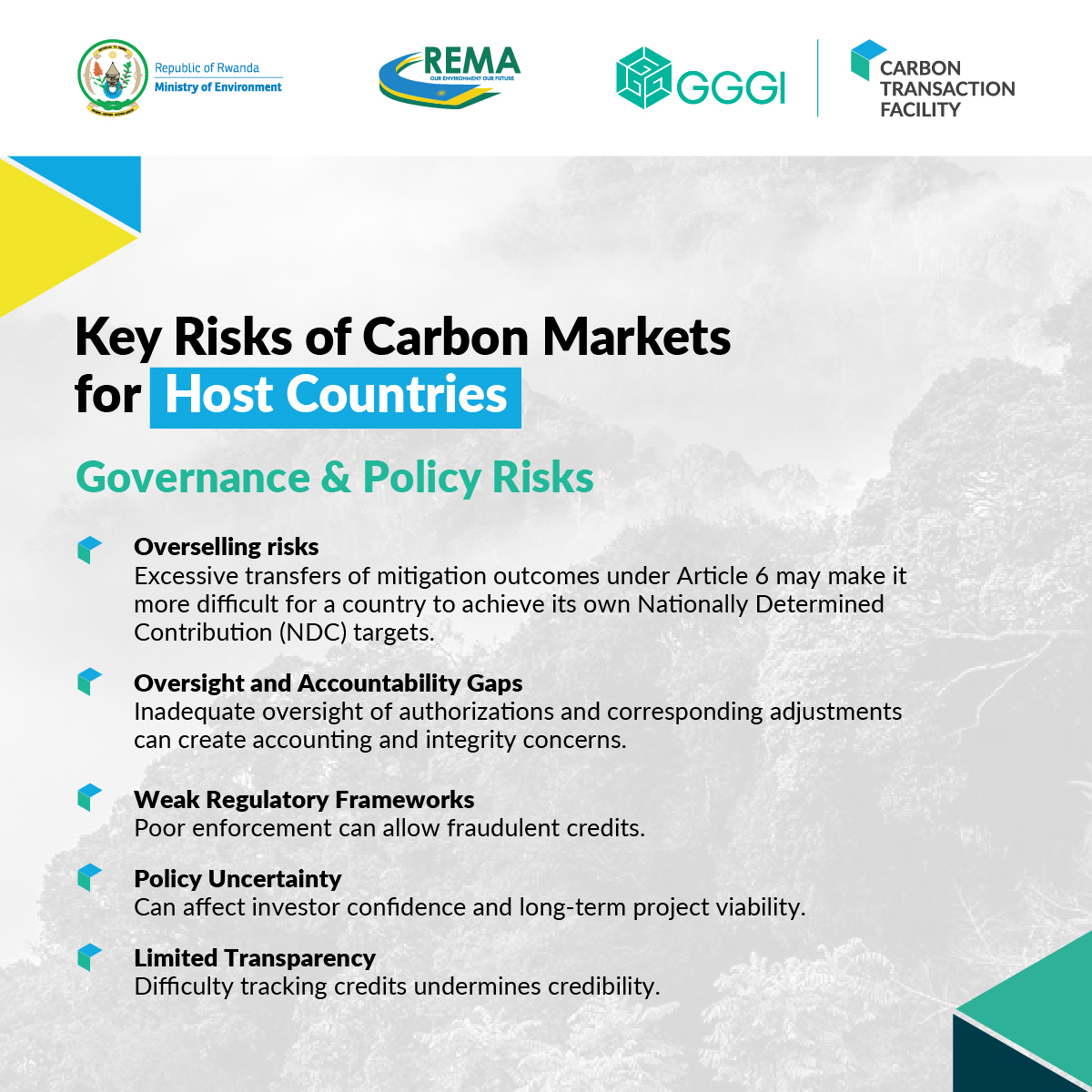
3️⃣ Governance & Policy risks
👉 Extensive transfers of mitigation outcomes without considering domestic mitigation needs may make it more difficult for a country to achieve its own Nationally Determined Contribution (NDC) targets
👉 Inadequate oversight of authorizations and corresponding adjustments can create accounting and integrity concerns
👉 Weak regulatory frameworks may allow low-quality credits
👉 Policy uncertainty can affect investor confidence and long-term project viability
👉 Limited transparency can reduce trust in carbon markets
Understanding these risks is essential to ensuring that carbon markets deliver real, fair, and lasting impact while supporting national development priorities.
📌 Stay with us as we continue unpacking carbon markets under the Paris Agreement. In the next post, we'll explore Rwanda's Carbon Market Framework to better understand its overview and purpose.
#KnowCarbonMarkets #GreenRwanda #ClimateAction #Article6 #ParisAgreement #GGGI #GreenGrowth #NetZero #Sustainability #CarbonCredits #GreenEconomy
We commend @Cooperation_RW for advancing international partnerships that support sustainable development.
At @GGGI_Rwanda, we value the critical role of South-South cooperation in promoting climate action and green growth. Rwanda’s leadership in sharing home-grown solutions continues to set a strong example.
#GreenGrowth #ClimateAction #SSCooperation
𝐉𝐎𝐈𝐍𝐓 𝐂𝐎𝐌𝐌𝐔𝐍𝐈𝐐𝐔𝐄́:
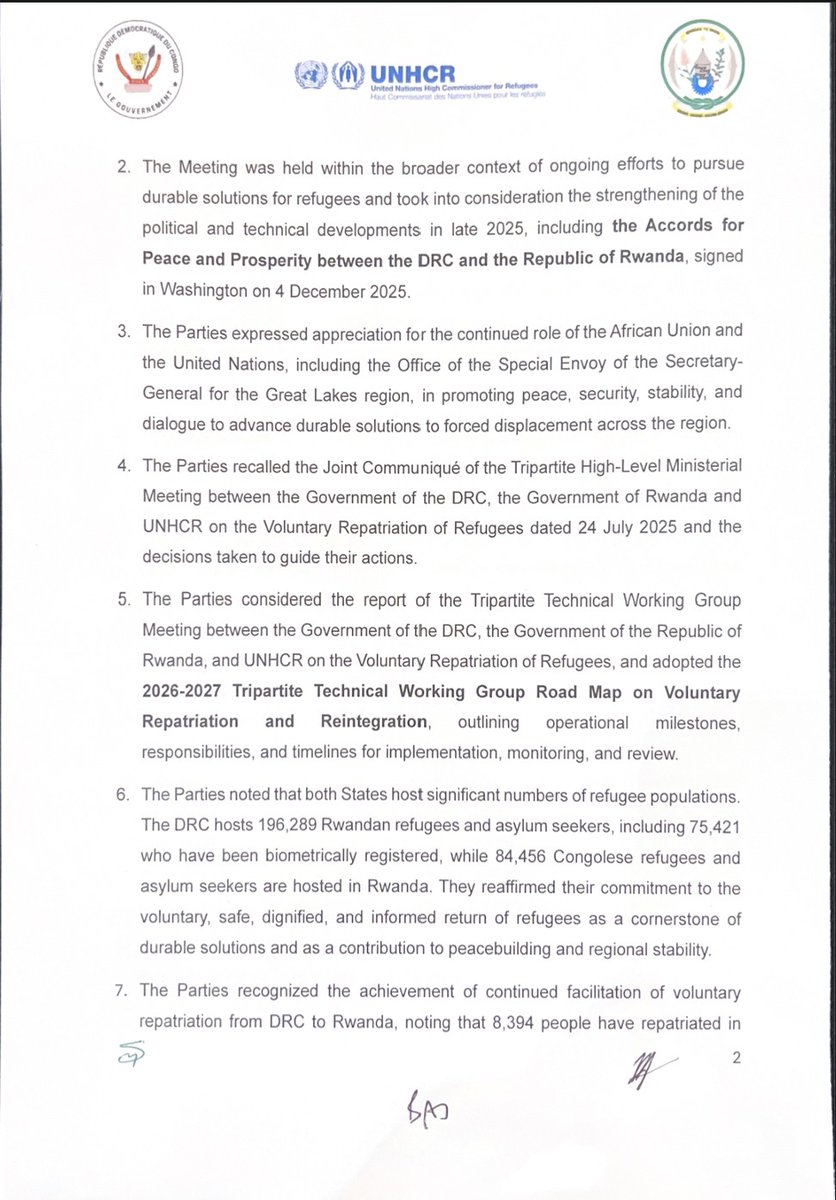
Today, 22 June 2026, in Addis Ababa, on behalf of the Republic of Rwanda, Minister Maj. Gen. (Rtd) Albert Murasira signed the Joint Communiqué of the Tripartite High-Level Meeting between the Government of the Democratic Republic of the Congo, the Government of the Republic of Rwanda, and the United Nations High Commissioner for Refugees on the Voluntary Repatriation of Refugees.
This morning, our CEO had the pleasure of welcoming Caroline Raes and her team from the Global Green Growth Institute (@gggi_hq ) for the signing of a Memorandum of Engagement between GGGI and Rwanda Green Fund.
The agreement establishes a framework for collaboration to advance Rwanda’s green growth and climate resilience ambitions in support of the Sustainable Development Goals, the Paris Agreement, Rwanda’s NDC 3.0, and the Green Growth and Climate Resilience Strategy.
Through this partnership, RGF and GGGI will work together to mobilize green investments, strengthen carbon market development and Article 6 implementation, support innovative financing solutions, provide technical advisory services on green technologies, and develop a pipeline of high-impact climate and green growth projects that contribute to Rwanda’s sustainable transformation.
#greenrwanda🇷🇼🌿 #investinrwanda
Happy Monday, and welcome to a new week and month filled with new opportunities to learn, grow, and deepen our understanding of carbon markets and their role in advancing climate action.
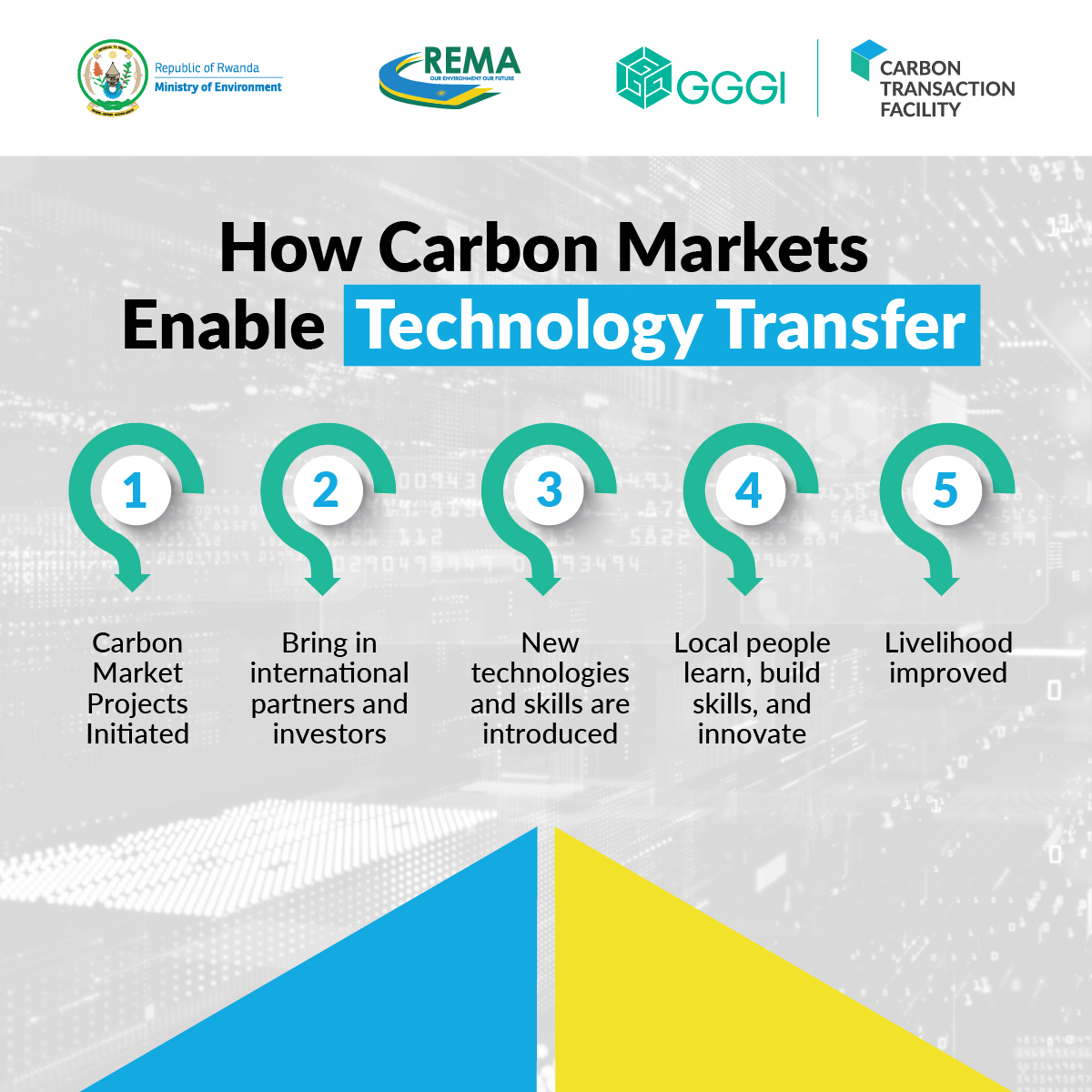
Building on our previous post on the carbon markets' economic and financial benefits, today, we continue the conversation on 𝐭𝐞𝐜𝐡𝐧𝐨𝐥𝐨𝐠𝐲 𝐭𝐫𝐚𝐧𝐬𝐟𝐞𝐫 𝐨𝐩𝐩𝐨𝐫𝐭𝐮𝐧𝐢𝐭𝐢𝐞𝐬 𝐚𝐬 𝐚𝐧𝐨𝐭𝐡𝐞𝐫 𝐜𝐨-𝐛𝐞𝐧𝐞𝐟𝐢𝐭.
𝐇𝐨𝐰 𝐜𝐚𝐧 𝐭𝐞𝐜𝐡𝐧𝐨𝐥𝐨𝐠𝐲 𝐛𝐞 𝐭𝐫𝐚𝐧𝐬𝐟𝐞𝐫𝐫𝐞𝐝 𝐭𝐡𝐫𝐨𝐮𝐠𝐡 𝐂𝐚𝐫𝐛𝐨𝐧 𝐦𝐚𝐫𝐤𝐞𝐭𝐬?
✍🏿 Through Carbon projects, technologies such as renewable energy and modern waste management solutions are introduced, which help in building technical skills and knowledge.
✍🏿Through activities such as carbon accounting, monitoring, and project management, technical capacities can be improved, creating innovative ideas and technologies.
Technology transfer is not only a necessity to ensure proper transition to greener and cleaner solutions, but it is also a means for adapting to green ways of innovation and livelihood.
In the next post, we will take a closer look at how carbon markets deliver 𝐞𝐧𝐯𝐢𝐫𝐨𝐧𝐦𝐞𝐧𝐭𝐚𝐥 𝐚𝐧𝐝 𝐬𝐨𝐜𝐢𝐚𝐥 𝐜𝐨-𝐛𝐞𝐧𝐞𝐟𝐢𝐭𝐬. You can also leave your comments and send in questions to engage with others in the carbon markets space.
#KnowCarbonMarkets #GreenRwanda #ClimateAction #Article6 #ParisAgreement #GGGI #GreenGrowth #NetZero #Sustainability #CarbonCredits #GreenEconomy
Congratulations to our #VisitRwanda partner Paris Saint-Germain @PSG_inside on their well-deserved UEFA @ChampionsLeague title and on being crowned champions for the second consecutive year.
Congratulations as well to @Arsenal on reaching the final and fighting with determination until the very end.
Both clubs have made their supporters proud, but tonight, PSG proved to be the better team!