Physics Photo Of the Day:
(L-R) Physicists Albert Einstein, Hideki Yukawa, John Wheeler, and Homi J. Bhabha in conversation as they walk through Marquand Park in Princeton, New Jersey, ca. 1954.
📷IAS
One of the best ways to tell how much the world has changed is by looking at how we measure things.
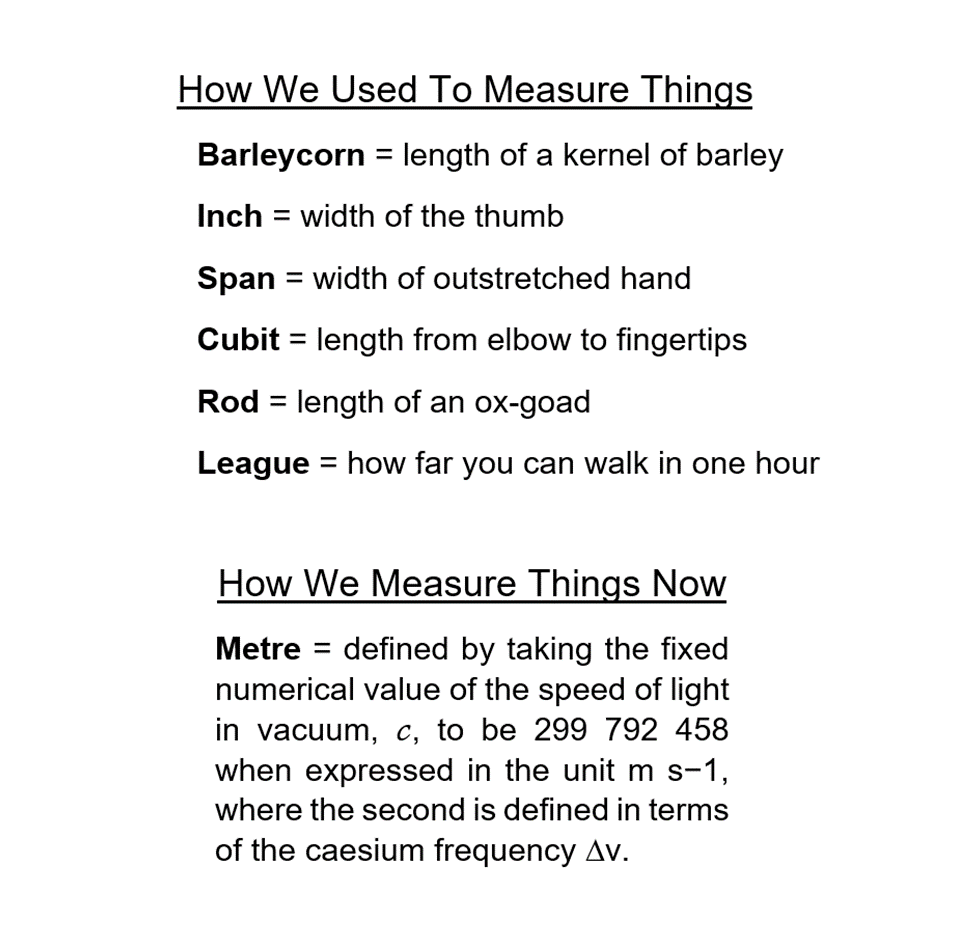
In the past we simply based length and time on familiar estimations.
And now they're based on the unperturbed ground-state hyperfine transition frequency of the caesium 133 atom.
The first and most obvious conclusion is that civilisation has shifted away from being fundamentally agricultural. Many measurements in the past, whether of time or distance, were related to the natural world and life in the fields.
An acre was originally how much land one team of oxen could plough in a day, for example. Then there's something like the barleycorn, which speaks for itself. And that makes sense, because for almost of all of human history the vast majority of people worked in agriculture. But we are an industrial society now, and such things have become meaningless to most of us.
A second conclusion is that our world has become much more interconnected. When you were building a cathedral, say, it was important for everybody involved to be using the same inches, feet, and yards. But there was no serious need for measurements to be the same from one country to another, and even if there was a need it would have been difficult to enforce or maintain. As late as the 19th century there were mind-boggling conversion charts in trade and commerce because every country had a *slightly* different standard for the length of an inch.
In the past measurements varied not only from country to country but from one city to the next. Even the length of hours varied from one place to another. But that was fine, because there were no Zoom meetings at 4:30pm ET to attend. Tasks were done according to the seasons and the needs of animals and crops. It was nature who scheduled labour, not managers.
But standardisation is an unavoidable part both of industrialisation and globalisation — our modern economic system could not exist without precise methods of timekeeping. Time zones, for example, were introduced after the invention of trains in order to prevent total transport chaos. And now, with goods being shipped all over the world, standardised measurements are necessary. Hence the International System of Units (or SI for short) which is the world's "official" system of measurements. Whereas the concept of a "second" once didn't even exist, it now has a globally recognised, legally enforced definition:
"The second is defined by taking the fixed numerical value of the caesium frequency ∆ν, the unperturbed ground-state hyperfine transition frequency of the caesium 133 atom, to be 9 192 631 770 when expressed in the unit Hz, which is equal to s−1."
And so a third conclusion is that we are increasingly reliant on technology. Everybody knows this, but the change in methods of measurement brings it home. Five hundred years ago such extreme precision wasn't possible — and nor was it needed. But now, in a world of global computer systems, nuclear reactors, and satellites, it is absolutely indispensable.
In recent decades the way we measure and quantify the world around us has shifted ever further away from life as we experience it and ever closer toward things of which the ordinary person simply has no, and cannot have any, comprehension. Whereas once upon a time measurements were based on parts of the body or estimations of familiar things, they now rely on the most advanced scientific equipment.
But that's the point. SI measurements are not for humans; they are for the systems and machines we use — the very systems and machines which mean we no longer need everybody to be working in the fields.
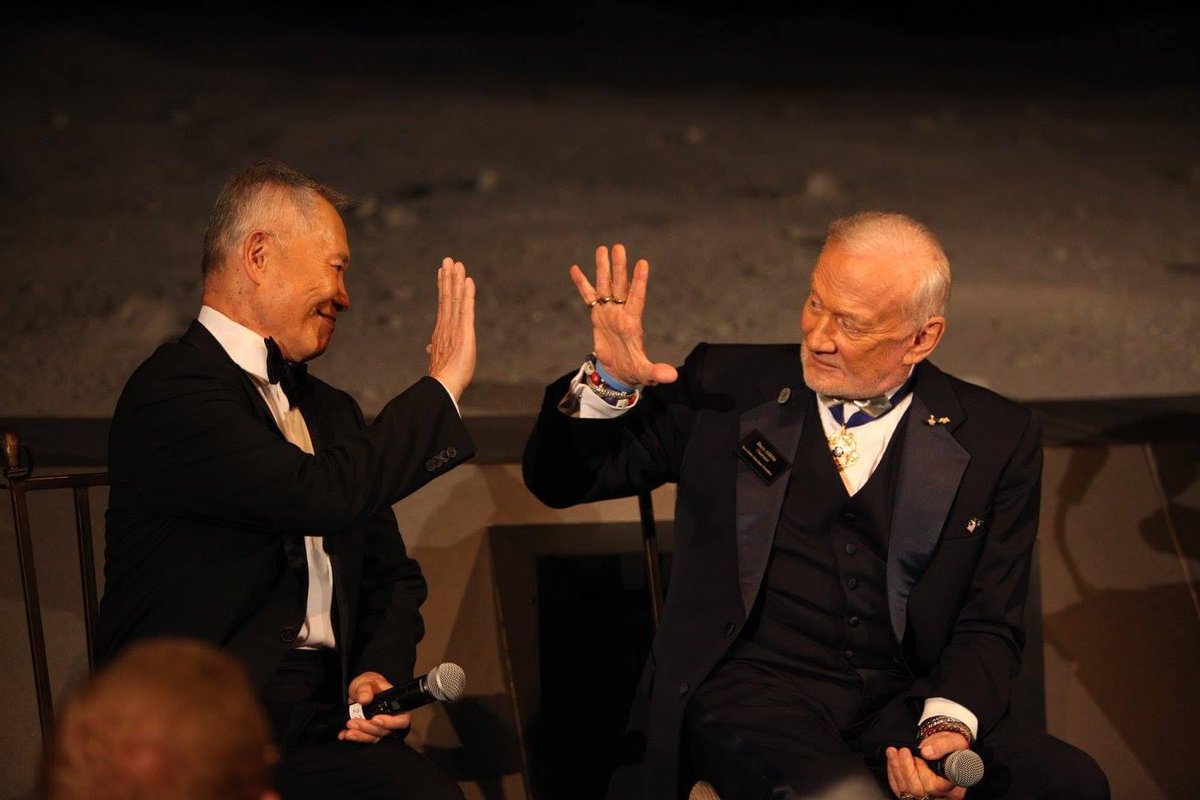
Today is #StarTrekDay…a day to recognize its television debut on September 8, 1966. Over the years I’ve gotten to know many of the actors. Here I’m with George Takei, aka Hikaru Sulu, where he helps me with my Vulcan salute. 🖖 Have a great Friday everyone and “Boldly Go Where No Man Has Gone Before”.
Richard Feynman's love letter to his deceased wife, 1946.
October 17, 1946
D’Arline,
I adore you, sweetheart.
I know how much you like to hear that — but I don’t only write it because you like it — I write it because it makes me warm all over inside to write it to you.
It is such a terribly long time since I last wrote to you — almost two years but I know you’ll excuse me because you understand how I am, stubborn and realistic; and I thought there was no sense to writing.
But now I know my darling wife that it is right to do what I have delayed in doing, and that I have done so much in the past. I want to tell you I love you. I want to love you. I always will love you.
I find it hard to understand in my mind what it means to love you after you are dead — but I still want to comfort and take care of you — and I want you to love me and care for me. I want to have problems to discuss with you — I want to do little projects with you. I never thought until just now that we can do that. What should we do. We started to learn to make clothes together — or learn Chinese — or getting a movie projector. Can’t I do something now? No. I am alone without you and you were the “idea-woman” and general instigator of all our wild adventures.
When you were sick you worried because you could not give me something that you wanted to and thought I needed. You needn’t have worried. Just as I told you then there was no real need because I loved you in so many ways so much. And now it is clearly even more true — you can give me nothing now yet I love you so that you stand in my way of loving anyone else — but I want you to stand there. You, dead, are so much better than anyone else alive.
I know you will assure me that I am foolish and that you want me to have full happiness and don’t want to be in my way. I’ll bet you are surprised that I don’t even have a girlfriend (except you, sweetheart) after two years. But you can’t help it, darling, nor can I — I don’t understand it, for I have met many girls and very nice ones and I don’t want to remain alone — but in two or three meetings they all seem ashes. You only are left to me. You are real.
My darling wife, I do adore you.
I love my wife. My wife is dead.
Rich.
PS Please excuse my not mailing this — but I don’t know your new address.
A dramatized series with catchphrases and limericks based on the life of a scammer set in an immediate post liberalized India isn't necessarily the best entryway to the stock world. How about a top tier MBA, a CFA, or a hands-on internship, just a thought. #Scam1992
A good student, husband, father and, most of all, human being. And to do it all with smile, grace and sense of humour. A rule book and how to be a man.
I don't think I have ever wait this eagerly for a book but The Deathly Hallows.
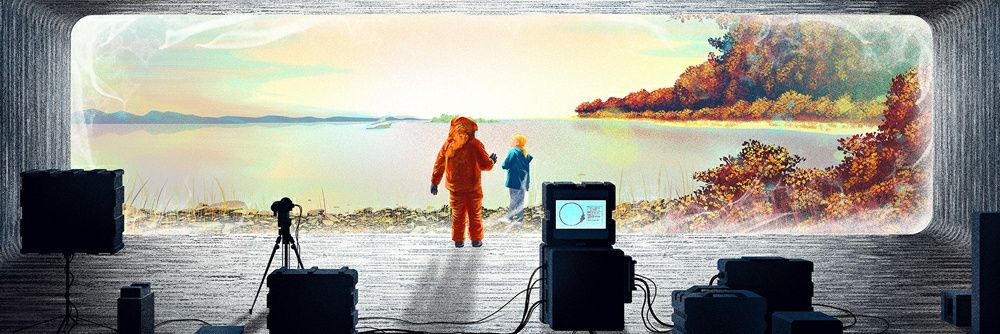
Watching @arrivalmovie during the pandemic is sublime. The way the global societal fabric is reputed with 'the arrival' of the unknown is so very cathartic. Still waiting for 'the gift', though.