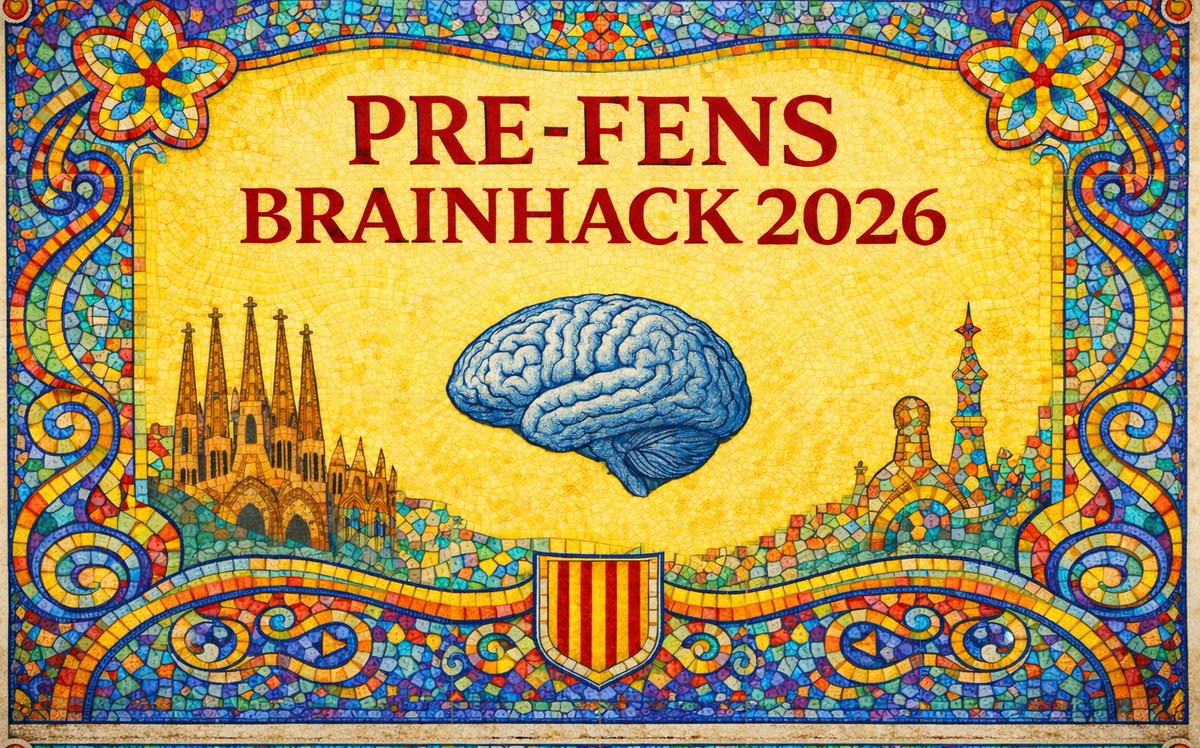
🧠💻 Join the Brainhack satellite at #FENS2026 (July 5)!
✨ Open to all - no FENS registration required
📆 Registration opens April 9
⚠️ Limited to 100 spots (first come, first served)
Learn more: https://t.co/UiehQbcUWM
#Brainhack#OpenScience#Neuroscience
Pre-COSYNE Brainhack 2026 – Join Us in Lisbon! March 10–11, 2026 • Lisbon, Portugal
https://t.co/1TOriSyIlx
Kick off COSYNE week with two days of hands-on, team-based hacking around real electrophysiology data, open tools, and reproducible workflows.
#cosyne26#cosyne2026
@AllenInstitute We implemented iSTTC to tackle challenges in our own sparse, developmental datasets, and it’s working beautifully. We hope it helps others working with tricky spiking data. Try it yourself https://t.co/y0iLOeHrtd!
New preprint from @HanganuOpatzLab! We present iSTTC, a robust method for estimating intrinsic neural timescales (ITs) from single-unit activity. It’s accurate, stable, and works even when data is sparse.
https://t.co/hqZyHvY4Sy
iSTTC doesn’t just perform well in simulations; it works in the mess of real neural data, too. Using 30 min of Neuropixels recordings from the Visual Coding @AllenInstitute dataset, iSTTC gave more stable, more accurate, and more inclusive IT estimates than other methods.
If we assume that the brain is randomly wired and that cell identity isn't a thing, we can still decode stimuli by pooling and averaging. If we drop these assumptions we can do *much* better. Which option do we think nature chooses?
https://t.co/SuqRgJlijO
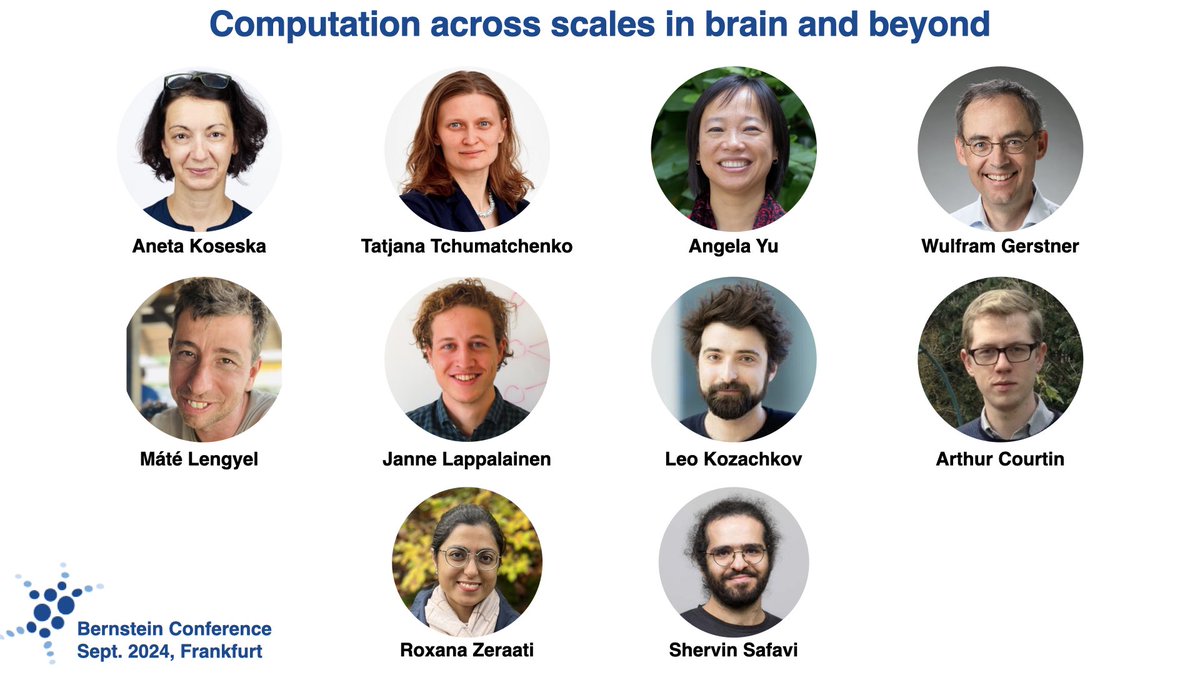
Headed to @BernsteinNeuro Conference this weekend and interested in how biological computation is performed across different scales from single neurons to populations and whole-brain and even astrocytes and
the whole body, drop by our workshop co-organized w/ @neuroprinciples
Hippocampus generates an internal model of Euclidean space. We ventured in a spatial odyssey exploring how much of the internal model is a priori, innate (Nature) and what is contributed by postnatal experience of Euclidean geometry (Nurture)
Our answer@ https://t.co/HkwkvAj4oO👇
I am excited to announce our workshop at the upcoming Bernstein Conference 2024 @BernsteinNeuro
How much biological inspiration makes a system "neuromorphic"?
What can we learn from Neuroscience breakthroughs and Machine Learning success?
link: https://t.co/2xU3tr5nMo
1/n
Excited to announce that I've started a regular column at The Transmitter @_TheTransmitter !
First column just out on that most convenient of all the fictions in neuroscience: averaging
https://t.co/jP5enfBvje
Back in 2022, @roxana_zeraati & I organized a Cosyne workshop on neural timescales, and after working on it for the last 2 years together, it's now a review paper!
https://t.co/LgVdULAQ2U
w/ @SelfOrgAnna & @jakhmack
(2nd blogpost to turn into a real review paper this year lol)
It’s finally out🔥 Our review formalizes hours of conversations w/ @_rdgao over the past 2 years, starting from our @CosyneMeeting workshop, into a new perspective about neural timescales.
Thanks to @SelfOrgAnna, @jakhmack and all our wonderful speakers and attendees!
📜🎉 We have a new preprint: an overview & comparison of measures of 'aperiodic' neural activity!
This project explores different ideas & many methods used to study non-oscillatory features of intra- & extra-cranial electrophysiological recordings!
https://t.co/4FCkv1TJlk