6/6 💡Our work shows how physical separation of signal sources acts as a "circuit breaker" in plants, ensuring precise control of organ shedding. Read more here: https://t.co/mJGpMkQfYH #PlantBiology#Arabidopsis
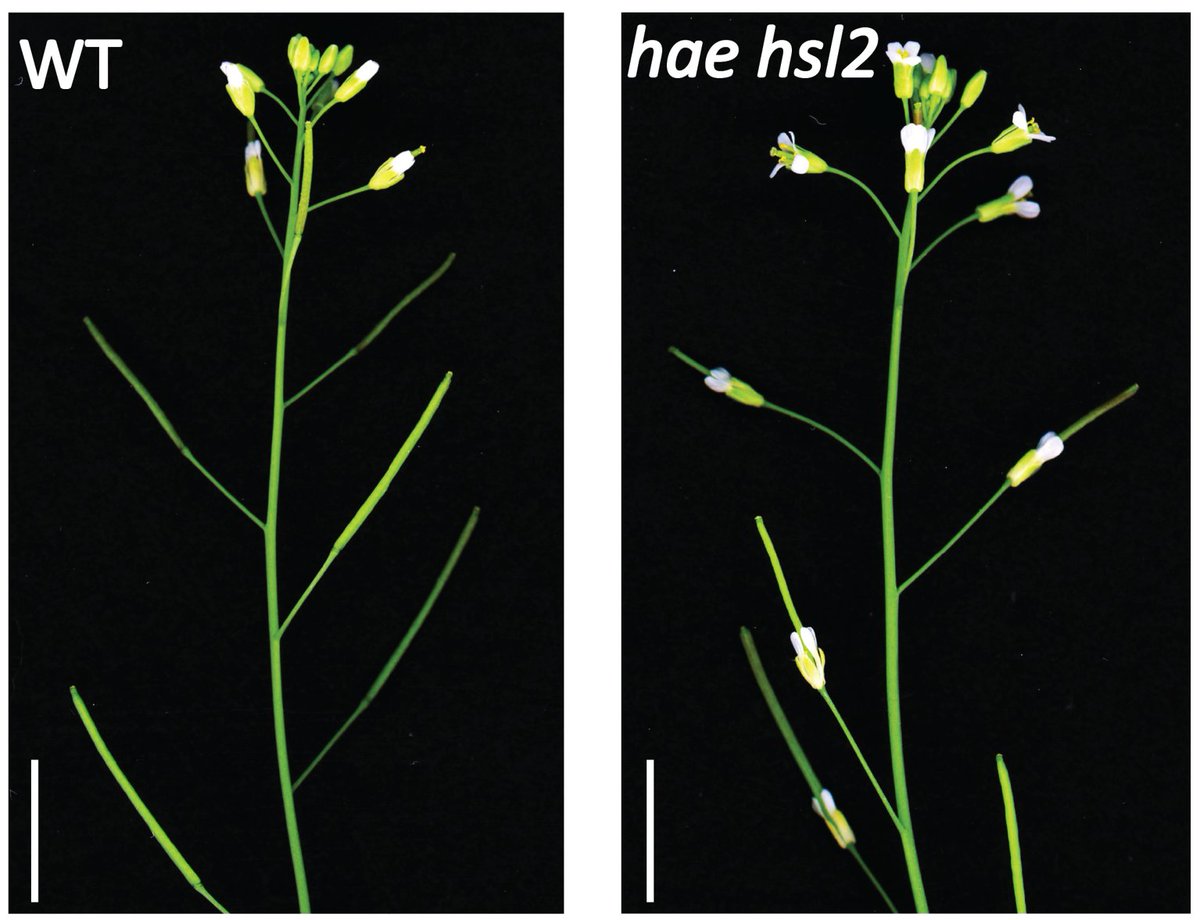
1/6 🎉Excited to share my final major paper bridging my PhD at Mizzou & postdoc at Duke, now in @PNASNews! We uncover simple and elegant mechanisms Arabidopsis uses to limit floral abscission signaling. Link: https://t.co/mJGpMkQfYH
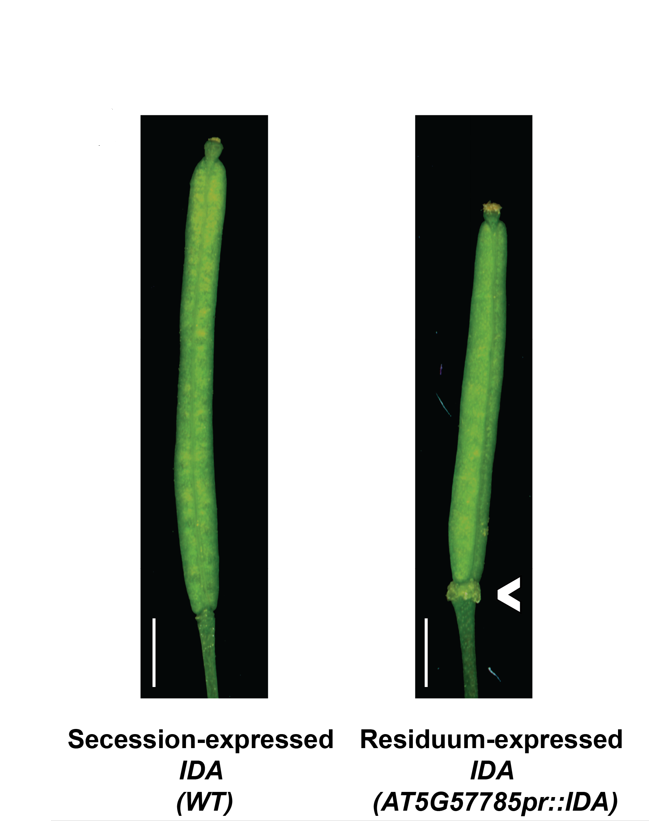
5/6 🔬Misexpressing IDA in the remaining cells caused an abscission-signaling overactivation phenotype, highlighting how this spatial control is crucial for balanced abscission.
Interesting study, incompetent analysis: “We found that men in the highest quintile of ultraprocessed food consumption, compared those in the lowest quintile, had a 29% higher risk of developing colorectal cancer,” - https://t.co/m9RzRtJSQE
I think we have to let go of the notion that every paper needs review. Just because we write something doesn’t mean that we are entitled to the time required from our peers to review it.
Our preprint describing Robotic Assay for Drought (RoAD), an automated system for Brassinosteroid and drought phenotyping experiments in soil-grown plants is up on BioRxiv. https://t.co/3JjMARONCN. A great collaboration w/ Lie Tang, @JustinWWalley and @yanhaiyin labs.
@PhDemetri Not an expert, so someone correct me if I'm wrong, but unless covid infection is incurable (like HIV) I think it means we can develop immunity, and therefore at least some vaccines should work.
Happy to share this part of my PhD in the Benfey Lab @DukeU. It was a really rewarding collaboration with @ShaoYanlin in Chuanzao Mao's lab @ZJU_China. We used a combination of phenotyping methods to identify a root system architecture (RSA) mutant and clone the underlying gene.
This has been a fascinating project leading us in a direction trying to use lab based growth assays to understand core principles about how roots grow in natural substrates. We expect more insights to come. 8/8
New preprint from Benfey lab on exploratory primary root growth in rice.
https://t.co/wRIvE6A3cD
Great collaboration with Dan Goldman (GA Tech), Pam Ronald (UC-Davis), and Elliot Hawkes (UCSB). W/@krlehner, @pcronald, @NotesByNiba, and more.
Lots of other things in the paper. Interestingly HK1 seems to function in a hybrid ET/cytokinin-type pathway. Not surprisingly, the pathway appears to regulate auxin transport in the root tip. Among other results supporting this idea, a rice aux1 mutant doesn’t circumnutate. 7/8