I just publish a python package (py-sync-dotenv 🔥) to help synchronize .env files across python projects.
You don't have to stress about keeping all .env files up-to-date anymore 🚀
@MOluwole@HAKSOAT@realpython@testdrivenio
https://t.co/HyZX6QncRl
https://t.co/htFRsDZfL9
Welcome to the new Gemma documentation!
We've built a brand new home for developers to explore, experiment, and build.
What’s new?
🌐 Global model selector for customized code snippets
🤖 Better agent support (turn any page into Markdown!)
📊 Data-driven backend for a consistent experience
⚡️ On-device demos running directly in your browser!
Check it out: https://t.co/yx9K4xGH8M
How do always-on, proactive agents like @Bot work?
Watch my lecture at Stanford CS146S:
2:35 How we got here
6:13 What changed in the models
10:06 Inside an always-on agent
18:07 The harness
27:26 Context engineering
34:26 Where this is going
You can literally type a sentence and watch a Transformer process it.
This interactive explainer runs a GPT-style model in the browser and lets you follow the whole path:
tokenization → embeddings → Q/K/V → attention → MLP → logits → next-token probabilities
You can inspect attention maps, intermediate values, and change temperature, top-k and top-p to see how generation changes.
If Transformers still feel like boxes connected by arrows, this is worth opening.
https://t.co/vkyxOqDVll
We'll be spending a lot more time trying to understand the outputs of language models. A few thoughts, tips & tricks:
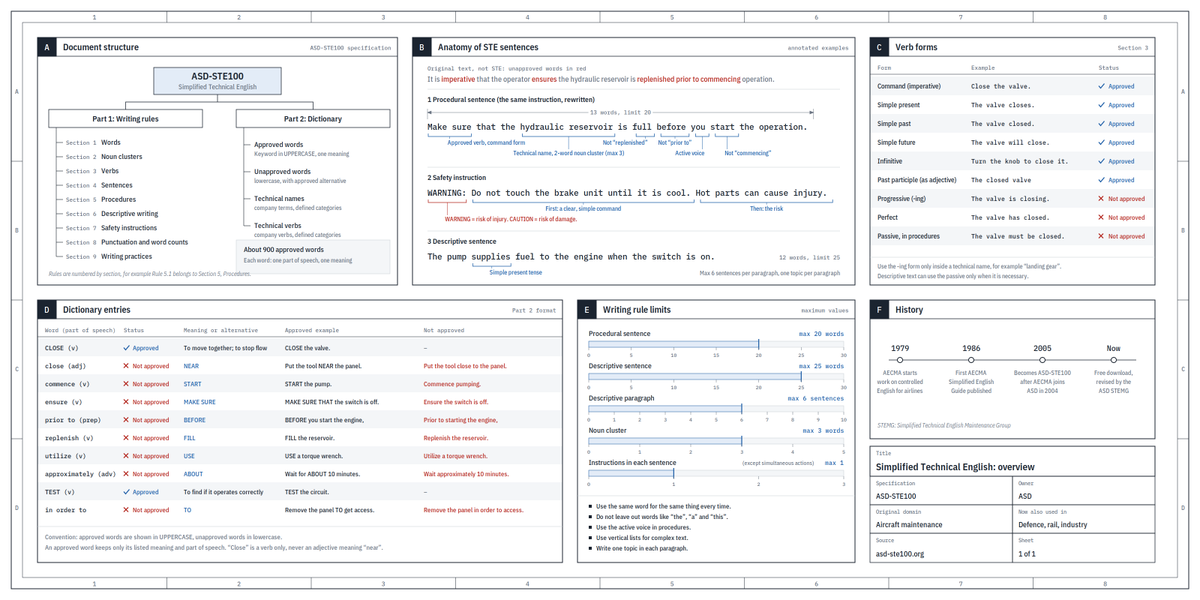
Writing. Something I've had success with: Ask your LLM to explain something in ASD-STE100, it's a controlled language specification originally developed for aerospace maintenance documentation. LLMs well-versed in this language and it comes with heavy constraints on clean writing style that I often find a lot more readable. Sometimes I've tried to soften it a bit e.g. ask for "80% of the way to ASD-STE100" because the spec is quite stringent. But even better:
Diagrams / images. Instead of writing, ask your LLM to create a diagram. These can be a lot easier to process, parse, and understand. But even better:
Web pages. Ask for output "in HTML" to get a beautiful, interactive webpage. LLMs are getting really good at frontend and can create beautiful experiences, animations, etc. But even better:
Explainer videos. The output format I am most bullish on is fully custom / bespoke explainer videos generated on any arbitrary topic. Experiment with things like "Create a 3b1b style video explainer on X. Use my ElevenLabs API key for audio narration". (you'd need an API key for the latter or you can ask your LLM to find you decent free alternatives that use your local compute). This is actually starting to work!
In summary:
- As LLMs get better, they will do more and more of the legwork autonomously, and a lot more of our work will rise up the abstractions into oversight and understanding.
- Luckily, LLMs can help here too because as intelligence and code are increasingly abundant, you can ask for large, custom, discardable software artifacts (e.g. web apps, video explainers) that would have never made sense to create before. Push the boundaries here and you'll be surprised.