Sushil Atreya reviews launch windows for Neptune and Uranus missions. No matter how you cut it, arrival dates are post 2040. Better eat my wheaties and spend more time at the gym...
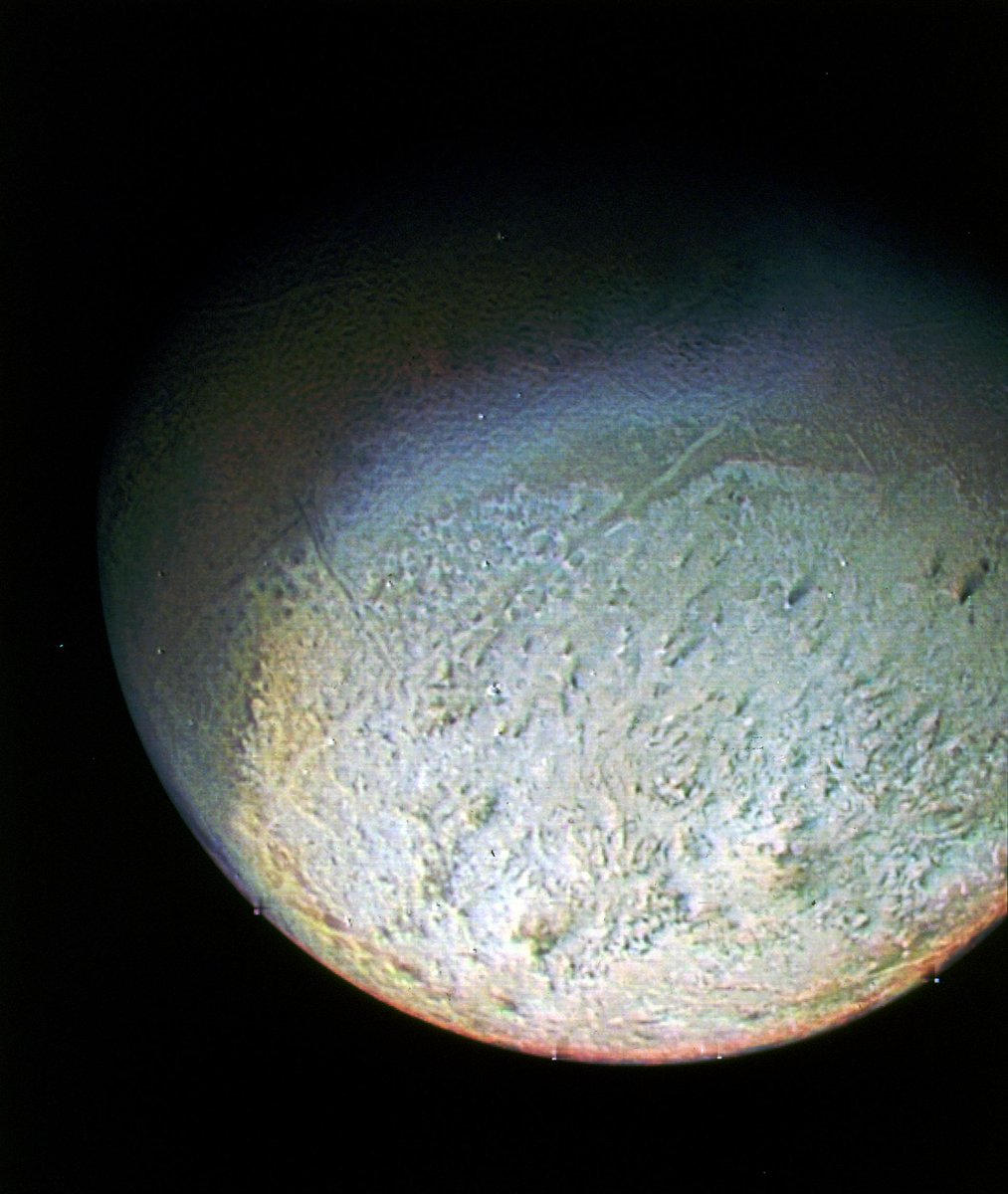
Louise Prockter @Louise_Prockter—Trident is a @NASA Discovery proposal to flyby Neptune’s moon Triton. The super close flyby would revolutionize our understanding of this former KBO, turned captured ocean world! #EPSCDPS2019
@NASAVoyager Neptune’s moon Triton circles the planet in a direction opposite to Neptune’s rotation, which suggests it's an object that the giant planet captured. Despite the extreme cold, Voyager 2 discovered geysers on Triton spewing icy material upward more than 5 miles (8 kilometers).
Throwback to a cool encounter 🔵
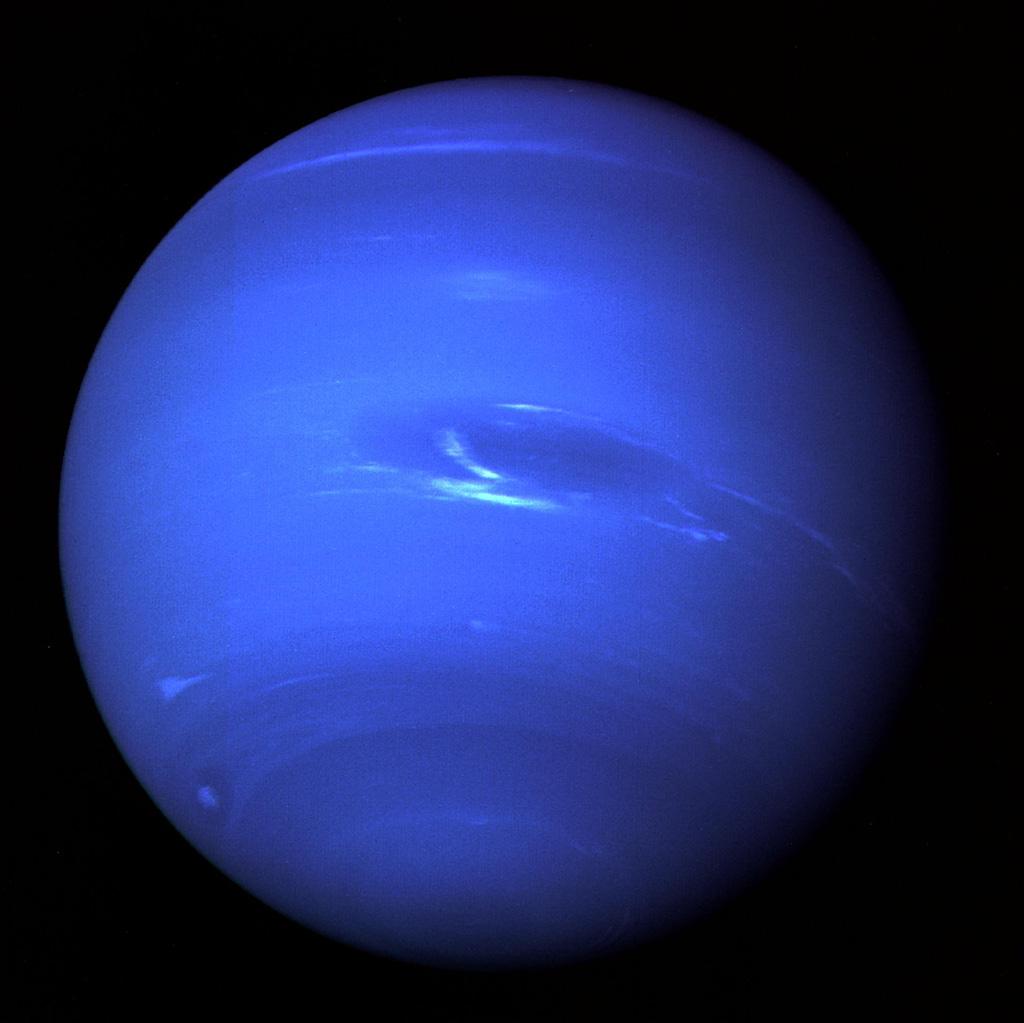
We’re coming up on the 30th anniversary of #Voyager2’s flyby of Neptune, which happened on Aug. 25, 1989: https://t.co/DBvPCcLwdA #tbt
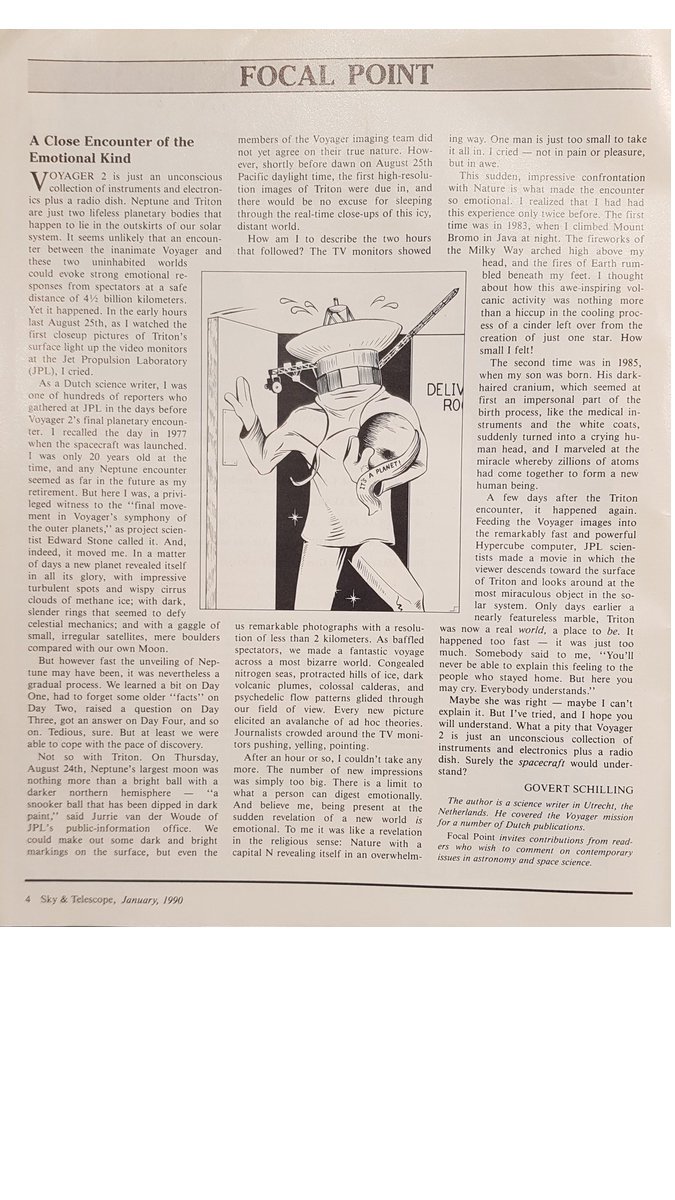
Govert Schilling (@govertschilling), in his first contribution to @SkyandTelescope, wrote in January 1990 about the experience of witnessing the Neptune/Triton encounter first-hand at @NASAJPL 30 years ago: https://t.co/woL9NoZc8I
Too busy to realize that ystrday marked 30 yrs since #Voyager2 flew past Neptune, the farthest planet in our solar system (tho we await Planet 9!)
It was a seminal moment in human history ...
... and a life-defining one for me. The following year, I was chosen to lead the imaging team on Cassini & never looked back.
I've led a charmed existence.
#Voyager2
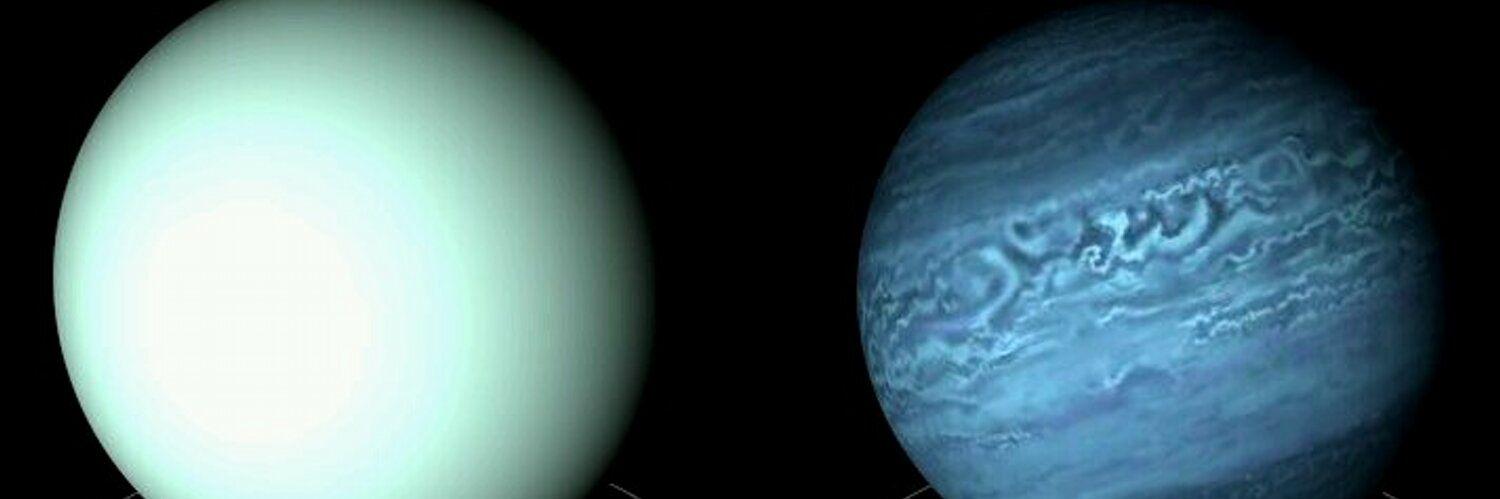
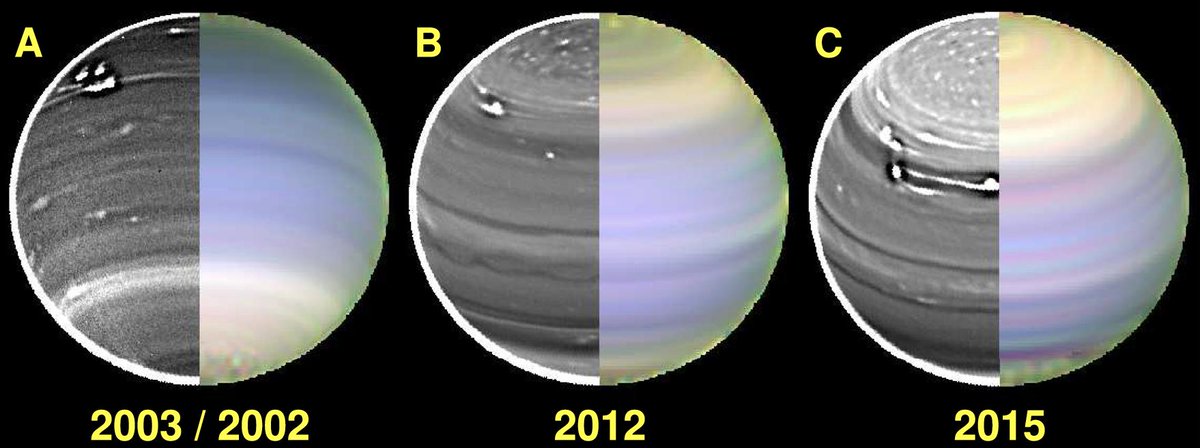
Sromovsky et al. (2018) used @NASAHubble spectroscopy to study methane depletion at the poles of Uranus (south in 2002, north in 2015), and show that the brightening of the spring pole can be explained by increased scattering from tropospheric aerosols:
https://t.co/BT3qyLFe2M
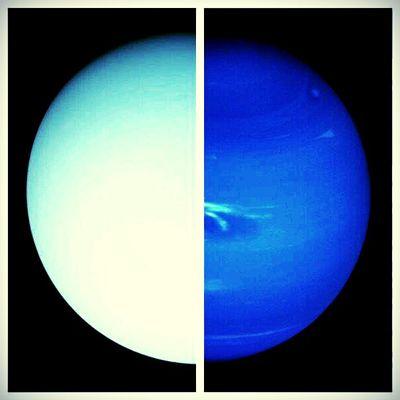
Trying to assemble a white paper on #IceGiants for an ESA call, and really struggling to find a decent infographic for Uranus and Neptune. So I cobbled one together from a variety of sources, hopefully it captures the incredible variety of these systems:
If you were asked to name the Moon, what would you call it? We chose Hippocamp as the name for a mysterious tiny moon around Neptune discovered by our @NASAHubble Space Telescope. Discover more about “the moon that shouldn’t be there”: https://t.co/2LxGtdwZUu
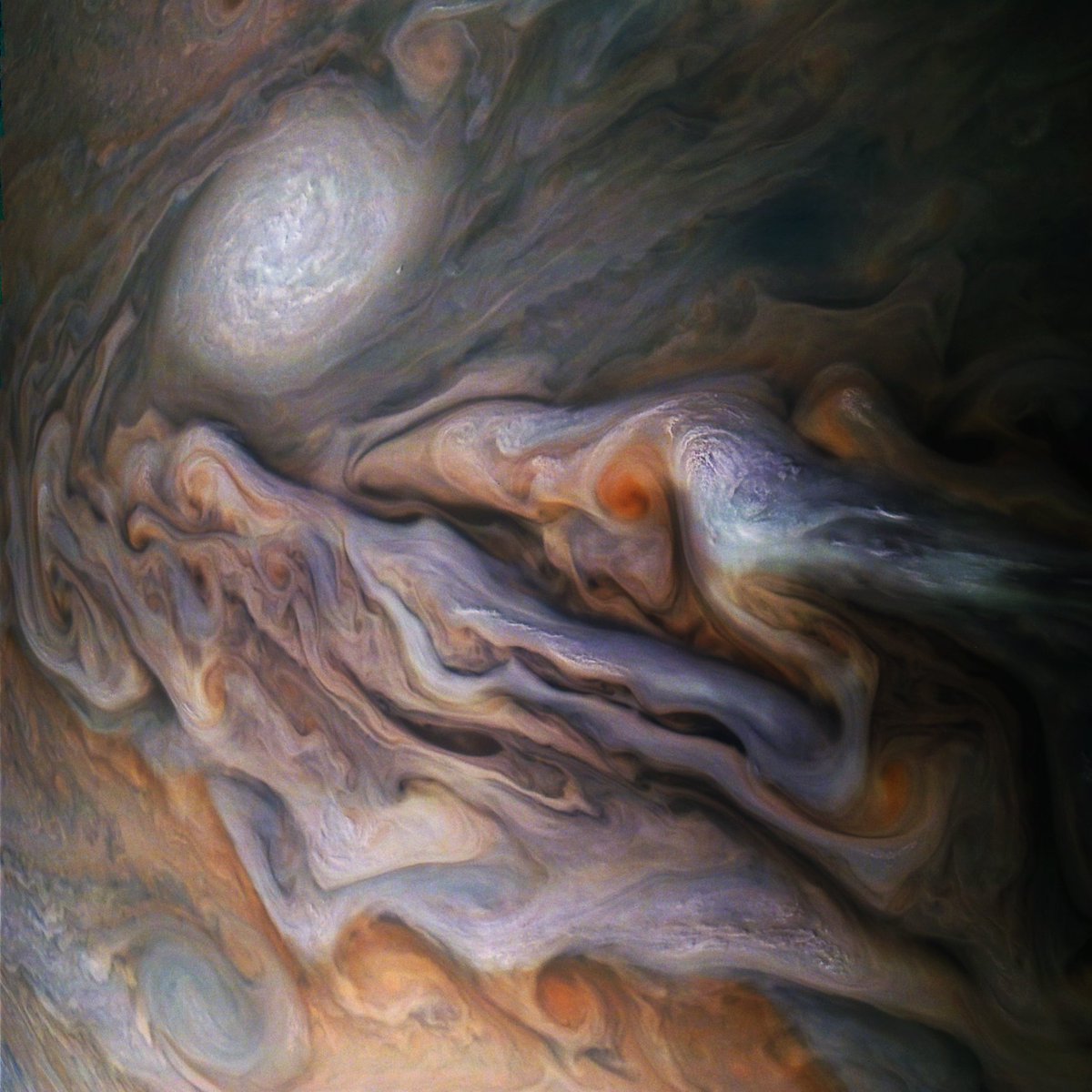
Jovian close encounter. A multitude of magnificent, swirling clouds in #Jupiter's dynamic North North Temperate Belt is captured in this color-enhanced image: https://t.co/0lAAb7fqEK
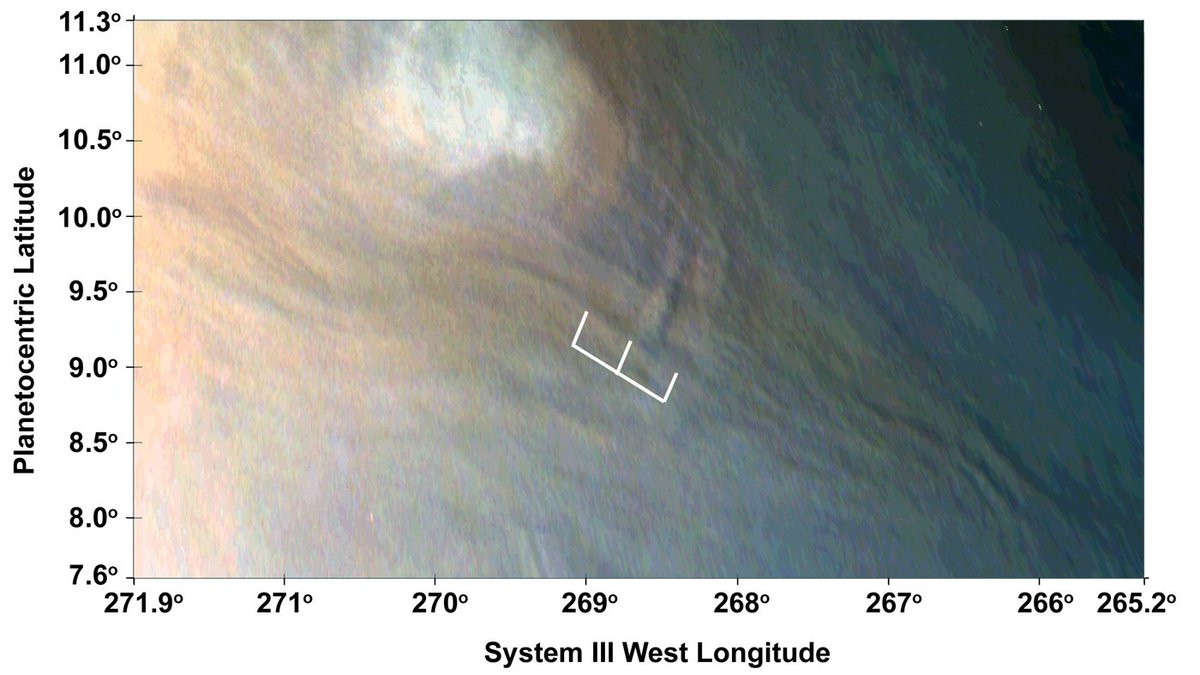
Spotted: Massive waves in #Jupiter’s atmosphere.
JunoCam has detected atmospheric wave trains -- towering structures that trail one after the other as they roam the planet https://t.co/VhlAdTEMZL
A14. I'd root for a Uranus mission over a Neptune mission because I love an underdog and while I appreciate how amazing Triton is, Uranus has a whole family of basically unexplored moons. https://t.co/Mb05cURrCm