Nine years in space. 28 orbits of Jupiter. Textbooks rewritten. And I’m just getting started.
This account is combining with @NASASolarSystem – join me there for continuing updates from my mission to Jupiter, along with other expeditions to the worlds of our solar system.
Nine years in space. 28 orbits of Jupiter. Textbooks rewritten. And I’m just getting started.
This account is combining with @NASASolarSystem – join me there for continuing updates from my mission to Jupiter, along with other expeditions to the worlds of our solar system.
@NASAJPL@beck@NASA@NASASolarSystem .@Beck's video for “See Through” on #Hyperspace2020 features AI-generated imagery of Jupiter based on NASA data. Makes sense to me – seeing through Jupiter's cloud layers is one of my main jobs: https://t.co/Y5VKDxs8yM
Nine years ago today, I began my journey to Jupiter. See these interviews with members of my team to hear more about what we have learned: https://t.co/wpDgXaYV7f
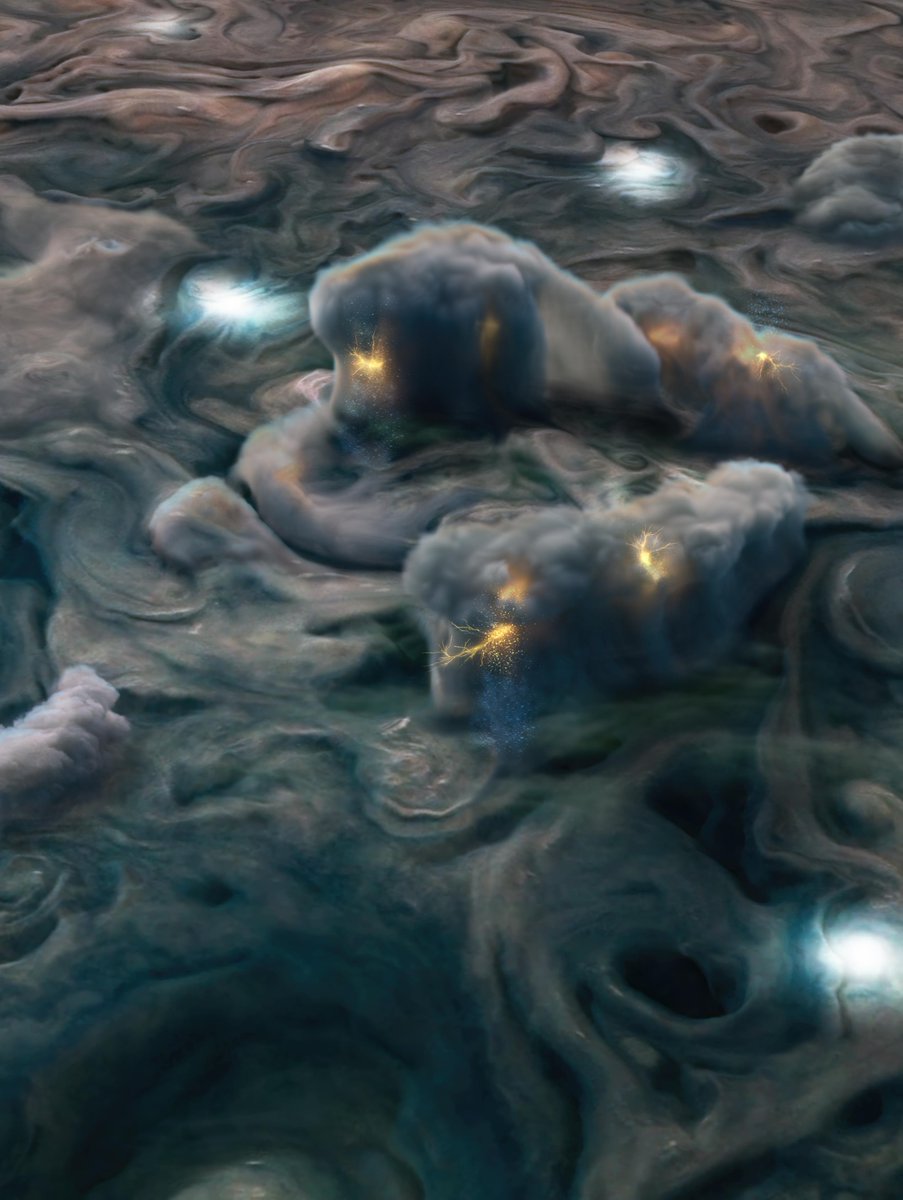
The swirling atmosphere we see on Jupiter is home to violent storms. @NASASolarSystem’s Juno mission discovered new evidence pointing to shallow lightning & slushy ammonia-rich hailstones known as mushballs. #ScienceInSeconds on Jupiter's exotic weather: https://t.co/2LSs19l0ki
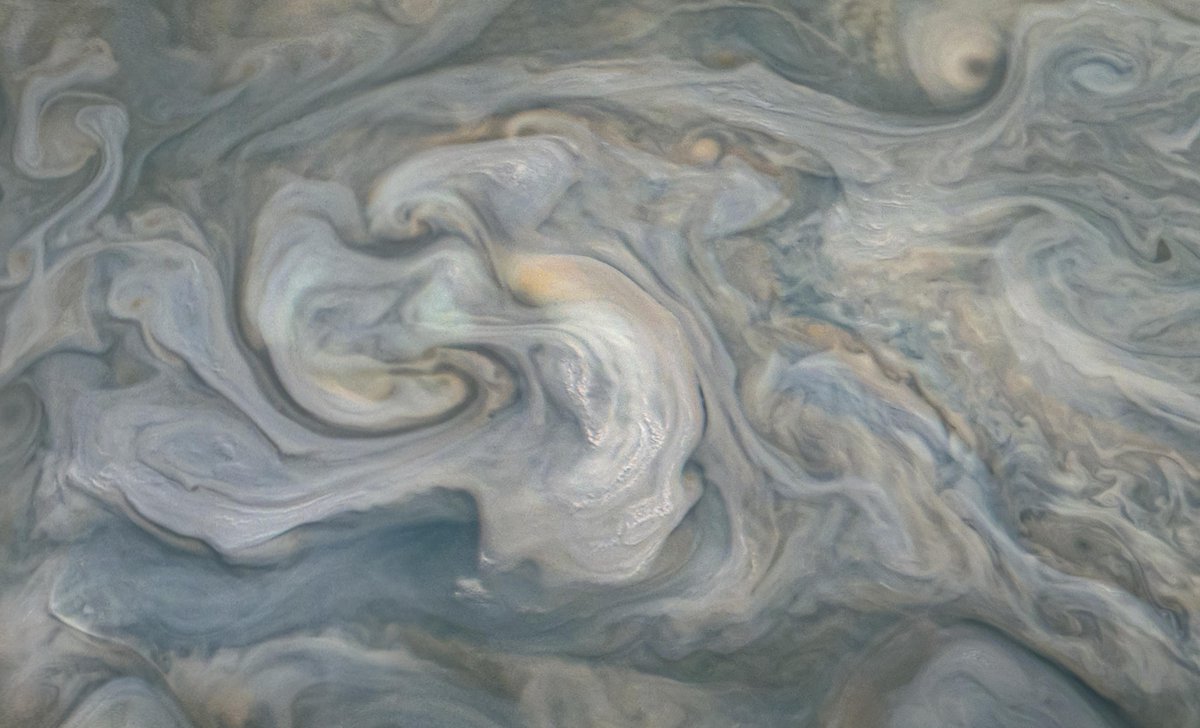
@_AnsumanRath@mitraphoenix The look of the clouds comes from actual pictures. The look of the lightning is an illustration. Details athttps://www.missionjuno.swri.edu/news/shallow-lighting-and-mushballs-reveal-ammonia
The third is a graphic that depicts the evolutionary process of "shallow lightning" and "mushballs" on Jupiter. Image Credit: NASA/JPL-Caltech/SwRI/CNRS
Shallow lightning, clouds of ammonia and water, and a hail of “mushballs” – my instruments are revealing more about Jupiter’s stormy interior: https://t.co/36PAy6a5mJ
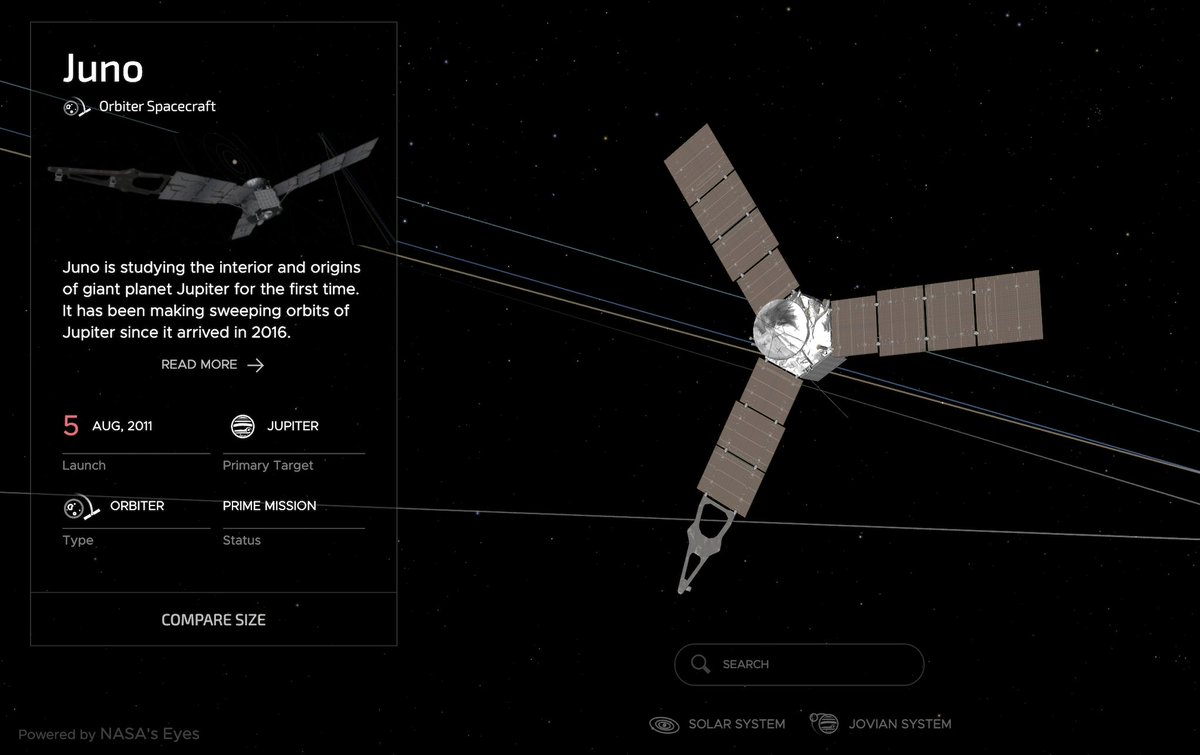
In the next few hours I’ll be making my 28th close pass by Jupiter (as simulated here by @NASASolarSystem’s Eyes on the Solar System: https://t.co/UEB4B0f8ro). Learn more about my mission at https://t.co/Y5VKDxs8yM.
Jupiter’s moon Ganymede is larger than the planet Mercury, the only moon in the solar system known to have its own magnetic field. I captured infrared images that provide the first glimpse of Ganymede's icy north pole. Learn more: https://t.co/w26S0aG9C0
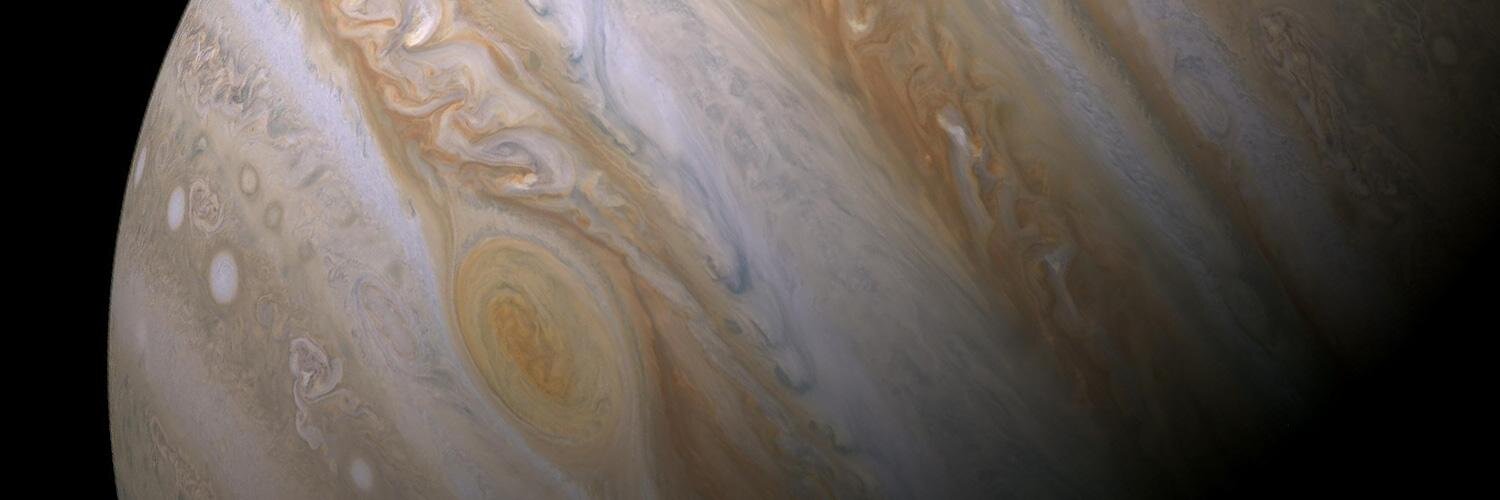
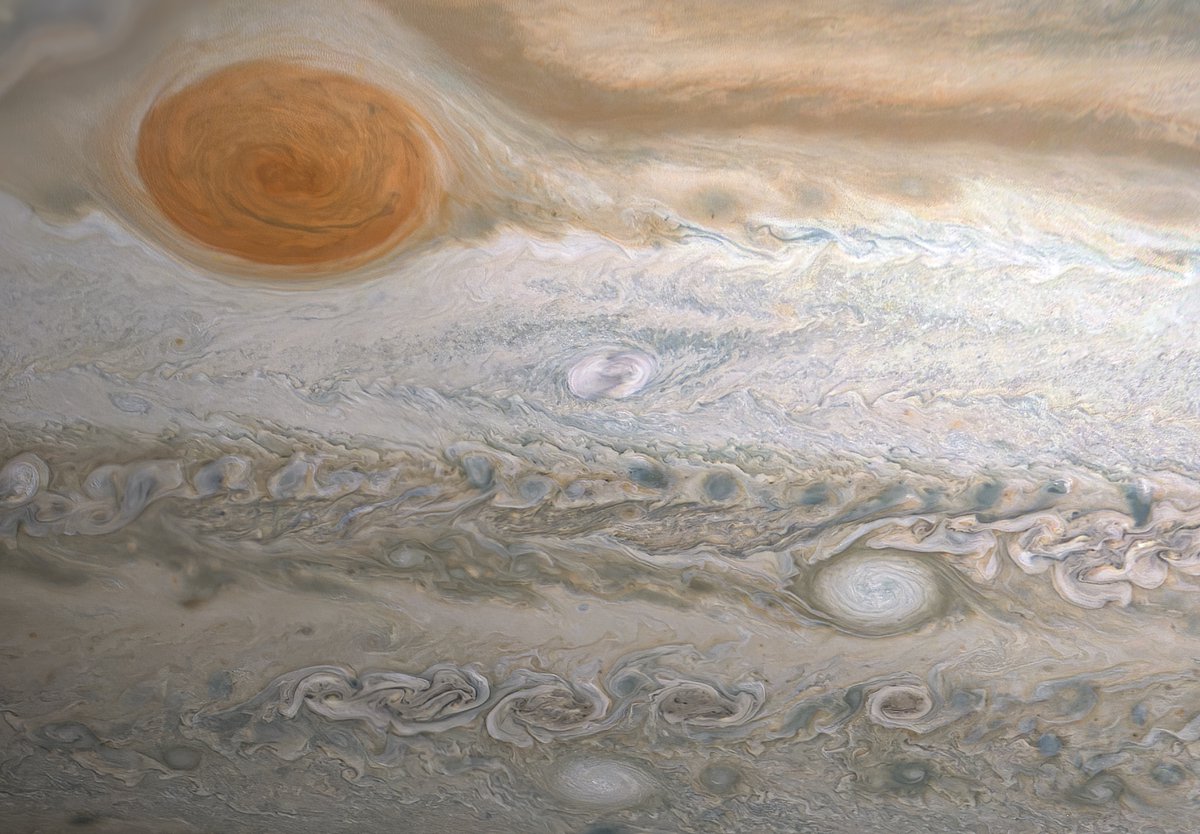
Amateur astronomer Clyde Foster spied a new feature in Jupiter’s clouds…I captured a detailed look at “Clyde’s Spot” when I zoomed by just two days later. #CitizenScience for the win. See more: https://t.co/CGXeABnn7d JunoCam image processing by Kevin M. Gill
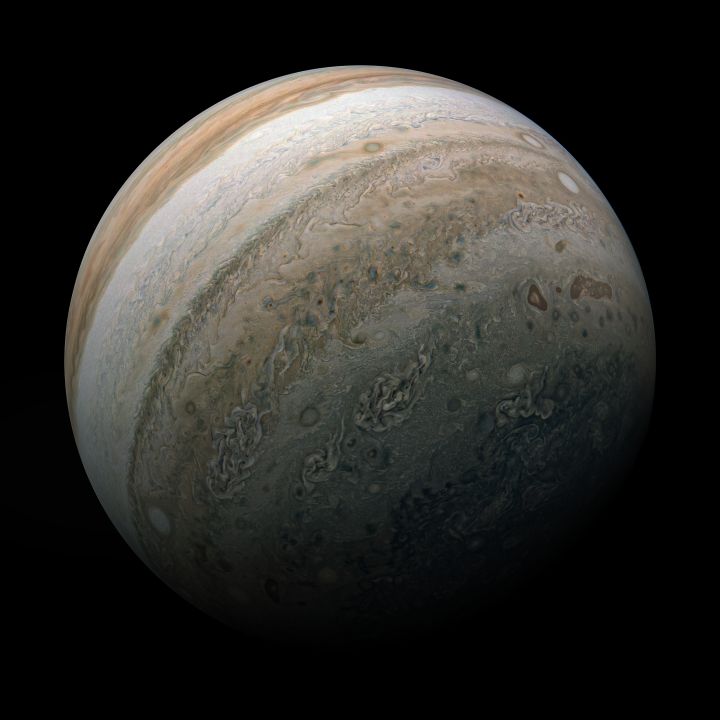
Racing stripes: Jupiter is huge, but makes a full rotation in just 10 hours. This creates powerful jet streams that divide its clouds into distinctive bands, as seen in this striking JunoCam image processed by citizen scientist David Marriott. Details: https://t.co/v71OOHdGj8