The new Gemini on Android auto is the worst. After the 100th time when I explained to Gemini again and again and again, it will not find my mom, son, brother, or Remember in general. Google - you can do better.
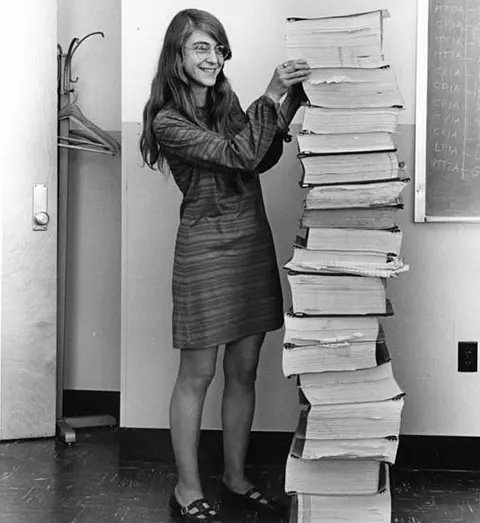
Margaret Hamilton is the pioneering computer scientist who led the development of NASA’s Apollo mission software. Her code helped land Apollo 11 safely on the Moon, even handling critical errors during descent. She coined the term "software engineering" and was awarded the Presidential Medal of Freedom in 2016 for her groundbreaking work.
The Sun Has Just 22 Laps Left in Its Epic Galactic Journey
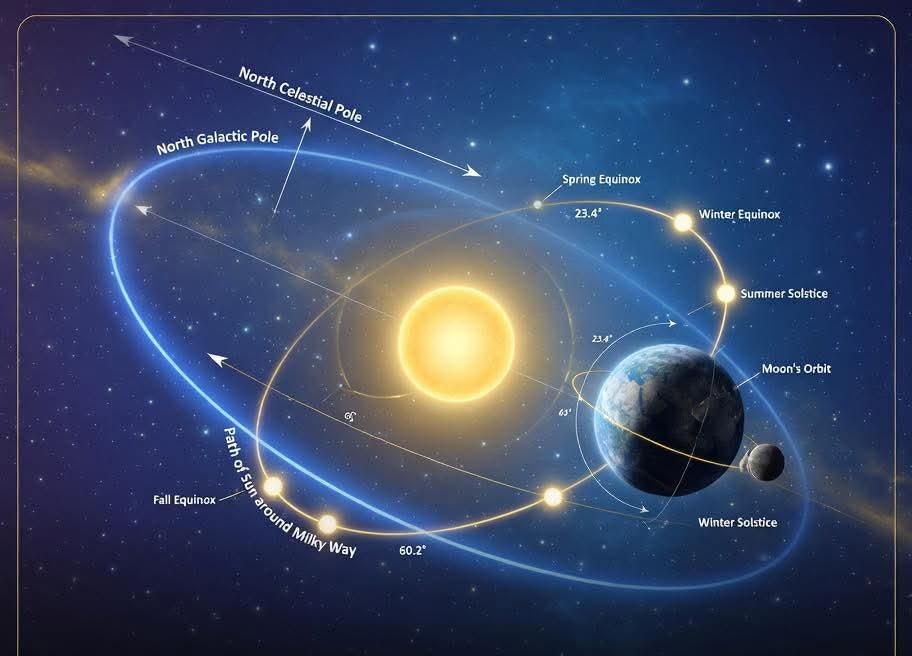
While we measure our lives in birthdays and calendar years, our entire Solar System is on a far grander voyage — one that makes Earth’s history feel like the blink of an eye.Our Sun is hurtling through space at 514,000 miles per hour (828,000 km/h), circling the center of the Milky Way once every 230 million years — a period known as a “cosmic year.” At that breathtaking speed, it takes roughly 230 million years to complete a single lap around the galaxy.The Sun formed 4.6 billion years ago and has so far completed only about 20 of these vast orbits. The last time our star was exactly where it is right now, the very first dinosaurs were just beginning to appear on Earth.Scientific models show the Sun is now middle-aged. With about 5 billion years of hydrogen fuel remaining in its core, it has roughly 22 galactic laps left before it swells into a red giant and eventually fades away. That gives our star a total lifetime of roughly 10 billion years.Think about that for a moment: all of human civilization — from the first cave paintings to space stations — has unfolded in just a tiny fraction of a single galactic orbit. While we obsess over decades and centuries, the Sun is silently carving a path tens of thousands of light-years long, weaving through spiral arms, star clusters, and interstellar clouds on a journey older than the dinosaurs and longer than anything our species will ever witness.We are passengers on a 10-billion-year odyssey that’s only halfway done.Source: NASA . Our Galactic Home. NASA Solar System Exploration.
Hey @GoogleAI this is the image I got for "may the forth be with you". third attempt. What happened to nano-banana? What happened to Gemini in the past couple of months?
Tech follows Moore’s Law, Big Pharma is stuck in Eroom’s Law: discovery gets slower/pricier as tech improves. W/ AI and modern tools, what’s holding back the breakthrough?
Naturally Occurring Bacteria Completely Eradicate Tumors in Mice With a Single Dose https://t.co/X2gs7IoNx5
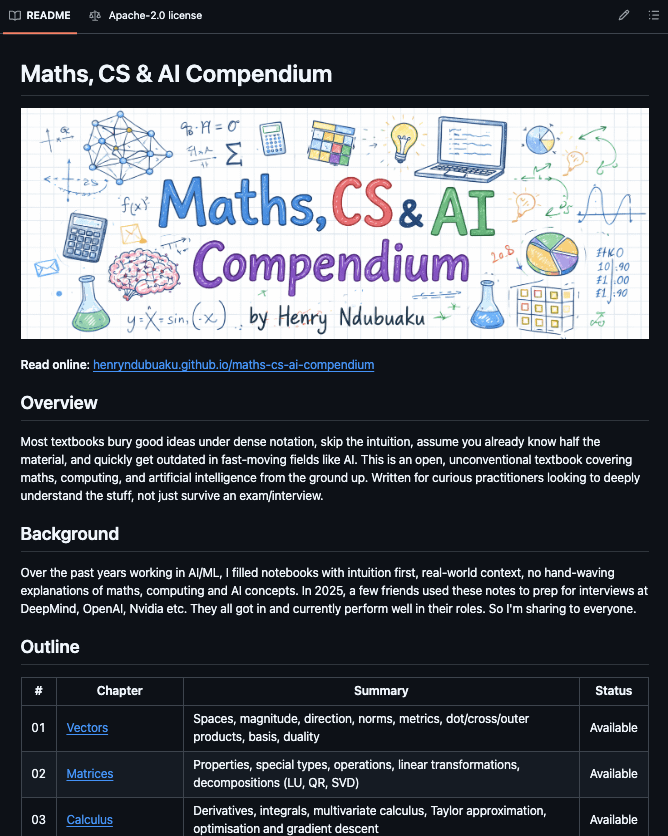
🚨 BREAKING: An AI engineer just compiled every maths, CS, and AI concept into one free open-source textbook. Built with intuition, not notation.
It covers vectors, calculus, machine learning, GPU programming, systems design, and AI inference. All explained the way nobody taught you in college.
It's called the Maths, CS & AI Compendium.
You open a chapter. It gives you the intuition first, then the math, then the real-world context. You come out actually understanding it. Not memorizing it. Not surviving an exam. Actually understanding the thing.
Not a course.
Not a YouTube playlist.
A full open-source textbook built by an AI engineer who filled notebooks for years working in AI, then watched his friends use those notes to get into DeepMind, OpenAI, and Nvidia.
Here's what's already inside:
→ Vectors and matrices from the ground up, spaces, transformations, SVD, all with clean intuition before the formulas
→ Calculus built for ML, derivatives, gradient descent, Taylor approximation, multivariate everything
→ Statistics and probability done right, Bayesian methods, information theory, distributions that actually make sense
→ Machine learning end to end, classical ML, deep learning, reinforcement learning, distributed training
→ GPU programming, SIMD, CUDA, Triton, ARM chips, TPUs, the low-level stuff most courses skip entirely
→ Systems design, inference, quantization, streaming LLMs, edge deployment, large scale infra
Here's how it's different:
Most textbooks bury the idea under 3 pages of notation. This one leads with the intuition. Why does this work. What does this actually mean. Where does this show up in the real world. Then the math. In that order. Every chapter.
Here's the wildest part:
A few friends used early drafts of these notes to prep for interviews at DeepMind, OpenAI, and Nvidia. They all got in. So he put the whole thing on GitHub for everyone. 18 chapters planned. 6 already live. The rest dropping soon.
Built by Henry Ndubuaku. 100% Open Source.
@StarTrek shows, including Acadamy, were flops because they forgot what we, the fans truly loved - "it's continuing mission: to explore strange new worlds; to seek out new life and new civilizations; to boldly go where no one has gone before". Adventures.
The book was ok, nice idea, but nothing special. I hope the movie is better. Expeditionary Force, Bob-verse, and Backyard Starship are much better stories.
'Project Hail Mary' Contains Not a Single Green Screen Shot in Movie https://t.co/3xW4UIqErj
It’s easy to be philosophical when it’s not your annihilation that’s being openly and repeatedly called for.
Spain's Pedro Sánchez hits back at Trump threat to sever trade saying 'no to war' https://t.co/kRxZzraaNS
BBC needs a fact check. Not a single settler goes into Gaza. October 7 massacre brought the palastenians to where they are now. UNRWA has been proven to have Hammas terrorists in their midst. Please be accurate and fact-chrck yourself. https://t.co/Dpwiii6qtH
Everyone who signed this are terror supporters, overlooking key historical, regional, and cultural context that’s essential to understanding the conflict. Oct 7 2023 - never forget.
80-Plus Names Sign Open Letter Criticizing Berlinale for Gaza Silence https://t.co/xlxzIHD7HU
True, if you don't understand AI and it's potential, you can't lead your team, group, or company. You soon will become irrelevant.
https://t.co/Cu483vLQtw
🚨 GLOBALISM JUST DIED IN DAVOS
Howard Lutnick just walked into the lion’s den — and told the World Economic Forum exactly what they didn’t want to hear.
“Globalism has failed.”
Not whispered.
Not softened.
Declared — on their own stage.
He dismantled the entire WEF doctrine in minutes:
• Offshoring hollowed out the West
• Cheap labor destroyed innovation
• Net Zero made Europe dependent on China
• Sovereignty begins with borders
• Nations must control their industry, energy, and medicine
Then came the line that shook the room:
“Why would Europe agree to Net Zero when they don’t even make a battery?”
That’s the truth globalists can’t answer.
Green agendas without industry.
Climate pledges without sovereignty.
Moral posturing while outsourcing power to Beijing.
America First isn’t isolation.
It’s independence.
And Lutnick made it crystal clear:
The old model is finished.
The globalist experiment has failed.
And the future belongs to nations that put their people first.
Davos just heard the obituary — live.
I would like to clarify a few things.
First, the obvious one: we do not have or want government guarantees for OpenAI datacenters. We believe that governments should not pick winners or losers, and that taxpayers should not bail out companies that make bad business decisions or otherwise lose in the market. If one company fails, other companies will do good work.
What we do think might make sense is governments building (and owning) their own AI infrastructure, but then the upside of that should flow to the government as well. We can imagine a world where governments decide to offtake a lot of computing power and get to decide how to use it, and it may make sense to provide lower cost of capital to do so. Building a strategic national reserve of computing power makes a lot of sense. But this should be for the government’s benefit, not the benefit of private companies.
The one area where we have discussed loan guarantees is as part of supporting the buildout of semiconductor fabs in the US, where we and other companies have responded to the government’s call and where we would be happy to help (though we did not formally apply). The basic idea there has been ensuring that the sourcing of the chip supply chain is as American as possible in order to bring jobs and industrialization back to the US, and to enhance the strategic position of the US with an independent supply chain, for the benefit of all American companies. This is of course different from governments guaranteeing private-benefit datacenter buildouts.
There are at least 3 “questions behind the question” here that are understandably causing concern.
First, “How is OpenAI going to pay for all this infrastructure it is signing up for?” We expect to end this year above $20 billion in annualized revenue run rate and grow to hundreds of billion by 2030. We are looking at commitments of about $1.4 trillion over the next 8 years. Obviously this requires continued revenue growth, and each doubling is a lot of work! But we are feeling good about our prospects there; we are quite excited about our upcoming enterprise offering for example, and there are categories like new consumer devices and robotics that we also expect to be very significant. But there are also new categories we have a hard time putting specifics on like AI that can do scientific discovery, which we will touch on later.
We are also looking at ways to more directly sell compute capacity to other companies (and people); we are pretty sure the world is going to need a lot of “AI cloud”, and we are excited to offer this. We may also raise more equity or debt capital in the future.
But everything we currently see suggests that the world is going to need a great deal more computing power than what we are already planning for.
Second, “Is OpenAI trying to become too big to fail, and should the government pick winners and losers?” Our answer on this is an unequivocal no. If we screw up and can’t fix it, we should fail, and other companies will continue on doing good work and servicing customers. That’s how capitalism works and the ecosystem and economy would be fine. We plan to be a wildly successful company, but if we get it wrong, that’s on us.
Our CFO talked about government financing yesterday, and then later clarified her point underscoring that she could have phrased things more clearly. As mentioned above, we think that the US government should have a national strategy for its own AI infrastructure.
Tyler Cowen asked me a few weeks ago about the federal government becoming the insurer of last resort for AI, in the sense of risks (like nuclear power) not about overbuild. I said “I do think the government ends up as the insurer of last resort, but I think I mean that in a different way than you mean that, and I don’t expect them to actually be writing the policies in the way that maybe they do for nuclear”. Again, this was in a totally different context than datacenter buildout, and not about bailing out a company. What we were talking about is something going catastrophically wrong—say, a rogue actor using an AI to coordinate a large-scale cyberattack that disrupts critical infrastructure—and how intentional misuse of AI could cause harm at a scale that only the government could deal with. I do not think the government should be writing insurance policies for AI companies.
Third, “Why do you need to spend so much now, instead of growing more slowly?”. We are trying to build the infrastructure for a future economy powered by AI, and given everything we see on the horizon in our research program, this is the time to invest to be really scaling up our technology. Massive infrastructure projects take quite awhile to build, so we have to start now.
Based on the trends we are seeing of how people are using AI and how much of it they would like to use, we believe the risk to OpenAI of not having enough computing power is more significant and more likely than the risk of having too much. Even today, we and others have to rate limit our products and not offer new features and models because we face such a severe compute constraint.
In a world where AI can make important scientific breakthroughs but at the cost of tremendous amounts of computing power, we want to be ready to meet that moment. And we no longer think it’s in the distant future. Our mission requires us to do what we can to not wait many more years to apply AI to hard problems, like contributing to curing deadly diseases, and to bring the benefits of AGI to people as soon as possible.
Also, we want a world of abundant and cheap AI. We expect massive demand for this technology, and for it to improve people’s lives in many ways.
It is a great privilege to get to be in the arena, and to have the conviction to take a run at building infrastructure at such scale for something so important. This is the bet we are making, and given our vantage point, we feel good about it. But we of course could be wrong, and the market—not the government—will deal with it if we are.
@PressTV LOL guys, translate the docs. It shows emails of university professors wanting to conduct panels for their students on the nuclear state in the middle east. That's the "sensitive" docs Iranian intelligence got their hands on? Can someone show them how to download the Meetup app?
"charge limit" works great on my Samsung phone and does not work on my M2 Mac. Apple's "Optimized Battery Charging" on Macs does-not-work and my Mac keeps charging to 100. Glad they go with "it just works" this time and wish it would come to Mac too.
https://t.co/zwFxrEq5s1
"Now, Iran should use its diplomatic capacity to reach a ceasefire."
Yes, Iran really should. because the Israeli war planes that circled over your head willy-nilly might not show restraint next time.
https://t.co/WJiLr6ZQIW