🌍 Africa is preparing to supply more gas to Europe
Nigeria, Niger, and Algeria have launched construction of a 4,128-kilometre gas pipeline, according to Business Insider.
The pipeline is expected to deliver up to 30 billion cubic metres of natural gas per year. Algeria has already begun work on its section of the project.
If completed, it will become one of the largest gas transport routes in Africa.
236 GW of plug-and-play battery storage is ready to be deployed in India's pooling stations to reduce renewable curtailment.
The store solar energy would cost INR 7-8/kWh -- which is cheaper than the INR 10/kWh states pay for peak power 🔋
https://t.co/xXVmFdIXSZ
In 2020, EVs made up just 4% of all car sales globally.
Their share rose to 25% in 2025 – and is set to grow close to 30% this year.
And by 2035, even without any new policy announcements, EVs could account for about half of global car sales 👉 https://t.co/NkYY60UsFL
The latest @UNUINWEH report unveils stark findings about the environmental cost of #AI’s energy use ⚡️
A responsible AI system — for people and planet — is urgently needed.
Access the full report: https://t.co/FKyQ5UZZzD
#WorldEnvironmentDay#NowForClimate
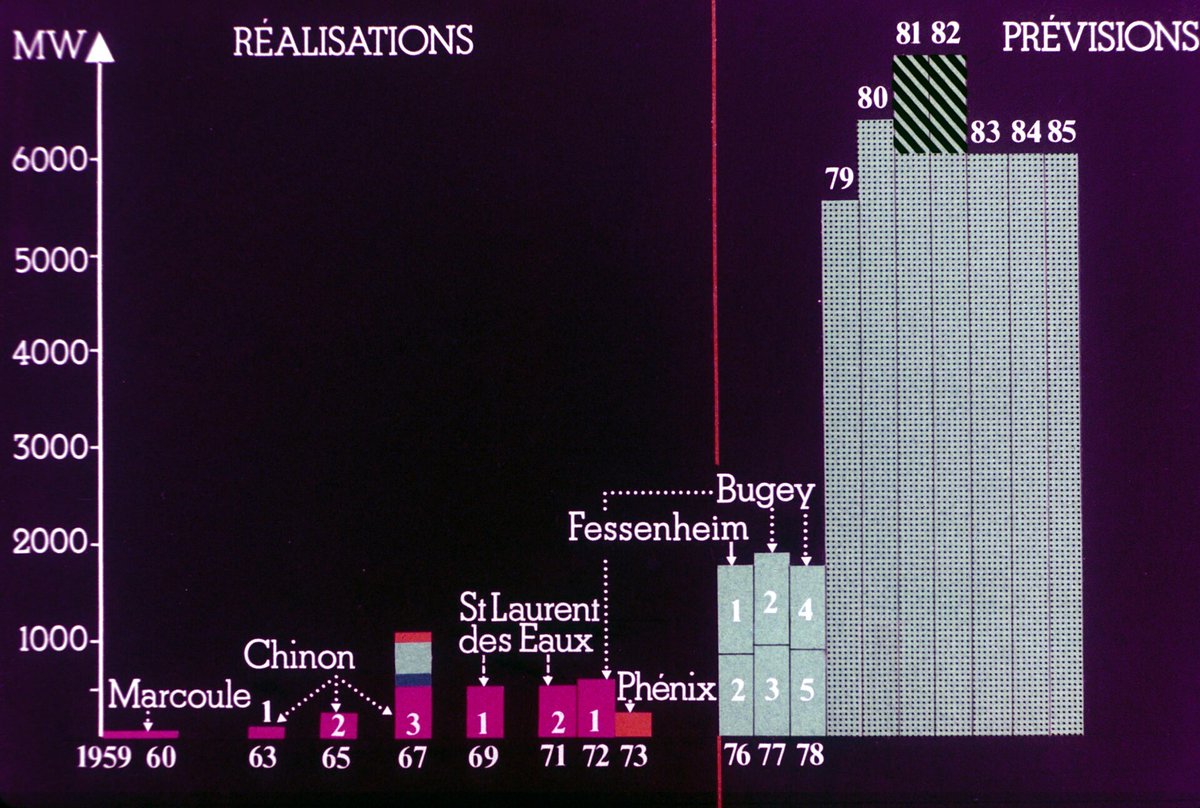
🇫🇷 En 1974, La France lance le Plan Messmer, un vaste programme de construction de centrales nucléaires.
⚡ Face au choc pétrolier de 1973, la France décide de réduire drastiquement sa dépendance aux importations de pétrole (70 % de son énergie).
🎯 L’objectif est clair : atteindre l’indépendance énergétique grâce au « tout-électrique, tout-nucléaire ».
🇺🇸 Le plan lance immédiatement 13 réacteurs et opte pour la filière des réacteurs à eau pressurisée (REP) de Westinghouse.
🏗️ Grâce à une standardisation industrielle, la France construit finalement 58 réacteurs entre les années 1970 et 1980.
☢️ Ce programme fait de la France une grande puissance nucléaire civile, avec un parc parmi les plus performants au monde.
💪 Aujourd’hui encore, le nucléaire issu de cette époque fournit environ 70 % de l’électricité française et reste un pilier de sa souveraineté énergétique.
A combination of market factors, policies & innovation are supporting the uptake of EVs globally
Recent declines in battery prices have helped make electric cars more affordable, while higher-voltage batteries are paving the way for faster charging
More: https://t.co/NkYY60UsFL
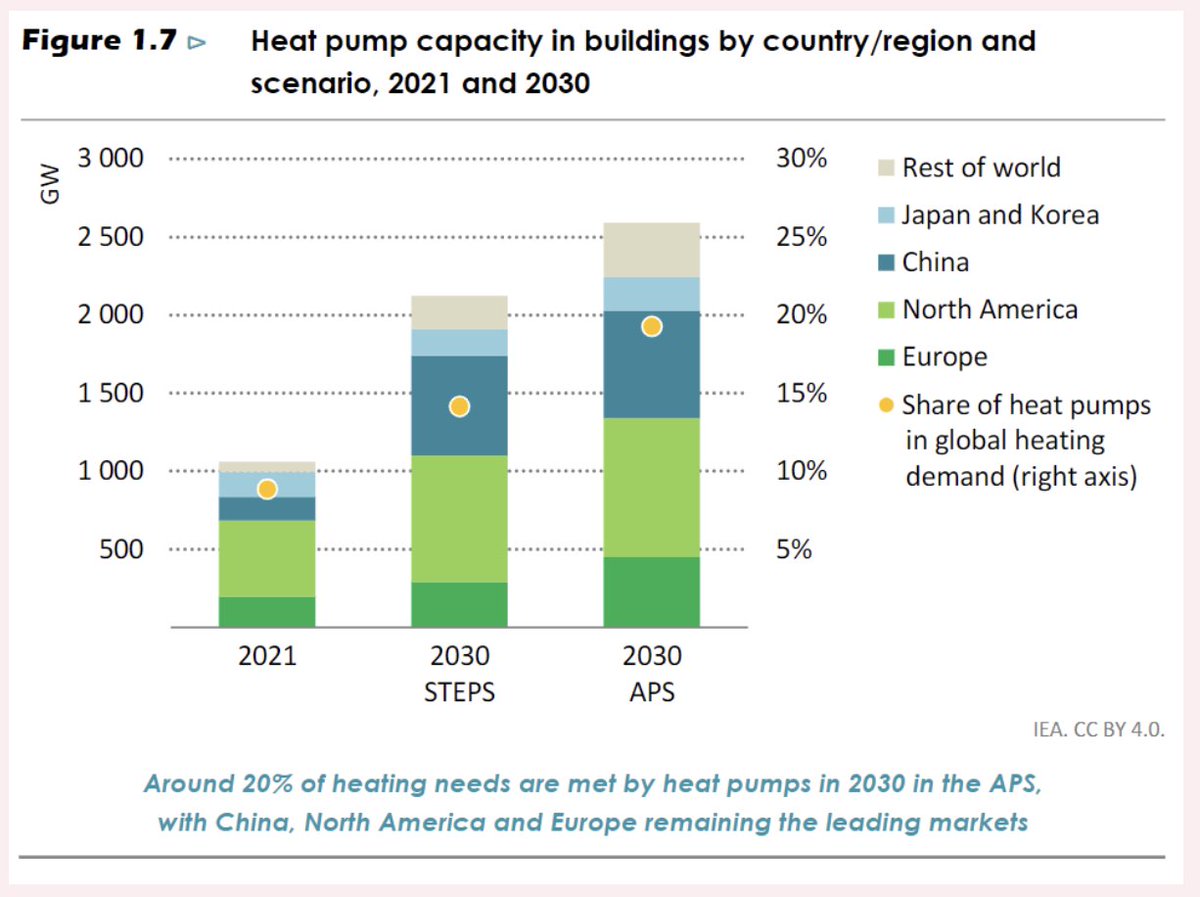
The boring heat pump is obliterating gas demand in Europe: heat pumps will cut 30 bcm of natural gas demand out of European buildings and light industry, each year, by 2030, a permanent structural erasure of gas demand
>30 bcm is about 20% of the entire annual output of the US LNG export infrastructure
>It's also 19% of Qatar’s entire annual global LNG exports, pre Hormuz
>And 80% of the total capacity of Russia's Power of Siberia 1, which ships 38.8 bcm/year to China
In Germany for example, heat pumps have outsold gas boilers for the 1st time in modern history. In the US, they've beaten gas boilers for 4 consecutive years
Every single heat pump is a non-reversible eviction notice for a fossil gas pipe
NEW – New coal plants hit ‘10-year’ global high in 2025 – but power output still fell | @MollyLempriere@GlobalEnergyMon
Read here: https://t.co/Ami9R3tWbw
BloombergNEF: Solar #1 electricity source by 2032! Storage 17x to 3.8 TW by 2050 — huge system shift. But IEA & forecasters underestimated solar growth for 20 straight years… This projection STILL too conservative. The #SWB revolution is accelerating FASTER than most understand!
The old energy modelling mindset still treats solar and wind as conventional energy technologies, assuming they're simply 1-for-1 replacements for coal, gas or nuclear. They aren't. They're modular, manufactured, deflationary, globally deployable and increasingly paired with batteries. That makes them behave less like traditional fuel-based infrastructure and more like technology platforms, improving through scale, learning curves and deployment.
Solar is becoming the backbone of the future grid, but wind increasingly looks like its perfect dance partner, strongest when solar is weakest.
While solar floods the grid with ultra-cheap daytime electricity in high-penetration markets, wind often strengthens overnight and during seasons when solar weakens. Add batteries and the whole system starts behaving very differently.
The killer point is this: once solar and wind become the cheapest source of new electricity, growth no longer relies on climate policy. Economics takes the wheel. Energy security, AI, EVs, industrial electrification, green fuels and escaping fossil fuel volatility all start accelerating adoption simultaneously
And that’s before the battery curve fully bites.
Batteries don't just support solar and wind. They fundamentally change their value proposition, turning the entire energy equation on its head. They transform midday solar abundance and overnight wind into dispatchable power. They crush gas peaker economics, reduce curtailment and make ultra-cheap renewables flexible enough to reorganise the grid around them.
So when a model says solar leads by 2032, I don't see a bold prediction. I see a conservative baseline.
History suggests the real question isn't whether solar becomes the world's largest source of electricity by 2032.
It's whether it gets there earlier, and whether the solar share projected for 2050 ends up looking laughably low in hindsight.
https://t.co/lYMd0GhGaJ
Global sales of combustion engine cars peaked in 2017—
To decarbonize road transport, the world must move away from petrol and diesel cars towards electric vehicles and other forms of low-carbon transport.
This transition has already started. In fact, global sales of combustion engine cars are well past their peak and are now falling.
As you can see in the chart, global sales peaked in 2017. This is calculated based on data from the International Energy Agency. Bloomberg New Energy Finance also estimated this peak occurred around that time.
Sales of electric cars, on the other hand, are growing quickly. They more than doubled in the three years from 2022 to 2025.
(This Data Insight was written by @_HannahRitchie.)
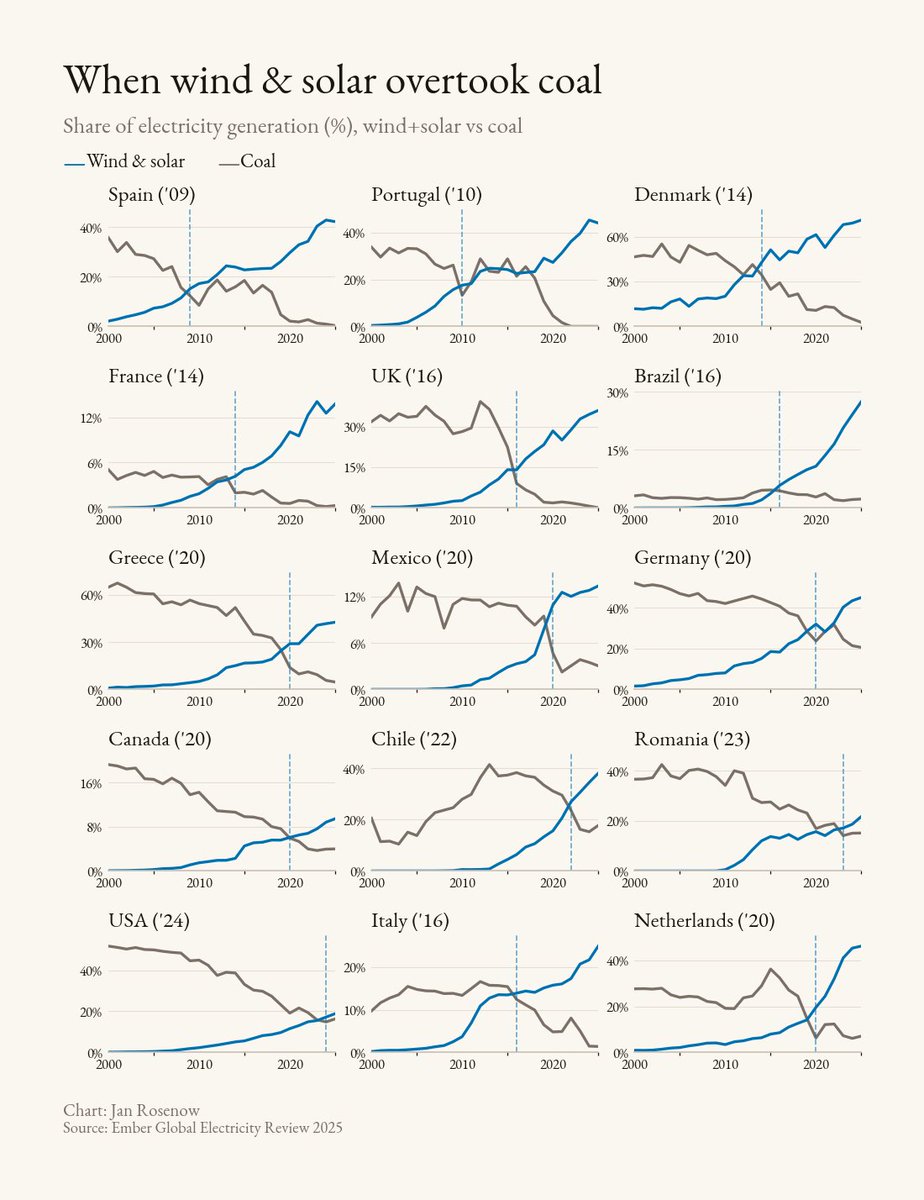
In 55 countries, wind and solar generated more electricity than coal in 2025.
34 of them have near-zero coal left.
Spain crossed over in 2009. The UK in 2016. The USA last year.
Want more of this? Sign up here https://t.co/In5lBaF2ox
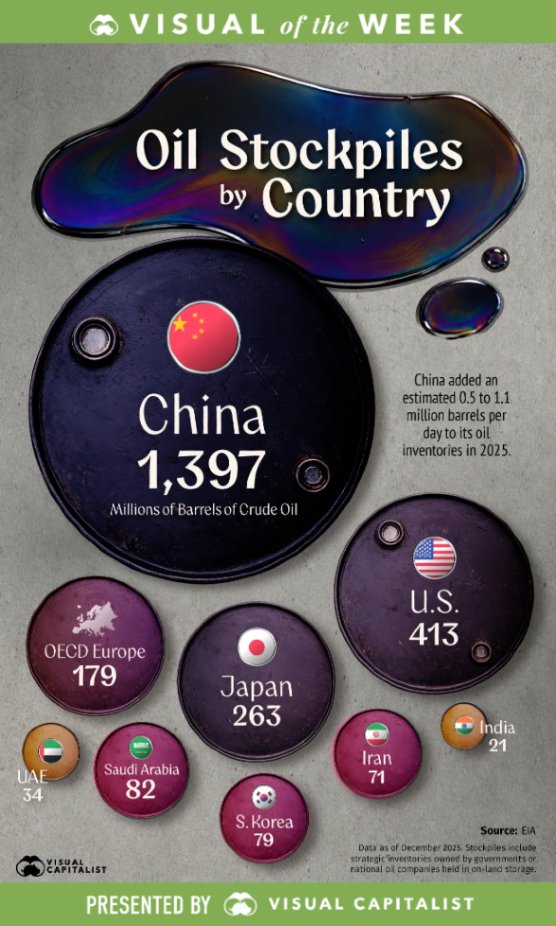
Visual of the Week 🥇
As the world faces one of the largest energy supply disruptions in modern history, China’s oil stockpile stands out. China holds ~1.4B barrels, more than the next 9 largest stockpiles combined 🛢️
https://t.co/wDdmnriCjL
Germany is undergoing a battery storage boom, with both grid-scale and residential markets scaling fast.
- Grid-scale batteries DOUBLED from 1.2 GW in 2023 to 2.5 GW in 2025.
- 2mn homes with battery systems today, potentially rising to 7mn by 2030.
https://t.co/GB5aEN8JiK
Disruptions to shipping flows through the Strait of Hormuz continue to have major implications for energy markets worldwide.
Our new interactive data tool looks at the reliance of different countries on oil & gas supplies from the Middle East 👉 https://t.co/WdC1L5wYXr
The world's largest single-unit 16-megawatt floating offshore wind turbine, Three Gorges Pilot, was installed off the coast of Yangjiang, Guangdong province. With a rotor diameter of 252 meters and a swept area equivalent to seven standard football fields, the turbine can generate about 44.65 million kWh annually, powering 24,000 households.
By integrating multiple new technologies and materials, Three Gorges Pilot is built to withstand super typhoons and operate safely in extreme sea conditions, where wave heights can exceed 20 meters.
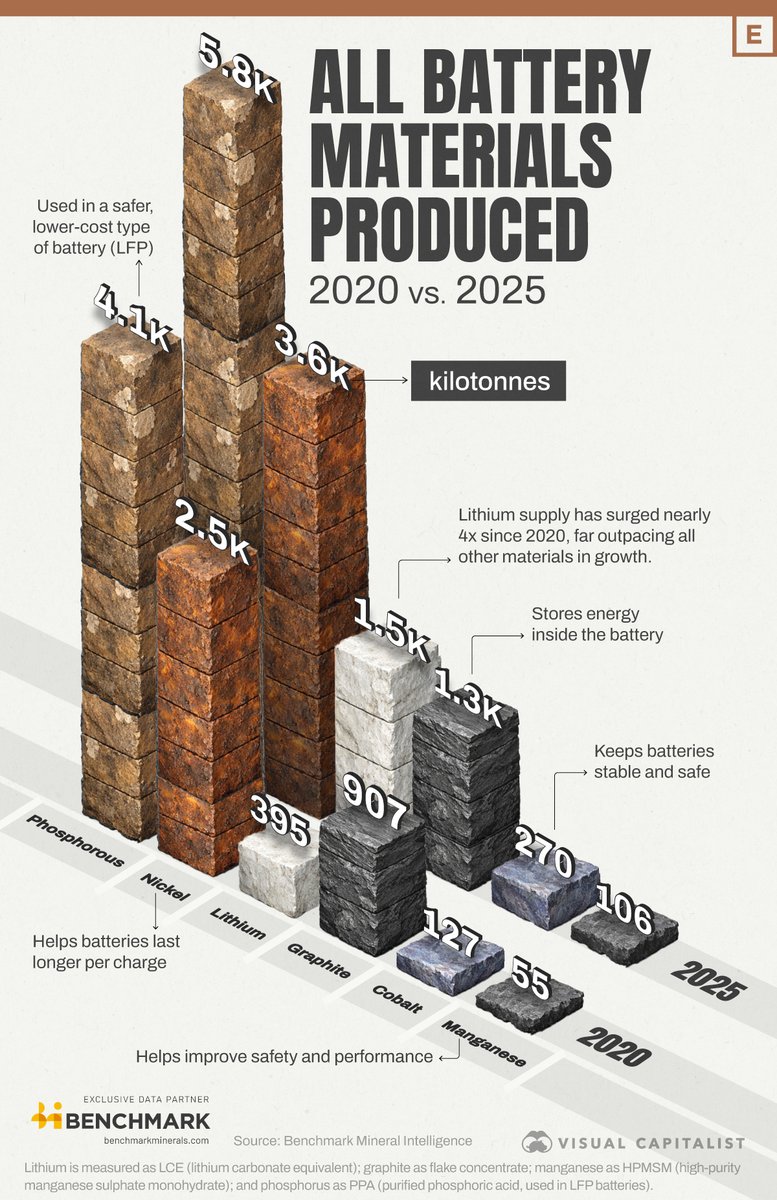
All the Battery Materials We Produced in One Visualization 🔋
Here we track the growth in production volumes of critical battery materials from 2020 to 2025, using exclusive data from our partner, @benchmarkmin.
https://t.co/san2uo7jze
Solar generated 636 TWh more electricity in 2025 than the year before, becoming the largest source of new electricity ☀️
Solar’s increase was 18 TIMES that of gas (+36 TWh), the only fossil source that increased in 2025.
⬇️ Explore more highlights in our #GER2026
Petrol and diesel cars fought for their lives in Norway but, as you can see, that old technology has now lost the battle to EVs forever and I love that's happening here too.
Being able to witness the end of an automotive era and the start of a new one in real time is honestly pretty cool and it's a privilege to have a front row seat.