Hay una política que destaca especialmente en el gráfico del @nytimes: la “science of reading”.
Los expertos la sitúan entre las medidas con mayor eficacia y con un coste relativamente contenido. Una combinación poco habitual: mejorar cómo se enseña a leer puede tener más recorrido que reformas mucho más caras.
https://t.co/Dwi7z1flgK
A supplement is shown to mimic some of the benefits of fasting - reduced hunger, LDL cholesterol & fasting glucose. Here's the recipe and what the components do:
Nicotinamide (250 mg)
Micronized Palmitoylethanolamide (600 mg),
Oleoylethanolamide (400 mg)
Spermidine (8 mg)
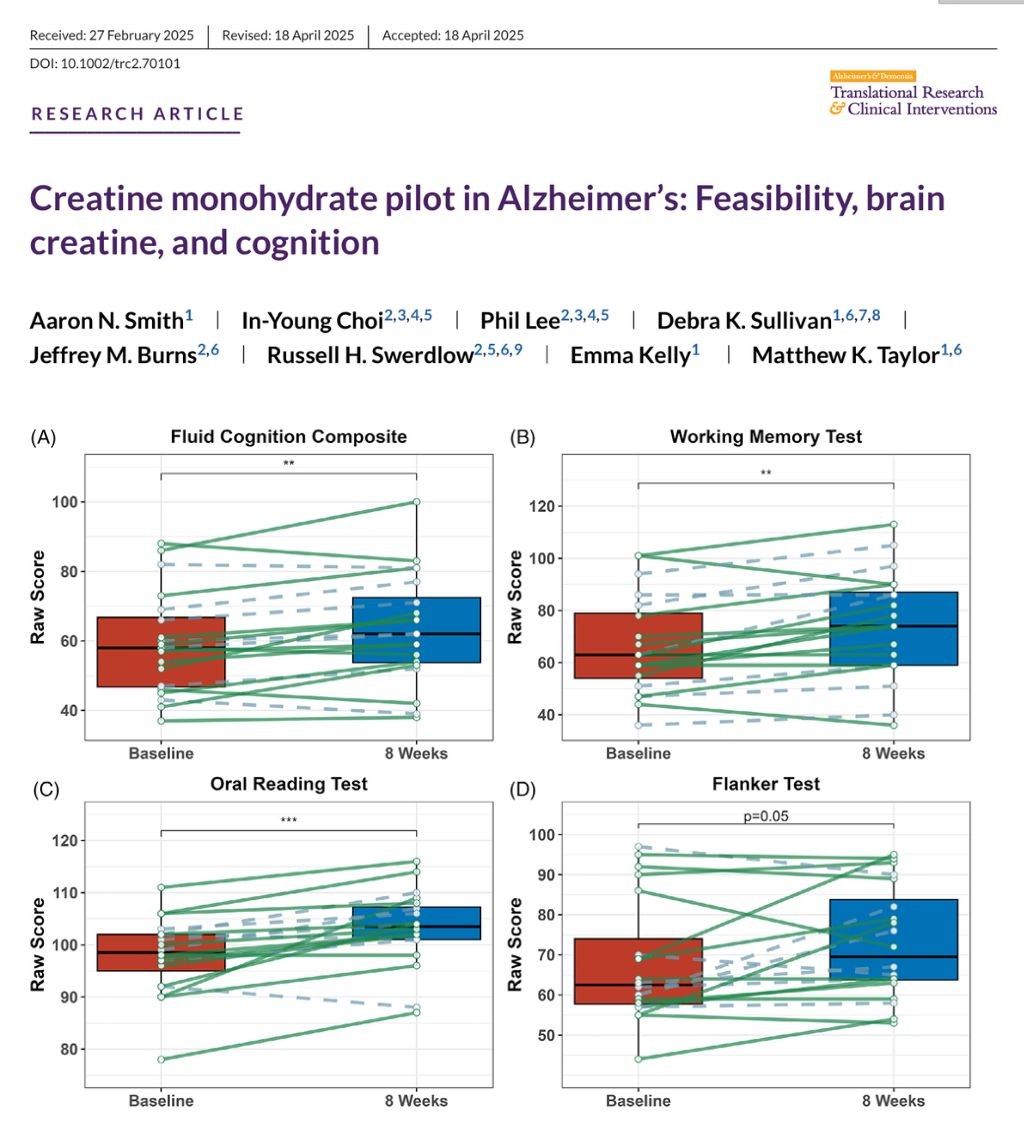
Scientists gave 20 Alzheimer's patients creatine monohydrate for 8 weeks.
This was the first clinical trial to test creatine in humans with Alzheimer's.
What happened to their memory and cognition was extraordinary.
Here's how remarkable creatine can be for your brain:
A SINGLE 20g dose of creatine increases cognitive processing speed by 24.5% within 3.5 hours.
A placebo-controlled trial found that creatine rapidly enhanced brain bioenergetics and improved cognitive performance during sleep deprivation, with effects lasting up to nine hours.
NEW STUDY: Brain NAD+ levels decline precipitously with age, especially in Alzheimer's. In two types of AD mouse models, raising NAD+ levels reversed major pathologies, recovered cognitive function, and normalized levels of p-tau 217, a biomarker of AD in humans 🧵 @CellReports
Your mitochondria are not batteries, they’re chemical factories. And this is what they’re building....
This diagram looks complex because it is. Your mitochondria act like tiny biochemical control centers that influence how well you think, heal, detoxify, fight infection, and even age.
Here’s the simple version:
1️⃣ They don’t just make energy, they make the building blocks of life.
Mitochondria produce the raw materials your cells need for:
-DNA & RNA
-Brain chemicals
-Antioxidants
-Cell membranes
-Repair enzymes
When mitochondria slow down, everything from immunity to cognition takes a hit.
2️⃣ They run a huge “chemical circuit” that keeps your cells functioning.
This network ties together:
-Folate
-B-vitamins
-Methylation
-Detox pathways
-Glutathione production
-DNA synthesis
Mitochondria supply key molecules (like formate) that cells use to build DNA and regulate repair.
This affects growth, immunity, fertility, inflammation, and aging.
3️⃣ When mitochondria falter, the effects ripple everywhere.
You don’t just feel tired, you see:
-More inflammation
-Poor detoxification processes
-Slower healing
-Brain fog
-Hormone imbalance
-Faster aging
Because the upstream control system is failing.
4️⃣ The takeaway
Your mitochondria aren’t batteries.
They’re the operating system that keeps your cells alive, communicating, and repairing damage.
Support them… and you support everything your body is trying to do.
📄 Source: Cell (2024). Mitochondrial one-carbon metabolism and its role in cellular biosynthesis and signaling.
Creatine made simple: how your body builds and uses its energy buffer
Creatine is a molecule your body makes naturally to keep energy flowing smoothly, especially in muscles and the brain. Here’s how the system works:
1️⃣ Where It Begins
Creatine starts in your kidneys, where the amino acids arginine and glycine combine to form guanidinoacetate (GAA).
🟢 Example: This first step is like assembling the base structure of a battery.
2️⃣ The Liver Finishes the Job
Guanidinoacetate travels to the liver, where it’s methylated by S-adenosyl-methionine (SAM), a reaction that converts it into creatine.
🟢 Example: The liver adds the “charge” that activates creatine for energy storage.
3️⃣ Creatine Travels to Muscles
Once made, creatine moves through the bloodstream to muscles, the heart, and brain, where it acts as an energy reserve.
🟢 Example: About 95% of your creatine is stored in muscle tissue, ready to recharge your cells when energy runs low.
4️⃣ The Energy Exchange System
Inside muscle cells, creatine and ATP (your cell’s energy currency) are in constant exchange:
When energy is plentiful, ATP donates a phosphate to form phosphocreatine (stored energy).
During activity, phosphocreatine donates that phosphate back to ADP, quickly regenerating ATP.
🟢 Example: This is your body’s “instant energy buffer” during sprinting or lifting.
5️⃣ Creatine Recycling and Excretion
After use, some creatine converts into creatinine, a natural byproduct filtered out by the kidneys.
🟢 Example: This is why creatinine levels are used in blood tests to check kidney function.
6️⃣ Why It Matters
Creatine supports:
Rapid ATP regeneration in muscle and brain.
Cellular hydration and stability.
Methylation balance, since it uses SAM in its synthesis.
🟢 Example: Supplementing creatine doesn’t just enhance performance, it supports cellular metabolism and brain health too.
Creatine acts as the body’s built-in energy recycling system. Made in the kidneys and liver, stored in muscle, and constantly recharging ATP, it’s one of the most efficient energy buffers biology ever designed.
Master metabolism with 9 steps/arrows
Here’s my shortcut to remembering it in just 9️⃣ arrows:
1️⃣ Glu → Fru → Pyr
(Glucose → Fructose → Pyruvate)
This is glycolysis — the breakdown of glucose into pyruvate for quick energy.
💡 Example: Eat bread, glucose enters your cells, and is converted to pyruvate to start producing ATP.
2️⃣ Pyr → ACoA → TCA
(Pyruvate → Acetyl-CoA → TCA Cycle)
When oxygen’s available, pyruvate becomes Acetyl-CoA and runs through the TCA (Krebs) cycle for sustained energy.
💡 Example: A post-lunch walk taps into this aerobic pathway.
3️⃣ TCA → NADH → ETC → ATP
(TCA products → NADH → Electron Transport Chain → ATP)
The TCA cycle generates NADH, which powers the electron transport chain to make ATP — your cellular energy currency.
💡 Example: Your brain uses that ATP to keep you sharp while studying.
4️⃣ G6P ↔ PPP → NADPH + Ribose
(Glucose-6-Phosphate → Pentose Phosphate Pathway → NADPH + Ribose)
This detour from glucose creates NADPH (for antioxidant defense) and ribose (for DNA/RNA synthesis).
💡 Example: Immune cells use NADPH to neutralize pathogens.
5️⃣ Pyr → Lac
(Pyruvate → Lactate)
In low-oxygen conditions, pyruvate shifts to lactate.
6️⃣ Pyr → OAA → Gluconeogenesis
(Pyruvate → Oxaloacetate → Glucose)
During fasting, pyruvate is turned into oxaloacetate, then glucose, to maintain blood sugar.
💡 Example: After 10+ hours without food, your liver makes glucose for your brain.
7️⃣ ACoA → FAs → TAGs
(Acetyl-CoA → Fatty Acids → Triglycerides)
Excess energy is stored as fat.
💡 Example: Too many sweets? Your body parks the surplus as belly fat.
8️⃣ FAs → β-ox → ACoA → TCA
(Fatty Acids → Beta-Oxidation → Acetyl-CoA → TCA)
When carbs run low, fat becomes your fuel.
💡 Example: After 14 hours of intermittent fasting, fat breakdown kicks in.
9️⃣ AAs → Pyr / ACoA / TCA
(Amino Acids → Pyruvate or Acetyl-CoA or TCA)
Amino acids can feed into different energy pathways, depending on type.
💡 Example: In prolonged starvation, muscle protein is converted into energy intermediates.
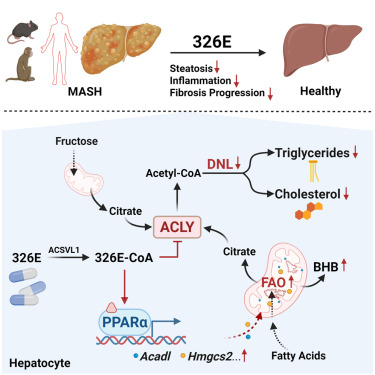
New! Online now: The enedioic acid analog 326E alleviates metabolic dysfunction-associated steatohepatitis via dual targeting at ACLY and PPARα https://t.co/uysEjgzNPD
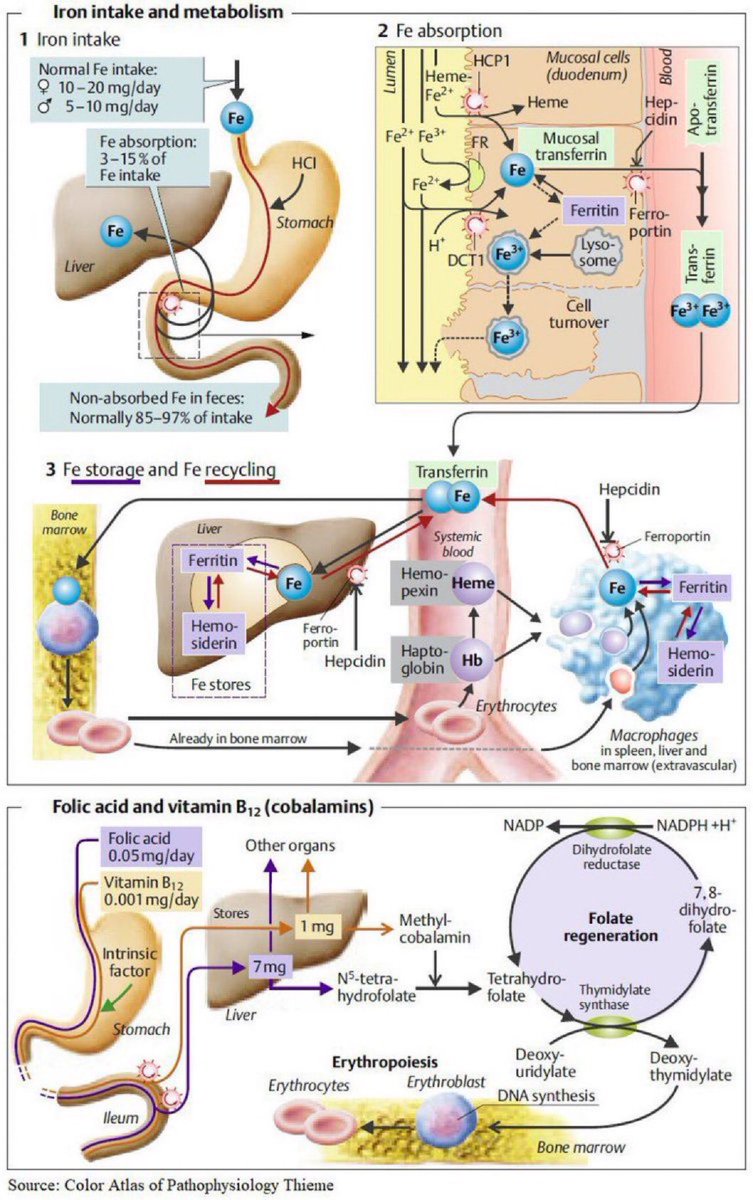
How iron, folate, and vitamin B12 sustain red blood cell formation
Iron, folate, and vitamin B12 are essential nutrients that work together to make and mature red blood cells. Their metabolism is tightly controlled because even small deficiencies can impair oxygen delivery and DNA synthesis, leading to anemia.
1️⃣ Iron intake and absorption
Most adults need 10–20 mg of dietary iron per day, but only 3–15% is absorbed in the small intestine. Iron from meat (heme iron) is absorbed more efficiently than iron from plants (non-heme iron). Stomach acid helps convert ferric iron (Fe³⁺) to its absorbable ferrous form (Fe²⁺).
🟢 Example: Vitamin C enhances absorption by reducing Fe³⁺ to Fe²⁺, while phytates in grains or excess calcium reduce uptake.
2️⃣ Iron transport and storage
Once absorbed, iron binds to transferrin, the blood’s transport protein, and is delivered to tissues like the bone marrow for red blood cell production. Surplus iron is stored in the liver as ferritin and hemosiderin. The hormone hepcidin from the liver regulates iron export—high levels block release, preventing overload.
🟢 Example: In chronic inflammation, hepcidin rises, trapping iron in macrophages and leading to “anemia of chronic disease.”
3️⃣ Iron recycling
When red blood cells break down, macrophages in the spleen and liver recover the iron from hemoglobin and return it to circulation. This recycling process supplies most of the daily iron needed for new red blood cell formation.
🟢 Example: The body recycles about 25 mg of iron each day, far exceeding the amount absorbed from food.
4️⃣ Folate and vitamin B12 absorption
Folate is absorbed in the small intestine, while vitamin B12 requires intrinsic factor from the stomach for uptake in the ileum. Both nutrients are stored in the liver and used for DNA synthesis in developing red blood cells.
🟢 Example: Vitamin B12 intake averages just 1 microgram daily, but liver stores (≈2–5 mg) can last for years, while folate stores deplete within months if intake falls.
5️⃣ Shared role in erythropoiesis and DNA synthesis
Inside bone marrow, folate and B12 cooperate to generate tetrahydrofolate, a cofactor for DNA and red cell production. Without them, cells enlarge without dividing properly, producing megaloblastic anemia.
🟢 Example: B12 deficiency traps folate in its inactive form (“methyl-folate trap”), halting DNA replication and leading to fatigue, pale skin, and neurological symptoms.
Efficient red blood cell production depends on the seamless interaction between iron supply, folate metabolism, and vitamin B12 activation. When any link in this triad breaks, oxygen transport falters and anemia develops—a sign that cellular energy and repair are being starved at the molecular level.
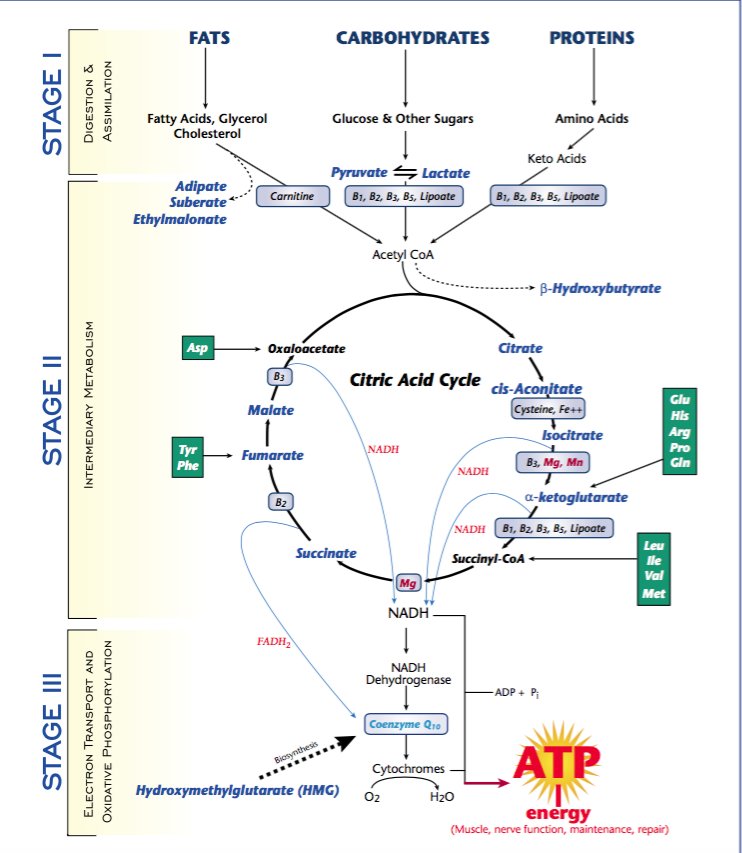
Micronutrients and cellular energy production
This diagram maps how vitamins and minerals act as cofactors through every major energy pathway; linking protein, fat, and carbohydrate metabolism into a single biochemical network that fuels life.
1️⃣ From food to fuel
Proteins, carbohydrates, and fats all converge at acetyl-CoA, the metabolic hub that feeds the mitochondria.
🟢 Example: Vitamin B1 (thiamine) converts glucose into pyruvate and then acetyl-CoA, while lipoic acid and magnesium enable that transition. Without these, energy stalls before reaching the mitochondria.
2️⃣ Beta oxidation and fatty acids
Fats enter through beta-oxidation, breaking into acetyl-CoA units with help from vitamins B2, B3, B5, and carnitine.
🟢 Example: Carnitine shuttles long-chain fatty acids into mitochondria—deficiency impairs fat burning and endurance.
3️⃣ Amino acids and the urea cycle
Amino acids feed into energy metabolism via the urea cycle, requiring vitamins B5, B6, magnesium, and potassium to detoxify ammonia while generating intermediates for the Krebs cycle.
🟢 Example: Low B6 limits amino acid breakdown and raises ammonia levels, causing fatigue and brain fog.
4️⃣ The Krebs cycle (citric acid cycle)
Once acetyl-CoA enters the mitochondria, it spins through the Krebs cycle, producing NADH and FADH₂ for ATP synthesis. Vitamins B1, B2, B3, and B5—plus iron, magnesium, and manganese—are essential for each enzymatic step.
🟢 Example: Niacin (B3) and riboflavin (B2) generate electron carriers that ultimately produce over 90% of the cell’s usable energy.
5️⃣ The electron transport chain
NADH and FADH₂ deliver electrons to the electron transport chain, where oxygen and coenzymes drive ATP synthesis.
🟢 Example: CoQ10, vitamin C, zinc, iron, and copper enable this redox cascade; deficiency reduces mitochondrial efficiency and increases oxidative stress.
6️⃣ Antioxidant protection and feedback
Iron, cysteine, and glutathione maintain redox balance, preventing electron leakage that can damage mitochondrial membranes.
🟢 Example: Magnesium stabilizes ATP and mitochondrial membranes, while glutathione—supported by B2 and cysteine—neutralizes free radicals produced during respiration.
Micronutrients are not optional—they are the gears of metabolism. Each B-vitamin, mineral, and cofactor serves as an enzyme’s ignition key, turning food into ATP and keeping the mitochondrial engine running clean and efficiently.
The accepted dogma for dietary lipids was their absorption by the gut lining into our bloodstream.
It turns out there's another way in, via our immune cells, influenced by the gut microbiome (as shown in mice)
@ScienceMagazine
https://t.co/Knvh8g9BjM
https://t.co/15UXOG7tAI
Vitamin B12 absorption can be viewed as a biochemical obstacle course
Here’s the shortcut to how your body actually gets B12 from food in 7️⃣ steps:
1️⃣ Starts in Food
Meat, eggs, dairy, fish → B12 is protein-bound.
💡 Example: That salmon fillet carries B12, but it’s locked up tight.
2️⃣ Stomach Acid Breaks It Free
Gastric acid + pepsin release B12 from food proteins.
💡 Without stomach acid (think antacids or age-related decline), B12 release suffers.
3️⃣ Haptocorrin (HC) Grabs It First
In the stomach, B12 binds to HC (a protective chaperone).
💡 This shields B12 from the harsh acidic environment.
4️⃣ Intrinsic Factor (IF) Takes Over
In the small intestine, enzymes break HC → B12 rebinds to IF (made by stomach cells).
💡 No IF = no absorption (that’s what happens in pernicious anemia).
5️⃣ Absorption in the Ileum
The B12–IF complex docks on special receptors (Cubam) in the ileum.
💡 That’s why B12 deficiency can occur after ileum surgery or Crohn’s disease.
6️⃣ Transport in Bloodstream
Once inside, B12 switches to transcobalamin (TC), the form cells can use.
💡 B12 + TC = delivery service to tissues and mitochondria.
7️⃣ Cellular Activation
Inside cells, B12 converts to active forms:
Methylcobalamin → makes methionine (DNA + neurotransmitters).
Adenosylcobalamin → runs mitochondria (energy).
💡 No active B12 = fatigue, neuropathy, brain fog.