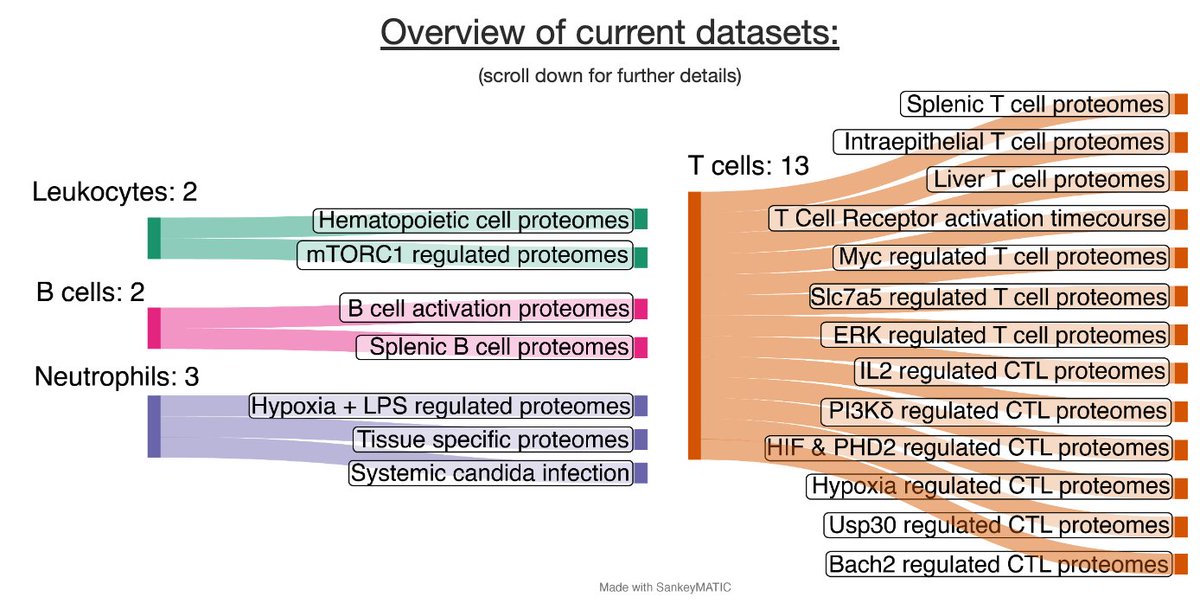
ImmPRes is an open access resource for large-scale quantitative mass spectrometry-based proteomics data for immune cell populations. Created by @AJ_Brenes
We are delighted to see this write up now being officially out in @NatImmunol@AJ_Brenes@LabDac
If you were looking for a reference to cite when using #ImmPRes data, this is the one.
https://t.co/dzCl69UZ4O
📢📢the human expansion of ImmPRes is live, with two datasets focussed on human T cells. The raw files for these datasets will be available soon, but we've shared the processed data already.
Want to know what IL2 deprivation does to CD8+ T cells? You know where to look
@pedrovelica @Caroline_Bartma @DrYihuiShen We have human T cell datasets, just need to build an expansion and sort out some logistics. Might be something before the end of summer
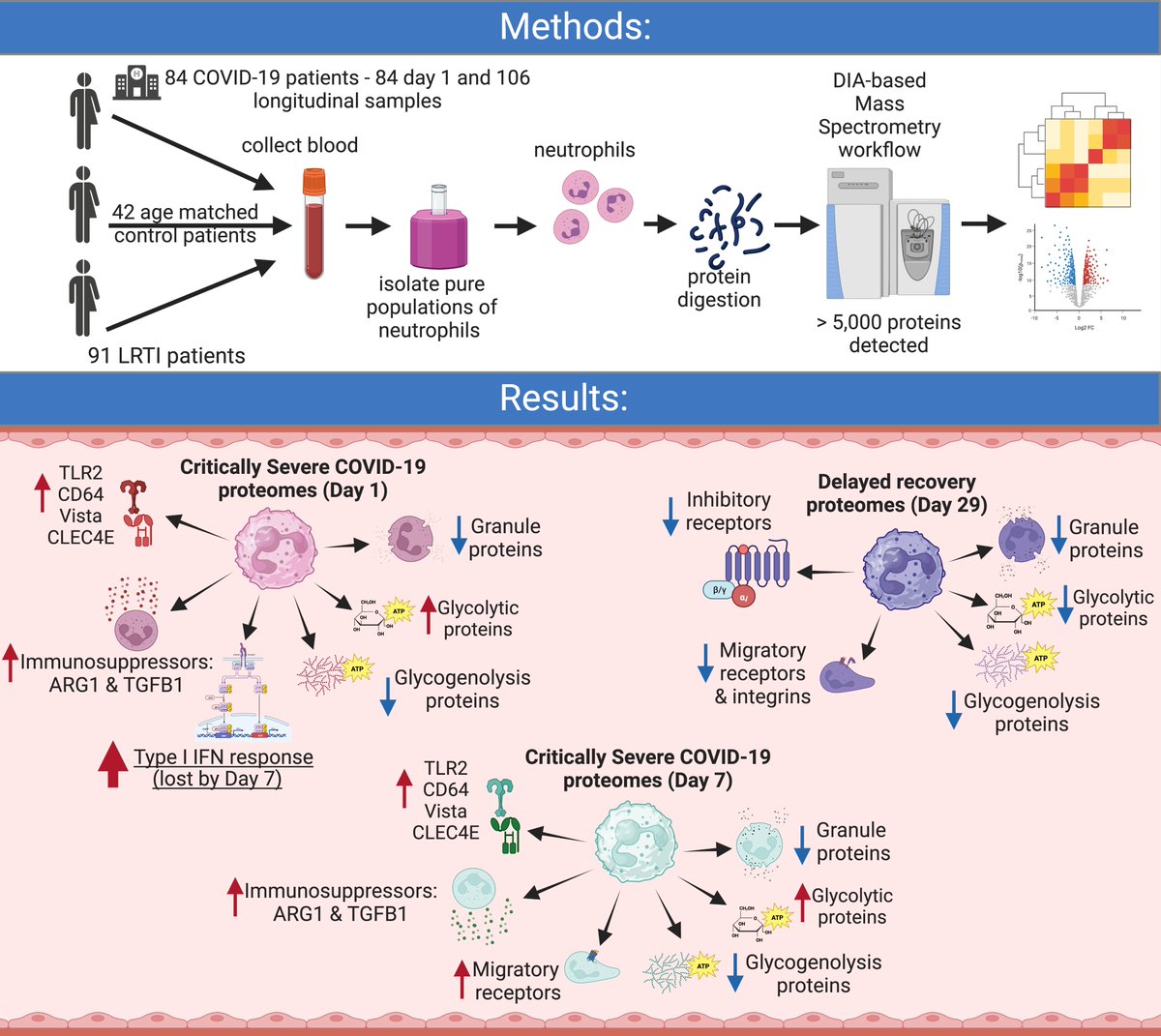
High-resolution #massspectrometry#proteomic analysis of peripheral blood neutrophils from >200 individuals provides novel insights into neutrophil phenotypes during acute COVID-19 and reveals altered neutrophils persist in convalescent COVID-19 patients https://t.co/qAdMUIzPqf
Many results that were not included on the manuscript (due to space constraints) can be viewed on ImmPRes. E.g. neutrophil #proteomes of patients with delayed recovery from COVID-19 displayed significantly reduced abundance of the master regulator of lysosome biogenesis, TFEB
"Early View" of our latest manuscript. We used #proteomics to study >300 neutrophil proteomes from COVID-19, LRTI and control patients, unravelling markers of acute severity, temporal changes and a signature of delayed recovery.
@ImmPRes_@EuroRespSoc
https://t.co/TJbNYlu7HV
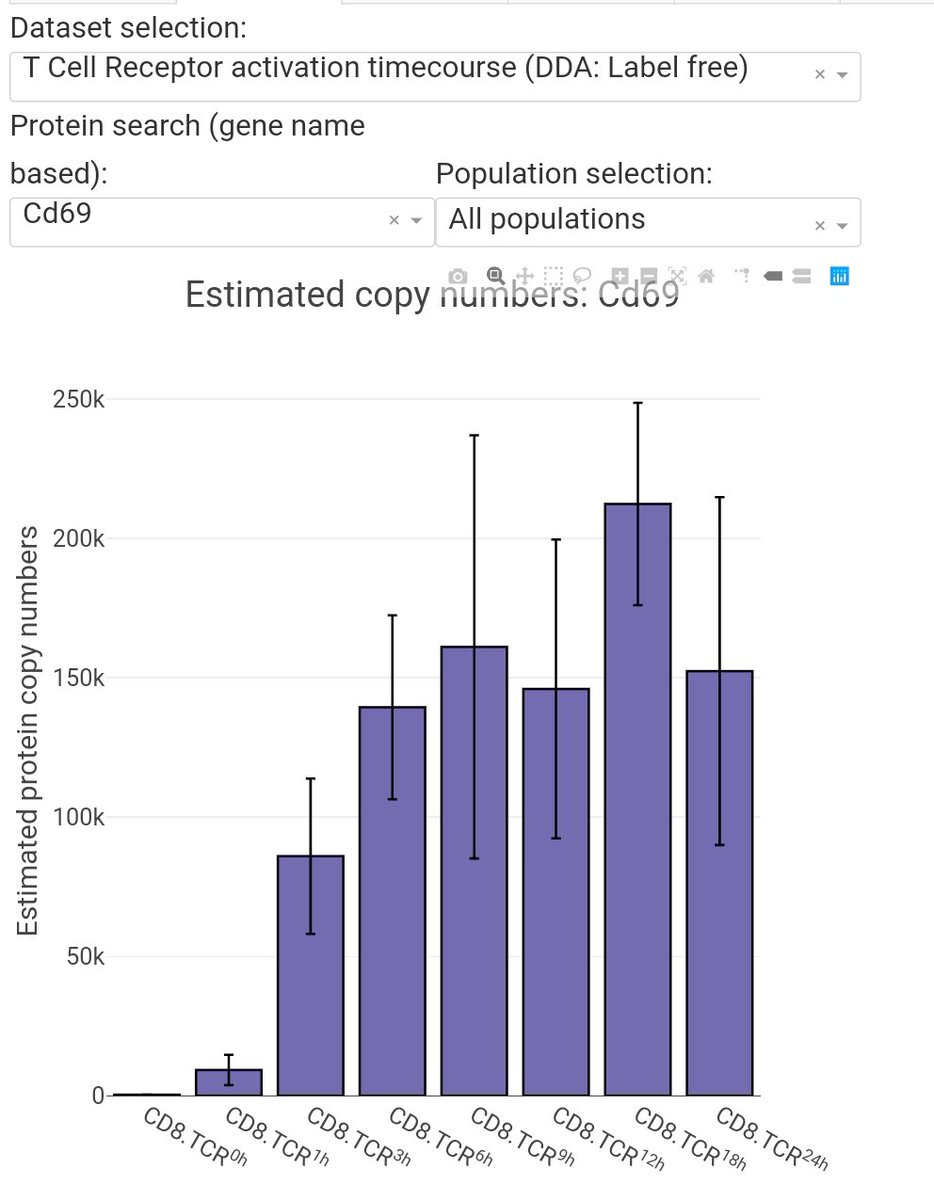
@RyanLab_MBU @MauroCorradoBio We have a TCR activation time course, which might be similar to what you're looking for?
And you can indeed search for any protein of interest on the mouse copy numbers tab after selecting the dataset shown on the screenshot 🤓
The sky is blue on the other side, and we are also there to see it. You can find us at theSiteWhichMustNotBeNamed with the 'ImmPRes' handle.
We will be active in both for the moment, but if you've migrated and want updates new datasets and developments, give us a follow.
A milestone for @ImmPRes_ . We have integrated 20 murine #proteomic datasets covering the adaptive and the innate immune system.
On the human side we have a dataset with hundreds of human peripheral blood neutrophil proteomes also available. #openaccess#datasharing
📢📢 new pre-print and new dataset! For all of you who are fans of the most exciting innate cell (no not macrophages) we have two new neutrophil datasets. The first is looking at murine neutrophil proteomes across the blood, bone marrow and peritoneum. #proteomics#neutrophils
📢📢 New dataset alert. The "PI3Kδ regulated TCR retriggered CTL proteomes" is now live on ImmPRes.
Want to know what inhibition of PI3Kδ does to CTL proteomes when they are TCR activated a second time? You know where to look
#tcells#PI3Kδ#proteomics
📢📢 paper alert. B cell #proteomes from splenic populations. Great work from @MartT_babraham@SalernoFiamma mapping environmental sensors and translation initiation factors defining cellular functions
Data is available on ImmPRes of course! #proteomics
https://t.co/2Ffh51rosy
📢📢 paper alert. B cell #proteomes from splenic populations. Great work from @MartT_babraham@SalernoFiamma mapping environmental sensors and translation initiation factors defining cellular functions
Data is available on ImmPRes of course! #proteomics
https://t.co/2Ffh51rosy
@CeriFielding@NatImmunol@AJ_Brenes@LabDac We have human peripheral blood neutrophils already on, (under the COVID 19 section) and have plans to include a few blood 🩸🩸🩸 based populations in the short run
We are delighted to see this write up now being officially out in @NatImmunol@AJ_Brenes@LabDac
If you were looking for a reference to cite when using #ImmPRes data, this is the one.
https://t.co/dzCl69UZ4O