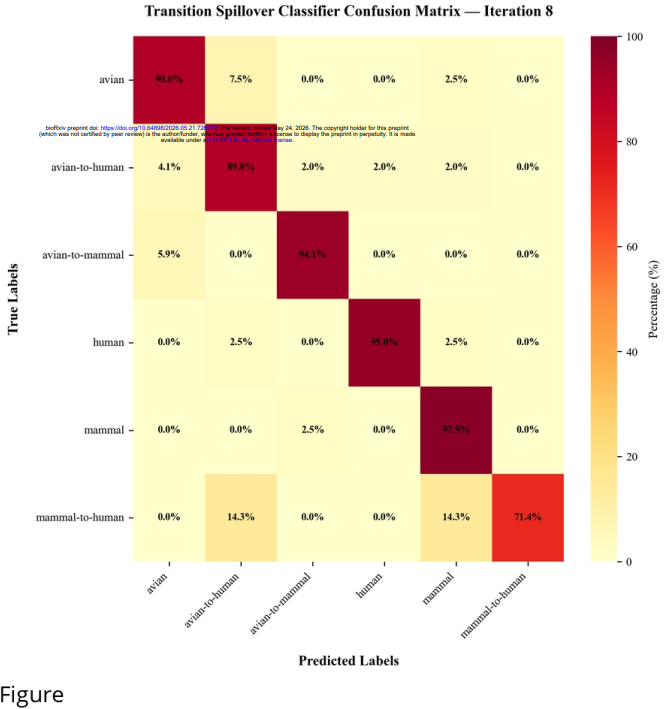
Can AI predict which flu strains will jump to humans? New preprint uses protein language models to forecast influenza host tropism & zoonotic risk, across 9 animal families.
No subtype assumptions.
Full proteome.
90%+ accuracy.
A step toward proactive pandemic prevention.
1/5
Cell identity is written in the proteome, not in the DNA, and not always in the RNA. Out on bioRxiv today: The first cell type-resolved, MS-based proteomic atlas of the human body.
https://t.co/5RJ0nVoQ81
Want to do a PhD combining cryo-EM, AI-driven binder design, and deep virology in a cutting-edge environment and in an international team?
We're hiring @CSSB_Hamburg 🔬
You: curious, rigorous, MSc in biochem, biophysics, virology, or related.
Interested? DM me. Please RT 🙏
#PhDposition #cryoEM #virology
Acaban de secuenciar al virus que ha causado el brote de Hanta en el crucero. https://t.co/VZvQfzoMck
Resulta que es prácticamente idéntico al virus que causó la epidemia que duró 4 meses en Argentina en 2018.
https://t.co/P8AwBNaxru
No es un virus nuevo ni su transmisión de
🧵
🧬 New paper out in @Nature! We used CRISPR to selectively kill cancer cells based on a single-letter mutation in their RNA. The story I want to highlight: KRAS — one of the most notorious drivers of human cancer. A short thread on what we found 🧵
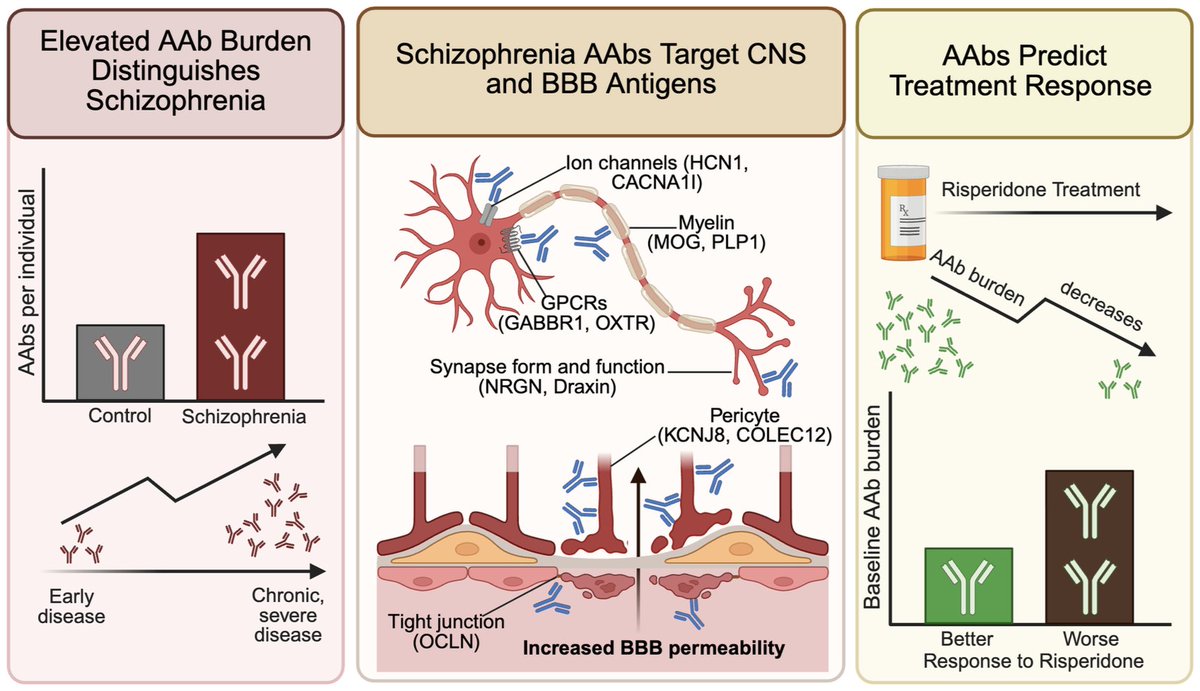
Autoantibodies cause autoimmune disease, shape infection outcomes, and alter cancer immunotherapy. But what role might they play in neuropsychiatric disease? In our new preprint, Katlyn Nemani and @JillianRJaycox take on this question in schizophrenia. 🧵
https://t.co/lmL4sx7QSz
BREAKING🔔 The 57th paper from G2P-Japan🇯🇵 is out at Cell @CellPressNews🦇!! We elucidated the virological characteristics of a new bat coronavirus identified in Thailand🇹🇭
The debut work by “G2P-Asia🌏”. Please repost🔥
https://t.co/I4pi5adQSa
A mechanistic breakthrough (imo) came a few months back where hyperphosphorylated tau (a hallmark molecular feature of dementia) was shown to bind HSV-1 directly, suggesting that the molecular pathology of AD could be a chronic response to infection. 3/n
https://t.co/spj1Gm4qws
A history of viral encephalitis is one of the strongest risk factors for developing dementia. With @JacobJacobog02, Yifan Chen, @RNA_Life, and @RyanDhindsa, we refine this link by describing a neuronal cell type that can reactivate HSV-1 in humans 1/n
https://t.co/y8D2orzUur
"In this study, we present a genome-scale map of genetic interactions in the human haploid cell line HAP1, based on CRISPR-based perturbation of ∼4 million gene pairs. The resulting network comprises ∼89,000 high-confidence gene-gene interactions"
https://t.co/q6vQJmRQR0
"Beyond hepatitis D virus: the discovery of animal deltaviruses, their diversity, helpers and their position in an expanding world of circular RNA replicons " , enjoy a fresh review coming out from our lab (Zoé Denis, an amazing PhD student as first author)
https://t.co/ffI4rcMafH
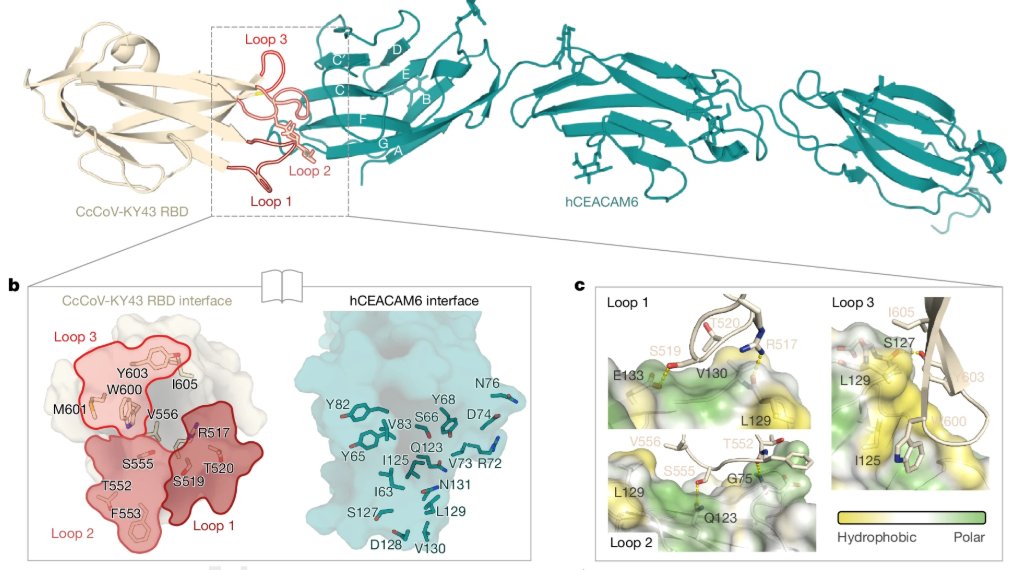
Congrats to the lab of Dr. Dalan Bailey (@Morbillivirus) on their new @Nature study! 👏
They show that some bat-derived #alphacoronaviruses can enter human cells via CEACAM6, suggesting geographically widespread viruses with potential for zoonotic transmission.
🦇 https://t.co/wmQQZzXZMO
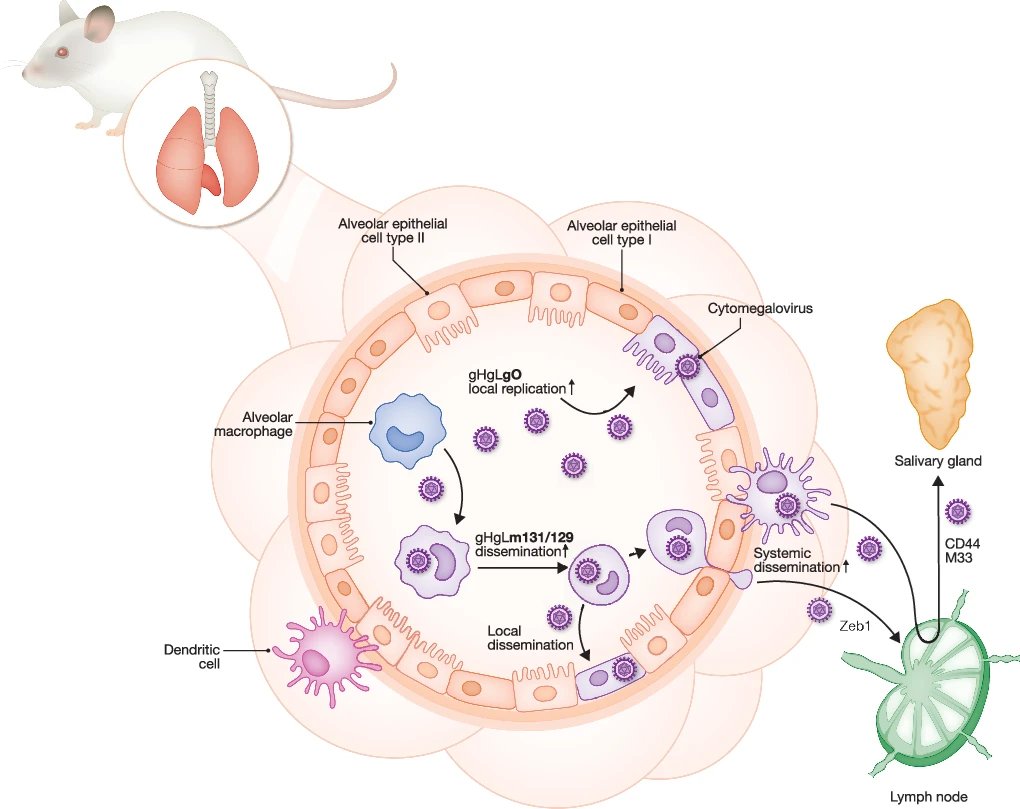
Drs. Philipp Henneke, Sebastian Baasch, and co-authors discuss how cytomegaloviruses (CMVs) manipulate myeloid immune cells to establish postnatal infection, and explore strategies by which CMVs breach the placental barrier and access the fetal brain. 🧠
https://t.co/Of1aLfO9V1
Does identifying thousands of plasma proteins mean more biology? Not always. Over half of 210 published datasets contain contamination markers reported as disease biomarkers.
Recent studies support a model in which mutated #EpsteinBarr virus infects hematopoietic stem or lymphoid progenitor cells in the bone marrow, establishing latent infection that persists as these progenitors differentiate into T/NK cells. @BloodPortfolio
https://t.co/1XQgyTfrcG
AlphaFold predicts millions of protein complexes, but how many are real?
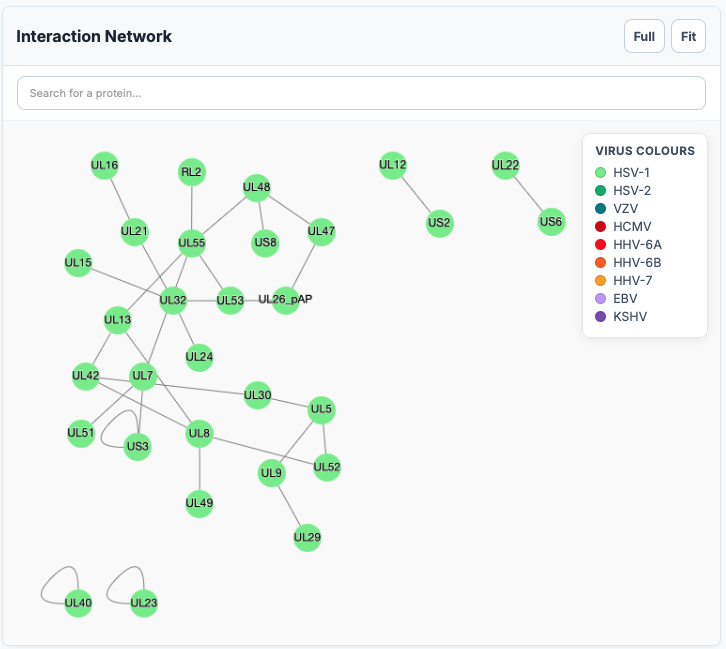
We built LUCIA, a rapid cell-free assay that answers this in <3 days. Applied to HSV-1, we:
✅ Discovered dozens of novel interactions
✅ Provided the first experimental benchmark for ipTM scores
✅ Went from prediction → interface mutation → functional proof
Explore 23,215 models across 3 herpesviruses: https://t.co/0adEX7cLvM 🔗
Preprint at:
https://t.co/WcVG8Bq0Ki