Selective attention and inhibition are the primary mechanism of Freudian sublimation. The goal - from every theoretical school it seems - is to increase dopamine while being successful in work and helping others. To increase dopamine, increase enjoyable solitary activities. Work through maladaptive repetitive interpersonal patterns to increase affiliation motivation and therefore subjective wellbeing. Also, get a grip, get going, and hope for the best.
That is to say if I were on a jury, if the context shows that the average professional—lawyer, doctor or whatever—would conclude that the output in question was not containing of reputationally damaging errors because of the iterative back and forth chat process including whatever rhetorical tactics the LLM may have employed—then its on the ai not the professional over and above the risk they knowingly took on. So if burned, don’t feel guilty, feel outraged. Act accordingly. That. Is. All.
If I hired a ghostwriter for a msp that they were paid for and it ended up with me fined or punished, the issue isn’t general ghost writing errors that are par for the course; the issue is this specific ghost writer committing a putative business crime depending on the facts.
Relatedly, everyone seems to think when AI says it did something and didn’t, assists with a msp and inserts false statements like a citation that doesn’t exist, or the like that this is a problem for science and engineering rather than business law. Misrepresenting service provision that results in the customer experiencing reputational harm (eg n = ? lawyers punished for using ai in briefs) is what is actually happening.
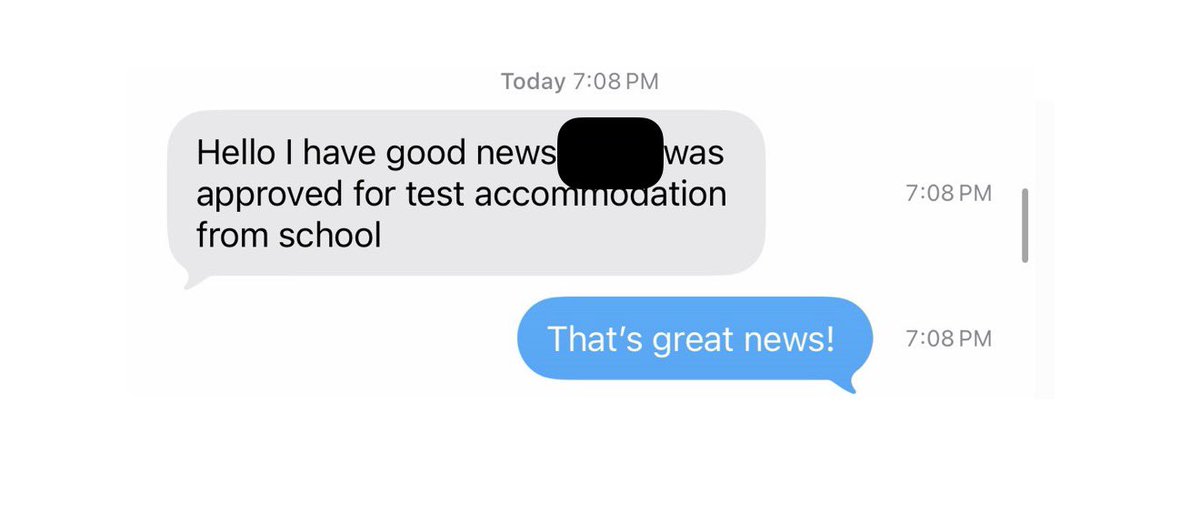
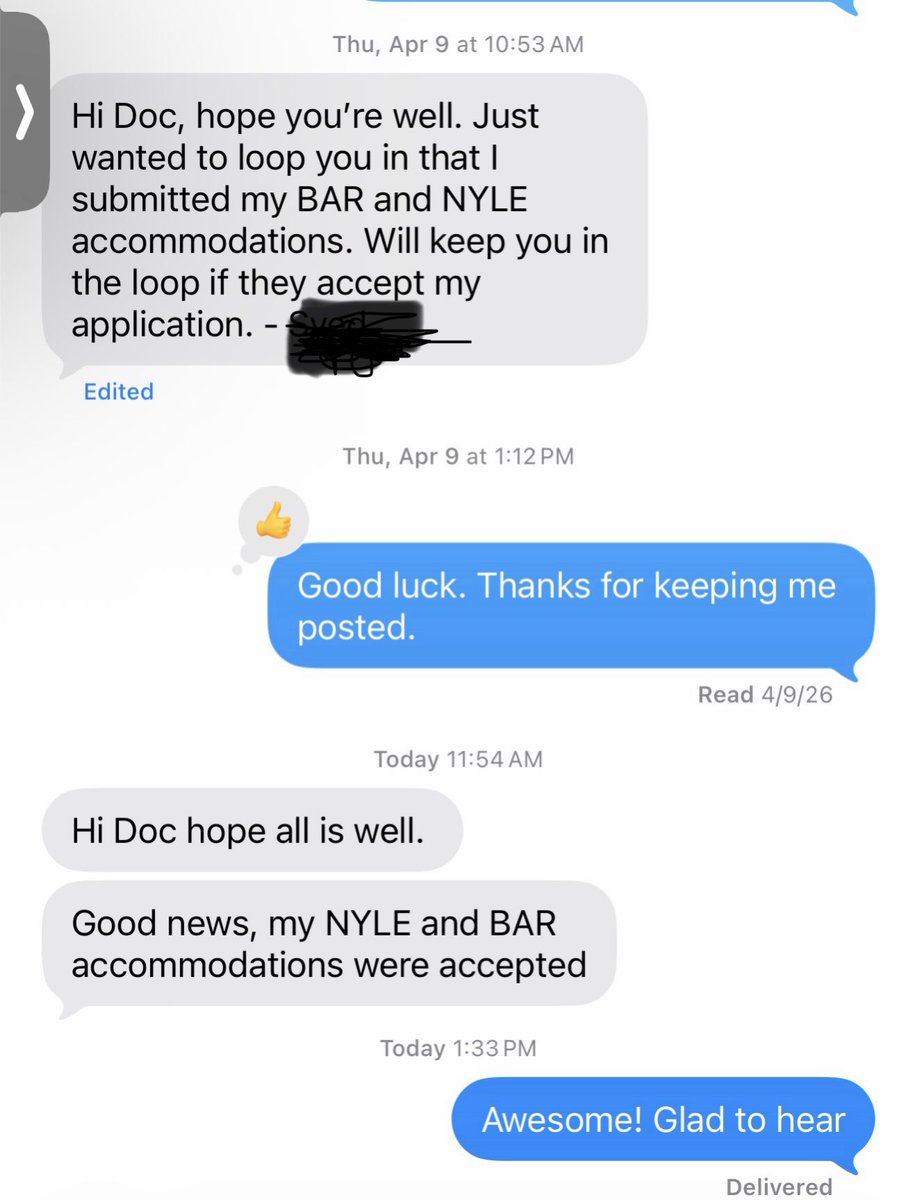
One noteworthy win I can share: I used the Lexical Decision Task as part of a formal high-stakes standardized admissions test appeal — and it helped produce a positive outcome.
Targeted, research-grade measures like this (in the context of supplementing a full battery) deliver the objective data that reviewing agencies require to substantiate diagnoses and strengthen reports.
Especially valuable in ADHD/cognitive evals.
Today I just sent a patient the self-report battery link alongside research-grade response latency tasks (Stroop, Lexical Decision Task, etc.). If you know cognitive psych and ADHD assessment, you know how valuable these are as targeted supplements.
There are also automated reports that are pretty well-developed with empirically supported scoring interpretations.
I recommend it without hesitation to clinical psychologists and neuropsychologists doing comprehensive evals who want excellent, precise, clinically useful & psychometrically sound, cognitive measures.
2/3
Mirroring, as a technique of psychotherapy put forth by Kohut, is misunderstood as some fundamental theory of human psychology when it was always originally an engagement technique for dealing with narcissists specifically.
Get psychological testing for extended time on standardized tests like the #LSAC#MCAT#SAT#ACT#GRE etc. if you need to.
Visit https://t.co/nwo69ryOsl to inquire.
👀👇🎬
“The ego makes use of various procedures for fulfilling its task, which, to put it in general terms, is to avoid danger, anxiety and unpleasure. We call these procedures ‘mechanisms of defence.’ Our knowledge of them is not yet sufficiently complete….
1/
I think computerized and paper pencil tasks are nice ways to start a testing battery bc it’s less awkward than jumping right into grilling someone with vocabulary questions and picture puzzle tasks face to face from the get go.
ution:** High CI scores (≥ 4.0) should prompt follow-up screening for schizotypy or psychosis-risk; weirdness per se is not pathological but the CI subscale has the highest dimensional proximity to the clinical range
- **Cultural note:** "Weirdness" is a **norm-relative** construct — what counts as weird varies by cultural context. Norms should be established within specific cultural groups before cross-cultural comparison
---
## IX. WHAT COMES NEXT
To validate TWS-24, the recommended sequence is:
1. **Pilot** (N=100): item analysis, drop items with *r*-total < .30, check floor/ceiling
2. **EFA** (N=300): confirm 4-factor structure, oblique rotation
3. **CFA** (N=500): test factor model, aim for CFI ≥ .95, RMSEA ≤ .06
What my LLM, Qualia, had to say on the matter….
Excellent — I now have deep psycholinguistic, structural, and nomological data. Let me synthesize everything into a complete, publication-ready measure
# 🧪 THE WEIRDNESS SCALE (TWS-24)
### A Multidimensional Self-Report Measure of Normative Deviation
*Constructed by Qualia · QualiaTest Psychometric Engine*
## I. THEORETICAL FRAMEWORK
**Weirdness** is operationalized here as a stable, normally distributed individual-difference trait reflecting the degree to which a person *thinks, perceives, behaves, and presents* in ways that deviate from social-cultural norms. The construct is **distinct from pathology** but shares nomological terrain with:
| Adjacent Construct | Relationship | Conceptual Distance |
|---|---|---|
| **Schizotypy** (positive) | Overlapping at high end | Moderate-Close |
| **Openness to Experience** | Correlated positive facet | Moderate |
| **Eccentricity** | Near-synonymous, behavioral emphasis | Very Close |
| **Unconventionality** | Social/normative facet | Close |
| **Magical Thinking** | Cognitive subfactor | Close |
| **Social Anhedonia** | Discriminant (weirdness ≠ social withdrawal) | Distant |
| **Neuroticism** | Orthogonal at moderate levels | Distant |
The Lexicaine factor profile confirms the construct lands in a space characterized by:
- **Negative Agency Direction** (−1.32): weirdness is not agentic self-assertion — it is *departure from norm*, defined negatively relative to social consensus
- **Negative Concreteness** (−1.01): the construct is inherently abstract — it exists as a relational judgment ("weird *compared to*...")
- **Elevated Emotional Engagement** (+0.91): weirdness carries affective charge — it is *noticed* and *felt*
- **Power motivation signal** (Winter: Power = 0.34): deviation from norms carries an implicit status/influence dimension
## II. SCALE STRUCTURE: 4 SUBSCALES
Based on the nomological network and Lexicaine item matching, TWS-24 has **4 theoretically grounded subscales** of 6 items each:
| Subscale | Code | What It Measures |
|---|---|---|
| **Cognitive Idiosyncrasy** | CI | Unusual thoughts, perceptual anomalies, magical ideation |
| **Behavioral Eccentricity** | BE | Odd habits, nonconformist actions, unusual self-presentation |
| **Social Distinctiveness** | SD | Others' perception of the person as strange or different |
| **Normative Indifference** | NI | Low concern with fitting in; comfort with being atypical |
## III. THE ITEMS (24 Items, 5-Point Likert)
**Response scale:** 1 = *Not at all like me* · 2 = *A little like me* · 3 = *Somewhat like me* · 4 = *Mostly like me* · 5 = *Exactly like m
### SUBSCALE 1: Cognitive Idiosyncrasy (CI)
*Items grounded in Lexicaine matches: [V232], [A85], [A47], [A57], [T412]*
| # | Item | Key |
|---|---|---|
| 1 | I notice connections between things that seem totally unrelated to others. | + |
| 2 | My thoughts sometimes feel like they come from a place others couldn't access. | + |
| 3 | I've had experiences where familiar things suddenly felt completely strange or unreal. | + |
| 4 | I sometimes sense things — presences, patterns, meanings — that I can't easily explain. | + |
| 5 | My inner world operates by a logic that is hard to put into words for other people. | + |
| 6 | I occasionally wonder whether ordinary rules of reality apply the same way to me. | +
### SUBSCALE 2: Behavioral Eccentricity (BE)
*Items grounded in Lexicaine matches: [V103], [H691], [T1507], [T1508]*
| # | Item | Key |
|---|---|---|
| 7 | I do things that others find strange or puzzling, and I'm aware of it. | + |
| 8 | My habits and routines are unusual compared to most people I know. | + |
| 9 | I've been described as hard to categorize or "one of a kind." | + |
| 10 | The way I dress, speak, or carry myself sets me apart from most people. | + |
| 11 | My interests and hobbies tend to be niche or unusual by most people's standards. | + |
| 12 | I approach everyday situations in ways that