Since the night of 28th May, there has been no electricity supply in Village Sabada, Thana Pailani, Block Jaspura, District Banda, Uttar Pradesh, and the entire nearby area is affected.
People are suffering badly in this extreme heat, and no proper update is being given.
⬛️ The Cultural Foundations of Psychological Safety
Introduction
🔷 An organization cannot mandate psychological safety; it can only enable it - or systematically prevent it. If psychological safety is to emerge seriously as a social property of the system, rather than as a well‑intentioned façade, organizational culture must meet a set of foundational conditions. These conditions go far beyond leadership tools, training programs, or value statements. They reflect deep cultural choices that become visible in everyday behavior. What follows is not a checklist, but a description of the cultural foundations required for psychological safety to take root and persist.
1⃣ Truth Over Harmony
The most critical prerequisite for psychological safety is a culture in which truth is valued more highly than harmony. In many organizations, the opposite is true: loyalty, consensus, and appearing “professional” outweigh the articulation of uncomfortable realities. Conflict is avoided, tensions are smoothed over, and deviations are seen as disruption.
📢 Psychological safety requires people to say what they see, not just what is acceptable.
Cultures that foster it understand that friction, dissent, and irritation are not signs of dysfunction, but signals of complexity. They distinguish clearly between personal rejection and substantive disagreement, and they do not socially sanction the latter.
📢 Where truth carries personal risk, psychological safety remains illusory.
2⃣ Separating the Person from the Contribution
Psychological safety cannot develop where people are equated with their ideas, mistakes, or opinions. In many cultures, criticism of an idea is experienced as an attack on identity; errors are interpreted as character flaws; dissent is framed as disloyalty.
Cultures that enable psychological safety establish a different norm: people have dignity; contributions have quality - and the two must be kept separate. This separation reduces identity defense and creates a social space where learning becomes possible.
It shows up concretely in:
🔹 how feedback is phrased,
🔹 how mistakes are discussed,
🔹 whether the organization asks “Who caused this?” or “What in the system made this possible?”
📢 This is not a soft skill, but a core cultural standard.
3⃣ Power That Is Acknowledged, Not Denied Psychological safety does not emerge in the absence of power, but in contexts where power is used consciously and responsibly. Cultures that claim “hierarchy doesn’t matter here” often produce greater insecurity, because power continues to operate - only implicitly.
Psychologically safe cultures acknowledge that:
🔹status exists,
🔹leaders carry disproportionate influence, and
🔹words, reactions, and silences from above matter more.
The decisive question is not whether power exists, but how it is exercised. In enabling cultures, leaders use authority to reduce fear through clarity, fairness, and predictability, not through control or avoidance. Psychological safety requires mature power cultures, not only flat hierarchies.
4⃣ Learning Above Being Right - Including for Leaders
Cultures that support psychological safety are fundamentally learning‑oriented. This does not mean abandoning accountability or commitment. It means that learning is structurally prioritized over defending positions.
This becomes visible in whether:
🔹assumptions may be challenged,
🔹course corrections are seen as competence rather than weakness,
🔹leaders can integrate criticism without losing authority.
📢 If leaders must always be right, others cannot be honest.
Psychological safety requires a culture in which not knowing, being wrong, and revising one’s view are legitimate states - even, and especially, for those in leadership roles.
5⃣ Errors as System Information, Not Moral Failure
No organization can foster psychological safety while treating errors primarily as individual moral shortcomings. As long as mistakes are moralized, personalized, or made career‑relevant, openness remains irrational - regardless of official messaging.
Cultures that truly enable psychological safety distinguish clearly between:
🔹learning errors in complex situations, and
🔹negligence or willful misconduct.
Only then will people speak openly about mistakes without fearing social or professional harm. This distinction is a cultural competence, not a procedural detail, and it becomes most visible under pressure, scrutiny, or public attention.
📢 Psychological safety arises where errors are understood as information about the system, not deficiencies of individuals.
6⃣ Dissent That Matters, Not Just Exists
Many organizations say, “You can speak up here.”
Psychological safety begins only where dissent also has impact.
Cultures that foster it:
🔹actively invite opposing views,
🔹protect minority opinions from social isolation,
🔹prevent symbolic or premature consensus.
Not every idea is adopted — but every serious contribution is heard, examined, and dealt with explicitly. The key experience is that speaking up does not disappear into the void. Without this experience, openness fades quickly.
7⃣ Consistency Between Aspiration and Reality
Psychological safety is extraordinarily sensitive to inconsistency. When values, leadership principles, or initiatives promise one thing while everyday behavior signals another, trust erodes faster than through open rigidity. Enabling cultures therefore display high everyday coherence:
🔹What actually happens when someone raises a critical issue?
🔹How does the system respond to bad news?
🔹Which stories circulate - about courage or compliance?
Psychological safety is not created through communication, but through lived consequences in daily practice, especially when conditions are difficult.
Conclusion
🔷 Psychological safety is not a quality of “good people.” It is the outcome of cultural choices that reveal themselves in everyday behavior - most clearly under pressure.
#PsychologicalSafety #OrganizationalCulture #Leadership #CultureTransformation #LearningOrganization #GrowthMindset #LeadershipDevelopment #SystemsThinking #PowerAndLeadership #ErrorCulture #DecisionMaking #DigitalTransformation #Responsibility #Trust ✨
🦋 @Khulood_Almani@AkwyZ@TamaraMcCleary@MaryRich78@rwang0@timo_vi@drsharwood@DrHolzwarth@HelenBevan@pierrecappelli@JimHarris@jenstirrup@GlenGilmore@subare@Ronald_vanLoon@enilev@Scobleizer@AndrewYNg@YuHelenYu
Image by @thomas_dettling | @grok
I MIGHT GET SUED FOR THIS, BUT YOLO:
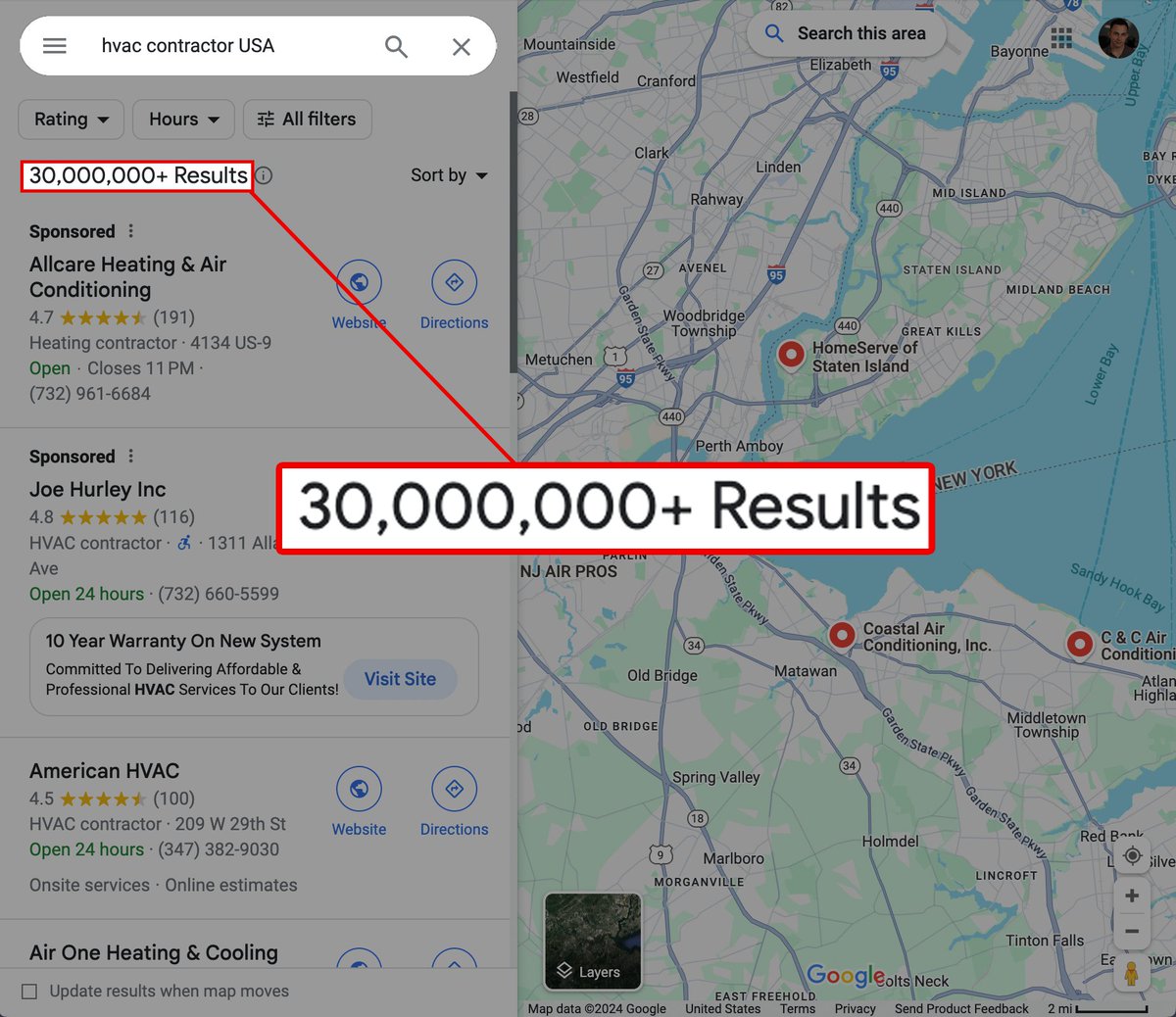
I just found a way to scrape over 200 million local businesses..
You can use this for cold email, cold calling or even door knocking..
And craziest part — IT'S COMPLETELY FREE.
Comment "G" and I'll send it to you. (24h only)
I built 5 Claude Code protocols that are now running my faceless YouTube business:
• They find ideas
• Write scripts
• Even post videos
And I just described all of them in this 10-page PDF.
I could charge $20 for it...
But because it's Sunday, it's yours for FREE.
RT & Comment "PDF" and I'll DM it to you.
(Must be following)





![darshal_'s tweet photo. Complete Digital Marketing Courses (Free for First 3500 People)
𝗣𝗮𝗶𝗱 𝗖𝗼𝘂𝗿𝘀𝗲 𝗙𝗥𝗘𝗘 (PART - 5)
🎯 SEO
🎯 Copywriting
🎯 Email Marketing
🎯 YouTube
🎯 Facebook Ads
🎯 Twitter
🎯 Quora
🎯 Content Creation
🎯 Analytics
🎯 Complete Digital Marketing
(72 Hours only)
Cost About - $450
To get:
1. Follow @darshal_ [MUST]
2. Like & Retweet to get DM
3. Reply "All"](https://pbs.twimg.com/media/HFMSyQ4bgAAjGK8.jpg)


