Brain/computer interfaces like @neuralink are the future.
Today @IrenaCronin and I interview @merongribetz who built one.
Join us at 4 p.m. Pacific.
https://t.co/oQxfpot0bh
@MassDevice just featured our promising clinical results showing significant improvement in patients with severe depression using our minimally invasive BCI: https://t.co/OiRk83jS9A…
Grateful to our co-founder Dr. @DarinDougherty for leading the trial, to our dedicated @Innercosmosbci team and investors for their support, and above all, to the patients who make this advancement possible.
Big thank you to the MassDevice team for covering this important milestone.
They tried everything - including TMS the leading treatment for treatment resistant depression.
Now, after 36 months in our trial, our patients are finally getting better.
New data from our depression study is out now: https://t.co/UOfVjbw649
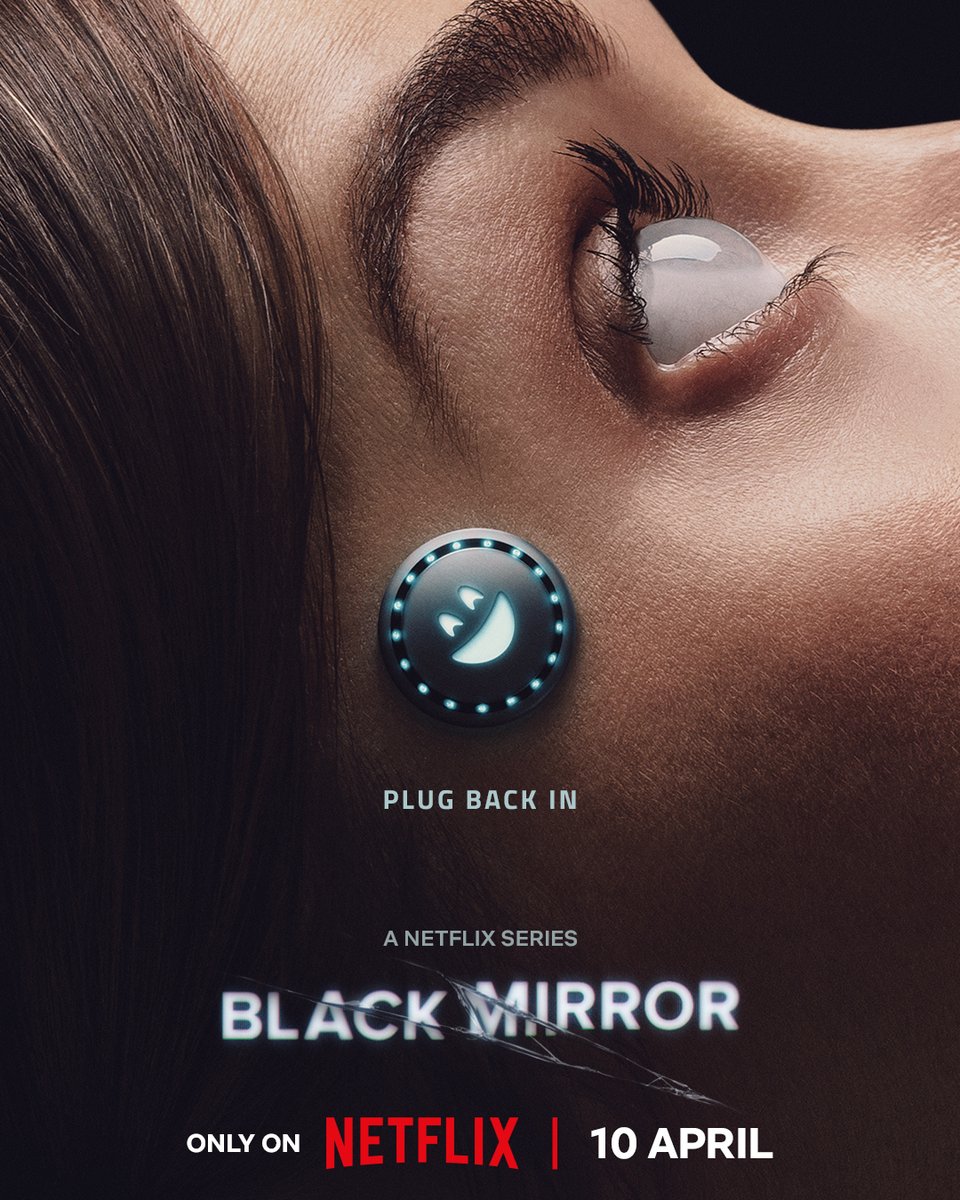
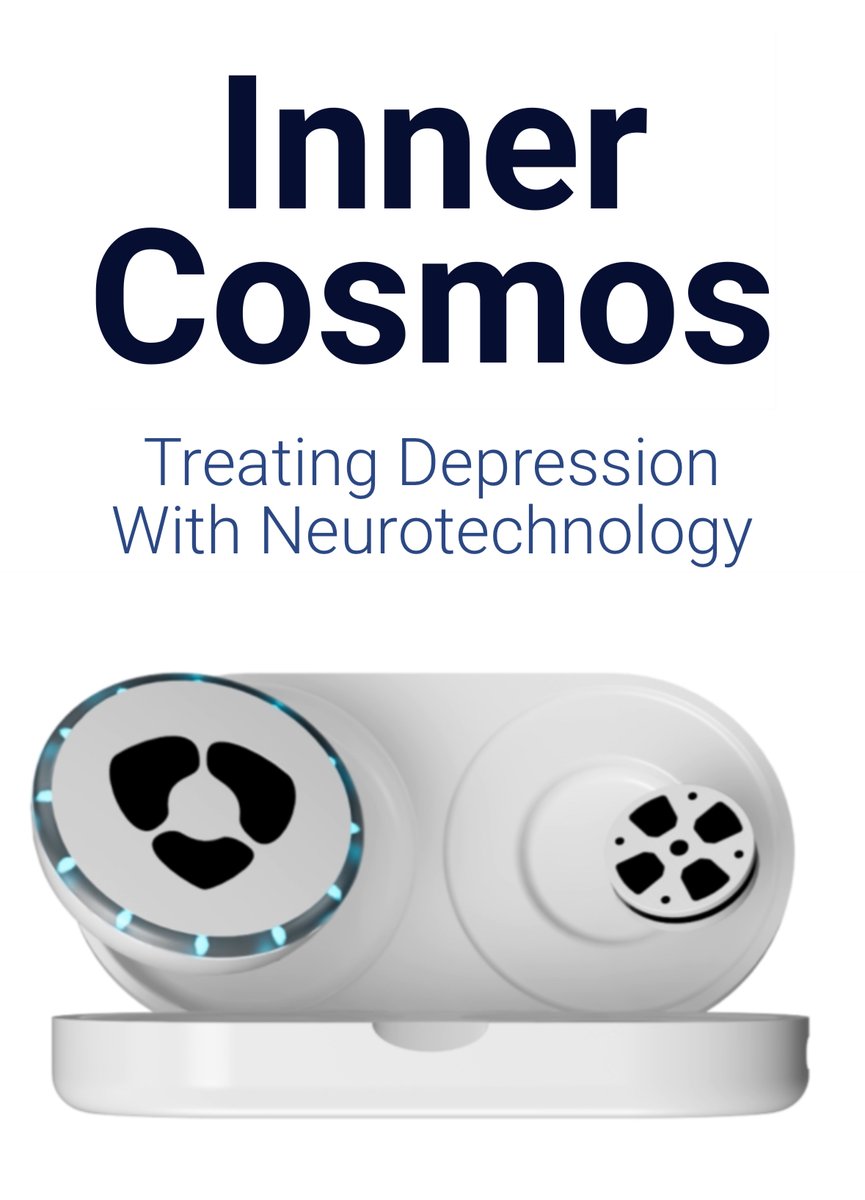
When Black Mirror features a BCI device that looks suspiciously like ours 👀
Dystopian fiction is fun, but in the real world we’re using Brain-Computer Interfaces to restore people’s hope and cognition, not erase them.
Minimally invasive. Patient-first. Designed to heal and augment, not control.
Learn more at: https://t.co/HosdTrZ66p
@blackmirror@netflix@Innercosmosbci
For our free newsletter this week, we focus on AI in digital identity verification.
@IrenaCronin and I write this newsletter every week.
AI is transforming digital identity verification by replacing outdated manual checks with real-time, automated systems. Using technologies like computer vision, liveness detection, and machine learning, AI enables fast, secure, and scalable verification across banking, healthcare, government, and remote work.
It improves fraud detection, speeds up onboarding, and enhances user experience, while reducing compliance costs. However, it also raises concerns around bias, privacy, and deepfake threats—issues that demand ethical implementation and transparency.
As digital identity becomes central to global trust infrastructure, AI will play a critical role in making verification faster, safer, and more reliable.
The link to subscribe and to read the newsletter is in the reply below.
Last week, we had the honor of sharing the stage at @NextMedHealth, a gathering of the boldest minds pushing the boundaries of medicine and technology.
I spoke about how Inner Cosmos is using BCI to advance the treatment of depression, and the progress we’re already seeing with patients in our clinical trial.
It was a powerful moment to reflect on how far we’ve come and why we believe this is the inflection point for BCI in psychiatry.
Huge thanks to @daniel_kraft and the NextMed team for creating a space where ideas like these can be shared and take flight.
Grateful to our team, our investors, our clinical partners, and especially the patients who trust us to build something that can truly impact lives.
A big day.
Our journey to improve Cognitive and Mental health care is featured in Forbes. (Link in the first comment)
I’m Grateful for this powerfully-deep and dimensionally broad look at how Inner Cosmos is reshaping depression treatment.
At the heart of it is a patient’s journey to remission after 18 years of severe depression - made possible by our minimally embedded digital pill.
Thank you @naveen101 for the detailed and balanced reporting, and to everyone who shared their voice.
Deep gratitude to our team and investors who make this work possible.
Thrilled to have participated in the @hellotmrc Global Summit 2025 in Paris! It was an honor to share the stage with visionary leaders:
Carolina Aguilar, CEO and Co-Founder of INBRAIN Neuroelectronics, a health-tech company developing neuroelectronic therapies using graphene brain interfaces to decode neural signals and improve lives. I appreciated your grounded wisdom from Medtronic on what is possible today versus in the future.
Simon Turner, Partner at @SofinnovaVC Partners, whose extensive experience in digital medicine investments, combined with his dynamic futurist energy, was fun to engage with!
Special thanks to our moderator, Cecilia MoSze Tham, Co-Founder and CEO of Futurity Systems, for steering such an engaging conversation—balancing grounded possibilities today with radical future visions and ethical ideas.
And a special thank you to Jack Fox-Male, whose warmth and generosity in setting everything up made it all flow perfectly.
This summit brought together some of the most inspiring innovators and forward-thinking investors, all shaping the future of deep tech.
Excited for the connections made and the future collaborations ahead!
Excited to be speaking at the @hellotmrc Global Summit in Paris on March 13-14, 2025!
I’ll be sharing how @Innercosmosbci is using minimally invasive BCI to advance depression care and how neurotechnology will become an integrated treatment for mental and cognitive healthcare.
Another first look: brain-computer interface helps depression sufferers.
You've seen @elonmusk's company @neuralink "jack in" a human being. But that's just one approach to brain-computer interfaces, here's another from @merongribetz's new company https://t.co/h1sLFPhzkt
"A digital pill for the mind," they call it.
What is it? It's a little device that gets surgically implanted under the surface of your skin, but does not touch the brain, like the Neuralink device does, which makes it a far safer procedure for a patient to undergo.
Also a lot cheaper to do (Meron told me it should be less than $10,000 to have done, where a Neuralink-style surgery has risk of death and costs far more).
Fun, I recorded this in my house and my autistic son joined the conversation in the background at one point.
You might remember Meron from his previous company, Meta Augmented Reality (which he started long before Mark Zuckerberg got the idea for renaming Facebook to).
InnerCosmos comes at the brain quite differently than the Neuralink, which puts thousands of "wires" directly touching the brain. This focuses stimulation on a specific part of the brain, which controls depression in humans.
Meron lays out how this kind of device can be expanded to other kinds of brain-computer interfaces to do other things and shows how the device's AI-heavy software can be upgraded to do more in the future.
Hope it helps many people deal with their depression in a far better way than the drug therapies used today.
Wow. BCI’s are coming fast!
@merongribetz just implanted his third BCI device in a human (brain/computer interface) and he will be on with me live tonight to talk about it.
Very different than @neuralink — the device from https://t.co/UANvlqvRdS gets embedded under the skin of people suffering from severe depression. In the future the company will work on other cognitive disorders.
He will answer your questions tonight at 6 p.m. Pacific. Join us for this live discussion. Register here: https://t.co/DAlzHRp2K2
If you missed this discussion last night about brain/computer interfaces with @merongribetz you are missing the most interesting of the 1,000+ spaces I have been on.
I'm happy to introduce Eric (pseudonym) to you today. He has overcome 17 years of severe, treatment-resistant depression and is now in full remission.
https://t.co/6w0klW3Bar