A new New Zealand online outlet dedicated to open inquiry and the pursuit of knowledge, and edited by a consortium of leading Kiwi scientists and scholars.
OpenInquiry was founded in the wake of the mobbing of the Listener 7. We seek to defend rationalism, science, and academic freedom in a politically-disinterested way, in the tradition of Mike Corballis. Profiles of some of our editors are on our website, https://t.co/N3pEskf9fP
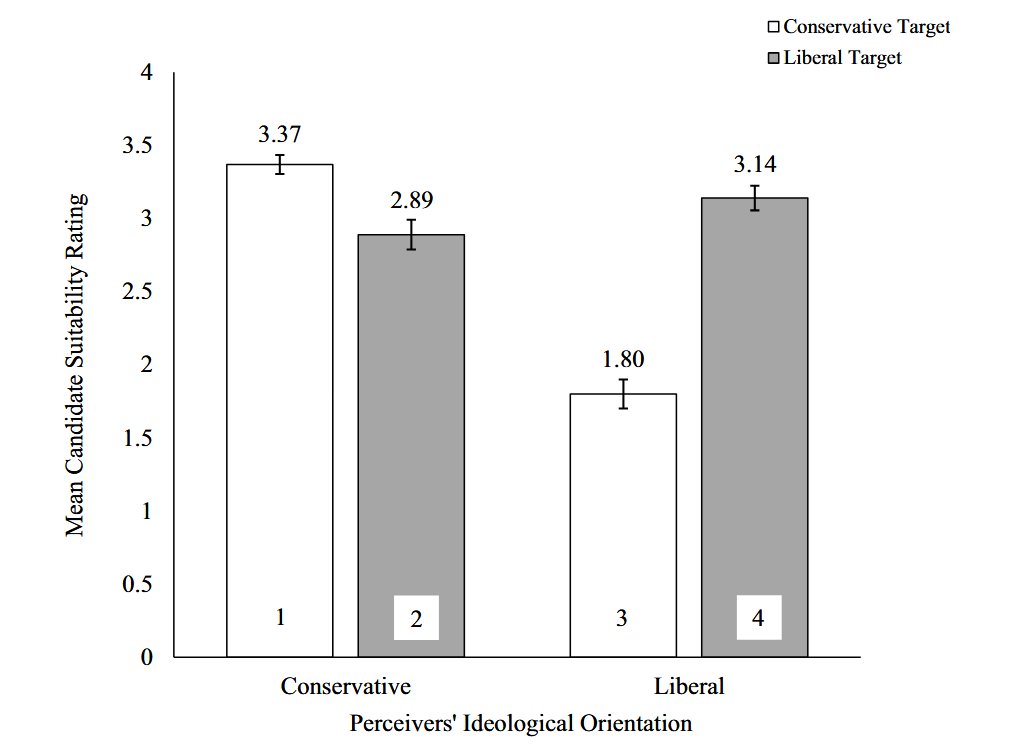
This is most clear in actual job-candidate appraisal, for which conservatives showed much less bias.
"Although negative job recommendations may seem tepid... politically motivated indirect aggression might lead not only to retarding career opportunities and advancement but could also lead to losing one’s livelihood. This study focused on the hiring stage of employment"
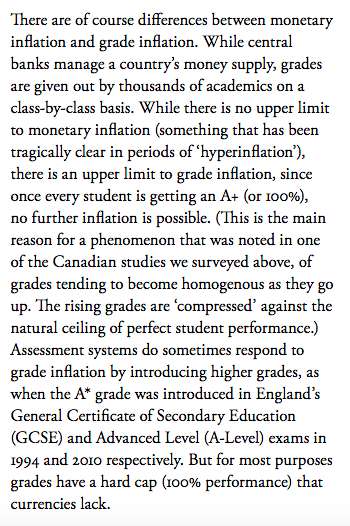
@trudgeon666 It looks like the dean there is using the term for PC reasons, which is obviously dumb, but grade compression is a real phenomenon, caused by the natural upper ceiling that grading systems have. From my report:
Maher:
Have college students changed in recent years? Do they have trouble keeping up with the amount of reading that used to be required?
Me:
The answer is yes, they have declined. I can see it in my own class, which I've taught for 22 years. So we had a meeting with the dean at Harvard because grades keep getting higher. 80% of students get an A. The average GPA is 3.8 out of 4.
Maher:
Grade inflation, they call it.
Me:
No, they don't. The dean said, we prefer to call it "grade compression."
Maher:
Oh (with a hand clap, head roll back, and sigh).
Me:
Maybe our students are just getting better and better. So I knew this was malarkey, so I actually had the data, because I've been giving kind of the same exam for 22 years, and it's multiple choice, so it's subjective. So there's a constant benchmark, and performance has been going down, at least in my class. 10 percentage points from 2004 to now. So the standards have been going down. Students do read less. I think they spend more time on extracurriculars than on classwork, and I just know that...
Maher:
Scrolling, scrolling.
Me:
That's when they're in the room, yes.
Maher:
I have to tell you, they're not going to read your book, not because it's not great. It is. It's a book. They won't read this. I read a letter that a student wrote to the Crimson, saying you can get out of this university without having fully read a whole book.
Me:
That might be true. Now I've got to say, there are a lot of really brilliant, really studious Harvard students, like intimidatingly smart. But there's also a lot for whom it's kind of a luxury cruise, and academics is just one of the activities. So our dean, to be fair, our dean has noticed, and she has changed the guidelines going forward. She's actually told students--you wouldn't think this would be a shock--academics is your first priority. Now the fact that she had to say that, this is a kind of a radical new policy. She said that it's okay for professors to take attendance in lectures, which I'm going to start doing. That it's okay to ban electronic devices, which I might start doing. Because we actually know that taking notes leads to better memory than using a screen. Just a principle of cognitive psychology, when you have to think hard about something, when you've got to process its meaning, when it's not just a bunch of words, then you actually remember better. Just the process of writing puts it in your brain. But a lot of them have screens. There are electronic note-taking devices, but they're not as fluid and easy as the old-fashioned pen and paper. So my teaching assistants are going to hate this, because we're going to have to schlep handouts to class every time.
Full Overtime episode: https://t.co/8X7k4TLtNl
@RealTimers@billmaher
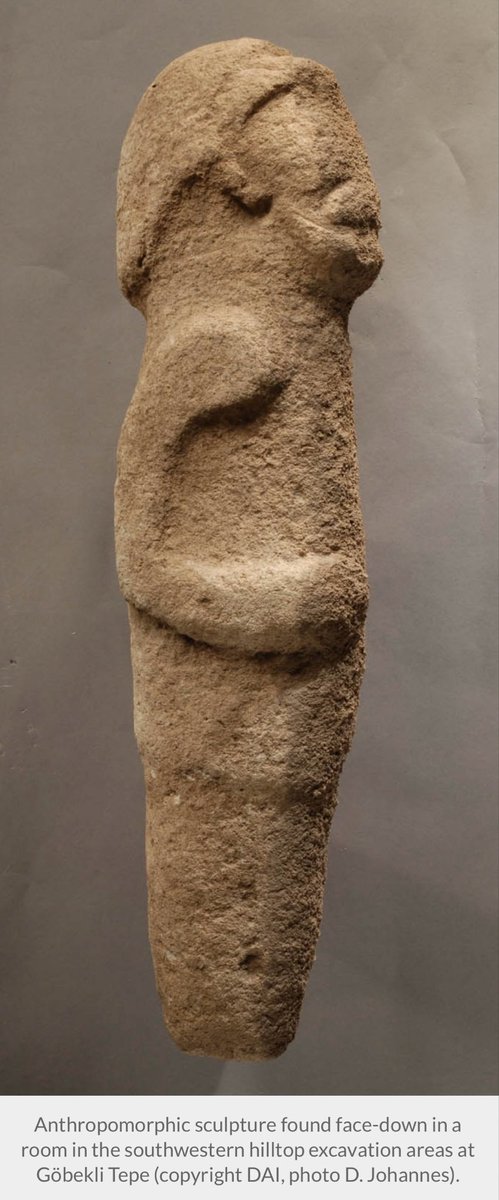
Say "Hi!" to a new (well: old, but you get the idea) human sculpture at #GobekliTepe.
Well fitting to another, apparently quite related find and type:
https://t.co/KBU1akhlQu
Has anyone currently teaching at a NZ university set the same, or a very similar, assessment for many years now? Ideally it would be something that lends itself to objective marking, like a factual test
I agree 99.2% - the only thing I'd change is to put "kind" in quotation marks. It's not actually that kind to lower standards and give students a lower-quality educational experience
@Kleisthenes2 We can apply for extensions with no need to provide a reason because *life can be complicated*. That definitely wasn't the case when I was an undergrad 20years ago!
If we had a more accurate grading system, good students would feel less pressure to do this kind of thing to stand out. Instead they would be able to just focus on their studies, safe in the knowledge that a high grade actually meant something.
@peterboghossian@HeatherEHeying@HPluckrose@JamesADamore Again, none of this is new, and the colleges and Universities do abdolutely nothing to discourage it.
Here's a video of a University of Missuori professor asking for "some muscle" to stop a journalist from filming a protest
AI models, driven by market incentives, might be increasingly designed to flatter users. The human desire for positive validation could create reinforcement loops that shape AI behavior, often prioritizing feel-good responses over robust debate and honest critique.
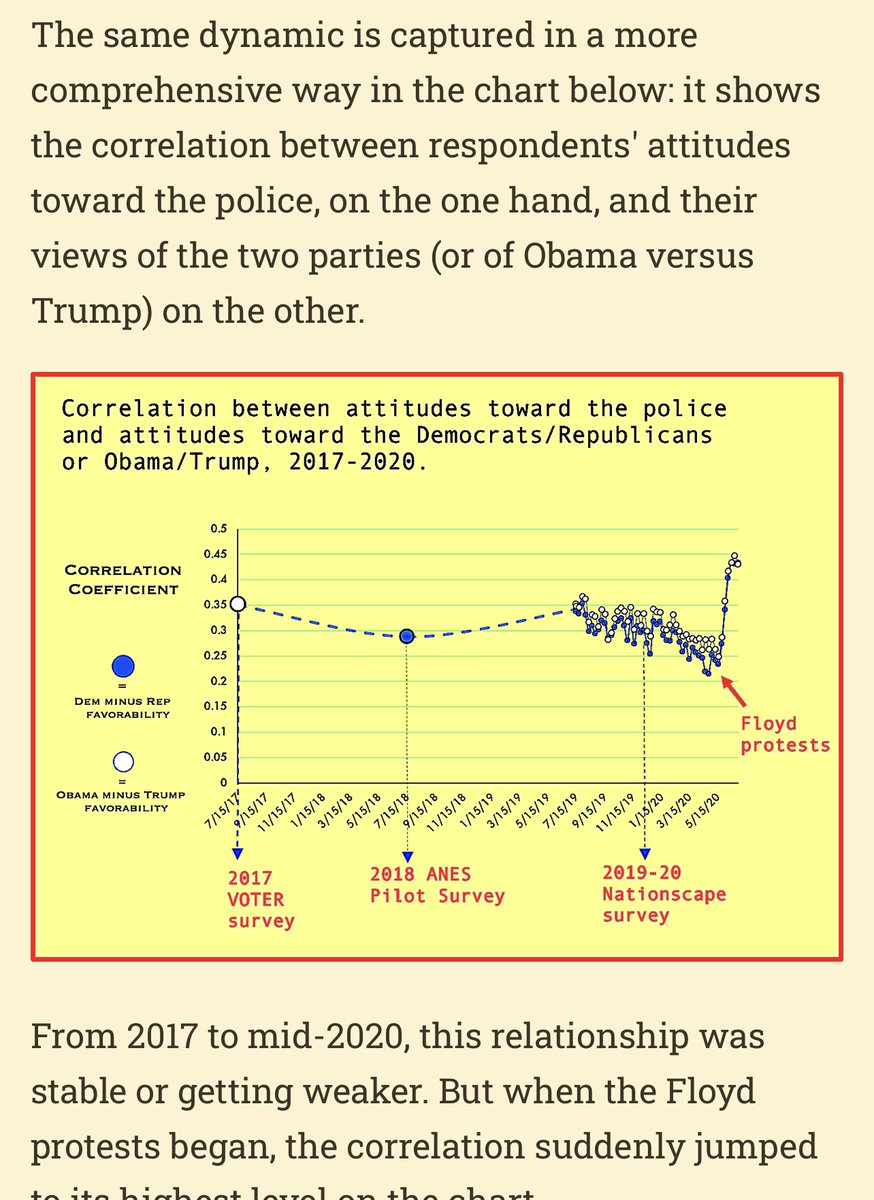
@whstancil On this literal question - defunding the police is a highly SES-loaded question that is, relative to partisanship, most unpopular with Hispanics and working class-white people. This is pretty consistent with what actually happened (though Defund was a symptom of a broader thing).
The murder of Charlie Kirk is part of a disturbing rise in political violence that threatens to hollow out our public life.
A free society relies on the premise that people can speak out without fear or humiliation.
No more political violence.
Ok, hear me out. In Hawaiian, Mahalo means thanks. In Taiwan’s indigenous Saisiyat (賽夏), ma'alo' means thanks & it comes from the root word 'alo' meaning blessing. In Hawaiian, it’s Aloha (good wishes)
📷 Austronesian Languages (Cognation & Comparison) FB
22. then we should look at whether colder countries in general have more words for snow, ice and so on. So I hope future research presses on more along the lines of that 2016 paper - and beyond the likes of Whorf and Pullum
This is a side of archaeology people don’t normally see. When you find any type of artefact, it needs to be cleaned and sorted. Lithics, bones, ceramics, everything. On most projects this happens every afternoon and depending on the scale, everyone takes part.