From the Mashayikh who are alive, I haven’t benefited from anyone more so, and quite frankly it’s not even close, than Shaykh Musa Jibril حفظه الله تعالى. He’s a man who lives what he preaches from A to Z, and apart from his heart soothing reminders, you learn from how he treats people. His actions and his mannerisms with the Muslims are his biggest Da’wah, may Allah preserve him, and smite every tongue who slanders him.
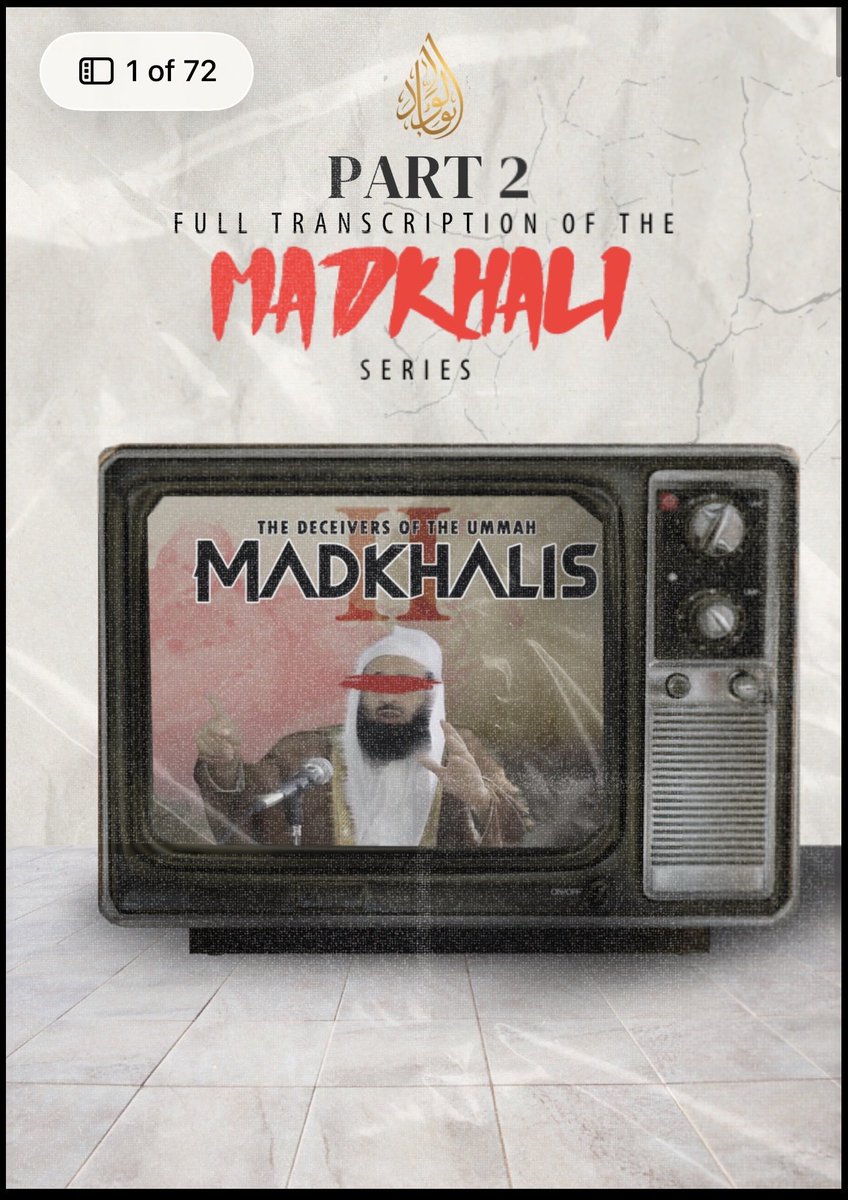
The Madkhali crowd, whilst loud and obnoxious, largely comprise of intellectual deprived and unemployed bums who have nothing going on in life, apart from being full time Zanadiqa. This leads them to think spam calling someone whose age qualifies them to be their great grandfather, is a good use of their time, whilst they giggle like little girls. That’s without even mentioning the Rafidhi esq Taqiyyah that was employed.
Not to mention the “gotcha” athar that was used (already refuted) — not a single one of the Madkhali scholars has used this as proof for saying Legislating Laws is “Kufran Duna Kufr.” That itself should tell you everything you need to know. Being academically deprived, leads one to believe that silence or indifference, or a belittling “I don’t know” in the face of their intellectual handicap and attempted deception, is somehow a victory for them. It’s cringe and pathetic, which is just another day in the office for the Madākhilah, may Allah cleanse the Ummah from their filth.
This is the same kid who lives in Astoria, Brooklyn who doesn’t even know the difference between Marfoo3 and Majroor, such that he made an elementary level Arabic grammar in the title of his book?
And he got someone to write his book because he can’t speak Arabic and doesn’t know basic Arabic grammar?
There’s more,
See the next reply under this for more
When I was influenced by the Madkhali Dawah over a decade ago, one of the biggest red flag was this exact topic that after Allah allowed me to comprehend, leaving this mental illness became an obvious thing for me.
The Shaykh may Allah preserve him, due to language barrier, wasn’t denying the statement of Ibn Abbas رضي الله عنه, rather its application in the scenario of changing the laws of the land. The Shaykh said that the statement of Ibn Abbas is applicable when the Khalifah rules by Sharia, and a judge does not rule by what Allah revealed in a specific matter. When the Shaykh said it’s not authentic, he clarifies in this audio itself that it’s not authentic in application to ruling by man made laws.
The caller on the line deceptively says that when 'Abd al-Rahman ibn Zayd ibn Aslam رحمه الله and Ibn Taymiyyah رحمه الله in one of his statements pertaining to this issue said that the one who rules by another law, while believing it to be from Allah, has committed Kufr equates to anyone otherwise ruling by man made laws not committing kufr, is wrong and applying deception on his part.
Nowhere did those scholars say the latter addition which he added, that ruling by man made laws is not kufr. That’s the caller’s own assumption which he’s putting out.
InshahAllah now I will explain the difference.
Example 1:
If X did not fast in Ramadan, X is a sinner. But if X does not fast in Ramadan while believing he is not obligated to fast without any Shar’i excuse, then he is a kafir. So the Istihlal of not fasting made him a kafir here, while simply not fasting out of laziness and desires was a sin. This is how the “istihlal” part comes into play in not judging by what Allah revealed.
Example 2:
X fasts in Ramadan, but for other than Allah. X fasts for the sake of Ganesh, the elephant idol; X is now a Mushrik for committing Shirk, since nobody can have any share in something that solely belongs to or is done for Allah. This is similar to one legislating a law other than the law of Allah, such as man made laws contradicting the Shariah.
The lack of comprehension between the general umbrella term of “not judging by what Allah revealed” vs a specific “ruling by other than what Allah revealed/ man made laws” is a gateway to zandaqah.
He has books responding to Murji'ah and Rāfidah, and on principles of Takfīr and on the sciences of Hadīth. He is a Muhaddith in every sense of the word. An 'Ālim in Ilal al-Hadīth.
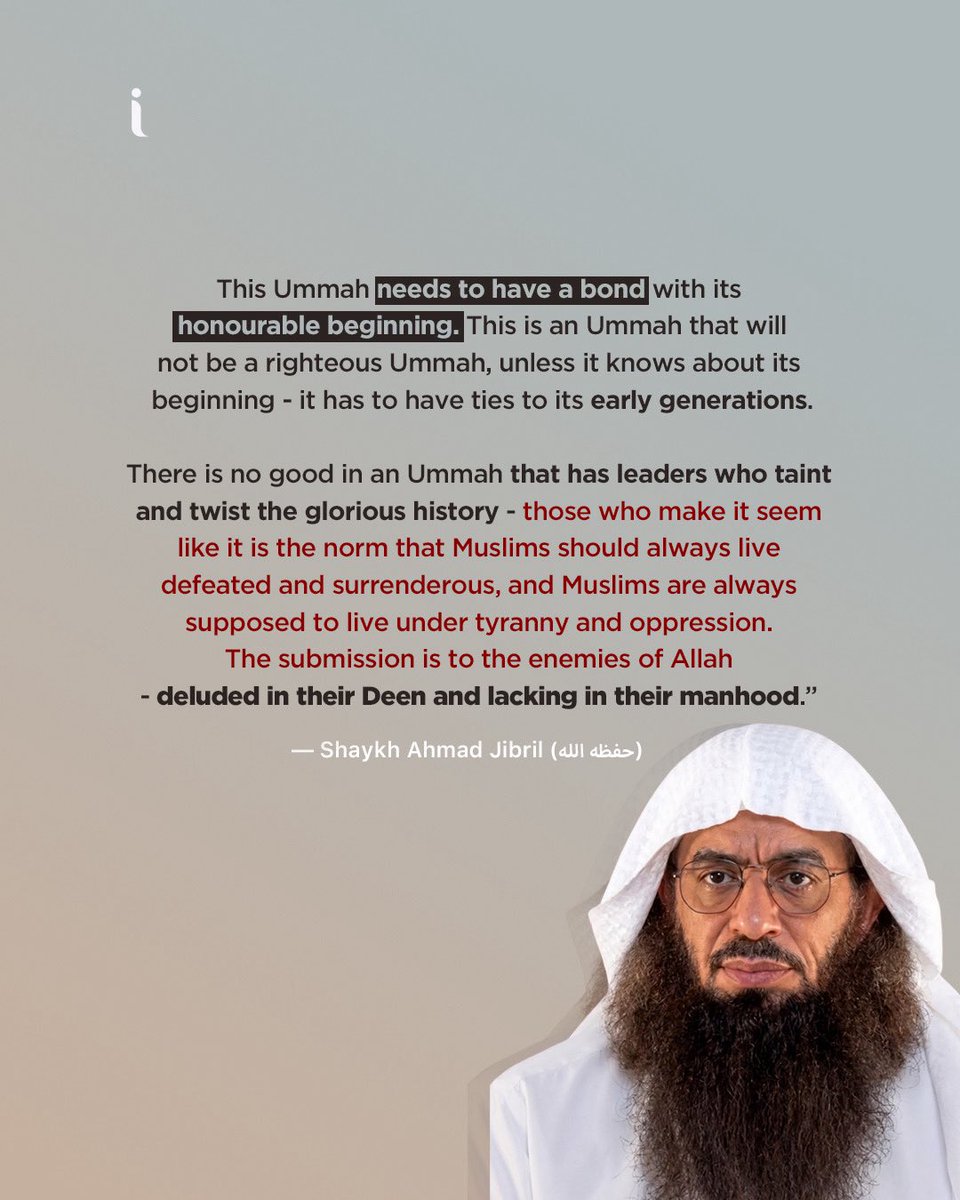
— Shaykh Ahmad Jibril
#Free_Nasr_Alfhd#ناصر_الفهد
#free_nasr_alfhd#ناصر_الفهد
I often find myself remembering the special Shuyūkh whom I loved for the sake of Allah, never letting a single day pass without making duʿāʾ for them repeatedly throughout the day. Foremost among those I mention after my parents is ḥabīb al-qalb, al-Shaykh al-Imām Nāṣir al-Fahd — فكَّ اللهُ بالعزِّ أسره.
I reminisce about the days of daʿwah we spent together, recalling the statement of Imām Aḥmad — may Allah have mercy on him — “إذا مات أصدقاء الرجل ذلّ” — “When a man’s friends die, he becomes humbled.” At times, I find myself extending its meaning in my heart: when a man’s friends die or are imprisoned, he becomes humbled.
Over the years, I often longed to read those letters again, though I had assumed they had all been confiscated during repeated raids in which digital devices, papers, and entire collections of belongings were seized. In many of those raids, they would even leaf through every book in my library, leaving the shelves emptied and the volumes scattered across the floor.
Weeks ago, however, I was overwhelmed with joy to discover that I had once printed one of his letters and used it as a bookmark in a notebook.
The Shaykh — فكَّ اللهُ بالعزِّ أسره — went out of his way to send me several letters from prison, written with ink made from a mixture of coffee and water, and a straw used as a pen. The first of those letters was the one attached here, sent after he learned of my release from prison. It contained words of encouragement and support the like of which, at that time, I had heard from no one outside my own family. For that alone, apart from his many other favors, I don't believe I could ever make enough duʿāʾ for him.
Having no close companion besides my father — may Allah grant him a long life filled with righteous deeds — I often find comfort in the companionship of Shaykh Nāṣir — فكَّ اللهُ بالعزِّ أسره — by returning to his books during quiet moments. I keep them within arm’s reach wherever I sit; they bring solace to my heart, and I never tire of reading them.
Rediscovering this letter brought even greater comfort, especially at a time like this.
May Allah keep him and his brothers steadfast upon the ḥaqq, hasten their release with honour, and grant us the joy of seeing them as imams leading this ummah sooner rather than later.
May Allah humiliate those who imprisoned them and those who rejoice in their imprisonment and oppression, and reunite us with them in al-Firdaws.
Ahmad Musa Jibril
4 Dhul-Ḥijjah 1447 AH
✍️**A Letter from Shaykh Nāṣir — فكَّ اللهُ بالعزِّ أسره —**
From Nasser bin Hamad Al-Fahd to the two noble brothers and virtuous Shaykhs, Musa bin Jibril and his son Ahmad, may Allah protect them from every evil and grant them success in every good. Amin.
Salāmun ʿalaykum wa raḥmatullāhi wa barakātuh. To proceed:
Indeed, I praise Allah to you, the One besides whom there is no deity, and I ask Him, Glorified be He, that this letter reaches you while you are in goodness and well-being. News of you reached me through (******) — may Allah grant him success — and I was pleased with the state you are now upon [i.e., the da‘wah you are engaged in], and praise belongs to Allah.
Whatever has befallen you of trials is the path of the prophets and the righteous reformers.
I ask Allah, Glorified be He, to make what has afflicted you an elevation in your ranks and an expiation for your sins, and to make us and you steadfast upon the firm word in this worldly life and the Hereafter.
And I give you glad tidings that we, along with all the brothers in the prisons, are in a tremendous blessing that reminds us of the statement of Shaykh al-Islam — may Allah have mercy on him — during his final imprisonment in the Citadel: “If I were given the equivalent of this Citadel filled with gold, it would not equal for me the gratitude I owe for this blessing.”
Convey my greetings to all the brothers with you, and may Allah preserve you.
Peace be upon you, and the mercy and blessings of Allah.
Al-Ha’ir Prison,
20 Rabīʿ al-Thānī 1434 AH
#free_nasr_alfhd#ناصر_الفهد
I often find myself remembering the special Shuyūkh whom I loved for the sake of Allah, never letting a single day pass without making duʿāʾ for them repeatedly throughout the day. Foremost among those I mention after my parents is ḥabīb al-qalb, al-Shaykh al-Imām Nāṣir al-Fahd — فكَّ اللهُ بالعزِّ أسره.
I reminisce about the days of daʿwah we spent together, recalling the statement of Imām Aḥmad — may Allah have mercy on him — “إذا مات أصدقاء الرجل ذلّ” — “When a man’s friends die, he becomes humbled.” At times, I find myself extending its meaning in my heart: when a man’s friends die or are imprisoned, he becomes humbled.
Over the years, I often longed to read those letters again, though I had assumed they had all been confiscated during repeated raids in which digital devices, papers, and entire collections of belongings were seized. In many of those raids, they would even leaf through every book in my library, leaving the shelves emptied and the volumes scattered across the floor.
Weeks ago, however, I was overwhelmed with joy to discover that I had once printed one of his letters and used it as a bookmark in a notebook.
The Shaykh — فكَّ اللهُ بالعزِّ أسره — went out of his way to send me several letters from prison, written with ink made from a mixture of coffee and water, and a straw used as a pen. The first of those letters was the one attached here, sent after he learned of my release from prison. It contained words of encouragement and support the like of which, at that time, I had heard from no one outside my own family. For that alone, apart from his many other favors, I don't believe I could ever make enough duʿāʾ for him.
Having no close companion besides my father — may Allah grant him a long life filled with righteous deeds — I often find comfort in the companionship of Shaykh Nāṣir — فكَّ اللهُ بالعزِّ أسره — by returning to his books during quiet moments. I keep them within arm’s reach wherever I sit; they bring solace to my heart, and I never tire of reading them.
Rediscovering this letter brought even greater comfort, especially at a time like this.
May Allah keep him and his brothers steadfast upon the ḥaqq, hasten their release with honour, and grant us the joy of seeing them as imams leading this ummah sooner rather than later.
May Allah humiliate those who imprisoned them and those who rejoice in their imprisonment and oppression, and reunite us with them in al-Firdaws.
Ahmad Musa Jibril
4 Dhul-Ḥijjah 1447 AH
✍️**A Letter from Shaykh Nāṣir — فكَّ اللهُ بالعزِّ أسره —**
From Nasser bin Hamad Al-Fahd to the two noble brothers and virtuous Shaykhs, Musa bin Jibril and his son Ahmad, may Allah protect them from every evil and grant them success in every good. Amin.
Salāmun ʿalaykum wa raḥmatullāhi wa barakātuh. To proceed:
Indeed, I praise Allah to you, the One besides whom there is no deity, and I ask Him, Glorified be He, that this letter reaches you while you are in goodness and well-being. News of you reached me through (******) — may Allah grant him success — and I was pleased with the state you are now upon [i.e., the da‘wah you are engaged in], and praise belongs to Allah.
Whatever has befallen you of trials is the path of the prophets and the righteous reformers.
I ask Allah, Glorified be He, to make what has afflicted you an elevation in your ranks and an expiation for your sins, and to make us and you steadfast upon the firm word in this worldly life and the Hereafter.
And I give you glad tidings that we, along with all the brothers in the prisons, are in a tremendous blessing that reminds us of the statement of Shaykh al-Islam — may Allah have mercy on him — during his final imprisonment in the Citadel: “If I were given the equivalent of this Citadel filled with gold, it would not equal for me the gratitude I owe for this blessing.”
Convey my greetings to all the brothers with you, and may Allah preserve you.
Peace be upon you, and the mercy and blessings of Allah.
Al-Ha’ir Prison,
20 Rabīʿ al-Thānī 1434 AH
You'll find that most of the ppl who slander the noble Shaykh Ahmad Jibrīl حفظه الله to be the most ignorant in regards to his vast qualifications, his sacrifice & struggle in the cause of Allāh, & they've never even listened to a single series of his before opening their mouths.
When Fāṭimah (رضي الله عنها) was suffering from the hardship of the hand mill and grinding, she sought to ask the Prophet ﷺ for a maid-servant to help her. Instead, he taught her to say Allāhu Akbar 34 times, Alḥamdulillāh 33 times, and Subḥān Allāh 33 times before sleeping, which would be better for her than a servant.
‘Ali (رضي الله عنه) added, “I have never failed to recite it ever since." Somebody asked, "Even on the night of the battle of Siffin?" He said, "Even on the night of the battle of Siffin.” (Sahih al-Bukhari 5362)
From the profound benefits of this prescribed remembrance is that it grants a person strength that surpasses and compensates for the need of any external, physical assistance. I was admonished by ‘Ali (رضي الله عنه) to persist in this remembrance and never abandon it, not for a single night. And all praise is due to Allah.
-Shaykh Musa Jibril (حفظه الله تعالى)
Al-Fudayl ibn Iyad, may Allah have mercy on him, said:
“If you see oppressors taking revenge on other oppressors, stand and observe in astonishment.”
When you see the greatest enemies of Islam in this era, those with the most blood of Muslims on their hands, turning against one another and weakening themselves through their conflicts, let your heart be soothed and turn to Allah in gratitude.
Sometimes, Allah soothes hearts by letting oppressors and tyrants orchestrate their own downfall through their conflicts and wars.
“We make the wrongdoers destructive to one another because of their misdeeds.” (6:129)
The parties involved in this war, the US along with their awliyā’, the leaders of the Gulf, as well as the Rafidah and the Yahud, are enemies, equally guilty and steeped in crimes against Islam and Muslims. Their hands are stained with the blood of countless innocents, and to true believers who grasp the depth of their kufr and the enormity of their crimes, each is as condemned as the next, none surpassing the other in guilt. They vied ruthlessly in their oppression and in betraying the Muslims.
Malik ibn Dinar, may Allah have mercy on him, said:
"I read in the revealed Books of Allah that Allah, the Exalted, said: ‘I destroy My enemies through My enemies, and then I destroy them through My awliyā’.’"
May Allah prolong their strife so that they are preoccupied with one another and weakened, and may He raise to leadership on this earth the Muslims they betrayed, oppressed, and harmed, so that Tawheed may be established across the earth!
May Allah safeguard every innocent Muslim wherever this conflict occurs!
Ahmad Musa Jibril
2 Shawwal 1447 AH