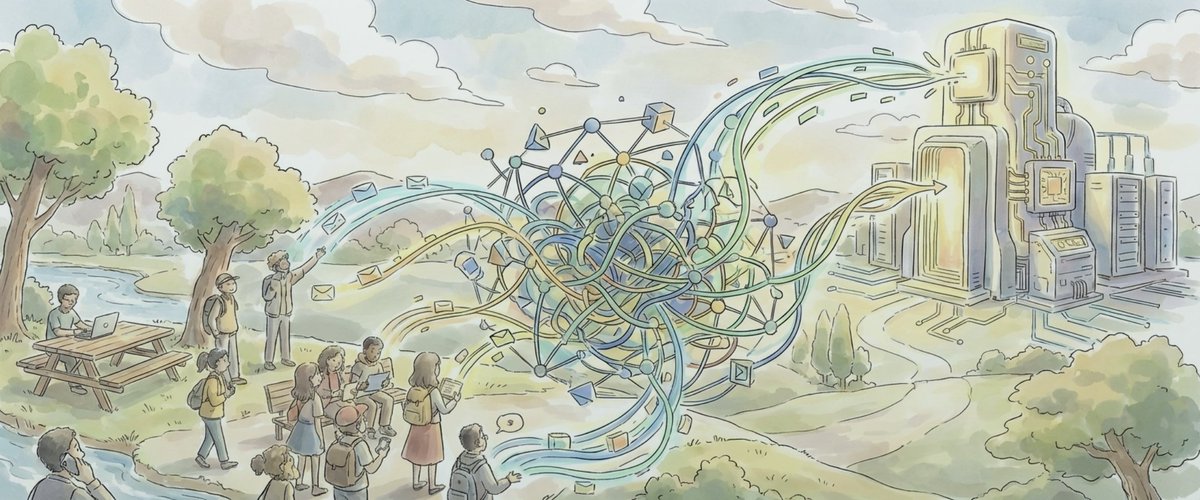
I truly wish I was on the self-host scene earlier than I was. It’s absolutely the best decision I’ve ever made in my life.
Most user groups are online, but I’d rather meet irl.
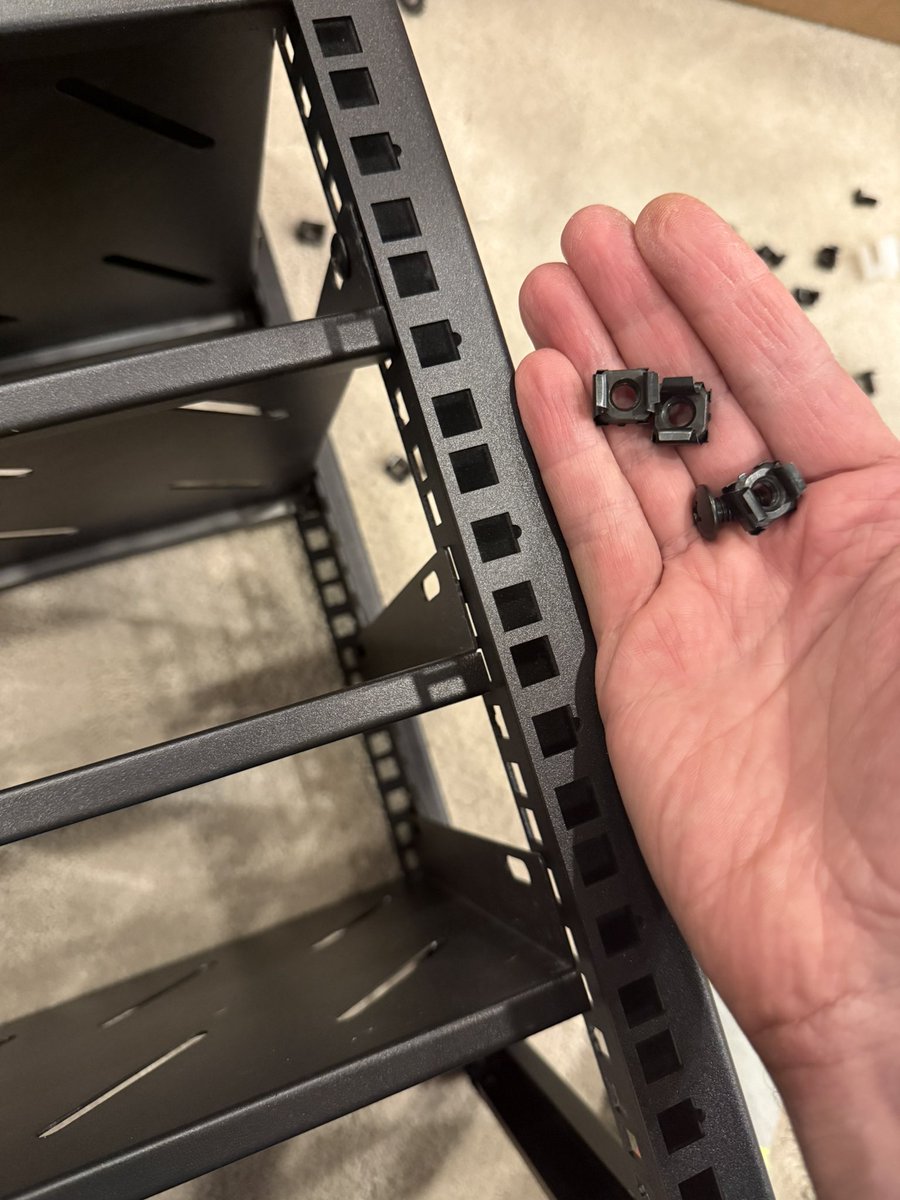
As for the cost, never underestimate a Goodwill Core2Duo and $20 managed switch.
@elonmusk For as intelligent as folks like Elon, Wong, et al are, they can't seriously think the people buy this load of sh... I mean line of reasoning. If this is an honest take by these people, they must know the world population is in for a major event that kills most of us.
14 prototypes. 1 mission.
Horizon One Mini brings enterprise-grade server design to SMB IT, homelabs & edge deployments—without the rack footprint. 🖥️📦
Manufacturing is wrapping up and we're planning launch in ~1 month.
#SelfHosting#EdgeComputing
We can just decide that our world should be different. That modern JavaScript can be made with #nobuild. That SaaS services can move out of the cloud. That Apple is not the end of history.
In 2023, we spent $3,934,099 on AWS + other hosting. In 2026, our hosting + support bill is down to ~$1m/year due to the cloud exit. Even including all the hardware buying, we will already have saved ~$4m by the end of this year. And going forward, it's ~$3m/yr in savings 🤑
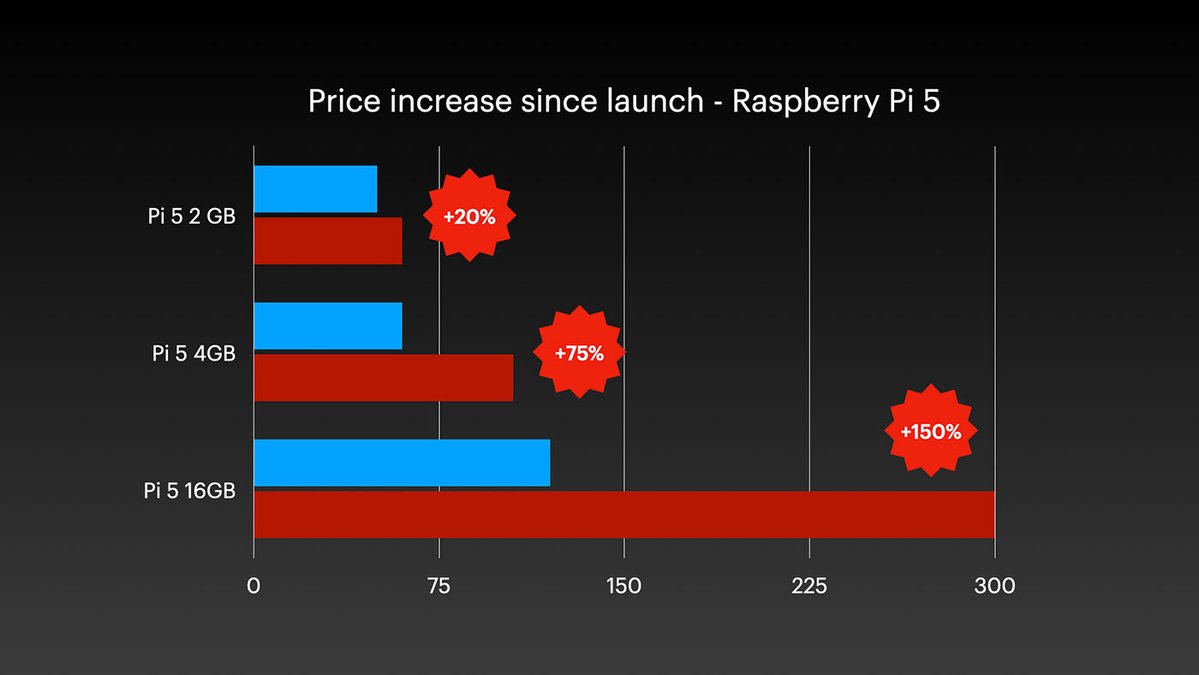
Yesterday's news about the Pi 5 16GB being $299.99 was *not* an April Fool's joke (sadly)—DRAM pricing is killing the hobby SBC market, and it's not just Raspberry Pi that's affected.
I wrote more on my blog, here: https://t.co/Q0HPeX9sXe
There's never been a better time to build your own router—a practice which the FCC will hopefully not *also* ban for US #homelab consumers :)
https://t.co/sCKxpaJZlb
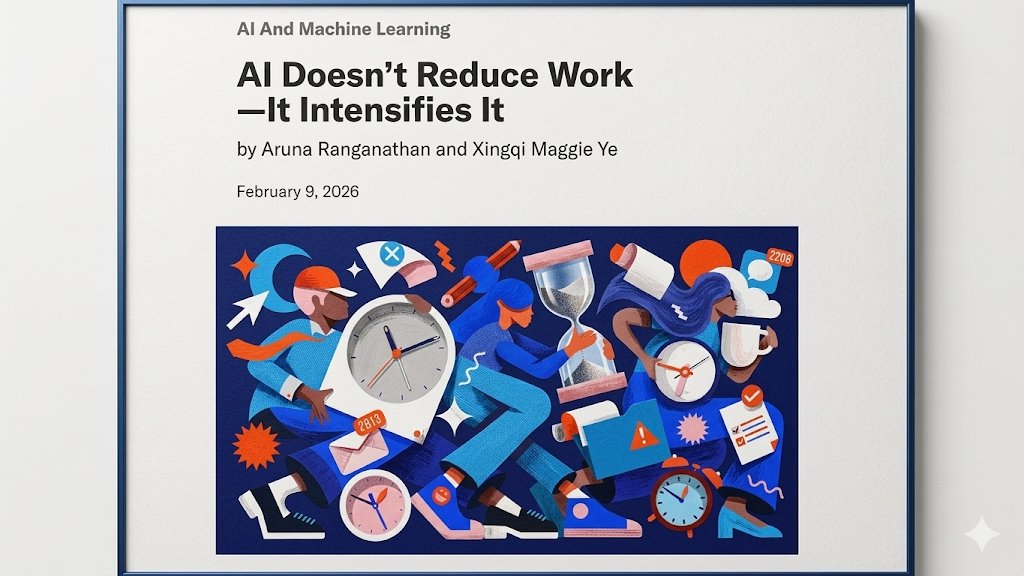
🚨BREAKING: Berkeley researchers spent 8 months inside a tech company watching how employees actually use AI.
The promise was simple: AI will save you time. Do less. Work smarter.
The opposite happened.
Workers didn't use AI to finish early and go home. They used it to take on more. More tasks. More projects. More hours. Nobody asked them to. They did it to themselves.
The researchers sat inside the company two days a week for 8 months. They watched 200 employees in real time. They tracked work channels. They conducted 40+ interviews across engineering, product, design, and operations.
Here's what they found. AI made everything feel faster, so people filled every gap. They sent prompts during lunch. Before meetings. Late at night. The natural stopping points in the workday disappeared. People ran multiple AI agents in the background while writing code, drafting documents, and sitting in meetings simultaneously.
It felt like momentum. It felt productive. But when they stepped back, they described feeling stretched, busier, and completely unable to disconnect.
83% said AI increased their workload. Not decreased. Increased.
62% of associates and 61% of entry-level workers reported burnout. Only 38% of executives felt the same strain. The people doing the actual work absorbed the damage while leadership celebrated the productivity numbers.
Then came the trap nobody saw coming. When one person uses AI to take on extra work, everyone else feels like they're falling behind. So the whole team speeds up. Nobody formally raises expectations. But the new pace quietly becomes the default. What AI made possible became what was expected.
The researchers gave it a name: workload creep. It looks like productivity at first. Then it becomes the new baseline. Then it becomes burnout.
AI was supposed to give you your time back. Instead it's eating more of it. And the worst part? You're doing it to yourself. Voluntarily.
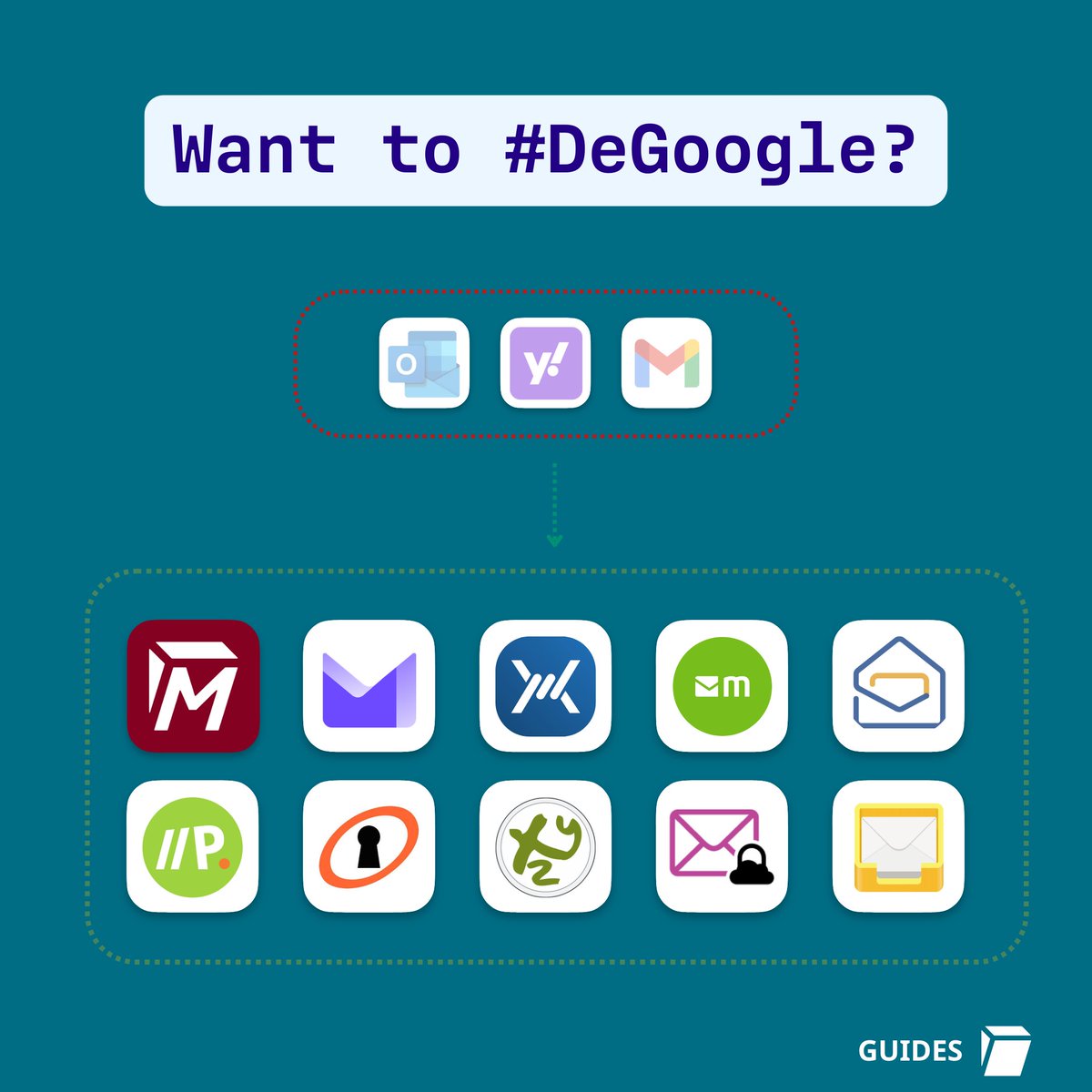
✉️🔒 Tired of Gmail scanning your emails to train its AI? Discover secure, privacy-focused alternatives like Proton, Tuta & mailbox. Switch easily & reclaim your data sovereignty today!
https://t.co/8RAHdzcr0y
Important Context on the @GrapheneOS x Motorola Partnership
Motorola is now a subsidiary of Lenovo (which acquired it from Google in 2014). Lenovo is headquartered in Beijing and its largest shareholder is Legend Holdings -- company founded and partially controlled by the Chinese Academy of Sciences (state institution of the People’s Republic of China).
[China’s 2017 National Intelligence Law (Article 14) legally compels Chinese organizations to support and cooperate with state intelligence work. This is the mandatory operating framework for any company under that jurisdiction.]
Lenovo’s security track record:
- 2006: the US State Department restricted 16K Lenovo computers to unclassified use only after security objections regarding hardware intended for classified embassy networks.
- Intelligence agencies across the Five Eyes alliance enacted similar bans on their secret networks after MI5 identified backdoor vulnerabilities in Lenovo firmware.
- 2013: Motorola Droid phones were silently transmitting personal data (including email and social media passwords) to Motorola’s servers every 9 minutes (often unencrypted).
- 2015: Lenovo was caught preinstalling Superfish on consumer laptops -- which performed MITM attacks.
- 2026: privacy class action was filed alleging that Lenovo’s own website tracking technologies expose American behavioral data to Chinese entities.
The technical transition away from Pixel hardware involves significant trade-offs.
Google Pixels use the Titan M2 - a RISC-V security chip with air-gapped manufacturing controls that provides hardware-backed key storage and verified boot protection isolated from the main CPU.
Motorola does NOT have this.
GrapheneOS publishes a non-exhaustive list of hardware requirements that any future device must meet (https://t.co/zjiFbKAtNi):
- hardware memory tagging (ARM MTE),
- hardware-based control flow integrity (BTI/PAC),
- isolated radios and components,
- StrongBox keystore via secure element,
- Weaver disk encryption throttling,
- insider attack resistance for secure element updates, - inline disk encryption with wrapped key support,
- verified boot with rollback protection for both firmware and OS,
- hardware key attestation with attest key pinning support.
Current Motorola hardware, including the flagship Motorola Signature, does not yet meet these standards.
GrapheneOS is pursuing this to break the hardware monoculture where a single vendor dictates the project’s future. Future devices (targeted for 2027) are expected to feature physical sensor kill switches to disconnect cameras and microphones.
However, a hardware kill switch is not a total solution.
It can disable the mic and camera - it does NOT cover the baseband processor, storage controller, or other components with Direct Memory Access.
If the underlying hardware or firmware is compromised at the factory level - a sensor switch cannot prevent data from being exfiltrated via the cellular modem or manipulated within the storage.
Privacy doesn’t have to be complicated.
This Privacy 101 guide breaks it down into 6 simple steps to get started.
Perfect to share with friends & family who don’t know where to begin.
GrapheneOS has no invasive services by default and is highly functional that way. iPhones can't be configured to provide similar privacy from Apple services. There's a much better privacy friendly, open source app ecosystem which can be used on it.
Sandboxed Google Play isn't part of GrapheneOS and is completely optional. GrapheneOS was started in 2014 and added sandboxed Google Play in 2021. It has existed for a longer period of time without sandboxed Google Play than with it. Many people use the OS without it. Unlike an iPhone without Apple services, GrapheneOS is highly functional and usable without Google services. Unlike an iPhone where people need Apple services for tons of basic functionality and to install/update apps.
On GrapheneOS, there's a very good open source app ecosystem available with many privacy friendly apps and services. People can use services like UnifiedPush instead of an Apple or Google push service. Apple's push service is one of many Apple services you wouldn't be avoiding with your described configuration. iPhones don't provide the option to avoid those services. On GrapheneOS, not using Google services is the default and normal state of the OS.
It's incredibly strange that you're comparing a crippled iPhone setup with barely any usability and functionality where you're still using Apple services to going out of the way to install unnecessary Google apps/services on GrapheneOS. It makes no sense to compare it that way when you wouldn't have the functionality from that in your described iPhone configuration. You get far more functionality with GrapheneOS without installing sandboxed Google Play. If someone only wants to use open source apps from the large open source app ecosystem and focus on using privacy friendly services then there's a whole lot available. There are plenty of commercial apps which work fine without Google Play too.
For people who do use sandboxed Google Play, it's more private than the Apple services included on the iPhone. Sandboxed Google Play doesn't in any way require logging into an account or especially one with personal data.
You're also ignoring privacy and security beyond these things. Also, why would someone need ADP if they aren't using an Apple account? The purpose of it is enabling end-to-end encryption for a larger subset of Apple services. On GrapheneOS, people use services such as the Proton app suite instead which provide end-to-end encryption for more than Apple does.
You don't actually know what you're talking about and it looks like a bunch of AI generated or AI assisted slop...
Can we build a blind, *unlinkable inference* layer where ChatGPT/Claude/Gemini can't tell which call came from which users, like a “VPN for AI inference”?
Yes! Blog post below + we built it into open source infra/chat app and served >15k prompts at Stanford so far. How it helps with AI user privacy:
# The AI user privacy problem
If you ask AI to analyze your ChatGPT history today, it’s surprisingly easy to infer your demographics, health, immigration status, and political beliefs. Every prompt we send accumulates into an (identity-linked) profile that the AI lab controls completely and indefinitely. At a minimum this is a goldmine for ads (as we know now). A bigger issue is the concentration of power: AI labs can easily become (or asked to become) a Cambridge Analytica, whistleblow your immigration status, or work with health insurance to adjust your premium if they so choose.
This is a uniquely worse problem than search engines because your average query is now more revealing (not just keywords), interactive, and intelligence is now cheap. Despite this, most of us still want these remote models; they’re just too good and convenient! (this is aka the "privacy paradox".)
# Unlinkable inference as a user privacy architecture
The idea of unlinkable inference is to add privacy while preserving access to the remote models controlled by someone else. A “privacy wrapper” or “VPN for AI inference”, so to speak.
Concretely, it’s a blind inference middle layer that:
(1) consists of decentralized proxies that anyone can operate;
(2) blindly authenticates requests (via blind signatures / RFC9474,9578) so requests are provably sandboxed from each other and from user identity;
(3) relays prompts over randomly chosen proxies that don’t see or log traffic (via client-side ephemeral keys or hosting in TEEs); and
(4) the provider simply sees a mixed pool of anonymous prompts from the proxies. No state, pseudonyms, or linkable metadata.
If you squint, an unlinkable inference layer is essentially a vendor for per-request, anonymous, ephemeral AI access credentials (for users or agents alike). It partitions your context so that user tracking is drastically harder.
Obviously, unlinkability isn’t a silver bullet: the prompt itself still goes to the remote model and can leak privacy (so don't use our chat app for a therapy session!). It aims to combat *longitudinal tracking* as a major threat to user privacy, and its statistical power increases quickly by mixing more users and requests.
Unlinkability can be applied at any granularity. For an AI chat app, you can unlinkably request a fresh ephemeral key for every session so tracking is virtually impossible.
# The Open Anonymity Project
We started this project with the belief that intelligence should be a truly public utility. Like water and electricity, providers should be compensated by usage, not who you are or what you do with it. We think unlinkable inference is a first step towards this “intelligence neutrality”.
# Try it out! It’s quite practical
- Chat app “oa-chat”: https://t.co/ELf8LvxFzX
(<20 seconds to get going)
- Blog post that should be a fun read: https://t.co/OwFmyFlZH5
- Project page: https://t.co/Swerz1xDE2
- GitHub: https://t.co/38CeKajCy2
New records show the FBI watches law-abiding Americans with few limits and may share details with whomever it chooses using an investigative tool called assessments: https://t.co/PMpFvRl3xN
Did you ever have a day where you have one task.
And you open up the app, open the file...
Then spend 8 hours on a completely separate task, and wonder how it's already 5 pm?
(At least I got this particular clock down from 37 seconds off to 200ms off...)